Numbers 14
People in this chapter
Israel has heard the report. Ten men say the land is impossible. Only Caleb and Joshua say it is possible. Now the people move. They move backward. All night they weep and cry out against Moses and Aaron: "Would God we had died in this wilderness! Why hath the Lord brought us unto this land, to fall by the sword? Our wives and our little ones will become a prey." They want to stone Joshua and Caleb. They want to choose a new captain to lead them back to Egypt.
Tap any highlighted phrase to jump to the commentary that unpacks it.
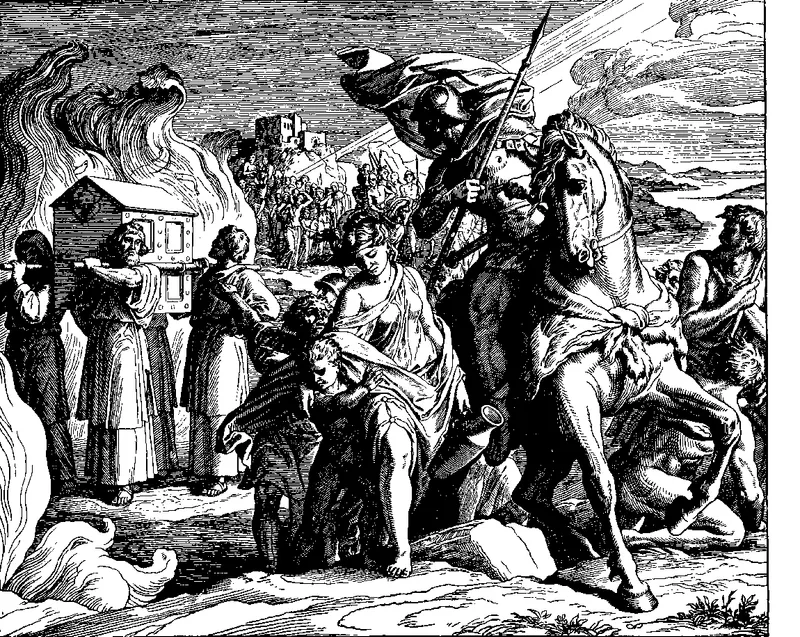
Numbers 14:1-4The Rebellion Begins
1And all the congregation lifted up their voice, and cried; and the people wept that night. 2And all the children of Israel murmured against Moses and against Aaron: and the whole congregation said unto them, Would God that we had died in the land of Egypt! or would God we had died in this wilderness! 3And wherefore hath the LORD brought us unto this land, to fall by the sword, that our wives and our children should be a prey? were it not better for us to return into Egypt? 4And they said one to another, Let us make a captain, and let us return into Egypt.
The people weep with fear and desperation. Their tears are a sign of how deep the panic runs. But tears without repentance fall short of turning to God. They are crying for a way out.
Murmuring - lun in Hebrew - is a recurring word in Numbers. It appears when the people complain at Marah (Exodus 15), when they hunger for meat (Numbers 11), and now here at the edge of the promised land. Each time, it is a rejection of God's provision and guidance, wrapped in the language of complaint. 1
"Would God we had died in the wilderness" - they wish they had died in Egypt or in the desert on the journey. They reject both the past (God's deliverance) and the future (God's promise). This is active rebellion against God's plan.
The people do not simply reject the land. They reject Moses as God's mediator and try to choose a new one. They are undoing the exodus itself. This is apostasy.
Numbers 14:5-10The Faithful Stand and Plead
5Then Moses and Aaron fell on their faces before all the assembly of the congregation of the children of Israel. 6And Joshua the son of Nun, and Caleb the son of Jephunneh, which were of them that searched the land, rent their clothes: 7And they spake unto all the company of the children of Israel, saying, The land, which we passed through to search it, is an exceeding good land. 8If the LORD delight in us, then he will bring us into this land, and give it us; a land which floweth with milk and honey. 9Only rebel not ye against the LORD, neither fear ye the people of the land; for they are bread for us: their defence is departed from them, and the LORD is with us: fear them not.
Moses and Aaron fall on their faces before the congregation. This is the posture of intercession - lying down before the people to plead with them to turn back. They do not speak yet, but their bodies speak: we are begging you.
Joshua and Caleb do not deny the obstacles or the giants. They say the land is "exceeding good." But they add the condition: "If the Lord delight in us." The goodness of the promise depends on the presence of God.
"Rebel not ye against the Lord" - Caleb names what the people are doing: rebellion. Rebellion is a choice.
"They are bread for us" - a poetic way of saying the enemies are defeated already in the mind of God. What looks like an obstacle from the perspective of fear looks like food from the perspective of faith. The language is almost violent: the enemies are sustenance.
Numbers 14:10-19The Glory Stops Everything
10But all the congregation bade stone them with stones. And the glory of the LORD appeared in the tabernacle of the congregation before all the children of Israel. 11And the LORD said unto Moses, How long will this people provoke me? and how long will it be ere they believe me, for all the signs which I have shewed among them? 12I will smite them with the pestilence, and disinherit them, and will make of thee a greater nation and mightier than they. 13And Moses said unto the LORD, Then the Egyptians shall hear it, (for thou broughtest up this people in thy might from among them;) 14And they will tell it to the inhabitants of this land: for they have heard that thou LORD art among this people, that thou LORD art seen face to face, and that thy cloud standeth over them, and that thou goest before them, by day time in a pillar of a cloud, and in a pillar of fire by night. 15Now if thou shalt kill all this people as one man, then the nations which have heard the fame of thee will speak, saying, 16Because the LORD was not able to bring this people into the land which he sware unto them, therefore he hath slain them in the wilderness. 17And now, I beseech thee, let the power of my LORD be great, according as thou hast spoken, saying, 18The LORD is longsuffering, and of great mercy, forgiving iniquity and transgression, and by no means clearing the guilty, visiting the iniquity of the fathers upon the children unto the third and fourth generation. 19Pardon, I beseech thee, the iniquity of this people according unto the greatness of thy mercy, and as thou hast forgiven this people, from Egypt even until now.
God speaks without softening. "I will smite them with pestilence and disinherit them" - this generation will not enter the land. The covenant promise stands, but this generation forfeits it by unbelief.
God proposes to start over with Moses as the patriarch of a new nation. This echoes Exodus 32, where God offers the same to Moses after the golden calf. Again Moses refuses the offer. He intercedes for the people instead1.
Moses' intercession is remarkable in what it asks. He asks God to show mercy in a way that honors His character: "Let the power of my Lord be great." Moses is asking God to be merciful in a way that magnifies His character.
Numbers 14:20-35The Sentence: Forty Years
20And the LORD said, I have pardoned according to thy word: 21But as truly as I live, all the earth shall be filled with the glory of the LORD. 22Because all those men which have seen my glory, and my miracles, which I did in Egypt and in the wilderness, and have tempted me now these ten times, and have not hearkened to my voice; 23Surely they shall not see the land which I sware unto their fathers, neither shall any of them that provoked me see it: 24But my servant Caleb, because he had another spirit with him, and hath followed me fully, him will I bring into the land whereinto he went; and his seed shall possess it. 25(Now the Amalekites and the Canaanites dwelt in the valley.) Tomorrow turn you, and get you into the wilderness by the way of the Red sea. 26And the LORD spake unto Moses and unto Aaron, saying, 27How long shall I bear with this evil congregation, which murmur against me? I have heard the murmurings of the children of Israel, which they murmur against me. 28Say unto them, As truly as I live, saith the LORD, as ye have spoken in mine ears, so will I do to you: 29Your carcases shall fall in this wilderness; and all that were numbered of you, according to your whole number, from twenty years old and upward, which have murmured against me, 30Doubtless ye shall not come into the land, concerning which I sware to make you dwell therein, save Caleb the son of Jephunneh, and Joshua the son of Nun. 31But your little ones, which ye said should be a prey, them will I bring in, and they shall know the land which ye have despised. 32But as for you, your carcases, they shall fall in this wilderness. 33And your children shall wander in the wilderness forty years, and bear your whoredoms, until your carcases be wasted in the wilderness. 34After the number of the days in which ye searched the land, even forty days, each day for a year, shall ye bear your iniquities, even forty years, and ye shall know my breach of promise. 35I the LORD have said, I will surely do it unto all this evil congregation, that are gathered together against me: in this wilderness they shall be consumed, and there they shall die.
God pardons. The judgment comes, but it is not annihilation. The people will live, but they will die in the wilderness. Their children will inherit the promise. Mercy and justice are held together in God's response.
To "provoke" God means to push against Him deliberately, to test His patience. This is worse than stumbling into sin. It is a deliberate choice to doubt His word and live against it.
Forty years in the wilderness. The number 40 appears throughout Scripture as a period of testing and judgment. Jesus fasted 40 days in the wilderness. The earth was rained on for 40 days at the flood. But the principle here - that judgment will last as long as the rebellion lasted - introduces the prophetic framework that will echo through Daniel, Ezekiel, and Revelation.
"A day for a year" - yom le-shanah in Hebrew. The spies were in the land for 40 days; Israel will wander for 40 years. This becomes the foundational principle of biblical prophecy. Ezekiel 4:6 applies it explicitly to a siege: God tells Ezekiel to lie on his side bearing the iniquity of Judah, "a day for a year." Daniel 9 builds entire prophetic calendars on this principle - 70 weeks for 70 years of exile.
Numbers 14:36-45Plague and a Rout
36And the men, which Moses sent to search the land, who returned, and made all the congregation to murmur against him, by bringing up a slander upon the land, 37Even those men that did bring up the evil report upon the land, died by the plague before the LORD. 38But Joshua the son of Nun, and Caleb the son of Jephunneh, which were of the men that went to search the land, lived still. 39And Moses told these sayings unto all the children of Israel: and the people mourned greatly. 40And they rose up early in the morning, and gat them up into the top of the mountain, saying, Lo, we be here, and will go up unto the place which the LORD hath promised: for we have sinned. 41And Moses said, Wherefore now do ye transgress the commandment of the LORD? but it shall not prosper. 42Go not up, for the LORD is not among you; that ye be not smitten before your enemies. 43For the Amalekites and the Canaanites are there before you, and ye shall fall by the sword: because ye are turned away from the LORD, therefore the LORD will not be with you. 44But they presumed to go up unto the hill top: nevertheless the ark of the covenant of the LORD, and Moses, departed not out of the camp. 45Then the Amalekites came down, and the Canaanites which dwelt in that hill, and smote them, and discomfited them, even unto Hormah.
The ten spies who brought the bad report die immediately by plague. They die before the congregation so that Israel will see: the word that came out of their mouths brought death. False reports of God kill those who speak them and those who believe them.
Joshua and Caleb, the faithful scouts, live on. They alone of the adult generation will see the promised land. Their faith is vindicated by their survival.
The next morning, the people rise early and try to go up anyway. They confess their sin: "we have sinned." But confession comes too late to change the judgment. They try to force their way into the land without the ark, without Moses, without God's presence. They are routed immediately. Presumption - acting as if you have God's favor when you do not - is always followed by a rout.
Research trail
Sources & further study
These references support the historical, linguistic, manuscript, and contextual notes in this chapter. Scripture remains the primary text; external sources are provided so readers can inspect the research directly.