Painter of the Bible
Carlo Saraceni
Carlo Saraceni was a Venetian-born painter who spent most of his career in Rome and was, alongside Orazio Gentileschi and Bartolomeo Manfredi, one of the principal Italian followers of Caravaggio in the generation immediately after the master's death.

Their faith
Why Carlo Saraceni painted Christ
Carlo Saraceni, born in Venice in 1579, dedicated his life to the exploration of sacred themes through his art, deeply influenced by the spiritual fervor of the Catholic faith. His training under an unknown Venetian painter laid the foundation for his artistic journey, but it was his time in Rome that truly shaped his religious devotion. Immersed in the vibrant artistic community following the death of Caravaggio, Saraceni embraced the chiaroscuro technique that illuminated the divine in his works. His altarpieces and devotional canvases reflect a commitment to the Christian faith, as he sought to convey the beauty of scripture and the presence of God through his art. Saraceni's works often served liturgical purposes, indicating a profound reverence for the church and its teachings, and his paintings were created not just as artistic expressions but as acts of worship.
Saraceni's faith is particularly evident in his notable works, such as the 'Death of the Virgin' and the 'Saint Cecilia and the Angel' altarpieces. The 'Death of the Virgin,' commissioned to replace Caravaggio's rejected version, showcases his ability to blend Caravaggesque chiaroscuro with the warm, rich colors characteristic of Venetian art. This painting, accepted for liturgical use, highlights Saraceni's dedication to creating works that honor the sacred narrative while remaining accessible to the faithful. His art invites viewers to contemplate the divine, bridging the gap between the earthly and the heavenly. Through his devotion, Saraceni continues to inspire countless individuals, reminding us of the power of faith and the beauty that can emerge when we dedicate our talents to glorifying God.
Life & work
Carlo Saraceni was a Venetian-born painter who spent most of his career in Rome and was, alongside Orazio Gentileschi and Bartolomeo Manfredi, one of the principal Italian followers of Caravaggio in the generation immediately after the master's death. Born in Venice in 1579, trained in Venice in the workshop of an unidentified late-Cinquecento Venetian painter before moving to Rome around 1598, and active in Rome for almost his entire career (with intermittent returns to Venice), he absorbed Caravaggio's chiaroscuro directly during the Roman years that overlapped with the master's principal activity. He returned to Venice in 1620 and died there in the same year, only forty-one years old.
His Christian religious work is concentrated in altarpieces and small devotional canvases in his characteristic combination of Caravaggesque chiaroscuro with a particularly Venetian-northern chromatic warmth that distinguished his manner from the more austere Roman Caravaggesque painters of the same generation. The Saint Cecilia and the Angel altarpieces (multiple versions in workshop variants in the Galleria Nazionale d'Arte Antica in Rome and other Italian collections), the Death of the Virgin (Santa Maria della Scala, Rome, 1610 — the altarpiece commissioned to replace Caravaggio's earlier rejected Death of the Virgin, which the Carmelites of the Trastevere church had dismissed as too coarse for their high altar), the Saint Charles Borromeo Carrying the Holy Nail in Procession (multiple versions), and the late Venetian altarpieces of his final year fill the painted corpus.
The Death of the Virgin commission for Santa Maria della Scala in particular gave Saraceni a peculiar place in Caravaggio's posthumous reputation. Caravaggio's earlier altarpiece (now in the Louvre, having been bought immediately by Rubens for the Mantuan ducal collection) had used a real corpse as the model for the dead Virgin and the Carmelites had refused to install it; Saraceni's replacement painting, less radical in its naturalism but unmistakably Caravaggesque in its chiaroscuro, was accepted and remains in continuous liturgical use in the church.
His Roman workshop was small but influential. He worked closely with the Venetian painter Jean Le Clerc (who was his principal pupil and assistant in the late Roman years) and shaped the development of the Caravaggesque manner in the Venetian-influenced direction that would distinguish the Saraceni followers from the more austere Roman Caravaggesque painters.
Notable works in detail
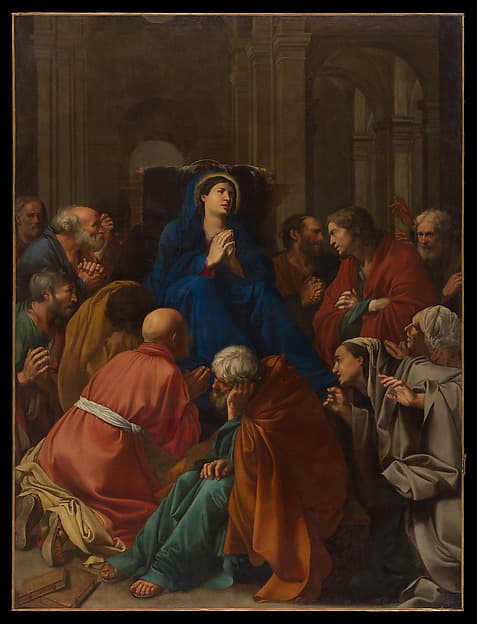
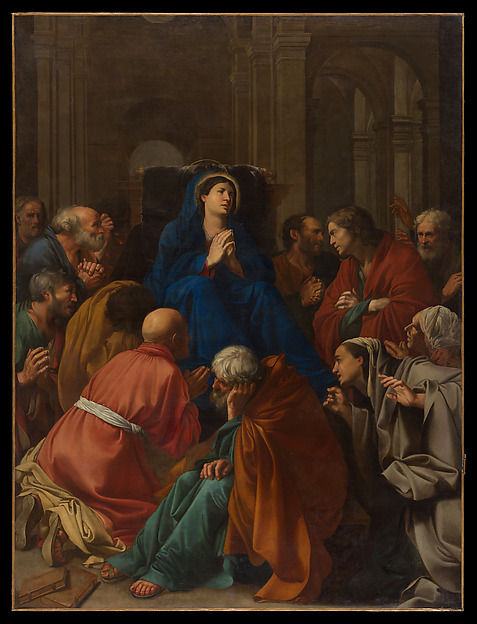
The Dormition of the Virgin, painted by Carlo Saraceni around 1607 in oil on canvas and now in the Metropolitan Museum of Art in New York, depicts the moment from the apocryphal Marian narrative in which the Virgin Mary, dying in her old age, is attended on her deathbed by the assembled apostles. Saraceni stages the scene with characteristic Caravaggesque-Venetian compositional drama: the Virgin lies in the bed at the lower center, the apostles gather around her in dense devotional postures of grief and prayer, with Peter (identified by the pyx of the Eucharist in his hand) leaning in over the bed. The chromatic palette of saturated crimson, deep ultramarine, and warm flesh against the dark interior reflects Saraceni's combination of Roman Caravaggesque chiaroscuro with the warm Venetian color of his native Venice.
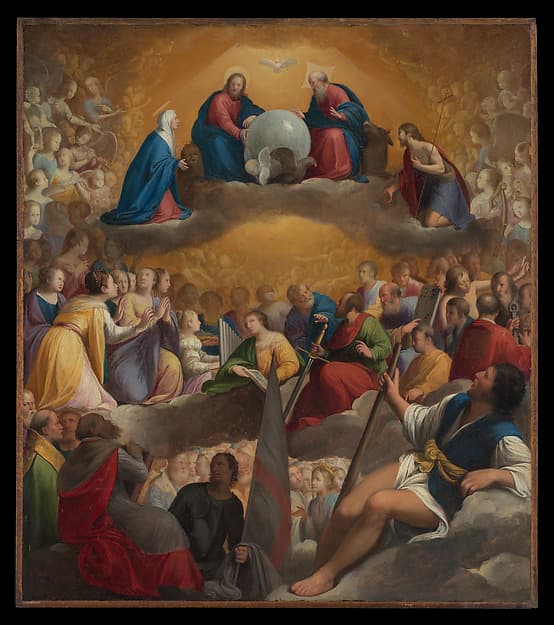
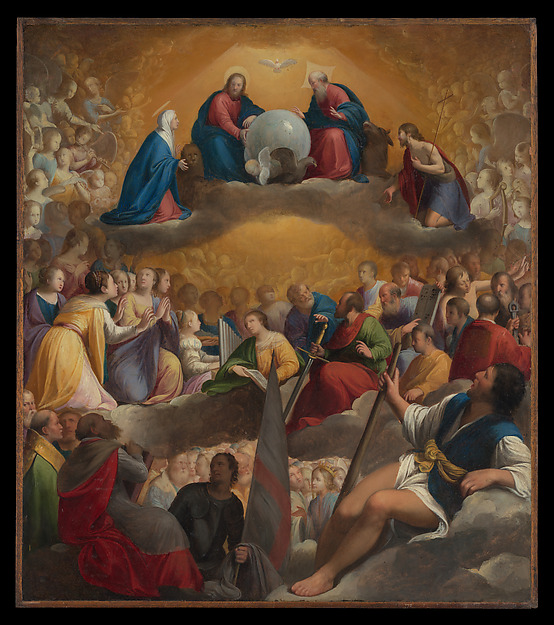
Paradise, painted by Carlo Saraceni around 1593 (early in his career, in his Venetian apprentice years before the move to Rome) in oil on copper and now in the Metropolitan Museum of Art in New York, depicts the iconographic subject of the celestial court of the blessed in heaven gathered around the central enthroned figure of God. Saraceni stages the scene with characteristic late-Cinquecento Venetian compositional density: God enthroned in glory at the upper center surrounded by the choirs of angels, the saints and the blessed ranged in formal procession in the lower registers, the souls of the just rising up through the architectural levels of the heavenly hierarchy. The painting is among the early Saraceni works produced before his transformative Roman move and absorption of the Caravaggesque manner.