Painter of the Bible
Giovanni Battista Caracciolo
Giovanni Battista Caracciolo — universally called Battistello — was the leading Neapolitan painter of the first generation after Caravaggio's brief but transformative Neapolitan visit of 1606–1607 and the principal early…

Their faith
Why Giovanni Battista Caracciolo painted Christ
Giovanni Battista Caracciolo, affectionately known as Battistello, was a devout Catholic whose artistry flourished in the heart of Naples during the Counter-Reformation. His deep faith is reflected in the numerous altarpieces and biblical narratives he created for local churches, which served as both spiritual and artistic expressions of his devotion. Trained in the late-Cinquecento workshop tradition, Caracciolo was profoundly influenced by Caravaggio's dramatic use of light and shadow, which he adopted to convey the divine presence in his works. His commitment to his faith is evident not only in the subjects he chose but also in the reverence with which he approached each canvas, often creating art that would inspire worship and reflection among the faithful.
Caracciolo’s paintings, such as the altarpiece of "The Liberation of Saint Peter" and "Christ Washing the Disciples' Feet," reveal a profound understanding of biblical narratives and a desire to communicate the essence of Christ’s teachings. In these works, he captures the emotional depth and spiritual significance of the moments he depicts, inviting viewers to engage with the divine. His mastery of chiaroscuro not only enhances the dramatic impact of his subjects but also serves to illuminate the sacred themes central to his faith. Through his art, Caracciolo continues to inspire and uplift those who encounter his work, reminding us of the beauty and power of a life dedicated to Christ.
Life & work
Giovanni Battista Caracciolo — universally called Battistello — was the leading Neapolitan painter of the first generation after Caravaggio's brief but transformative Neapolitan visit of 1606–1607 and the principal early-seventeenth-century Caravaggesque master in the city. Born in Naples in 1578, trained in Naples in the late-Cinquecento workshop tradition before Caravaggio's arrival in 1606 transformed the Neapolitan pictorial scene, he became the principal early Neapolitan Caravaggesque painter and worked in Naples for the rest of his life. He died in Naples in 1635.
His Christian religious work is concentrated in altarpieces and large-format biblical narrative canvases produced for the Neapolitan Counter-Reformation Catholic churches across the first three decades of the seventeenth century. The Liberation of Saint Peter altarpiece (Pio Monte della Misericordia, Naples — the same Naples confraternity for which Caravaggio had painted the Seven Works of Mercy in 1607), the Lamentation altarpiece (San Martino, Naples), the Christ Washing the Disciples' Feet (Pio Monte della Misericordia), the Saint John the Baptist (Capodimonte), the Madonna with Saints (Naples), and dozens of half-length devotional saints and biblical narrative paintings anchor the painted corpus.
His personal style is the unmistakable early Neapolitan Caravaggesque signature — strong chiaroscuro derived directly from Caravaggio's Naples altarpieces of 1606–1610 (the Seven Works of Mercy and the Flagellation), with a particular preference for the dramatic single-figure half-length saint and the small-format biblical narrative subject. The Caracciolo workshop trained the next generation of Neapolitan painters who would absorb the Caravaggesque vocabulary at one further remove, including the young Jusepe de Ribera in his early Naples years.
He was a personal friend of the Spanish viceroy of Naples, the Duke of Osuna, and produced a substantial body of court portraits alongside the religious commissions across his career. He was buried in Naples in the church of Santa Maria della Stella, his Neapolitan parish.
Notable works in detail
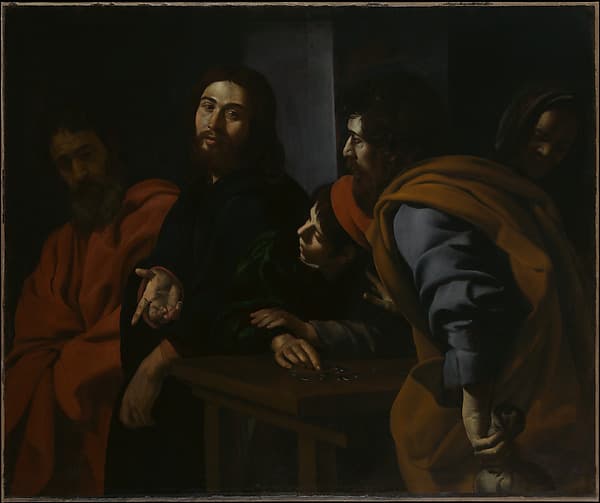
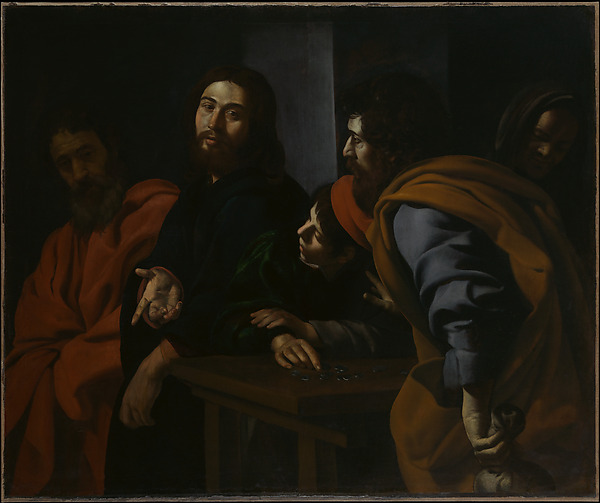
The Calling of Saint Matthew, drawn by Battistello Caracciolo around 1625 in pen and ink with wash on paper and now in the Metropolitan Museum of Art in New York, illustrates the moment from Matthew 9 in which Christ calls the tax collector Matthew to discipleship — the same subject Caravaggio had famously treated in his 1599–1600 Roman altarpiece for San Luigi dei Francesi. Battistello stages the scene with characteristic early-Neapolitan Caravaggesque compositional drama: Christ at the right with his arm extended in command, Matthew at the wooden tax-collecting table on the left in startled recognition, his small companions watching in attendance. The drawing demonstrates the Naples Caravaggesque tradition that Battistello and his generation developed directly from Caravaggio's brief but transformative Naples visit of 1606–1607.
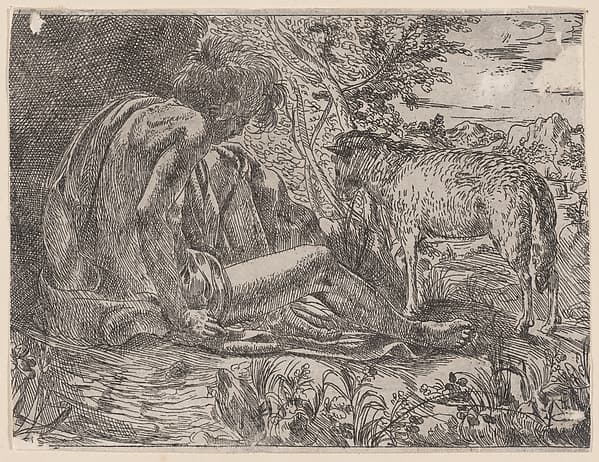
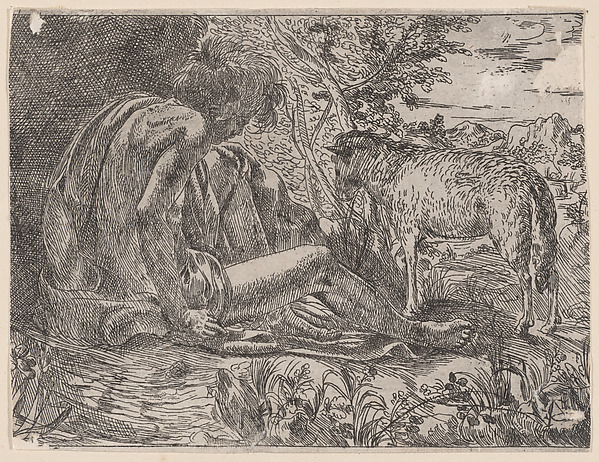
Saint John the Baptist with a lamb
Saint John the Baptist with a Lamb, drawn by Battistello Caracciolo around 1610 in pen and ink with wash on paper and now in the Metropolitan Museum of Art in New York, depicts the cousin of Christ in his desert ministry holding the small lamb that became his iconographic attribute (the lamb refers to John's identification of Christ as the Lamb of God in John 1:29). Battistello stages the scene with characteristic Caravaggesque tonal restraint: the standing Baptist in three-quarter view holding the small lamb against his chest, the dark neutral background concentrating attention on the figure. The drawing demonstrates Battistello's lifelong interest in the single-figure half-length saint subject that defined the Naples Caravaggesque tradition of the early seventeenth century.