Painter of the Bible
Giovanni della Robbia
Giovanni della Robbia was a Florentine sculptor and the principal continuer of the Della Robbia glazed-terracotta workshop after the death of his father Andrea della Robbia.

Their faith
Why Giovanni della Robbia painted Christ
Giovanni della Robbia was a devout Christian whose faith was intricately woven into the fabric of his artistic life. As the principal continuer of the Della Robbia family workshop, he dedicated his career to creating sacred art that served the churches and confraternities of Florence and Tuscany. His upbringing in a family of artists deeply committed to Christian themes instilled in him a profound reverence for scripture and the teachings of Christ. Giovanni's works, particularly his glazed-terracotta altarpieces and devotional pieces, reflect a spiritual discipline that sought to inspire devotion and reverence among viewers. His commitment to his faith was evident in the way he infused each piece with a sense of divine presence, creating works that were not only aesthetically pleasing but also spiritually uplifting.
Giovanni’s faith profoundly shaped his artistic vision, as seen in masterpieces such as the Pietà altarpiece in San Lorenzo and the Last Supper roundel for the refectory of San Domenico in Pistoia. These works reveal his ability to capture the essence of Christ's sacrifice and the communal aspect of faith, inviting viewers into a deeper contemplation of their own spiritual journeys. The vibrant colors and intricate details of his compositions reflect the joy and beauty of the Christian message, while the figures exude a sense of grace and serenity that draws the observer closer to God. Giovanni della Robbia's devotion continues to resonate through his art, reminding us of the sacred connection between creativity and faith, and inspiring us to seek the divine in our own lives.
Life & work
Giovanni della Robbia was a Florentine sculptor and the principal continuer of the Della Robbia glazed-terracotta workshop after the death of his father Andrea della Robbia. Born in Florence in 1469, trained in his father's workshop from his youth, and active in Florence for his entire career, he ran the family workshop in close partnership with his brothers Luca the Younger and Marco della Robbia until his own death in Florence in 1529.
His Christian religious work is concentrated in glazed-terracotta altarpieces, devotional roundels, lunettes, and architectural sculpture for the Florentine and broader Tuscan churches and confraternities. The Pietà altarpieces in San Lorenzo and Santa Maria Novella in Florence, the great Resurrection altarpiece in the Anchorite church near Siena, the Last Supper roundel for the refectory of San Domenico in Pistoia (1521 — the supreme late-Della Robbia narrative composition with the apostles arranged at the long horizontal table), the Crucifixion altarpieces for the Franciscan sanctuary at La Verna (continuing the cycle his father had begun), and dozens of small Madonna and Child roundels for the Florentine domestic devotional market anchor the painted-and-glazed corpus.
His personal style continued the Della Robbia workshop signature — figures glazed in white tin-oxide for the flesh, drapery in deep saturated cobalt blue, manganese purple, and copper green against the deep ultramarine grounds and the swag-of-fruit garlands that became the unmistakable Della Robbia decorative trademark — but with a slight loosening of the careful Quattrocento figural discipline that his father Andrea had maintained, in the direction of the early Cinquecento Italian Renaissance softening of compositional structure.
The Della Robbia workshop began to decline commercially in the second quarter of the sixteenth century as the High Renaissance taste for marble and bronze sculpture displaced the older glazed-terracotta tradition. Giovanni's sons continued the workshop briefly after his death; the family firm wound down by the 1560s, and the Della Robbia technique was effectively abandoned by the end of the sixteenth century.
Notable works in detail
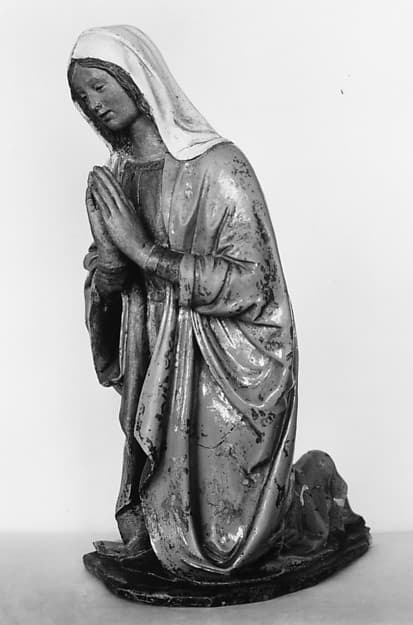
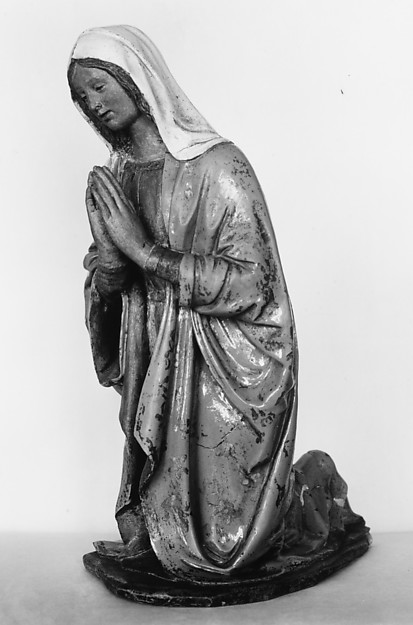
Kneeling Madonna, modeled by Giovanni della Robbia around 1485 in glazed terracotta and now in the Metropolitan Museum of Art in New York, is one of the early Giovanni della Robbia compositions from the years immediately after his father Andrea's death when Giovanni had just inherited direction of the family workshop. The composition shows the Virgin kneeling in profile with her hands folded in adoration before the Christ Child; the polychrome glazed surface continues the Andrea della Robbia signature combination of white tin-oxide for the flesh and deep ultramarine for the ground, but with the slightly looser figural proportions and softer compositional handling that characterize Giovanni's workshop production.
met-192684
Pietà, modeled by Giovanni della Robbia around 1500 in glazed terracotta and now in the Metropolitan Museum of Art in New York, depicts the iconographic subject of the seated Virgin holding the dead body of Christ across her lap immediately after the Deposition. Giovanni della Robbia stages the scene with characteristic late-Della-Robbia compositional density: the Virgin in three-quarter view supporting the body of Christ, John the Evangelist standing behind in formal attendance, the Magdalene kneeling at the feet. The polychrome glazed surface — white tin-oxide for the flesh, deep saturated drapery color, the swag-of-fruit garland border that became the unmistakable Della Robbia decorative trademark — demonstrates the workshop's late-Quattrocento mature commercial productivity.
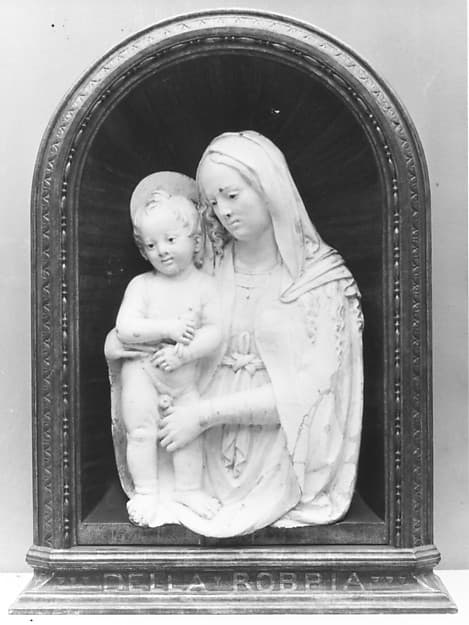
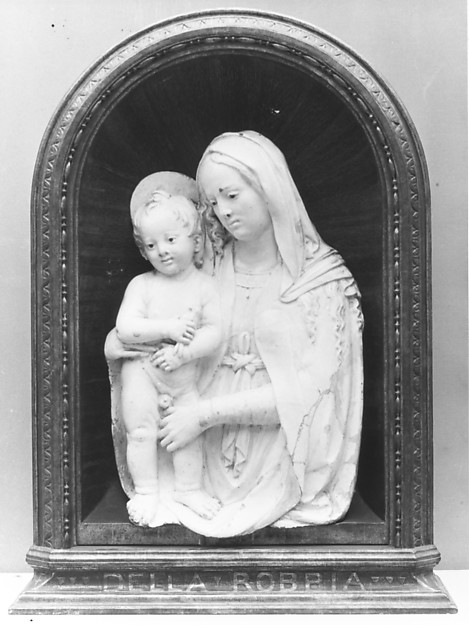
Madonna and Child, modeled by Giovanni della Robbia around 1500 in glazed terracotta and now in the Metropolitan Museum of Art in New York, is one of the standard small-format Della Robbia roundels Giovanni's workshop produced in editions for the Florentine and broader Tuscan domestic-altar market. The composition shows the Virgin in three-quarter view holding the standing Christ Child upright on her lap, framed by the swag-of-fruit garland border that became the Della Robbia decorative signature. The polychrome glazed surface and the minor stylistic variations between this and Andrea's earlier comparable Madonnas demonstrate the workshop's continued productivity into the early sixteenth century before the High Renaissance taste for marble and bronze sculpture began to displace the older glazed-terracotta tradition.
Bible scenes Giovanni della Robbia painted
Luke