Painter of the Bible
Jan Lievens
Jan Lievens was a Dutch Golden Age painter and printmaker who shared a studio in Leiden with the young Rembrandt van Rijn from roughly 1626 to 1631 — the formative years for both painters — and went on to a substantial i…

Their faith
Why Jan Lievens painted Christ
Jan Lievens was deeply rooted in the Christian faith, which profoundly influenced his artistic journey. Born in the Dutch city of Leiden in 1607, he trained under notable artists who instilled in him a reverence for biblical themes. Throughout his career, Lievens produced numerous altarpieces and narrative paintings that reflected his devotion. His works often served as spiritual reflections for the community, showcasing his commitment to portraying sacred subjects with sincerity and depth. The time he spent sharing a studio with Rembrandt not only honed his skills but also reinforced his dedication to exploring the divine through art, as both artists engaged in a spirited dialogue about biblical narratives and their representation.
Lievens' faith is particularly evident in works like "The Resurrection of Lazarus" and "The Pilate Washing His Hands," where he captures the emotional weight of these biblical moments with striking clarity. In "The Resurrection of Lazarus," the dramatic interplay of light and shadow evokes a sense of divine intervention, inviting viewers to contemplate the power of Christ's miracles. Similarly, in "The Pilate Washing His Hands," Lievens presents a poignant moment of moral conflict, encouraging reflection on the nature of justice and responsibility. Through these paintings, Lievens not only demonstrated his artistic prowess but also his desire to inspire faith and contemplation in those who beheld his work. His devotion continues to resonate, reminding us of the enduring impact of sacred art in guiding our spiritual journeys.
Life & work
Jan Lievens was a Dutch Golden Age painter and printmaker who shared a studio in Leiden with the young Rembrandt van Rijn from roughly 1626 to 1631 — the formative years for both painters — and went on to a substantial international career across the Netherlands, England, and the Spanish Netherlands. Born in Leiden in 1607 (a year older than Rembrandt), trained briefly in Leiden under Joris van Schooten and then in Amsterdam in the workshop of Pieter Lastman (the same Amsterdam workshop in which Rembrandt also briefly trained around 1624), he returned to Leiden in 1625 and shared his early Leiden studio with Rembrandt for several years before traveling to England in 1632 (where he worked at the court of Charles I) and then to Antwerp from 1635 to 1644 (where he absorbed the loose painterly Antwerp manner of Rubens and van Dyck). He returned to the Netherlands in 1644 and worked in Amsterdam, The Hague, and Leiden for the rest of his life, dying in Amsterdam in 1674.
His Christian religious work is concentrated in altarpieces and small biblical narrative paintings produced across his entire career. The Pilate Washing His Hands (Bredius Museum), the Christ on the Cross compositions, the Resurrection of Lazarus (Brighton, c. 1630, painted in close stylistic dialogue with Rembrandt's almost-contemporary Lazarus etching), the Job on the Dunghill (Ottawa, 1631), the Esther preparing to Approach Ahasuerus (Madrid), and the late Antwerp altarpieces fill the painted corpus.
The early Leiden years are the most consequential for the history of Dutch painting. Lievens and the young Rembrandt produced biblical-history paintings in close stylistic competition — sometimes painting the same subject within months of each other, sometimes seemingly correcting each other's compositions — and the small body of paintings produced in their shared Leiden studio in the late 1620s constitutes one of the most studied workshop dialogues in the entire history of Dutch art. Several paintings traditionally attributed to Rembrandt have been reattributed to Lievens, and vice versa; the careful Rijksmuseum and Mauritshuis exhibition in 2008–2009 sorted out much of the confusion.
His later international career was substantial but never quite caught the supreme reputation Rembrandt achieved in the same years; modern criticism increasingly treats Lievens as a major painter whose career was overshadowed by his early studio mate's later supremacy.
Notable works in detail
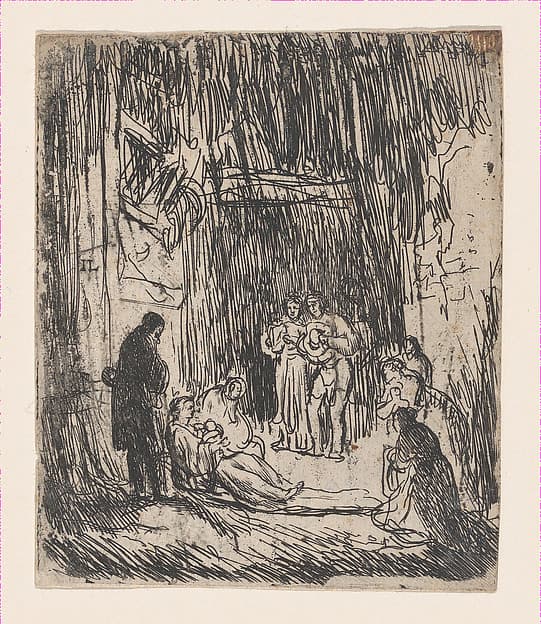
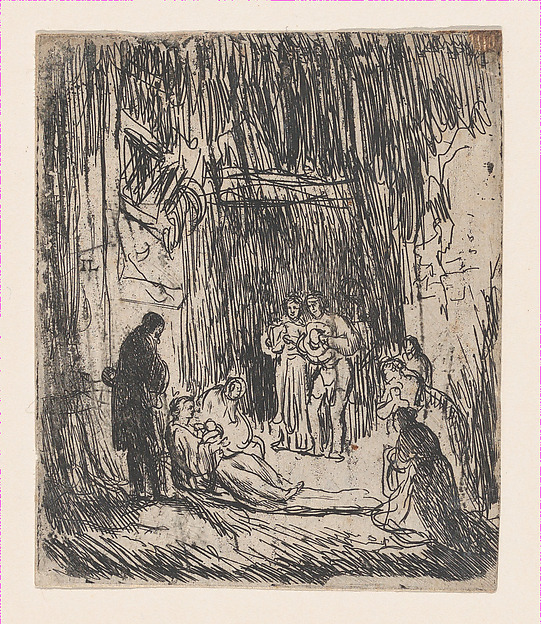
Adoration of the Shepherds, etched by Jan Lievens around 1620 in his Leiden workshop years (during the period he shared a studio with the young Rembrandt), depicts the moment from Luke 2 in which the shepherds, having heard the angels' announcement of the birth of Christ, arrive at the small dwelling at Bethlehem to find the newborn child laid in the manger. Lievens stages the scene with characteristic Leiden-period dramatic chiaroscuro: the seated Virgin holding the swaddled Christ Child illuminated by a single source of golden light, Joseph waiting behind, three peasant shepherds in the foreground in postures of recognition and tender adoration. The print is one of the principal early Lievens etchings and demonstrates the dramatic Caravaggesque manner that he and the young Rembrandt were both developing in their shared Leiden studio in the late 1620s.
met-747592
The Resurrection of Lazarus, etched by Jan Lievens around 1620 in his Leiden workshop, illustrates the climactic miracle of John 11. Lievens stages the scene with characteristic Leiden-period dramatic chiaroscuro: Christ at the lower left with his right arm extended in command, the bound figure of Lazarus emerging upright from the open tomb at the upper right, the sisters Martha and Mary kneeling between them at Christ's feet, and a small crowd of witnesses gathered behind. The print was painted in close stylistic dialogue with Rembrandt's own Lazarus etching of about 1632; the Lievens-Rembrandt Leiden studio years produced a remarkable body of paintings and etchings on shared subjects, with the two painters in stylistic competition with each other across nearly identical subject matter.
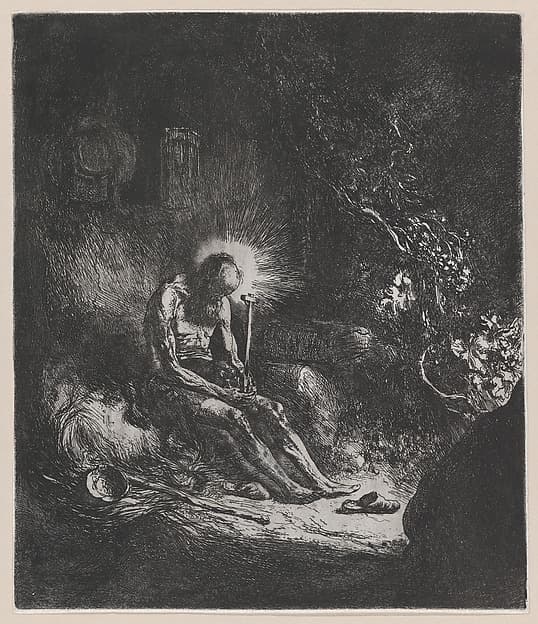
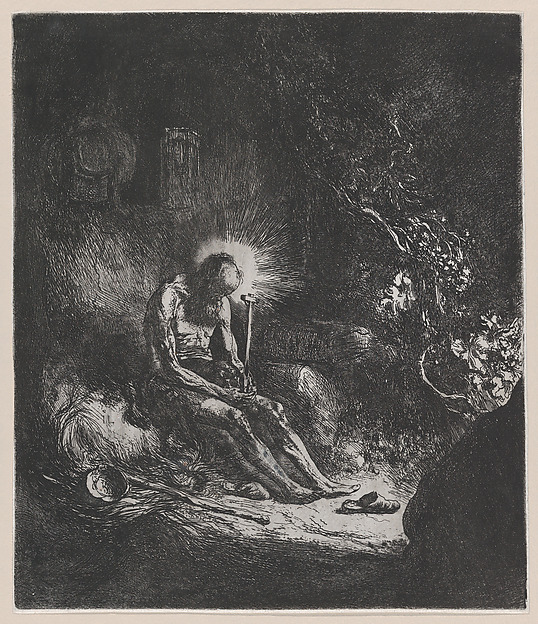
Saint Jerome, etched by Jan Lievens around 1620 in his Leiden workshop, depicts the early Church Father in the conventional iconographic posture of his hermit years — half-naked, kneeling on his rocks, with his small open book and his lion (the iconographic attribute that distinguishes Jerome from any other bearded saint) at his feet. Lievens stages the scene with characteristic Leiden-period dramatic Caravaggesque chiaroscuro and a particularly strong contrast between the dark cave of the saint's retreat and the small bright opening to the sky above. The print is one of the principal early Lievens etchings and demonstrates the dense narrative composition and atmospheric tonal range that defined his Leiden-studio output.