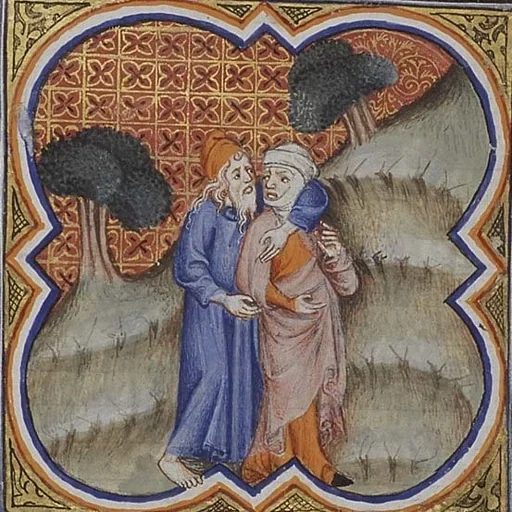

Who was Gomer in the Bible?
Gomer was the wife of the prophet Hosea, and her unfaithfulness and reconciliation pictured Israel’s relationship with God.
Wife of Hosea
8th century BC
Gomer was the wife of the prophet Hosea, and her unfaithfulness and reconciliation pictured Israel’s relationship with God.
Follow the reading trailBEYOND THE NAME
Gomer, daughter of Diblaim, married the prophet Hosea at the Lord’s command, and she bore children whose names carried prophetic meaning. Her wandering from the marriage became a living sign of how Israel had been unfaithful to God, yet Hosea was told to love her still and bring her back. Her story is woven into the message of a God whose love seeks the one who strays.
Themes in the authored commentary
These are other entries using this name. Compare their source passages before treating them as the same or different historical people.
FOLLOW THE PASSAGES
These are chapter studies associated with this record. Their order follows the books and chapters, rather than a reconstructed timeline of the person’s life.
daughter of Diblaim, taken as Hosea's wife in fulfillment of God's command
The book of Hosea begins not with a sermon but with a marriage, and the marriage is the sermon. The word of the LORD comes to the prophet with a command that would mark his whole life: Go, take unto thee a wife of whoredoms and children of whoredoms: for the land hath committed great whoredom, departing from the LORD (v. 2). Israel had bound herself to God in covenant and then given herself to other gods, and the LORD now asks Hosea to carry that betrayal in his own household - to feel from the inside what it is to love one who will not be faithful. Hosea obeys. He takes Gomer to wife, and the sign begins to unfold in the children she bears.
Chapter overview from the authored study guide.the unfaithful wife whose return is promised as an image of Israel's future restoration
In Hosea 2 the LORD speaks the way a wounded husband might - and the honesty is startling. He names the marriage as broken: she is not my wife, neither am I her husband (v. 2). His people, pictured as the unfaithful wife, have gone after other lovers, the idols of the surrounding nations, crediting them with every good thing in her life: I will go after my lovers, that give me my bread and my water, my wool and my flax, mine oil and my drink (v. 5). The chapter does not flinch from naming this as covenant betrayal. But neither does it sensationalize it.
Chapter overview from the authored study guide.the woman Hosea redeems by purchasing her back, a sign of God's coming redemption of Israel
After the long second chapter of accusation and promise, Hosea 3 returns to the marriage itself, and it is brief and almost unbearable in its tenderness. The LORD speaks again to His prophet, and the command is startling: Go yet, love a woman beloved of her friend, yet an adulteress (v. 1). The wife has gone; she is loved by another and unfaithful to Hosea. He could let her go, and no one would blame him. Instead he is told to love her - an act he must go and perform. And the reason is given at once: this is to be according to the love of the LORD toward the children of Israel, who look to other gods, and love flagons of wine.
Chapter overview from the authored study guide.THE PEOPLE AROUND THE PERSON
Recorded parents
Recorded spouses
Recorded children
Relationships follow the source graph. Some are interpretive or uncertain, and individual verse citations are not yet available for every connection.
STUDY & INTERPRETATION
Gomer stands at the center of one of Scripture’s most striking enacted parables, her marriage to Hosea chosen by God to mirror His bond with a wayward Israel. Through her unfaithfulness and the prophet’s costly act of reclaiming her, the book gives flesh to the grief and persistence of covenant love, showing that God’s response to betrayal is not abandonment but pursuit. The redemption of Gomer, sought out and brought home, dramatizes the hope that runs through the prophets, that a faithless people can be restored by a faithfulness that is not their own. Her rescued life quietly foreshadows the love that would later seek out the lost and pay the price to bring them back.
From the Learn of Christ person commentary. Read alongside the linked Scripture passages.KEEP SCRIPTURE CLOSE
3 authored chapter guides feature this person. This is guide coverage, not an exhaustive count of biblical mentions.
ASK A BETTER QUESTION
Identity, story, early-life sources, family, and where to read.
Gomer was the wife of the prophet Hosea, and her unfaithfulness and reconciliation pictured Israel’s relationship with God.
Gomer, daughter of Diblaim, married the prophet Hosea at the Lord’s command, and she bore children whose names carried prophetic meaning. Her wandering from the marriage became a living sign of how Israel had been unfaithful to God, yet Hosea was told to love her still and bring her back. Her story is woven into the message of a God whose love seeks the one who strays.
The individualized passage index associates this Gomer record with Hosea. There is 1 distinct indexed verse reference in the 66-book Bible. Browse the book-by-book list below; it separates this identity from other people who share the name. Source assignments and textual identifications can require interpretation.
A separate childhood account for Gomer is not provided in our current authored profile sources. Begin with Hosea 1:3 and the passages linked here for the evidence that is available. The first indexed reference to a name is not a birth record. This profile does not establish a birth date, schooling, or childhood events beyond what its sources state.
Gomer’s source record lists Diblaim (father), Hosea (spouse), Jezreel (child), Lo-ruhamah (child), Lo-ammi (child). These are source-graph relationships; legal family, uncertain identifications, and ancestral language require the cautions below. Individual verse evidence is not yet retained for every family edge.
Gomer stands at the center of one of Scripture’s most striking enacted parables, her marriage to Hosea chosen by God to mirror His bond with a wayward Israel. Through her unfaithfulness and the prophet’s costly act of reclaiming her, the book gives flesh to the grief and persistence of covenant love, showing that God’s response to betrayal is not abandonment but pursuit.
Answers draw on our existing authored biography and linked chapter studies. Where supplied, verse assignments come from the individualized STEP Bible index. Childhood answers distinguish documented events from gaps in the available sources.
FIND THE PERSON IN THE TEXT
1 distinct verse references in the source’s 66-book index. These are indexed name assignments, rather than every indirect allusion to this person. A name may also refer to descendants, a tribe, or a nation; read each passage to distinguish that usage from the individual.
“So he went and took Gomer the daughter of Diblaim; which conceived, and bare him a son.”
Hosea 1:3 · King James Version
References are adapted from STEP Bible / Tyndale House TIPNR (CC BY 4.0). Deduplicated, matched to this identity, and checked against the bundled KJV’s verse bounds. Interpretive assignments and translation/versification differences may remain. This index is separate from evidence for individual family relationships.
YOUR OWN OBSERVATIONS
Notes, saved people, and study marks stay in this browser. They do not sync to your account.
KEEP EXPLORING
People featured in the same study guides. Sharing a chapter does not establish a family relationship.