Who was Hosea in the Bible?
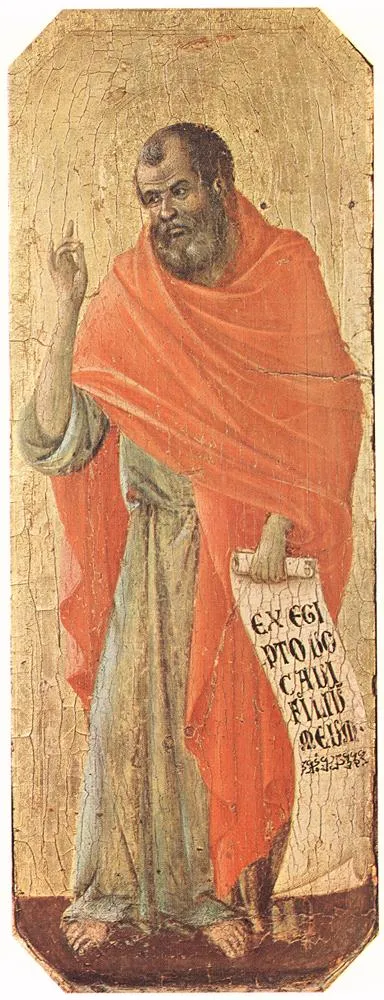
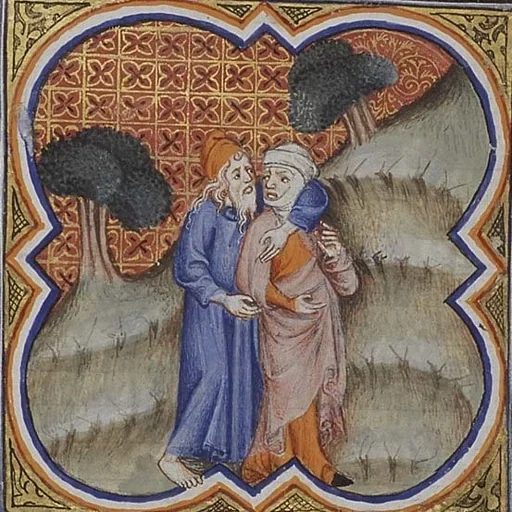
Hosea was a prophet whose own troubled marriage became a living picture of God’s faithful love for an unfaithful people.
Prophet of Faithful Love
8th century BC
Hosea was a prophet whose own troubled marriage became a living picture of God’s faithful love for an unfaithful people.
Follow the reading trailBEYOND THE NAME
Hosea prophesied in the northern kingdom of Israel during its final decades, when prosperity masked deep unfaithfulness to God. At the Lord’s command he married Gomer, whose wandering became a sign of how Israel had abandoned the God who loved her, and the names of their children carried messages of judgment and, beyond it, of mercy. Through this painful drama Hosea proclaimed a God whose love pursues even those who have turned away.
Themes in the authored commentary
FOLLOW THE PASSAGES
These are chapter studies associated with this record. Their order follows the books and chapters, rather than a reconstructed timeline of the person’s life.
prophet commanded by God to marry a promiscuous woman as a sign of Israel's unfaithfulness
The book of Hosea begins not with a sermon but with a marriage, and the marriage is the sermon. The word of the LORD comes to the prophet with a command that would mark his whole life: Go, take unto thee a wife of whoredoms and children of whoredoms: for the land hath committed great whoredom, departing from the LORD (v. 2). Israel had bound herself to God in covenant and then given herself to other gods, and the LORD now asks Hosea to carry that betrayal in his own household - to feel from the inside what it is to love one who will not be faithful. Hosea obeys. He takes Gomer to wife, and the sign begins to unfold in the children she bears.
Chapter overview from the authored study guide.the prophet through whom God's lawsuit against Israel and its priests is delivered
The first three chapters of Hosea were intensely personal - a prophet told to marry an unfaithful wife so that his own heartbreak might picture God’s. Now the lens widens. Hosea 4 opens the long indictment that fills the rest of the book, and it opens like a courtroom: Hear the word of the LORD, ye children of Israel: for the LORD hath a controversy with the inhabitants of the land (v. 1). The word controversy is a legal term - God is bringing a formal case against His people. But the charge is striking. Before a single sin is listed, three things are named as absent: there is no truth, nor mercy, nor knowledge of God in the land.
Chapter overview from the authored study guide.the prophet whose oracles call Israel to return and promise God's faithful love
After chapters of accusation, Hosea 6 opens on a surprising sound: the people calling one another home. Come, and let us return unto the LORD: for he hath torn, and he will heal us; he hath smitten, and he will bind us up (v. 1). They have grasped something true and deep about the God they have wounded - that the very hand that struck them is the hand that can make them whole, that His tearing was never the end of the story. And they reach for the highest hope they know: After two days will he revive us: in the third day he will raise us up, and we shall live in his sight (v. 2).
Chapter overview from the authored study guide.the prophet declaring the end of Israel's feasts and foretelling exile
For eight chapters Hosea has used the language of a broken marriage to describe Israel’s unfaithfulness to God. Now, in chapter 9, the warnings turn into a sentence handed down. It opens by forbidding the one thing the nation most wanted to do - celebrate: Rejoice not, O Israel, for joy, as other people: for thou hast gone a whoring from thy God (v. 1). Israel had been keeping the harvest feasts, but with a divided heart, thanking God at the threshingfloor while crediting the local fertility gods for the grain. So God strikes at the harvest itself: The floor and the winepress shall not feed them (v. 2).
Chapter overview from the authored study guide.the prophet through whom God speaks of his love for Israel as a father calling a son out of Egypt
After ten chapters of charge and lament, Hosea 11 changes register entirely. The LORD begins to speak as a father remembering a child: When Israel was a child, then I loved him, and called my son out of Egypt (v. 1). The exodus - the founding act of the nation’s life - is recalled here as the moment a father took a beloved son for his own. What follows is a memory of patient nurture: teaching the boy to walk, holding him up by their arms, healing him, drawing him with cords of a man, with bands of love (vv. 3-4). It is some of the most tender language in all the prophets, and it makes the betrayal that follows hurt all the more.
Chapter overview from the authored study guide.the prophet calling Israel to return with words of repentance and promising restoration
Hosea has spent thirteen chapters laying bare a heartbreak. A prophet was told to marry a woman who would betray him, and his ruined marriage became a living parable of the LORD’s grief over a people who kept running to other lovers - to idols of gold, to the protection of Assyria, to the strength of their own horses. The indictments have been severe and the warnings of ruin real. So the final chapter lands with surprising tenderness, opening with a closing invitation: O Israel, return unto the LORD thy God; for thou hast fallen by thine iniquity (v. 1).
Chapter overview from the authored study guide.THE PEOPLE AROUND THE PERSON
Recorded parents
Recorded spouses
Recorded children
Relationships follow the source graph. Some are interpretive or uncertain, and individual verse citations are not yet available for every connection.
STUDY & INTERPRETATION
Hosea ministered to a nation on the edge of collapse, calling Israel back from idolatry while the Assyrian shadow lengthened over the land. God told him to enact the divine heartbreak in his own household, loving a wife who strayed and reclaiming her, so that the whole book becomes a portrait of covenant love that refuses to let go. The children’s names move from judgment to a stunning reversal, where “not my people” are called “sons of the living God,” and where God promises to allure His people back into the wilderness and speak tenderly to them. This relentless, redeeming love, willing to seek and buy back the one who wandered, finds its fullest voice in the One who would come to seek and save the lost and call a scattered people His own.
From the Learn of Christ person commentary. Read alongside the linked Scripture passages.KEEP SCRIPTURE CLOSE
14 authored chapter guides feature this person. This is guide coverage, not an exhaustive count of biblical mentions.
ASK A BETTER QUESTION
Identity, story, early-life sources, family, and where to read.
Names and spellings in the source: Hosea · Osee
Hosea was a prophet whose own troubled marriage became a living picture of God’s faithful love for an unfaithful people.
Hosea prophesied in the northern kingdom of Israel during its final decades, when prosperity masked deep unfaithfulness to God. At the Lord’s command he married Gomer, whose wandering became a sign of how Israel had abandoned the God who loved her, and the names of their children carried messages of judgment and, beyond it, of mercy. Through this painful drama Hosea proclaimed a God whose love pursues even those who have turned away.
The individualized passage index associates this Hosea record with Hosea, Romans. There are 3 distinct indexed verse references in the 66-book Bible. Browse the book-by-book list below; it separates this identity from other people who share the name. Source assignments and textual identifications can require interpretation.
A separate childhood account for Hosea is not provided in our current authored profile sources. Begin with Hosea 1:1 and the passages linked here for the evidence that is available. The first indexed reference to a name is not a birth record. This profile does not establish a birth date, schooling, or childhood events beyond what its sources state.
Hosea’s source record lists Beeri (father), Gomer (spouse), Jezreel (child), Lo-ruhamah (child), Lo-ammi (child). These are source-graph relationships; legal family, uncertain identifications, and ancestral language require the cautions below. Individual verse evidence is not yet retained for every family edge.
Hosea ministered to a nation on the edge of collapse, calling Israel back from idolatry while the Assyrian shadow lengthened over the land. God told him to enact the divine heartbreak in his own household, loving a wife who strayed and reclaiming her, so that the whole book becomes a portrait of covenant love that refuses to let go.
Answers draw on our existing authored biography and linked chapter studies. Where supplied, verse assignments come from the individualized STEP Bible index. Childhood answers distinguish documented events from gaps in the available sources.
FIND THE PERSON IN THE TEXT
3 distinct verse references in the source’s 66-book index. These are indexed name assignments, rather than every indirect allusion to this person. A name may also refer to descendants, a tribe, or a nation; read each passage to distinguish that usage from the individual.
“The word of the LORD that came unto Hosea, the son of Beeri, in the days of Uzziah, Jotham, Ahaz, and Hezekiah, kings of Judah, and in the days of Jeroboam the son of Joash, king of Israel.”
Hosea 1:1 · King James Version
“The beginning of the word of the LORD by Hosea. And the LORD said to Hosea, Go, take unto thee a wife of whoredoms and children of whoredoms: for the land hath committed great whoredom, departing from the LORD.”
Hosea 1:2 · King James Version
“As he saith also in Osee, I will call them my people, which were not my people; and her beloved, which was not beloved.”
Romans 9:25 · King James Version
References are adapted from STEP Bible / Tyndale House TIPNR (CC BY 4.0). Deduplicated, matched to this identity, and checked against the bundled KJV’s verse bounds. Interpretive assignments and translation/versification differences may remain. This index is separate from evidence for individual family relationships.
YOUR OWN OBSERVATIONS
Notes, saved people, and study marks stay in this browser. They do not sync to your account.
KEEP EXPLORING
People featured in the same study guides. Sharing a chapter does not establish a family relationship.