Hosea 14
People in this chapter
Hosea has spent thirteen chapters laying bare a heartbreak. A prophet was told to marry a woman who would betray him, and his ruined marriage became a living parable of the LORD's grief over a people who kept running to other lovers - to idols of gold, to the protection of Assyria, to the strength of their own horses. The indictments have been severe and the warnings of ruin real. So the final chapter lands with surprising tenderness, opening with a closing invitation: O Israel, return unto the LORD thy God; for thou hast fallen by thine iniquity (v. 1).
The fall is named honestly - there is no pretending the wound away - but the word that follows it is return.1
Tap any highlighted phrase to jump to the commentary that unpacks it.
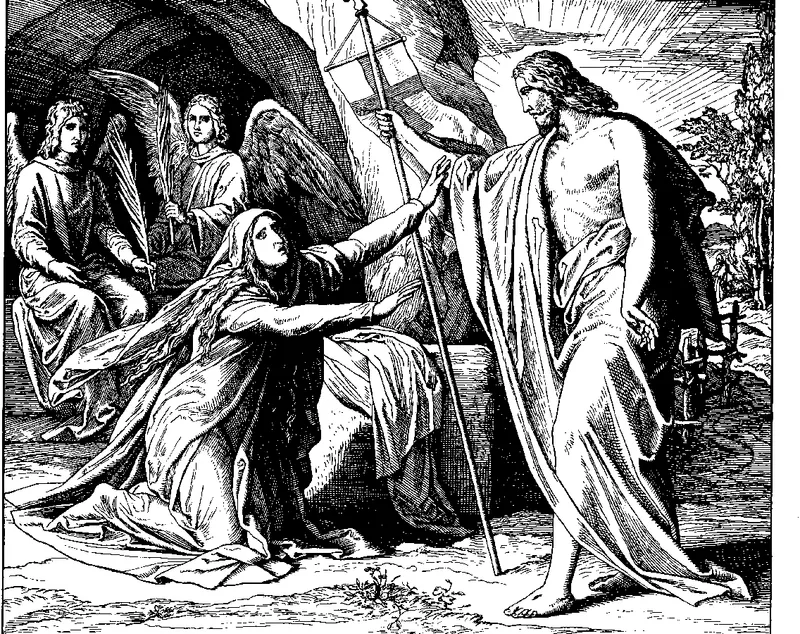
Hosea 14:1-3Take With You Words, and Turn to the LORD
1O Israel, return unto the LORD thy God; for thou hast fallen by thine iniquity. 2Take with you words, and turn to the LORD: say unto him, Take away all iniquity, and receive us graciously: so will we render the calves of our lips. 3Asshur shall not save us; we will not ride upon horses: neither will we say any more to the work of our hands, Ye are our gods: for in thee the fatherless findeth mercy.
After everything the book has charged against Israel, the final chapter opens not with a verdict but with an open hand: O Israel, return unto the LORD thy God; for thou hast fallen by thine iniquity (v. 1). The two halves of the verse must be held together. The fall is named without softening - thou hast fallen, and the cause is not bad luck or harsh fate but thine iniquity. Hosea will not let the people pretend the wound is anyone's fault but their own.
And yet the very first word out of the LORD's mouth, after all that has gone wrong, is return. The door He holds wide is the door He might justly have shut. This is the pattern of the whole book in a single line: an honest reckoning with sin, and then a summons home that is wider than the sin. The God who has been wronged is the same God who calls the wrongdoer back.
Repentance, in Hosea, does not begin with the sinner working up the nerve to approach; it begins with God calling.1
What the LORD asks them to bring is striking: simply words. Take with you words, and turn to the LORD (v. 2). And then - most tender of all - He supplies the words Himself, putting the prayer of repentance directly into their mouths: say unto him, Take away all iniquity, and receive us graciously. A people who had forgotten how to pray, who had spent their devotion on idols, are handed the exact sentence to say.
There is no demand that they first prove their sincerity or compose a worthy confession. The prayer is two plain petitions: take away what we have done, and receive us graciously, as a gift freely given. This is the heart of true return. It does not come bargaining or boasting; it comes empty-handed, asking for mercy it cannot deserve and trusting the One it asks. That God should script the prayer of the penitent before they can find the words tells you everything about the kind of God Hosea has been describing.
Real return shows itself in what the people lay down. The prayer of verse 2 is followed at once by a renouncing of every false refuge they had trusted instead of God: Asshur shall not save us; we will not ride upon horses: neither will we say any more to the work of our hands, Ye are our gods (v. 3). Three idols are named, and they are the three that recur all through Hosea.
Asshur - Assyria, the great power they had courted for protection - cannot save. Horses - military strength, the muscle of their own armies - will be leaned on no more. And the work of our hands, the gods they had literally manufactured, will no longer be called gods. To return to the LORD is, of necessity, to turn from these - you cannot trust Him and trust them at the same time. And in the place of every false security they confess a single true one: for in thee the fatherless findeth mercy. They come now as the fatherless come - with nothing to offer, no standing, no leverage, only need - and that, the verse says, is exactly the kind of person who finds mercy in God.
The empty-handed are the ones His mercy is for.
Hosea 14:4-8I Will Love Them Freely
4I will heal their backsliding, I will love them freely: for mine anger is turned away from him. 5I will be as the dew unto Israel: he shall grow as the lily, and cast forth his roots as Lebanon. 6His branches shall spread, and his beauty shall be as the olive tree, and his smell as Lebanon. 7They that dwell under his shadow shall return; they shall revive as the corn, and grow as the vine: the scent thereof shall be as the wine of Lebanon. 8Ephraim shall say, What have I to do any more with idols? I have heard him, and observed him: I am like a green fir tree. From me is thy fruit found.
Here is the answer to the prayer, and it is the high-water mark of the whole book: I will heal their backsliding, I will love them freely: for mine anger is turned away from him (v. 4). Weigh each clause. I will heal their backsliding - the very disease the book has diagnosed, the chronic bent toward turning away, God Himself undertakes to cure. They cannot heal it; He will. I will love them freely - and the little word freely carries the weight of the gospel.
It means lavishly, unconditionally, as a gift given with no price asked. And mine anger is turned away - the wrath the prophecy held out as real and just is now, toward the returning people, simply gone. Notice what this love is not based on. It is not Israel's improved performance; their return was itself something God called forth and even scripted. The love is grounded in God's own freedom to love. This is grace in its purest form: the wronged party, of His own will, healing and loving the one who wronged Him, and asking nothing first.
The book that opened with a husband's grief over an unfaithful wife ends with that same love poured out freely on the unfaithful.
What does such free love do to a ruined people? It brings them back to life, and Hosea reaches for the language of a garden in spring to say so. I will be as the dew unto Israel: he shall grow as the lily, and cast forth his roots as Lebanon (v. 5). The picture is exact and tender. In a dry land, dew is the quiet, nightly gift of life - it asks nothing, falls freely, and without it nothing green survives.
God will be that to His people. And under that grace the withered nation springs up: it blossoms quickly like the lily, yet sinks deep, stable roots like the great cedars of Lebanon - both sudden beauty and lasting strength. The images then spread outward and multiply: his branches shall spread, and his beauty shall be as the olive tree, and his smell as Lebanon (v. 6); they that dwell under his shadow shall return; they shall revive as the corn, and grow as the vine: the scent thereof shall be as the wine of Lebanon (v. 7).
Spreading branches, fragrant olive, reviving grain, growing vine, the very air sweet with the scent of the hills - everything here is growth, fruitfulness, and life shared with others who shelter in its shade. This is the opposite of the barrenness sin had brought. Grace does not merely forgive the past; it makes the forgiven flourish.
The healed people speak for themselves at last, and their words show that the cure has reached the heart: Ephraim shall say, What have I to do any more with idols? (v. 8). This is the whole book's longing fulfilled. The very people who could not stop running to idols now want nothing more to do with them, their hearts turned at last. I have heard him, and observed him, they say: they are listening to God now, and watching for Him, instead of consulting carved wood.
And then the LORD answers with a final image and a final, decisive word about where their new life comes from: I am like a green fir tree. From me is thy fruit found. An evergreen does not lose its life with the seasons; it stays green when everything else is bare. God offers Himself as that - the constant, living source. And the closing clause leaves no room for the people to take credit: from me is thy fruit found. All the lily's blossom and the vine's growth and the olive's fragrance - every bit of the fruitfulness of verses 5 through 7 - is traced back to its one true origin in Him. The grace that healed them is also the grace that bears fruit through them.
Hosea 14:9The Ways of the LORD Are Right
9Who is wise, and he shall understand these things? prudent, and he shall know them? for the ways of the LORD are right, and the just shall walk in them: but the transgressors shall fall therein.
The book closes with a single verse that steps back from Israel and turns to face the reader directly: Who is wise, and he shall understand these things? prudent, and he shall know them? (v. 9). It reads almost like the closing line of a book of wisdom rather than a prophet's oracle - and that is the point. Everything Hosea has shown - the broken marriage, the grieving God, the indictments, and now this flood of free grace - is set before the reader as something to be understood, taken to heart, acted on.
The question is gentle but searching: are you wise enough to grasp these things? Then the verse states the ground of it all: for the ways of the LORD are right. After everything - the severity and the mercy alike - the verdict on God's dealings is that they are right, straight, true. And the same road forks under the feet of two kinds of people: the just shall walk in them: but the transgressors shall fall therein. The identical ways of the LORD - the same grace, the same truth - become a path to walk for the one who receives them and a stone to stumble over for the one who refuses.
The free love held out in this chapter is not neutral. It asks for a response. And the closing line leaves the reader standing exactly where Israel stood at verse 1: invited to return, and faced with a choice.
Research trail
Sources & further study
These references support the historical, linguistic, manuscript, and contextual notes in this chapter. Scripture remains the primary text; external sources are provided so readers can inspect the research directly.
- Hosea 14 - Translators' NotesThe NET Bible's detailed footnotes on Hosea 14 - the call to return in verses 1-2, the renouncing of Assyria and idols in verse 3, the imagery of dew and lily and vine in verses 5-7, and the closing wisdom saying in verse 9 that turns the whole prophecy toward the reader.
- Hosea 14 · Hebrew + classical Jewish commentaryThe Hebrew text of Hosea 14 with Rashi, Ibn Ezra, and other classical commentators side by side - useful for the verb shuv (vv. 1-2, “return”), for nedavah (v. 4, the “freely” that means a freewill offering), and for the much-discussed phrase parim sefateinu (v. 3, the “calves of our lips”).
- Hosea 14 ↔ Romans 3 · Luke 15 · John 15 · Hebrews 13Traces the threads tying Hosea 14 to the rest of Scripture - the freely-given love of verse 4 read alongside justified freely by his grace (Rom. 3:24), the supplied prayer of verses 2-3 beside the father who runs to the returning son (Luke 15:20-24), and from me is thy fruit found (v. 8) beside the Vine apart from whom ye can do nothing (John 15:5).
Where this echoes in Scripture
Take With You Words, and Turn to the LORD
- Luke 15:20-22when he was yet a great way off, his father saw him, and had compassion, and ran... Bring forth the best robe, and put it on him.The prayer “receive us graciously” (v. 2) answered - the returning son met with the best robe and a feast.
- Joel 2:13turn unto the LORD your God: for he is gracious and merciful, slow to anger, and of great kindness.The same prophetic call to return as verse 1 - turning to a God known to be gracious.
- Hebrews 13:15let us offer the sacrifice of praise to God continually, that is, the fruit of our lips.The “calves of our lips” of verse 2 - praise offered in place of the bulls of the altar.
- Psalm 51:17The sacrifices of God are a broken spirit: a broken and a contrite heart, O God, thou wilt not despise.The empty-handed return of verse 3 - the offering God receives is the contrite heart, not the costly animal.
- John 6:37him that cometh to me I will in no wise cast out.The welcome implied in “receive us graciously” (v. 2) made a promise - no one who comes is turned away.
I Will Love Them Freely
- Romans 3:24Being justified freely by his grace through the redemption that is in Christ Jesus.The free love of verse 4 named by the apostle - the sinner set right freely, as a gift.
- John 15:4-5I am the vine, ye are the branches... without me ye can do nothing.The truth of verse 8 - “from me is thy fruit found” - pressed to its point: no fruit apart from the source.
- Romans 5:8while we were yet sinners, Christ died for us.The ground of God's free love (v. 4) - love poured out before, and not because of, any deserving.
- Ezekiel 36:25-27A new heart also will I give you... and cause you to walk in my statutes.The healed heart of verse 8 - the people who renounce idols because God Himself has changed them within.
- Psalm 1:3he shall be like a tree planted by the rivers of water, that bringeth forth his fruit in his season.The flourishing of verses 5-7 - the life that grows and bears when it is rooted in God.
The Ways of the LORD Are Right
- Psalm 107:43Whoso is wise, and will observe these things, even they shall understand the lovingkindness of the LORD.Almost the twin of verse 9 - the wise are those who take to heart the mercy of God.
- Deuteronomy 32:4He is the Rock, his work is perfect: for all his ways are judgment: a God of truth and without iniquity, just and right is he.The verdict of verse 9 - that the ways of the LORD are right - sounded over all His dealings.
- 1 Peter 2:7-8unto you therefore which believe he is precious: but... a stone of stumbling, and a rock of offence.The fork of verse 9 - the same way a path for the just and a stumbling for those who refuse it.
- Matthew 7:13-14strait is the gate, and narrow is the way, which leadeth unto life, and few there be that find it.The two destinies of verse 9 - the walking and the falling - set as two ways before every hearer.
- Proverbs 4:18-19the path of the just is as the shining light... The way of the wicked is as darkness: they know not at what they stumble.The same contrast as verse 9 - the just walking the way, the transgressors stumbling on it.