Who was The Angel of the Lord in the Bible?
The Angel of the LORD is the figure through whom God appears and speaks to people in Scripture.
Messenger of the LORD
The Angel of the LORD is the figure through whom God appears and speaks to people in Scripture.
Follow the reading trailBEYOND THE NAME
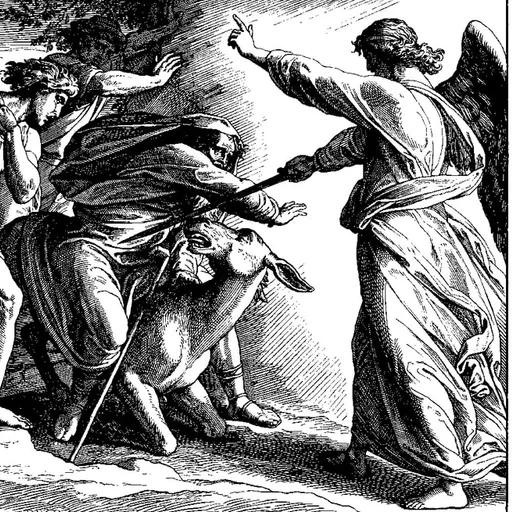
The Angel of the LORD appears across the Old Testament as the one through whom God makes Himself known, speaking and acting with the LORD’s own authority. In 1 Chronicles 21 this figure stands between heaven and earth with a drawn sword over Jerusalem during the plague, then commands Gad to tell David to raise an altar on Ornan’s threshing floor. Earlier He meets Hagar, Moses at the bush, Gideon, and others at pivotal moments.
Themes in the authored commentary
FOLLOW THE PASSAGES
These are chapter studies associated with this record. Their order follows the books and chapters, rather than a reconstructed timeline of the person’s life.
the messenger of the LORD who finds Hagar by a spring and announces Ishmael’s birth
Genesis 16 says Abram has lived ten years in Canaan. Sarai remains barren and gives Hagar, her Egyptian enslaved servant, to Abram as a wife. Hagar conceives; conflict and harsh treatment follow, and she flees into the wilderness.
Chapter overview from the authored study guide.appears to Moses in the flame of fire within the burning bush
Moses goes out with his father-in-law’s sheep and sees a bush burning without being consumed. From the bush God tells him He has heard Israel crying out under slavery and is sending him to Pharaoh.
Chapter overview from the authored study guide.appears at Bochim to rebuke Israel for breaking the covenant
A messenger of the LORD comes up from Gilgal to the place that will be named Bochim. After Israel crossed the Jordan, the people camped at Gilgal, were circumcised, and kept the Passover there. And an angel of the LORD came up from Gilgal to Bochim, and said, I made you to go up out of Egypt, and have brought you unto the land which I sware unto your fathers; and I said, I will never break my covenant with you. The messenger begins by reminding Israel of the promise the LORD made to their ancestors. Whatever has gone wrong, God has kept His word.
Chapter overview from the authored study guide.announces to Manoah's wife that she will bear a Nazirite son
When the children of Israel did evil again in the sight of the LORD, He hands them over to the Philistines for forty years (v. 1). The story then turns to Manoah’s household in Zorah. His wife is barren. The angel of the LORD appeared unto her and says she will have a son. He will be a Nazarite from the womb and shall begin to deliver Israel out of the hand of the Philistines (v. 5).
Chapter overview from the authored study guide.divine figure with whom Jacob strove and prevailed, as recalled in the oracle against Ephraim
Hosea has been pleading with a people who keep slipping away, and in chapter 12 he reaches for the oldest argument he has - their own father. But first he names the disease. Ephraim feedeth on wind, and followeth after the east wind (v. 1): the northern kingdom is chasing what can never hold a soul, the way a man might run after the hot desert blast and come back with empty arms. And it shows up in her politics - they do make a covenant with the Assyrians, and oil is carried into Egypt - playing the great powers off each other, buying protection from everyone except the God who alone can give it.
Chapter overview from the authored study guide.rolls back the stone from the tomb, announces that Jesus is risen, and instructs the women to tell the disciples
Matthew has carried his readers through the cross and the sealed, guarded tomb, and now the last chapter opens at first light: In the end of the sabbath, as it began to dawn toward the first day of the week, came Mary Magdalene and the other Mary to see the sepulchre (v. 1). What follows is told with restraint and awe. Behold, there was a great earthquake: for the angel of the Lord descended from heaven, and came and rolled back the stone from the door, and sat upon it (v. 2). His countenance is like lightning, his raiment white as snow, and the soldiers set to guard the dead shake for fear and become as dead men (vv. 3-4).
Chapter overview from the authored study guide.THE PEOPLE AROUND THE PERSON
Relationships follow the source graph. Some are interpretive or uncertain, and individual verse citations are not yet available for every connection.
STUDY & INTERPRETATION
Throughout the Hebrew Scriptures the Angel of the LORD carries a striking closeness to God Himself: He speaks as God, accepts worship, and is addressed as the LORD, yet is also sent and seen. In 1 Chronicles 21 He brings the census judgment to its turning point, his drawn sword withdrawn the moment David’s sacrifice is offered on the threshing floor that becomes the temple site. Readers across the centuries have pondered how directly this figure reveals God’s own presence, and many Christians have seen in these appearances a foreshadowing of how God would ultimately draw near. The fuller revelation comes in Jesus, in whom God’s presence dwells among His people, the One who stands between divine justice and mercy and turns the sword aside through His own sacrifice.
From the Learn of Christ person commentary. Read alongside the linked Scripture passages.KEEP SCRIPTURE CLOSE
15 authored chapter guides feature this person. This is guide coverage, not an exhaustive count of biblical mentions.
ASK A BETTER QUESTION
Identity, story, early-life sources, family, and where to read.
The Angel of the LORD is the figure through whom God appears and speaks to people in Scripture.
The Angel of the LORD appears across the Old Testament as the one through whom God makes Himself known, speaking and acting with the LORD’s own authority. In 1 Chronicles 21 this figure stands between heaven and earth with a drawn sword over Jerusalem during the plague, then commands Gad to tell David to raise an altar on Ornan’s threshing floor. Earlier He meets Hagar, Moses at the bush, Gideon, and others at pivotal moments.
Our authored studies connect The Angel of the Lord with Genesis, Exodus, Judges, Hosea, Matthew. The linked chapters provide reading context, not proof that an unnamed or inferred identity is explicitly named there. A verified, identity-specific verse index is not yet available for this record, so these chapter tags should not be treated as an exhaustive list of mentions.
The linked source context describes The Angel of the Lord within its biblical setting. Read their recorded role in context, and distinguish the narrative’s direct statements from theological interpretation or later traditions.
The current source graph does not list immediate family for The Angel of the Lord. That is a limit of this data, not evidence that The Angel of the Lord had no relatives. Read the cited passages for the details they actually give.
Throughout the Hebrew Scriptures the Angel of the LORD carries a striking closeness to God Himself: He speaks as God, accepts worship, and is addressed as the LORD, yet is also sent and seen. In 1 Chronicles 21 He brings the census judgment to its turning point, his drawn sword withdrawn the moment David’s sacrifice is offered on the threshing floor that becomes the temple site.
Answers draw on our existing authored biography and linked chapter studies. Where supplied, verse assignments come from the individualized STEP Bible index. Childhood answers distinguish documented events from gaps in the available sources.
YOUR OWN OBSERVATIONS
Notes, saved people, and study marks stay in this browser. They do not sync to your account.
KEEP EXPLORING
People featured in the same study guides. Sharing a chapter does not establish a family relationship.