Judges 13
People in this chapter
The book of Judges turns its familiar wheel one more time: the children of Israel did evil again in the sight of the LORD, and they are handed over - this time into the hand of the Philistines for forty years (v. 1). But the rescue this chapter announces begins in a field, with a woman who is barren, and with a visitor she does not at first understand.
The angel of the LORD appeared unto her, and told her she would conceive and bear a son who must be a Nazarite to God from the womb - and who shall begin to deliver Israel out of the hand of the Philistines (v. 5). The pattern is one Scripture returns to again and again: the deliverer comes through the opened womb, the answer arrives where no one was looking.1
Tap any highlighted phrase to jump to the commentary that unpacks it.
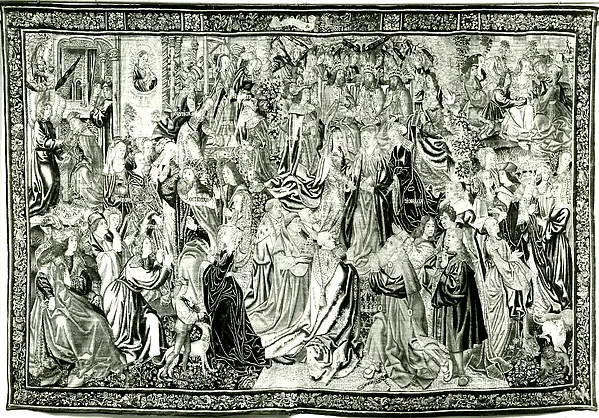
Judges 13:1-7A Son Set Apart from the Womb
1And the children of Israel did evil again in the sight of the LORD; and the LORD delivered them into the hand of the Philistines forty years. 2And there was a certain man of Zorah, of the family of the Danites, whose name was Manoah; and his wife was barren, and bare not. 3And the angel of the LORD appeared unto the woman, and said unto her, Behold now, thou art barren, and bearest not: but thou shalt conceive, and bear a son. 4Now therefore beware, I pray thee, and drink not wine nor strong drink, and eat not any unclean thing: 5For, lo, thou shalt conceive, and bear a son; and no razor shall come on his head: for the child shall be a Nazarite unto God from the womb: and he shall begin to deliver Israel out of the hand of the Philistines. 6Then the woman came and told her husband, saying, A man of God came unto me, and his countenance was like the countenance of an angel of God, very terrible: but I asked him not whence he was, neither told he me his name: 7But he said unto me, Behold, thou shalt conceive, and bear a son; and now drink no wine nor strong drink, neither eat any unclean thing: for the child shall be a Nazarite to God from the womb to the day of his death.
The chapter opens with the line that has tolled all through the book like a slow bell: And the children of Israel did evil again in the sight of the LORD (v. 1). The word that does the heavy work is again. This is a familiar failure - the same turning away, the same handing over, the same long stretch under an oppressor that Judges has narrated time after time.
This time the oppressor is the Philistines, and the term is forty years - longer than any servitude yet recorded in the book, and the round number Scripture so often attaches to seasons of testing and waiting. But notice what the chapter does not do. The usual pattern in Judges runs: the people sin, the LORD sells them into an enemy's hand, the people cry out, and the LORD raises up a deliverer.
Here there is no record of the people crying out. They have apparently settled into the captivity. And yet, unasked, God begins to move. The deliverance that follows is set in motion not because Israel pleaded for it but because the LORD purposed it. Grace, in this chapter, runs ahead of the cry.
Against that wide and weary backdrop the camera narrows to a single household in a single town: a certain man of Zorah, of the family of the Danites, whose name was Manoah; and his wife was barren, and bare not (v. 2).
The man is named; the woman, who will be the chapter's true protagonist, is not - she is known to us only as Manoah's wife, and yet it is to her the angel comes, to her the promise is given, and hers is the clear-eyed faith the story finally commends. Her barrenness is named twice over, barren, and bare not, the doubling pressing the finality of it.
And here the chapter joins a long and deliberate line. Sarah was barren, and Rebekah, and Rachel, and Hannah, and in time Elizabeth - and in every case the child at last given through an opened womb became God's answer to something far larger than one family's private sorrow. Barrenness, in Scripture, is the place God repeatedly chooses to begin, so that when the child comes everyone will know whose doing it was. An angel does not appear to announce an ordinary birth.
The terms laid on this child are unusual in their reach. No razor shall come on his head… for the child shall be a Nazarite unto God from the womb (v. 5), and the mother herself must keep part of the vow during the pregnancy - drink not wine nor strong drink, and eat not any unclean thing (v. 4).
The Nazarite separation, set out in Numbers 6, was ordinarily a vow an adult took on willingly for a season: abstaining from the fruit of the vine, leaving the hair uncut, avoiding contact with the dead. The uncut hair was the visible sign, a thing anyone could see and read. This child has the vow laid on him before he is born; it runs, the woman repeats, from the womb to the day of his death (v. 7). He is consecrated for life, set apart before he can take a step.
There is something to weigh in that. The deliverer Israel needs is set apart by God from the very beginning, marked out for a purpose he had no hand in establishing. The whole of his life is to be a kind of standing sign - a man visibly belonging to God in a land that had forgotten Him.1
Judges 13:8-18Why Askest Thou Thus After My Name?
8Then Manoah intreated the LORD, and said, O my Lord, let the man of God which thou didst send come again unto us, and teach us what we shall do unto the child that shall be born. 9And God hearkened to the voice of Manoah; and the angel of God came again unto the woman as she sat in the field: but Manoah her husband was not with her. 10And the woman made haste, and ran, and shewed her husband, and said unto him, Behold, the man hath appeared unto me, that came unto me the other day. 11And Manoah arose, and went after his wife, and came to the man, and said unto him, Art thou the man that spakest unto the woman? And he said, I am. 12And Manoah said, Now let thy words come to pass. How shall we order the child, and how shall we do unto him?
Manoah's response to his wife's report is one of the most appealing things about him: he prays. Then Manoah intreated the LORD, and said, O my Lord, let the man of God which thou didst send come again unto us, and teach us what we shall do unto the child that shall be born (v. 8). He does not doubt the word his wife brought him; he asks for more teaching. There is a humility in the prayer worth pausing over - he wants the visitor to come again, not to dazzle them further but to teach us what we shall do. He senses that something has been entrusted to them that is larger than they understand, and his instinct is to ask for instruction.
And the next line is quietly tender: And God hearkened to the voice of Manoah (v. 9). God listened. The prayer of an obscure man in an obscure town, asking only to be taught how to raise the child God was giving, moved heaven to answer. It is a small picture of a large truth: God does not despise the prayer that simply asks, teach me what to do.
There is a pattern running through this chapter that the narrator clearly wants us to see, and it surfaces again here. The angel comes the second time not to Manoah, who prayed, but once more to the woman as she sat in the field (v. 9) - and she must run and fetch her husband. Throughout, it is the woman who is addressed, who sees clearly, who remembers exactly.
When Manoah finally reaches the visitor his questions are practical and earnest: Now let thy words come to pass. How shall we order the child, and how shall we do unto him? (v. 12). He wants a manual, a method - how do we order this child, how do we get the raising of him right? It is an honest question and not a faithless one.
But the answer he receives gently redirects him. The angel returns to what was already said to the woman, telling Manoah that she is to keep what she has already been told. The implication is quiet but real: the word had already been given, in full, to the one who first received it. Manoah needed to trust that first word - and to listen to his wife.
13And the angel of the LORD said unto Manoah, Of all that I said unto the woman let her beware. 14She may not eat of any thing that cometh of the vine, neither let her drink wine or strong drink, nor eat any unclean thing: all that I commanded her let her observe. 15And Manoah said unto the angel of the LORD, I pray thee, let us detain thee, until we shall have made ready a kid for thee. 16And the angel of the LORD said unto Manoah, Though thou detain me, I will not eat of thy bread: and if thou wilt offer a burnt offering, thou must offer it unto the LORD. For Manoah knew not that he was an angel of the LORD. 17And Manoah said unto the angel of the LORD, What is thy name, that when thy sayings come to pass we may do thee honour? 18And the angel of the LORD said unto him, Why askest thou thus after my name, seeing it is secret?
Manoah, in the warm custom of his world, presses hospitality on the visitor: let us detain thee, until we shall have made ready a kid for thee (v. 15). He wants to feed this man of God, to honor him with a meal, perhaps to keep him a little longer. The reply draws a careful and important line: Though thou detain me, I will not eat of thy bread: and if thou wilt offer a burnt offering, thou must offer it unto the LORD (v. 16).
The visitor will not be hosted as a guest and will not take a meal from Manoah's hand. If anything is to be given, it must be offered up unto the LORD.
And then the narrator leans in to whisper the thing Manoah still has not grasped: For Manoah knew not that he was an angel of the LORD. The whole exchange is heavy with dramatic irony - Manoah keeps trying to treat as an honored stranger the very One before whom the offering belongs. How often that is exactly our position. We meet God in a conversation, a question asked at just the right moment, a turn of events we only later recognize, and we treat it as ordinary - offering hospitality where worship is what is called for, and understanding only afterward who it was we were speaking with.
Judges 13:19-25We Have Seen God
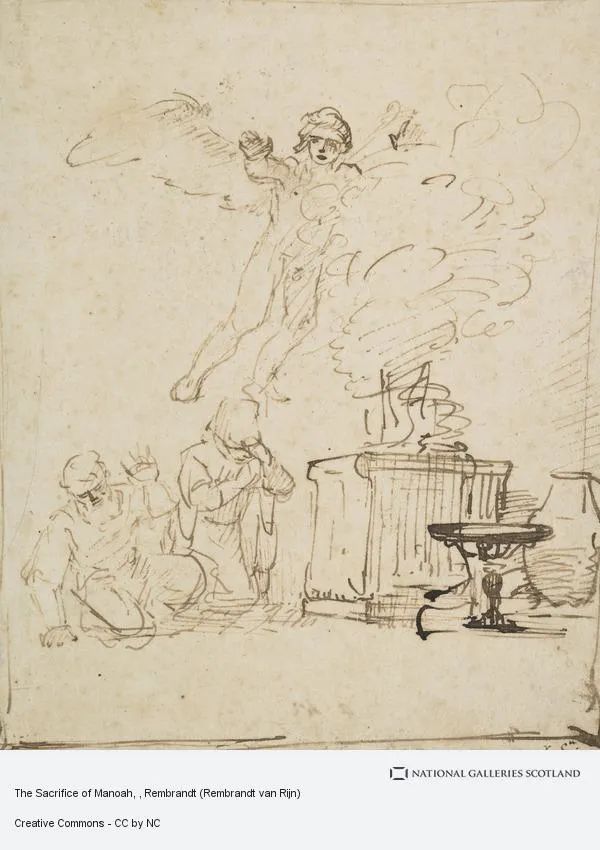
19So Manoah took a kid with a meat offering, and offered it upon a rock unto the LORD: and the angel did wonderously; and Manoah and his wife looked on. 20For it came to pass, when the flame went up toward heaven from off the altar, that the angel of the LORD ascended in the flame of the altar. And Manoah and his wife looked on it, and fell on their faces to the ground. 21But the angel of the LORD did no more appear to Manoah and to his wife. Then Manoah knew that he was an angel of the LORD.
Now the moment arrives that strips away every doubt about who has been speaking with them. Manoah does as he was told: he took a kid with a meat offering, and offered it upon a rock unto the LORD (v. 19). The rock becomes an altar; the offering goes up. And then the narrator records, almost too plainly, that the angel did wondrously - the same root, pala, that lay hidden in the wonderful name of verse 18 now breaks into the open as an act.
As the flame went up toward heaven from off the altar… the angel of the LORD ascended in the flame of the altar (v. 20). The messenger does not merely stand by while the sacrifice burns; He rises in the fire of it, going up with the flame toward heaven. This is no human man of God. A man does not ascend in the smoke of the offering he received.
Manoah and his wife, who had been speaking with Him as with an honored stranger, now see what they are in the presence of, and there is only one possible response: they fell on their faces to the ground. The whole exchange has been moving toward this prostration. What began as hospitality ends, as it always must, in worship.
When the flame dies down, the visitor is gone: the angel of the LORD did no more appear to Manoah and to his wife (v. 21). And only now, with the field empty and the rock still warm, does the understanding finally land: Then Manoah knew that he was an angel of the LORD. Throughout the chapter Manoah has been a step behind - asking, hosting, seeking a name, knowing not. The knowing comes last, and it comes through the offering and the ascent, through what was done and seen, with no explanation added.
There is a pattern here that holds true far beyond Manoah's field. So often we recognize that God was in a thing only afterward, looking back at the empty place where He stood - the conversation that changed our course, the door that opened or closed, the moment we now see was holy and did not see then. Recognition, in this chapter, is the fruit of the encounter, arriving only after the fire has gone. Manoah knew Whom he had met only once the flame had carried Him up out of sight.
22And Manoah said unto his wife, We shall surely die, because we have seen God. 23But his wife said unto him, If the LORD were pleased to kill us, he would not have received a burnt offering and a meat offering at our hands, neither would he have shewed us all these things, nor would as at this time have told us such things as these.
Manoah's first thought, the instant he understands, is dread: We shall surely die, because we have seen God (v. 22). And his fear is not irrational; it rests on something old and deep in Israel's understanding - that no one can look upon God and live, that the holy is so far above the sinful that to come too near it is to be consumed.
What is remarkable is the answer his wife gives, which is the steadiest and clearest reasoning in the whole chapter: If the LORD were pleased to kill us, he would not have received a burnt offering and a meat offering at our hands, neither would he have shewed us all these things, nor would as at this time have told us such things as these (v. 23).
Weigh what has actually happened, she says. He received our offering - would He have accepted it if He meant to destroy us? He shewed us all these things, He told us of the son to come - would He reveal a future to people He was about to kill? Her logic is as tender as it is sound: the very signs that terrify Manoah are themselves the proof of mercy. The accepted sacrifice, the gracious word, the promised child - these are the marks of a God who means them well: we have seen God and have been spared.
24And the woman bare a son, and called his name Samson: and the child grew, and the LORD blessed him. 25And the Spirit of the LORD began to move him at times in the camp of Dan between Zorah and Eshtaol.
The chapter ends as quietly as it began, on a growing boy and a stirring Spirit: the child grew, and the LORD blessed him. And the Spirit of the LORD began to move him at times in the camp of Dan between Zorah and Eshtaol (vv. 24-25). Two small words carry a great deal. The first is began - the same word as the angel's promise that Samson would begin to deliver Israel (v. 5). The deliverance and the Spirit's moving both begin here; neither is yet complete.
The second is at times. The Spirit moves him at times - an anointing that comes and stirs and will, as his story unfolds, also depart. It is worth marking honestly: the Spirit's moving in Samson is real but intermittent, and the man it moves will prove tragically unreliable even as the power proves genuine.
Yet the chapter closes on the first stirrings of grace - a child blessed, the Spirit beginning to move. Everything the rest of the story will struggle with is held back for now. Here, at the end, there is only a boy growing up in a small place between two towns, and the wind of God beginning, gently, to blow.
Research trail
Sources & further study
These references support the historical, linguistic, manuscript, and contextual notes in this chapter. Scripture remains the primary text; external sources are provided so readers can inspect the research directly.
- Judges 13 - Translators' NotesThe NET Bible's detailed footnotes on Judges 13 - the recurring identity of the angel of the LORD (vv. 3, 13, 15-21), the terms of the Nazarite separation given before birth (vv. 4-5, 14), the grammar and meaning of the “secret” name in verse 18, and the scene at the altar where the messenger ascends in the flame (vv. 19-21).
- Judges 13 · Hebrew + classical Jewish commentaryThe Hebrew text of Judges 13 with Rashi, Radak, and other classical commentators side by side - especially useful on nazir (v. 5, “Nazarite”, the separated one), on peliy (v. 18, the “secret” / “wonderful” name), and on the much-discussed question of how Manoah and his wife could see the angel of the LORD and yet live (vv. 21-23).
- Judges 13 ↔ Isaiah 9 · Luke 1 · Exodus 33 · John 1Traces the threads tying Judges 13 to the rest of Scripture - the “wonderful” name of verse 18 read beside his name shall be called Wonderful (Isa. 9:6), the birth announced to a barren woman (vv. 3-5) set next to the birth announced to a virgin (Luke 1:31-35), and Manoah's fear of seeing God (v. 22) held against there shall no man see me, and live (Exod. 33:20) and the One who declared the Father (John 1:18).
Where this echoes in Scripture
A Son Set Apart from the Womb
- Numbers 6:2-5When either man or woman shall separate themselves to vow a vow of a Nazarite... no razor shall come upon his head.The Nazarite separation laid on Samson in verses 4-5 - here taken up willingly by an adult; on him, given before birth.
- 1 Samuel 1:11I will give him unto the LORD all the days of his life, and there shall no razor come upon his head.Another barren woman, another son set apart - the same pattern as verses 2-5, Hannah's vow over Samuel.
- Luke 1:13-15thy wife Elisabeth shall bear thee a son... he shall drink neither wine nor strong drink; and he shall be filled with the Holy Ghost.A barren woman, an angel, a son separated from the womb - the announcement of John echoes verses 3-5 almost word for word.
- Matthew 1:21thou shalt call his name JESUS: for he shall save his people from their sins.The deliverance Samson only begins (v. 5), brought to completion - salvation reaching to sin itself.
- Hebrews 7:25he is able also to save them to the uttermost that come unto God by him, seeing he ever liveth.The contrast with verse 5 - where Samson begins and falls, this One saves completely and forever.
Why Askest Thou Thus After My Name?
- Genesis 32:29And Jacob asked him, and said, Tell me, I pray thee, thy name. And he said, Wherefore is it that thou dost ask after my name?The same withheld name - Jacob, wrestling at Peniel, asks and is turned aside just as Manoah is in verse 18.
- Isaiah 9:6unto us a son is given... and his name shall be called Wonderful, Counsellor, The mighty God.The word held back from Manoah as wonderful (v. 18) laid as the first name of the coming Child.
- Exodus 3:13-14And Moses said unto God... what is his name? what shall I say unto them? And God said unto Moses, I AM THAT I AM.A name asked at a divine appearing - here given as mystery rather than withheld, the counterpart to verses 17-18.
- John 10:36Say ye of him, whom the Father hath sanctified, and sent into the world, Thou blasphemest; because I said, I am the Son of God?The One set apart and sent - the pattern of the consecrated, sent deliverer that runs through this chapter.
- Philippians 2:9-10God also hath highly exalted him, and given him a name which is above every name.A name above every name - the wonderful name of verse 18 answered in the One whose name is highest of all.
We Have Seen God
- Exodus 33:20And he said, Thou canst not see my face: for there shall no man see me, and live.The fear behind Manoah's cry in verse 22 - the old truth that no one may look on God and live.
- Genesis 16:13And she called the name of the LORD that spake unto her, Thou God seest me... Have I also here looked after him that seeth me?Hagar, met by the angel of the LORD, names Him God and lives - the same wonder as verses 21-23.
- Judges 6:22-23Alas, O Lord GOD! for because I have seen an angel of the LORD face to face. And the LORD said unto him, Peace be unto thee; fear not: thou shalt not die.Gideon's identical terror, met with the same mercy - the pattern Manoah's wife reasons her way to in verse 23.
- John 1:14And the Word was made flesh, and dwelt among us, (and we beheld his glory, the glory as of the only begotten of the Father,) full of grace and truth.The dread of verse 22 answered - God drawing near so that His glory may be beheld and not bring death.
- John 1:18No man hath seen God at any time; the only begotten Son, which is in the bosom of the Father, he hath declared him.The truth Manoah felt (v. 22) and its resolution - the unseen God made known through the Son.