Judges 12
People in this chapter
Judges 121 opens on a complaint we have heard before in this book. The men of Ephraim gather, cross the Jordan, and confront Jephthah with a grievance: Wherefore passedst thou over to fight against the children of Ammon, and didst not call us to go with thee? They feel slighted, left out of a victory they wanted a share in. But this is not the only time Ephraim has come spoiling for credit.
They said almost the very same thing to Gideon a few chapters earlier - and the difference between how Gideon answered and how Jephthah answers is the hinge on which this whole chapter turns. Gideon gave a soft word and the anger melted. Jephthah does not.
Tap any highlighted phrase to jump to the commentary that unpacks it.
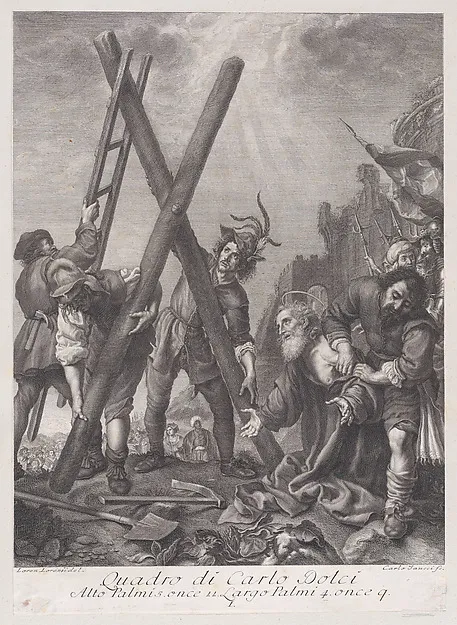
Judges 12:1-3Ephraim Threatens; Jephthah Answers
1And the men of Ephraim gathered themselves together, and went northward, and said unto Jephthah, Wherefore passedst thou over to fight against the children of Ammon, and didst not call us to go with thee? we will burn thine house upon thee with fire. 2And Jephthah said unto them, I and my people were at great strife with the children of Ammon; and when I called you, ye delivered me not out of their hands. 3And when I saw that ye delivered me not, I put my life in my hands, and passed over against the children of Ammon, and the LORD delivered them into my hand: wherefore then are ye come up unto me this day, to fight against me?
It is Ephraim again. A reader of Judges has met this complaint before, almost word for word. After Gideon's great victory over Midian, the men of Ephraim said unto him, Why hast thou served us thus, that thou calledst us not…? And they did chide with him sharply (Judg. 8:1). The grievance is identical: a battle was won, glory was gained, and Ephraim was not invited to share in it. There is a real wound underneath the bluster - the ache of being overlooked, of watching others honored for a fight you would gladly have joined.
But notice that Ephraim does not come to ask why they were left out; they come northward, mustered for war, to confront. The tribe that wanted to be included arrives in the posture least likely to be welcomed: armed, accusing, and demanding satisfaction. A felt slight, carried long enough and nursed hot enough, rarely seeks understanding. It seeks a fight.1
And then the threat that changes everything: we will burn thine house upon thee with fire. A vow to kill a man and his family in their own home - the very man who has just delivered Israel from the Ammonites at the risk of his own life. The disproportion is staggering. Ephraim was not invited to a battle; Ephraim's answer is to threaten to burn a deliverer alive. This is how offense escalates when it is fed instead of forgiven: the response always overshoots the injury.
A slight is met with a threat; a threat will soon be met with a sword. The men of Ephraim believe they are owed honor, and in their certainty that they have been wronged, they say something monstrous - and feel justified in saying it. That is the terrible logic of wounded pride. It convinces us that because we have been hurt, almost anything we do in return is fair.
Jephthah's reply is not a lie. When I called you, ye delivered me not out of their hands. By his account he did summon Ephraim, and Ephraim did not come; the help he needed was not given. So there is truth on his side too - he was left to fight alone and is now being blamed by the very people who would not stand with him. But set his answer beside Gideon's. When Ephraim chided Gideon, Gideon disarmed them with humility: What have I done now in comparison of you? Is not the gleaning of the grapes of Ephraim better than the vintage of Abi-ezer? - and their anger was abated (Judg. 8:2-3).
Gideon, who had every right to defend himself, chose instead to honor them, and the soft answer turned away wrath. Jephthah, who also has the facts on his side, chooses to press them. The facts are on his side - yet his refusal to absorb the offense the way Gideon did turns a chapter that might have ended in peace into one that ends in forty-two thousand graves.
There is real pathos in Jephthah's words: I put my life in my hands, and passed over against the children of Ammon. To put your life in your hands is to carry it where it can be lost - to go out to a battle you might not survive. He is reminding Ephraim that while they stayed home, he walked into the place of death, and only the LORD's deliverance brought him back. And so his closing question lands hard: wherefore then are ye come up unto me this day, to fight against me? The man who risked everything for the nation is now being threatened by part of the nation.
His grievance is genuine. Yet a true grievance, gripped tightly and answered in heat, does not stay a grievance for long. Both Ephraim and Jephthah have a case to make; both feel wronged; both are partly right. And being partly right, on both sides, is about to prove no protection at all against catastrophe.
Judges 12:4-6Civil War, and the Word at the Crossing
4Then Jephthah gathered together all the men of Gilead, and fought with Ephraim: and the men of Gilead smote Ephraim, because they said, Ye Gileadites are fugitives of Ephraim among the Ephraimites, and among the Manassites. 5And the Gileadites took the passages of Jordan before the Ephraimites: and it was so, that when those Ephraimites which were escaped said, Let me go over; that the men of Gilead said unto him, Art thou an Ephraimite? If he said, Nay; 6Then said they unto him, Say now Shibboleth: and he said Sibboleth: for he could not frame to pronounce it right. Then they took him, and slew him at the passages of Jordan: and there fell at that time of the Ephraimites forty and two thousand.
The war does not begin over the battle with Ammon at all; it begins over an insult. The Ephraimites taunt the Gileadites: Ye Gileadites are fugitives of Ephraim among the Ephraimites, and among the Manassites. The jab is that the men of Gilead are nobodies - runaways, leftovers, a displaced fragment of Ephraim with no standing of their own. It is contempt dressed as geography, a way of saying you are not even a real tribe; you are our castoffs. And it does what contempt is designed to do: it lands on the rawest nerve and provokes.
Jephthah gathered together all the men of Gilead, and fought with Ephraim. Now the sword that was raised against Ammon is turned inward. The tragedy has shifted from a quarrel over honor to open war between brothers, and the trigger was a sentence meant only to wound. Words that demean a person's worth - that reduce a whole people to fugitives - are never as cheap as they feel in the mouth. Here they cost a nation tens of thousands of its sons.
For he could not frame to pronounce it right. The phrase is almost gentle, and that is what makes it dreadful. The man cannot say it. His mouth was shaped by his homeland, and the sound simply will not come. He is condemned by an accident of birth, by the accent of the place that raised him - a thing no more a moral fault than the color of his eyes. And yet the Gileadites took him, and slew him at the passages of Jordan. Here is tribalism stripped to its naked logic: find the smallest difference, the most involuntary marker, and make it the dividing line between who lives and who dies.
It does not matter that the difference is trivial. It does not matter that the man cannot help it. The word is only the excuse; the real engine is the will to divide - the appetite, once brother has turned on brother, to seize on any pretext that lets the killing continue. A whole theology of cruelty fits inside one mispronounced syllable.
Judges 12:7Jephthah Judges Six Years and Dies
7And Jephthah judged Israel six years. Then died Jephthah the Gileadite, and was buried in one of the cities of Gilead.
A single verse closes Jephthah's story, and its brevity is its own verdict. And Jephthah judged Israel six years. Six - the shortest tenure of any of the major judges, against Gideon's forty and the long rests others won for the land. The narrator does not pause to praise him, does not record peace secured or worship restored, does not give him an epitaph. He simply died… and was buried in one of the cities of Gilead - the place not even named, as if the memory itself has gone dim.
There is a sober honesty in how Scripture remembers Jephthah. He was a true deliverer; the LORD did give Ammon into his hand, and the New Testament will name him among those who through faith… waxed valiant in fight (Heb. 11:32-34). And yet his final chapter is not triumph but tragedy - a deliverer whose hardest battle was against his own brothers, whose short reign ended with the blood of forty-two thousand Israelites between him and the tribe of Ephraim.
A man may be genuinely used by God and still leave behind a harvest of grief where there might have been peace. The six years are a quiet warning: gifting is not the same as wisdom, and victory over enemies is no guarantee of peace among brothers.
Judges 12:8-15Three Judges: Ibzan, Elon, and Abdon
8And after him Ibzan of Bethlehem judged Israel. 9And he had thirty sons, and thirty daughters, whom he sent abroad, and took in thirty daughters from abroad for his sons. And he judged Israel seven years. 10Then died Ibzan, and was buried at Bethlehem. 11And after him Elon, a Zebulonite, judged Israel; and he judged Israel ten years. 12And Elon the Zebulonite died, and was buried in Aijalon in the country of Zebulun. 13And after him Abdon the son of Hillel, a Pirathonite, judged Israel. 14And he had forty sons and thirty nephews, that rode on threescore and ten ass colts: and he judged Israel eight years. 15And Abdon the son of Hillel the Pirathonite died, and was buried in Pirathon in the land of Ephraim, in the mount of the Amalekites.
After the bloodshed, the narrative grows suddenly quiet and spare. Three judges are named in eight verses - Ibzan, Elon, Abdon - and what the text gives us is their families and the years they served. Of Ibzan of Bethlehem we are told only that he had thirty sons, and thirty daughters, and that he sent his daughters abroad and took in thirty daughters from abroad for his sons. This is the language of a man building a house through marriage - thirty alliances married out, thirty married in, a web of strategic connections binding clans together.
There is no enemy defeated here, no Spirit of the LORD rushing upon anyone, no cry to God and no deliverance. Just numbers: sons, daughters, years. After Jephthah's catastrophe it reads almost as relief - at least no one is dying - and yet something has thinned. The judges have become established men of substance, ruling through wealth and family and the quiet accumulation of standing, a long way from the charismatic deliverers raised up in Israel's extremity.
The drama is gone, and so, the narrator seems to imply, is something of the fire.
Elon the Zebulonite gets the barest notice of all: a name, a tribe, ten years, a burial place, and nothing more. No sons are counted, no deeds recorded, no word of God spoken or battle fought. And after him Elon, a Zebulonite, judged Israel; and he judged Israel ten years. Then he died and was buried. The very sparseness is telling. We have moved a long way from the opening chapters of Judges, where the Spirit came mightily and deliverers shook off the oppressor's yoke.
Now a man can judge Israel for a decade and leave behind no story at all - only the fact that the years passed and he held the office while they did. The land was apparently at peace under them. But peace without a story, leadership that leaves no trace beyond a tomb, is its own kind of quiet commentary on where Israel has arrived. The age of the judges is winding down toward its exhausted refrain: there was no king in Israel.
Abdon is the most prosperous of the three, and the text measures his standing in the same currency - offspring and display. He had forty sons and thirty nephews, that rode on threescore and ten ass colts. Seventy young men of one household, each mounted on his own donkey: a moving picture of wealth, fertility, and authority. To ride was a mark of rank, and to put seventy of your own kin on their own mounts was to parade a dynasty.
The number seventy echoes uneasily - Gideon also had seventy sons (Judg. 8:30), and that house ended in the bloodshed of Abimelech. Here there is no such collapse recorded; Abdon simply rules eight years and is buried in Pirathon. But the pattern is unmistakable across these closing verses: the judges have become patriarchs living like petty kings, their importance told in sons and saddles rather than in faith or deliverance. Israel keeps asking, in effect, for a king - and these men are a foretaste of what merely human kingship will look like: prosperous, dynastic, impressive to the eye, and spiritually thin.
The thing the people crave is already quietly arriving, and it is not enough.
A Closing Word - What the Mouth Reveals
One image lingers after the swords are still: a man at a river, undone by a single word on his lips. The Ephraimite could not hide who he was, because the moment he opened his mouth, his speech betrayed his origin. Scripture knows this is true of more than accents. The Lord Jesus said it plainly: out of the abundance of the heart the mouth speaketh (Matt. 12:34) - that what fills a heart will eventually surface on the tongue, and our words give away what we are far more reliably than any dialect.
The Gileadites used a word to expose a man's tribe and kill him; but there is a Word that exposes something deeper and does not come to destroy. For the word of God is quick, and powerful, and sharper than any twoedged sword… and is a discerner of the thoughts and intents of the heart (Heb. 4:12). At the fords of Jordan, exposure meant death; in the gospel, the One who discerns every hidden thing came to save the exposed.
The chapter that began with brothers devising a test to find who did not belong points us, in the end, to the King who tests the heart only to make it new - and who gathers the very people that pride and offense had scattered, that they all may be one.
Research trail
Sources & further study
These references support the historical, linguistic, manuscript, and contextual notes in this chapter. Scripture remains the primary text; external sources are provided so readers can inspect the research directly.
- Judges 12 - Translators' NotesThe NET Bible's detailed footnotes on Judges 12 - the geography of the fords of Jordan, the dialectal difference behind “Shibboleth” and “Sibboleth,” the staggering figure of forty-two thousand, and the spare formulaic notices that introduce the three judges Ibzan, Elon, and Abdon.
- Judges 12 · Hebrew + classical Jewish commentaryThe Hebrew text of Judges 12 with Rashi, Radak, and other classical commentators side by side - useful for shibboleth (v. 6, an ear of grain or a flowing stream, the password the Ephraimites could not pronounce) and for the verb 'avar (“to cross over, pass over”) that runs through the chapter at the Jordan passages.
- Judges 12 ↔ John 17 · Ephesians 2 · Galatians 5Traces the threads tying the civil bloodshed of Judges 12 - brother slaying brother over offense - to the New Testament longing for a people made one: that they all may be one (John 17:21), he is our peace, who hath made both one (Eph. 2:14), and the warning of if ye bite and devour one another (Gal. 5:15).
Where this echoes in Scripture
Ephraim Threatens; Jephthah Answers
- Judges 8:1-3And the men of Ephraim said unto him, Why hast thou served us thus… And he said unto them, What have I done now in comparison of you?… Then their anger was abated.The same complaint Gideon faced - answered with humility, and the wrath melted. The contrast that exposes Jephthah's heat.
- Proverbs 15:1A soft answer turneth away wrath: but grievous words stir up anger.The exact choice between Gideon and Jephthah - the soft word that heals against the grievous word that ignites.
- Ephesians 2:14For he is our peace, who hath made both one, and hath broken down the middle wall of partition between us.The dividing wall Jephthah could only widen - the breach among God's people that Christ came to tear down.
- Proverbs 17:14The beginning of strife is as when one letteth out water: therefore leave off contention, before it be meddled with.A trickle of offense becomes a flood - the precise course of Judges 12, from a complaint to a slaughter.
Civil War, and the Word at the Crossing
- John 17:21That they all may be one; as thou, Father, art in me, and I in thee, that they also may be one in us.The prayer the fords of Jordan cry out for - the oneness a divided people could never make for themselves.
- Galatians 5:15But if ye bite and devour one another, take heed that ye be not consumed one of another.A caption for Judges 12 - the people of God consuming the people of God, forty-two thousand devoured.
- James 3:5Even so the tongue is a little member, and boasteth great things. Behold, how great a matter a little fire kindleth!An insult (“fugitives of Ephraim”) and a syllable set a nation ablaze - how great a matter a little fire kindleth.
- Galatians 3:28There is neither Jew nor Greek, there is neither bond nor free… for ye are all one in Christ Jesus.The undoing of every shibboleth - the differences remain, but they no longer decide who belongs.
Jephthah Judges Six Years and Dies
- Hebrews 11:32-34And what shall I more say? for the time would fail me to tell of Gedeon, and of Barak, and of Samson, and of Jephthae… who through faith… waxed valiant in fight.Jephthah is honored for his faith in battle - yet Judges leaves the cost of his reign unhidden.
- Proverbs 18:19A brother offended is harder to be won than a strong city: and their contentions are like the bars of a castle.The wound Jephthah leaves behind - an offended brother-tribe, harder to win back than any walled city.
Three Judges: Ibzan, Elon, and Abdon
- Zechariah 9:9Behold, thy King cometh unto thee: he is just, and having salvation; lowly, and riding upon an ass, and upon a colt the foal of an ass.Abdon's seventy colts of display answered by the one colt of the King - the meekness of a kingship that serves.
- Matthew 21:5Tell ye the daughter of Sion, Behold, thy King cometh unto thee, meek, and sitting upon an ass, and a colt the foal of an ass.The true King the judges strained toward - entering His city in lowliness, needing only one colt.
- Judges 8:30And Gideon had threescore and ten sons of his body begotten: for he had many wives.The uneasy echo behind Abdon's seventy - Gideon's seventy sons ended in Abimelech's bloodshed.
- Judges 21:25In those days there was no king in Israel: every man did that which was right in his own eyes.The refrain the whole era is sliding toward - the void these prosperous, fading judges leave behind.
A Closing Word - What the Mouth Reveals
- Matthew 12:34O generation of vipers, how can ye, being evil, speak good things? for out of the abundance of the heart the mouth speaketh.A word on the lips gives a man away - the Shibboleth at the river deepened into the exposure of the heart.
- Hebrews 4:12For the word of God is quick, and powerful, and sharper than any twoedged sword… a discerner of the thoughts and intents of the heart.A sword that exposes the heart - wielded by the One who came to save the exposed.
- Luke 6:45For of the abundance of the heart his mouth speaketh.What fills the heart surfaces on the tongue - the deeper test no change of accent could ever pass.