Judges 11
People in this chapter
Jephthah the Gileadite enters the story carrying a label he did not choose: a mighty man of valour, yes - but also the son of an harlot. When his half-brothers came of age they thrust him out of his father's house with a verdict that sounded final: Thou shalt not inherit… for thou art the son of a strange woman (v. 2). He fled, and gathered to himself a company of restless men in the land of Tob.
His rise from that rejected place follows a pattern the Scriptures return to again and again: the deliverer is so often drawn from the very place that despised him.1
Tap any highlighted phrase to jump to the commentary that unpacks it.
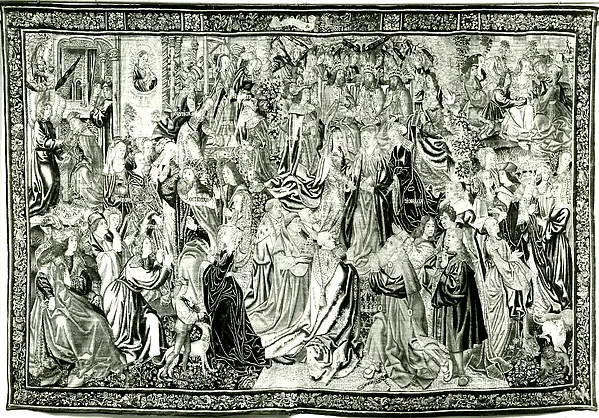
Judges 11:1-11Thou Shalt Not Inherit · Made Head and Captain
1Now Jephthah the Gileadite was a mighty man of valour, and he was the son of an harlot: and Gilead begat Jephthah. 2And Gilead’s wife bare him sons; and his wife’s sons grew up, and they thrust out Jephthah, and said unto him, Thou shalt not inherit in our father’s house; for thou art the son of a strange woman. 3Then Jephthah fled from his brethren, and dwelt in the land of Tob: and there were gathered vain men to Jephthah, and went out with him. 4And it came to pass in process of time, that the children of Ammon made war against Israel. 5And it was so, that when the children of Ammon made war against Israel, the elders of Gilead went to fetch Jephthah out of the land of Tob: 6And they said unto Jephthah, Come, and be our captain, that we may fight with the children of Ammon. 7And Jephthah said unto the elders of Gilead, Did not ye hate me, and expel me out of my father’s house? and why are ye come unto me now when ye are in distress? 8And the elders of Gilead said unto Jephthah, Therefore we turn again to thee now, that thou mayest go with us, and fight against the children of Ammon, and be our head over all the inhabitants of Gilead. 9And Jephthah said unto the elders of Gilead, If ye bring me home again to fight against the children of Ammon, and the LORD deliver them before me, shall I be your head? 10And the elders of Gilead said unto Jephthah, The LORD be witness between us, if we do not so according to thy words. 11Then Jephthah went with the elders of Gilead, and the people made him head and captain over them: and Jephthah uttered all his words before the LORD in Mizpeh.
The story begins by naming, in a single breath, the two things that will pull against each other through the whole chapter: Now Jephthah the Gileadite was a mighty man of valour, and he was the son of an harlot (v. 1). He is genuinely capable - a man of strength and standing in the field - and he is genuinely marked, his birth held against him as a permanent stain. When his half-brothers came of age, they made the stain official: they thrust out Jephthah, and said unto him, Thou shalt not inherit in our father's house; for thou art the son of a strange woman (v. 2).
The verdict was not about anything he had done; it was about where he came from. He was disqualified by his origin. So he fled from his brethren and settled in the land of Tob, where a company of vain men - the restless, the displaced, men with nothing to lose - gathered to him and made him their leader (v. 3). It is the same shape we meet elsewhere in Scripture: the one cast out by his own becomes, in the wilderness, a captain of the desperate.
The place of rejection is quietly becoming the place of his making.1
Then the world turns. The children of Ammon made war against Israel (v. 4), and suddenly the despised man is the indispensable one. The elders of Gilead - the leaders of the very community that had stood by while he was driven out - went to fetch Jephthah out of the land of Tob (v. 5) and asked him to be their captain. Jephthah does not pretend the past did not happen. He presses the wound, plainly and without rage: Did not ye hate me, and expel me out of my father's house? and why are ye come unto me now when ye are in distress? (v. 7).
It is an honest question, and a fair one. The men who decided he was worth nothing now need him precisely because of what he is. There is no bitterness that closes the door - he hears them out - but there is no pretending either. He makes them say out loud what they want and what they will give, and he will not move on a vague promise. The exchange is a small study in dealing with people who dismissed you and have come back only because they need you: he neither nurses the grudge nor lets them off the hook.
The elders meet his terms and raise them: not merely captain for the campaign, but head over all the inhabitants of Gilead (v. 8). Jephthah pins it down with an oath, naming the LORD as the one who must give the victory and the one who witnesses the deal: The LORD be witness between us (v. 10). Then it is done: the people made him head and captain over them: and Jephthah uttered all his words before the LORD in Mizpeh (v. 11).
Everything that was denied him at the start - inheritance, honor, a place in his father's house - is now handed to him in full and more. The son who could not inherit a single field is made head of the whole region. But notice where it all happens: before the LORD in Mizpeh. Jephthah brings the matter into God's presence; he speaks his words before the LORD. That instinct - to set things before God - is the right one.
It will also, before the chapter is done, become the very ground of his undoing, for words spoken before the LORD are not lightly taken back.
Judges 11:12-28The Reasoned Message · The LORD the Judge Be Judge
12And Jephthah sent messengers unto the king of the children of Ammon, saying, What hast thou to do with me, that thou art come against me to fight in my land? 13And the king of the children of Ammon answered unto the messengers of Jephthah, Because Israel took away my land, when they came up out of Egypt, from Arnon even unto Jabbok, and unto Jordan: now therefore restore those lands again peaceably. 14And Jephthah sent messengers again unto the king of the children of Ammon: 15And said unto him, Thus saith Jephthah, Israel took not away the land of Moab, nor the land of the children of Ammon: 16But when Israel came up from Egypt, and walked through the wilderness unto the Red sea, and came to Kadesh; 17Then Israel sent messengers unto the king of Edom, saying, Let me, I pray thee, pass through thy land: but the king of Edom would not hearken thereto. And in like manner they sent unto the king of Moab: but he would not consent: and Israel abode in Kadesh.
Before Jephthah marshals an army he sends a message, and the message is striking for what it is: a careful argument, point by point. What hast thou to do with me, that thou art come against me to fight in my land? (v. 12). He asks Ammon to state the grievance - and Ammon does: Because Israel took away my land, when they came up out of Egypt… now therefore restore those lands again peaceably (v. 13).
Here is a man of war who first tries reason, who would rather settle the dispute with the truth than with the sword. That instinct is worth pausing over. The deliverers of Israel were not only strong arms; some, like Jephthah here, were careful minds who knew the history and could make a case. He answers the claim head-on: Israel took not away the land of Moab, nor the land of the children of Ammon (v. 15).
Then he begins to walk the king back through the record, step by step - how Israel, coming up from Egypt, asked Edom for passage and was refused, asked Moab and was refused, and so abode in Kadesh rather than force a way through (vv. 16-17). He is building a case from the facts, laying them out plainly.
18Then they went along through the wilderness, and compassed the land of Edom, and the land of Moab, and came by the east side of the land of Moab, and pitched on the other side of Arnon, but came not within the border of Moab: for Arnon was the border of Moab. 19And Israel sent messengers unto Sihon king of the Amorites, the king of Heshbon; and Israel said unto him, Let us pass, we pray thee, through thy land into my place. 20But Sihon trusted not Israel to pass through his coast: but Sihon gathered all his people together, and pitched in Jahaz, and fought against Israel. 21And the LORD God of Israel delivered Sihon and all his people into the hand of Israel, and they smote them: so Israel possessed all the land of the Amorites, the inhabitants of that country. 22And they possessed all the coasts of the Amorites, from Arnon even unto Jabbok, and from the wilderness even unto Jordan. 23So now the LORD God of Israel hath dispossessed the Amorites from before his people Israel, and shouldest thou possess it?
The heart of Jephthah's argument is a careful piece of history. Israel did not seize Moab's land or Ammon's land at all. Coming up from Egypt, they went around Edom and Moab, respecting those borders, and came not within the border of Moab (v. 18). The land in dispute had belonged to neither Ammon nor Moab when Israel arrived - it belonged to Sihon king of the Amorites (v. 19). Israel asked Sihon, too, for peaceful passage; it was Sihon who refused, who gathered all his people together… and fought against Israel (v. 20).
Only then, in a war Sihon started, did Israel take his land - and even here Jephthah names the true cause: the LORD God of Israel delivered Sihon and all his people into the hand of Israel (v. 21). This is the spine of the whole case. The land was not stolen from Ammon; it was won from an Amorite king who attacked first, and it was the LORD who gave it. So Jephthah presses the point home: So now the LORD God of Israel hath dispossessed the Amorites from before his people Israel, and shouldest thou possess it? (v. 23).
What God Himself has granted, Ammon now claims with no right.
24Wilt not thou possess that which Chemosh thy god giveth thee to possess? So whomsoever the LORD our God shall drive out from before us, them will we possess. 25And now art thou any thing better than Balak the son of Zippor, king of Moab? did he ever strive against Israel, or did he ever fight against them, 26While Israel dwelt in Heshbon and her towns, and in Aroer and her towns, and in all the cities that be along by the coasts of Arnon, three hundred years? why therefore did ye not recover them within that time? 27Wherefore I have not sinned against thee, but thou doest me wrong to war against me: the LORD the Judge be judge this day between the children of Israel and the children of Ammon. 28Howbeit the king of the children of Ammon hearkened not unto the words of Jephthah which he sent him.
Jephthah closes the argument with two shrewd thrusts. First he meets Ammon on their own terms: Wilt not thou possess that which Chemosh thy god giveth thee to possess? (v. 24) - if you reckon your land as the gift of your god, then grant that we hold ours as the gift of ours. He accepts Ammon's own framework and shows them that even by their own logic the dispute is settled, while quietly setting the living LORD over against a god who gives nothing.
Then comes the argument from time: in the three hundred years since Israel settled in Heshbon and Aroer and the cities along the Arnon, why did no one come to claim them back? (vv. 25-26). If the claim were just, why wait three centuries until Israel looked weak? A right not pressed for three hundred years is not really the point; this war is about opportunity, not justice. Having made his case as far as reason can go, Jephthah does the most important thing of all - he hands the verdict to a higher court: the LORD the Judge be judge this day between the children of Israel and the children of Ammon (v. 27).
He has argued; now he appeals past the argument to God. And the king of Ammon hearkened not (v. 28). Some men will not hear the truth however plainly it is set before them, and then the matter must indeed pass to the Judge.
Judges 11:29-40I Will Offer It Up · His Only Child
29Then the Spirit of the LORD came upon Jephthah, and he passed over Gilead, and Manasseh, and passed over Mizpeh of Gilead, and from Mizpeh of Gilead he passed over unto the children of Ammon. 30And Jephthah vowed a vow unto the LORD, and said, If thou shalt without fail deliver the children of Ammon into mine hands, 31Then it shall be, that whatsoever cometh forth of the doors of my house to meet me, when I return in peace from the children of Ammon, shall surely be the LORD’s, and I will offer it up for a burnt offering. 32So Jephthah passed over unto the children of Ammon to fight against them; and the LORD delivered them into his hands. 33And he smote them from Aroer, even till thou come to Minnith, even twenty cities, and unto the plain of the vineyards, with a very great slaughter. Thus the children of Ammon were subdued before the children of Israel.
Two things happen in close succession, and the order matters. First: the Spirit of the LORD came upon Jephthah (v. 29). The same empowering presence that had rested on Othniel and Gideon and would rest on Samson came to him, and under it he moved through the territories and advanced on Ammon. The Spirit was given; the victory was already as good as won. And then, in that very surge of the moment, Jephthah did something the Spirit did not require and the text does not praise: he vowed a vow unto the LORD (v. 30).
Read his words carefully, because everything turns on them: whatsoever cometh forth of the doors of my house to meet me, when I return in peace… shall surely be the LORD's, and I will offer it up for a burnt offering (v. 31). It was a bargain struck in the heat of zeal - an attempt to secure with a promise what God had already begun to give. Nothing compelled it. The LORD had not asked for it.
Jephthah opened his mouth on his own, in the fervor of the hour, and bound himself with words whose cost he had not begun to count.1
The phrasing of the vow is the seed of the tragedy: whatsoever cometh forth of the doors of my house to meet me. What did Jephthah picture? Some have supposed he expected an animal - but houses in that world did not stable beasts in a way that would send them out the door to greet a returning master, and the language (to meet me, in peace) is the language of a welcome, of someone coming out gladly.
He seems to have flung the vow wide without weighing what whatsoever might mean. And so the bargain was sealed and the battle joined: the LORD delivered them into his hands (v. 32). The victory was total - twenty cities, a very great slaughter, Ammon subdued (v. 33). Jephthah had everything he had fought for. But the same triumph that crowned him bound him, for now the vow stood and waited at the door of his own house.
Here the chapter asks us to hold two truths at once: that the LORD truly gave the victory, and that the LORD never asked for the price Jephthah had rashly attached to it. The deliverance was God's; the vow was Jephthah's own.
34And Jephthah came to Mizpeh unto his house, and, behold, his daughter came out to meet him with timbrels and with dances: and she was his only child; beside her he had neither son nor daughter. 35And it came to pass, when he saw her, that he rent his clothes, and said, Alas, my daughter! thou hast brought me very low, and thou art one of them that trouble me: for I have opened my mouth unto the LORD, and I cannot go back. 36And she said unto him, My father, if thou hast opened thy mouth unto the LORD, do to me according to that which hath proceeded out of thy mouth; forasmuch as the LORD hath taken vengeance for thee of thine enemies, even of the children of Ammon. 37And she said unto her father, Let this thing be done for me: let me alone two months, that I may go up and down upon the mountains, and bewail my virginity, I and my fellows. 38And he said, Go. And he sent her away for two months: and she went with her companions, and bewailed her virginity upon the mountains.
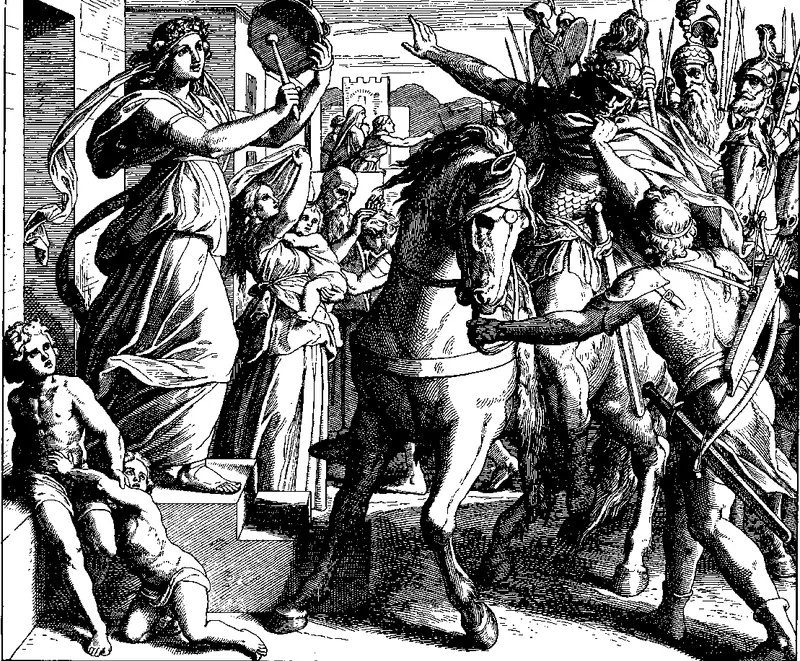
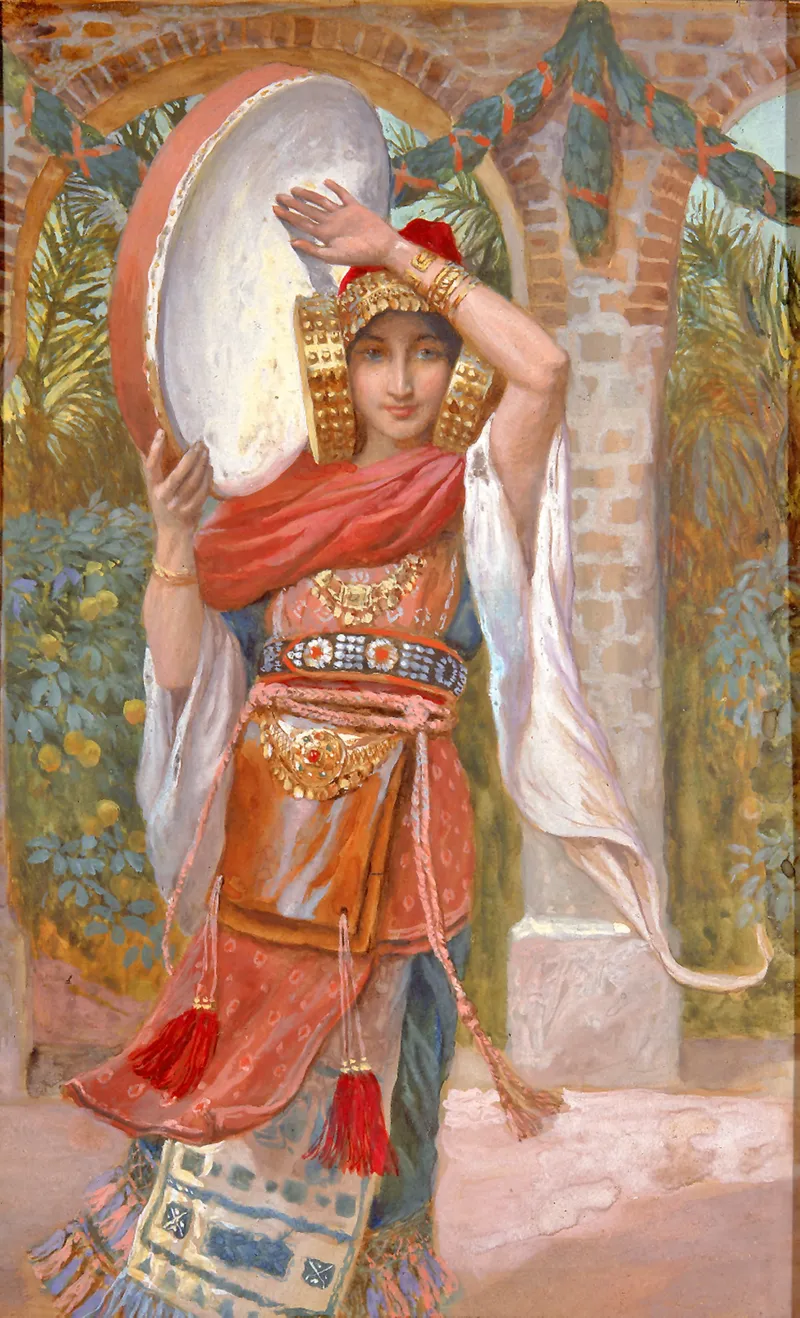
The homecoming is written to break the reader's heart. Jephthah returns victorious to Mizpeh, and the first one through the door is the one he loves most: his daughter came out to meet him with timbrels and with dances. She comes the way Israel's women came to greet returning victors - with music and joy, celebrating her father's triumph. And then the line that turns celebration to dread: she was his only child; beside her he had neither son nor daughter (v. 34).
All his hope, his whole future, his one beloved child - and she is the one at the door. When he sees her, he rent his clothes, the ancient sign of unbearable grief, and cried out: Alas, my daughter! thou hast brought me very low… for I have opened my mouth unto the LORD, and I cannot go back (v. 35). The man who had been so deft with words - who could argue history and pin down an oath and out-reason a king - is undone by his own mouth.
He had bound himself, and now the binding falls not on him but on her. There is a hard lesson under the grief: rash words do not always wound the one who speaks them. Often the cost falls heaviest on someone we love.
Her answer is one of the most remarkable speeches given to anyone in the book. She does not rage, does not plead for escape, does not accuse her father of the wrong he has done her. She says: My father, if thou hast opened thy mouth unto the LORD, do to me according to that which hath proceeded out of thy mouth; forasmuch as the LORD hath taken vengeance for thee of thine enemies (v. 36).
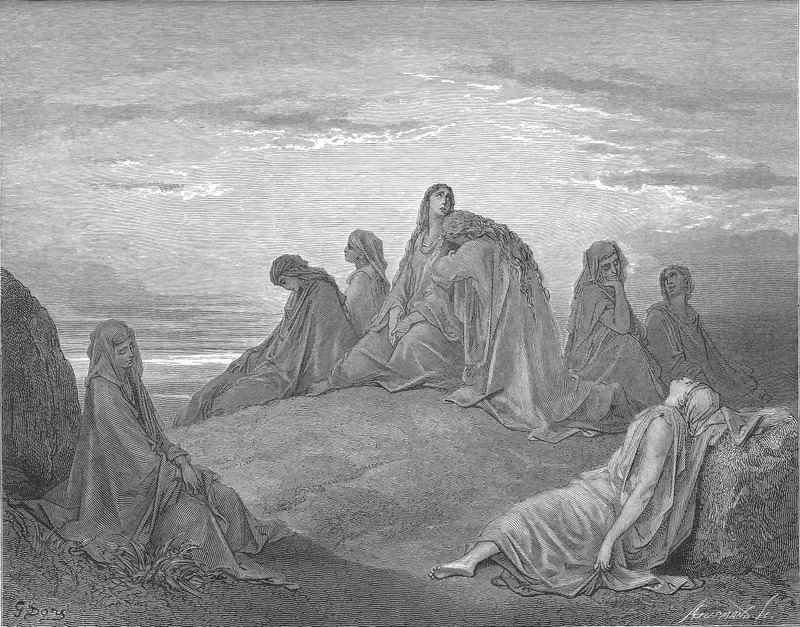
She submits - honoring her father's word and the LORD's deliverance - though the wrong was never hers and the vow was never wise. She asks one thing: let me alone two months, that I may go up and down upon the mountains, and bewail my virginity, I and my fellows (v. 37). It is a grief worth understanding. In her world, to die or be set apart without marriage and children was to lose the whole expected shape of a woman's life - the husband she would never have, the children she would never bear, the future now unmade.
So she goes into the mountains with her companions to mourn not merely an ending but a life that will never be lived (v. 38). Her dignity in this hour rises above her father's. He spoke rashly; she suffers faithfully. The chapter quietly honors her.
39And it came to pass at the end of two months, that she returned unto her father, who did with her according to his vow which he had vowed: and she knew no man. And it was a custom in Israel, 40That the daughters of Israel went yearly to lament the daughter of Jephthah the Gileadite four days in a year.
After the two months she returns, and the text states the outcome with a restraint that has weighed on readers ever since: her father… did with her according to his vow which he had vowed: and she knew no man (v. 39). The narrator does not describe the act; he draws a curtain over it and leaves it for the reader's conscience to bear. And here the text itself leaves room for more than one reading, and honesty requires that we let it.
On the one hand, the vow was framed as a burnt offering (v. 31), and many have understood the chapter to record exactly that - a daughter put to death, a horror the LORD forbade, the bitterest possible fruit of a rash oath. On the other hand, the line the narrator chooses to add - and she knew no man - together with her bewailing not her death but her virginity (vv. 37-38), has led others to read it differently: that she was devoted to the LORD in perpetual virginity and lifelong service, set apart and never to marry, a living offering rather than a slain one.
The Hebrew of verse 31 can even be read as shall surely be the LORD's, or I will offer it up. The text genuinely sustains both readings, and it does not finally settle the question for us. What it will not allow is the one conclusion both readings reject: that the LORD asked for this, or was pleased by it. The vow was Jephthah's; the deliverance alone was God's.2
The chapter does not close in silence, and that is its final mercy: it was a custom in Israel, that the daughters of Israel went yearly to lament the daughter of Jephthah the Gileadite four days in a year (vv. 39-40). Her name is never given - Scripture does not record it - but her grief was not let fall and forgotten. It was taken up by the whole community of the daughters of Israel and made a yearly remembrance, four days every year, generation after generation.
They went up, as she had gone up, into the mountains to mourn. There is something quietly important in that. A loss that no one should ever have had to bear was not erased, not hushed up, not waved away as the unfortunate price of a great victory. It was named, witnessed, and held in shared memory. The pain was not made less real by being remembered; it was honored by it. The book of Judges is full of triumphs that ring hollow, and here is one of them - a great deliverance shadowed by a needless loss - and the women of Israel refused to let the shadow go unmourned.
They kept her. The chapter ends not with a trophy but with a lament that would not die.
Research trail
Sources & further study
These references support the historical, linguistic, manuscript, and contextual notes in this chapter. Scripture remains the primary text; external sources are provided so readers can inspect the research directly.
- Judges 11 - Translators' NotesThe NET Bible's detailed footnotes on Judges 11 - the social standing of the son of an harlot (vv. 1-2), the legal and diplomatic shape of Jephthah's message to Ammon (vv. 12-27), the grammar of the fateful vow in verses 30-31, and the long-debated question of what verse 39 actually says happened.
- Judges 11 · Hebrew + classical Jewish commentaryThe Hebrew text of Judges 11 with Rashi, Radak, and other classical commentators side by side - especially useful on neder (vv. 30, 39, the binding “vow”), on the agonized debate over what Jephthah did with her according to his vow (v. 39), and on the strange verb in verse 40 (tanah) describing the yearly remembrance of his daughter.
- Judges 11 ↔ Hebrews 11 · Psalm 118 · Leviticus 18 · Genesis 22Traces the threads tying Judges 11 to the rest of Scripture - the rejected son made head (vv. 1-11) read beside the rejected stone become the head of the corner (Ps. 118:22), Jephthah named among the faithful (Heb. 11:32), and his vow (vv. 30-31) set against the law that forbade child sacrifice (Lev. 18:21; Deut. 12:31) and the binding nature of vows (Num. 30; Eccl. 5:4-6).
Where this echoes in Scripture
Thou Shalt Not Inherit · Made Head and Captain
- Psalm 118:22The stone which the builders refused is become the head stone of the corner.The pattern of verses 1-11 - the rejected one raised to be the head - applied by the Gospels to Christ.
- Hebrews 11:32-34And what shall I more say? for the time would fail me to tell of Gedeon, and of Barak, and of Samson, and of Jephthae... who through faith subdued kingdoms.Jephthah named by name in the roll of faith - honored for his faith (vv. 9-11) though not for all that followed.
- 1 Samuel 22:1-2every one that was in distress, and every one that was in debt... gathered themselves unto him; and he became a captain over them.The same picture as verse 3 - the rejected man becoming captain of the displaced and desperate.
- Isaiah 53:3He is despised and rejected of men; a man of sorrows, and acquainted with grief.The rejection of verses 1-2 echoed in the One who would be despised by His own.
- John 1:11He came unto his own, and his own received him not.Jephthah cast out by his brethren (v. 2) - a shadow of the Son not received by His own.
The Reasoned Message · The LORD the Judge Be Judge
- Numbers 21:21-24And Israel sent messengers unto Sihon king of the Amorites... and Israel smote him with the edge of the sword, and possessed his land.The history Jephthah recounts in verses 19-22 - the original account of the war Sihon began and lost.
- Genesis 18:25Shall not the Judge of all the earth do right?The same appeal as verse 27 - trusting the dispute to the God who judges rightly.
- Deuteronomy 2:9Distress not the Moabites, neither contend with them in battle: for I will not give thee of their land for a possession.Why Israel went around Moab (vv. 17-18) - the LORD had forbidden them that land, confirming Jephthah's case.
- John 5:22For the Father judgeth no man, but hath committed all judgment unto the Son.The LORD the Judge of verse 27 - the judgment finally committed to the Son.
- Romans 12:19Avenge not yourselves... for it is written, Vengeance is mine; I will repay, saith the Lord.The posture of verse 27 - making one's case honestly, then entrusting the verdict to God.
I Will Offer It Up · His Only Child
- Ecclesiastes 5:2-6Be not rash with thy mouth... when thou vowest a vow unto God, defer not to pay it... Better is it that thou shouldest not vow.The exact warning Jephthah needed before verse 30 - the peril of the rash vow he made.
- Numbers 30:2If a man vow a vow unto the LORD... he shall not break his word, he shall do according to all that proceedeth out of his mouth.The binding weight of the vow (v. 35) - why Jephthah felt he could not go back.
- Deuteronomy 12:31for every abomination to the LORD, which he hateth, have they done unto their gods; for even their sons and their daughters they have burnt in the fire.The plain proof that the LORD never required Jephthah's vow (vv. 30-31) - He forbade such offerings outright.
- Romans 8:32He that spared not his own Son, but delivered him up for us all, how shall he not with him also freely give us all things?The bright contrast to verse 35 - the Father's own Son freely given, of His own will.
- John 10:17-18I lay down my life... No man taketh it from me, but I lay it down of myself.Set against the daughter bound by another's vow (v. 36) - the Son who offered Himself by His own free will.