Judges 2
People in this chapter
The book of Judges opens its second chapter at a hinge, and everything that follows for the next four hundred years swings on it. Joshua is about to pass from the scene; the conquest is unfinished; and a messenger of the LORD comes up from Gilgal - the place where Israel first camped, was circumcised, and kept the Passover after crossing the Jordan - to a new place that will take its name from this very moment.
And an angel of the LORD came up from Gilgal to Bochim, and said, I made you to go up out of Egypt, and have brought you unto the land which I sware unto your fathers; and I said, I will never break my covenant with you.1 Notice where the rebuke begins: with God's fidelity. Before a word of accusation, the speaker plants the immovable fact that the covenant is whole on God's side.
Whatever has gone wrong, God has kept His word.
Tap any highlighted phrase to jump to the commentary that unpacks it.
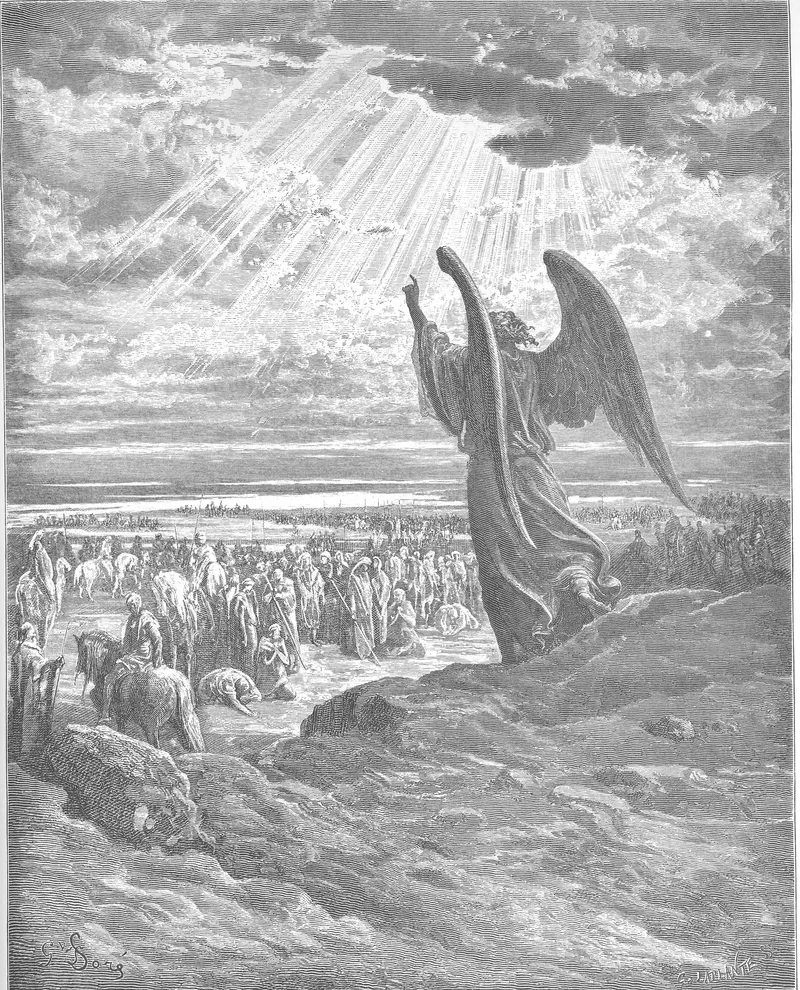
Judges 2:1-5The Angel of the LORD at Bochim
1And an angel of the LORD came up from Gilgal to Bochim, and said, I made you to go up out of Egypt, and have brought you unto the land which I sware unto your fathers; and I said, I will never break my covenant with you. 2And ye shall make no league with the inhabitants of this land; ye shall throw down their altars: but ye have not obeyed my voice: why have ye done this? 3Wherefore I also said, I will not drive them out from before you; but they shall be as thorns in your sides, and their gods shall be a snare unto you. 4And it came to pass, when the angel of the LORD spake these words unto all the children of Israel, that the people lifted up their voice, and wept. 5And they called the name of that place Bochim: and they sacrificed there unto the LORD.
The messenger comes up from Gilgal - and the starting point is freighted with memory. Gilgal was the camp where Israel first stood after the waters of the Jordan rolled back; where the men were circumcised and the reproach of Egypt was rolled away; where they kept the Passover and first ate of the produce of the promised land. It was the place of beginnings, of covenant renewed, of a people freshly consecrated to their God.
From that ground the angel travels to a place that has no name yet - and gives it one by what happens there. The geography tells the story in miniature: Israel has journeyed from the place of consecration to the place of weeping. The distance between Gilgal and Bochim is the distance between what Israel promised at the river and what Israel has become in the land.
The charge is exact, and the question at the end of it is tender. Israel had been given clear and simple commands - make no league with the peoples of the land, throw down their altars - and the verdict is equally simple: but ye have not obeyed my voice. They had not driven out the false worship; they had come to terms with it. And then: why have ye done this? The question carries the wounded note of a covenant partner who had every right to be obeyed and was not.
It invites Israel to look honestly at what they have done, to sit with the weight of it. There is a kindness even in the form of the rebuke: God asks the question first, giving the people a moment to feel the weight of their own choices before the consequence is named.
The consequence fits the sin with a terrible precision. Israel would not remove the nations; therefore I will not drive them out from before you. What the people refused to clear away, God now leaves in place - and the leaving is itself the judgment. The images are vivid and physical: the nations will be as thorns in your sides, a constant low-grade pain that never quite lets the body rest; and their gods shall be a snare unto you, a trap that catches the foot of the very people who would not pull it up.
This is how the consequence of compromise so often works in Scripture and in life. The thing we will not deal with does not stay neutral; it becomes the thing that wounds us, and the trap we keep stepping into. Israel wanted the convenience of coexistence with the idols of Canaan. They will get instead a lifetime of being pricked and ensnared by exactly what they spared.
The response is immediate and total: the people lifted up their voice, and wept, and they name the place Bochim, the weepers, and offer sacrifice. The tears are real; this is no small or staged emotion, but a whole assembly breaking down under the word of God. And weeping over sin is right - it is the proper grief of people who have heard the truth about themselves. Yet the chapter, and the whole book to come, will quietly test what these tears are made of.
Because the very next thing the book records is the long, dreary spiral of a people who keep doing the same evil over and over. Weeping is not the same as turning. It is possible to feel the sting of conviction deeply, to cry out under the announcement of judgment, and still walk back to the altars the next morning. The sorrow that saves is the sorrow that changes the road you walk; the sorrow that merely wets the surface leaves the heart exactly where it was.
Bochim asks every reader the question it asked Israel: when God's word breaks you, do the tears go all the way down?
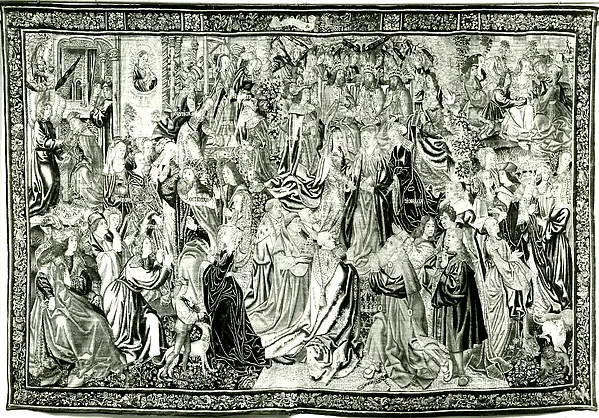
Judges 2:6-10A Generation That Knew Not the LORD
6And when Joshua had let the people go, the children of Israel went every man unto his inheritance to possess the land. 7And the people served the LORD all the days of Joshua, and all the days of the elders that outlived Joshua, who had seen all the great works of the LORD, that he did for Israel. 8And Joshua the son of Nun, the servant of the LORD, died, being an hundred and ten years old. 9And they buried him in the border of his inheritance in Timnathheres, in the mount of Ephraim, on the north side of the hill Gaash. 10And also all that generation were gathered unto their fathers: and there arose another generation after them, which knew not the LORD, nor yet the works which he had done for Israel.
The narrator pauses to give the bright picture before the dark one. The people served the LORD all the days of Joshua, and all the days of the elders that outlived Joshua. For one whole generation, faith held. And the verse tells us exactly why it held: these were the people who had seen all the great works of the LORD, that he did for Israel. They had stood at the Jordan and watched it part; they had marched around Jericho and seen the walls fall flat; they had lived inside the story while it was still happening.
Their obedience was anchored in firsthand sight. That is a real and good thing - and it is also the quiet warning hidden in the praise. A faith grounded only in having seen is a faith that lasts exactly as long as the eyewitnesses do. The generation that watched the miracles served the LORD. The question the next verse forces is what happens when the eyes that saw are closed in death, and the only ones left are those who merely heard the stories secondhand.
And here it is - perhaps the most chilling sentence in the book. Joshua dies; the elders die; all that generation were gathered unto their fathers: and there arose another generation after them, which knew not the LORD, nor yet the works which he had done for Israel. Read the wording closely, because it is worse than it first sounds. The text says they knew not the LORD. The knowledge itself had simply evaporated - not in centuries, but in a single generation.
The parting of the sea, the falling walls, the conquest of the land: these had passed from living memory into fading story, and from fading story into indifference. This is the engine of all spiritual decline, and it is quieter than we expect. The disaster began with a generation that had never been taught to know Him - that had inherited the land their parents won but not the God who won it for them. What one generation experiences, the next must be deliberately taught, or it is lost.
The works of God pass down only when they are told, and lived, and pressed into the hearts of those who did not see them.
Judges 2:11-15Israel Forsakes the LORD
11And the children of Israel did evil in the sight of the LORD, and served Baalim: 12And they forsook the LORD God of their fathers, which brought them out of the land of Egypt, and followed other gods, of the gods of the people that were round about them, and bowed themselves unto them, and provoked the LORD to anger. 13And they forsook the LORD, and served Baal and Ashtaroth. 14And the anger of the LORD was hot against Israel, and he delivered them into the hands of spoilers that spoiled them, and he sold them into the hands of their enemies round about, so that they could not any longer stand before their enemies. 15Whithersoever they went out, the hand of the LORD was against them for evil, as the LORD had said, and as the LORD had sworn unto them: and they were greatly distressed.
The decline is named in a single, heavy phrase that will toll through the whole book: the children of Israel did evil in the sight of the LORD. Two things are worth noticing. First, the evil is a positive act of worship - they served Baalim. Israel bowed to something else. Second, the evil is done in the sight of the LORD. There is no private idolatry. Every altar Israel raises to a false god is raised in full view of the God who brought them out of Egypt, the way a betrayal done in the presence of the one betrayed carries a particular sting.
The sequence of verbs in these verses is its own sermon: they did evil, they served, they forsook, they followed, they bowed. This is the active turning of people who chose other gods over the One who had loved and rescued them.
The text names the rivals: Baal and Ashtaroth - the storm-and-fertility god of the Canaanites and his consort.1 These were the gods of weather, crops, and the womb: powers a farming people leaned on for rain and harvest and children. And that is precisely what made them such a snare. The pull toward Baal was the very practical hope that these local gods could deliver the goods - security, prosperity, fertility - that everyone around them seemed to be getting by serving them.
Israel abandoned the LORD because they wanted the things the idols promised and were not willing to wait on the God who had already proven faithful. Idolatry comes dressed as the sensible way to get what you want.
The consequence follows with grim logic: the anger of the LORD was hot against Israel, and he delivered them into the hands of spoilers that spoiled them. Note who is acting. The LORD Himself delivered and sold them into the hand of their enemies. The very protection that had made them invincible - the hand of the LORD - is now turned the other way: the hand of the LORD was against them for evil. This is the bitter fruit of choosing other gods.
The God they forsook uses the consequence to press the lesson home. The Baals they ran to for security cannot give it, and the LORD, who alone could, now stands against them. They were greatly distressed - and the distress is the point at which the next movement of the chapter, and the next note of mercy, will begin.
Judges 2:16-23The LORD Raises Up Judges; the Cycle Repeats
16Nevertheless the LORD raised up judges, which delivered them out of the hand of those that spoiled them. 17And yet they would not hearken unto their judges, but they went a whoring after other gods, and bowed themselves unto them: they turned quickly out of the way which their fathers walked in, obeying the commandments of the LORD; but they did not so. 18And when the LORD raised them up judges, then the LORD was with the judge, and delivered them out of the hand of their enemies all the days of the judge: for it repented the LORD because of their groanings by reason of them that oppressed them and vexed them. 19And it came to pass, when the judge was dead, that they returned, and corrupted themselves more than their fathers, in following other gods to serve them, and to bow down unto them; they ceased not from their own doings, nor from their stubborn way.
The whole sorrow of the book is folded into one small clause: the LORD delivered them all the days of the judge. The deliverance is genuine; while the judge lives, the enemy is broken and the people are free. But the rescue has a horizon, and the horizon is a single human lifespan. All the days of the judge - and not one day longer. The salvation is real, and it is mortal. Bound up in the life of one frail deliverer, it can do nothing about the deepest problem in the story: the stubbornness inside the people, which no external victory ever touches.
And so every rescue in this book carries its own expiration date written on it from the start. The judge will save them, and the judge will die, and the salvation will die with him - because the deliverer was only a man. The phrase quietly aches for a deliverer whose days do not run out.
The cycle does not merely repeat; it descends. When the judge was dead… they returned, and corrupted themselves more than their fathers. Each turn of the wheel ends lower than it began. The people sink past where they were before the judge rescued them, growing worse with every generation, following other gods… they ceased not from their own doings, nor from their stubborn way. This is the hopeless mathematics of a salvation that can only ever come from outside.
The judge can break the enemy's grip, but the people's stubbornness remains; the moment the external pressure of his rule is gone, the internal corruption simply resumes, and deepens. The book of Judges, read honestly, is a four-hundred-year demonstration that what Israel needs is a new heart - a Deliverer who changes the wanting within. And that need is precisely the door through which the gospel will one day walk.
20And the anger of the LORD was hot against Israel; and he said, Because that this people hath transgressed my covenant which I commanded their fathers, and have not hearkened unto my voice; 21I also will not henceforth drive out any from before them of the nations which Joshua left when he died: 22That through them I may prove Israel, whether they will keep the way of the LORD to walk therein, as their fathers did keep it, or not. 23Therefore the LORD left those nations, without driving them out hastily; neither delivered he them into the hand of Joshua.
The chapter closes by giving the nations that remain a purpose beyond punishment. The LORD leaves them in the land that through them I may prove Israel, whether they will keep the way of the LORD… or not. The word prove means to test, to try, to bring to the surface what is really there - the way fire is brought to gold to reveal whether it is true. The unconquered nations become the testing ground of Israel's heart.
The very temptation Israel would not remove is now the instrument that will show, generation by generation, whether their loyalty to the LORD is real. And a test, by its nature, can go either way; the outcome is not announced in advance. There is a sober dignity in this. God leaves His people with real choices, real pressures, real thorns - and in the friction of those choices, what they actually love is revealed. The same pattern holds for us.
The temptations that remain in your life, the pulls you have not yet been delivered from, are in His hand the proving ground where it becomes clear - to you, and through you - whether you will keep the way of the LORD when keeping it is costly.
It is worth setting this chapter's hard realism beside a New Testament promise that breathes the same air. There hath no temptation taken you but such as is common to man: but God is faithful, who will not suffer you to be tempted above that ye are able; but will with the temptation also make a way to escape, that ye may be able to bear it (1 Cor. 10:13). The God who left the nations to prove Israel is the same God, and the proving is the same.
The test is real; the thorns are real; the snare is real. But for those who belong to Him, the testing is never abandonment, and never beyond bearing - there is always a way of escape held open. Judges 2 shows a people who, again and again, refused to take it, and corrupted themselves more than their fathers. The promise shows the door that was always there. What separated Bochim from victory was whether Israel would walk through the way of escape the faithful God always provides - and that question still stands at every reader's door.
Research trail
Sources & further study
These references support the historical, linguistic, manuscript, and contextual notes in this chapter. Scripture remains the primary text; external sources are provided so readers can inspect the research directly.
- Judges 2 - Translators' NotesThe NET Bible's detailed footnotes on Judges 2 - the identity of the angel of the LORD at Bochim, the meaning of “Baalim” and “Ashtaroth” as the plural worship of the Canaanite gods (vv. 11-13), and the difficult clause behind “it repented the LORD because of their groanings” in verse 18.
- Judges 2 · Hebrew + classical Jewish commentaryThe Hebrew text of Judges 2 with Rashi, Radak, and other classical commentators side by side - useful for shaphat (the root behind “judge,” vv. 16-18), for nacham (v. 18, “it repented the LORD because of their groanings”), and for the name Bochim, “weepers” (v. 5).
- Judges 2 ↔ Hebrews 7 · Hebrews 8 · Romans 5Traces the threads tying the judges who deliver only all the days of the judge (v. 18) to the priest who saves to the uttermost seeing he ever liveth (Heb. 7:25), and the generation that knew not the LORD (v. 10) to the new-covenant promise that they shall all know me (Heb. 8:11).
Where this echoes in Scripture
The Angel of the LORD at Bochim
- Joshua 5:9This day have I rolled away the reproach of Egypt from off you. Wherefore the name of the place is called Gilgal.Gilgal, where the angel begins - the place of consecration Israel has now traveled from to the place of weeping.
- Hebrews 8:10-11I will put my laws into their mind… and they shall all know me, from the least to the greatest.The covenant God will never break (v. 1) reaches its goal - a people who all know the LORD, unlike the generation of verse 10.
- 2 Corinthians 7:10For godly sorrow worketh repentance to salvation… but the sorrow of the world worketh death.The test of Bochim - whether the weeping is the sorrow that changes the road, or only the sorrow that wets the surface.
- Exodus 3:8And I am come down to deliver them… unto a good land… unto the place of the Canaanites.The same voice that brought Israel up out of Egypt (v. 1) now speaks at Bochim - the Deliverer who keeps covenant.
A Generation That Knew Not the LORD
- Deuteronomy 6:7And thou shalt teach them diligently unto thy children, and shalt talk of them when thou sittest in thine house.The very command Israel let slip - the deliberate handing-down that would have prevented a generation that knew not the LORD.
- Exodus 1:8Now there arose up a new king over Egypt, which knew not Joseph.The same ominous formula - a new generation arising that “knew not” what came before, and turning to disaster.
- Psalm 78:6-7That the generation to come might know them… that they might set their hope in God.Israel's own remedy for Judges 2:10 - telling the next generation the works of God so they will know Him too.
- John 17:3And this is life eternal, that they might know thee the only true God, and Jesus Christ.The knowing that the generation of verse 10 lacked - named by Christ as life itself.
Israel Forsakes the LORD
- Jeremiah 2:13They have forsaken me the fountain of living waters, and hewed them out cisterns, broken cisterns, that can hold no water.The exact tragedy of verse 12 - forsaking the LORD for gods that cannot deliver what they promise.
- Romans 1:25Who changed the truth of God into a lie, and worshipped and served the creature more than the Creator.Idolatry named at its root - serving the created thing in place of the God who made and rescued them.
- Deuteronomy 28:25The LORD shall cause thee to be smitten before thine enemies… and shalt be removed into all the kingdoms of the earth.The sworn word behind verse 15 - the covenant consequence God had warned would follow forsaking Him.
- Matthew 6:24No man can serve two masters… Ye cannot serve God and mammon.The choice Israel refused to make - the impossibility of holding the LORD and a Baal at once.
The LORD Raises Up Judges; the Cycle Repeats
- Hebrews 7:24-25But this man, because he continueth ever, hath an unchangeable priesthood… he ever liveth to make intercession for them.The answer to “all the days of the judge” (v. 18) - a Deliverer whose salvation never lapses, because He never dies.
- Romans 5:6For when we were yet without strength, in due time Christ died for the ungodly.God moved to mercy by the groaning of the undeserving (v. 18) - gone to its uttermost depth at the cross.
- Nehemiah 9:27Thou gavest them saviours, who saved them out of the hand of their enemies… they cried unto thee, thou heardest them from heaven.Israel's own later memory of the judges cycle - the LORD's repeated mercy at the sound of their cry.
- 1 Corinthians 10:13God is faithful, who will not suffer you to be tempted above that ye are able; but will… make a way to escape.The proving of verse 22, with the promise Israel kept refusing - the test is real, but a way out is always held open.