Deuteronomy 28
People in this chapter
Two mountains face each other across a valley. From one, the blessings are read aloud. From the other, the curses. Fourteen verses of blessing if Israel listens 1: blessed in the city, blessed in the field, blessed coming in and going out. Then the ground tilts. Fifty-four verses of curse if Israel turns away, and the language grows unbearable - fever, siege, exile, a life that hangs in doubt before you day and night.
Tap any highlighted phrase to jump to the commentary that unpacks it.
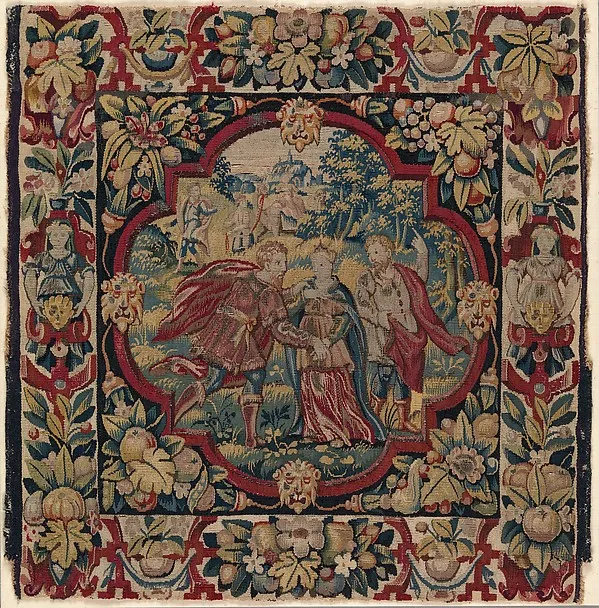
Deuteronomy 28:1-6Hearken and Be Blessed
1And it shall come to pass, if thou shalt hearken diligently unto the voice of the LORD thy God, to observe and to do all his commandments which I command thee this day, that the LORD thy God will set thee on high above all nations of the earth:
The Hebrew word shema - "hearken" - is the root of the Shema, the most basic Jewish prayer and confession. It means more than hearing; it means listening with the intent to obey. The covenant blessing begins with attentive obedience, a bent ear toward God's voice.
2And all these blessings shall come on thee, and overtake thee, if thou shalt hearken unto the voice of the LORD thy God. 3Blessed shalt thou be in the city, and blessed shalt thou be in the field. 4Blessed shall be the fruit of thy body, and the fruit of thy ground, and the fruit of thy cattle, the increase of thy kine, and the flocks of thy sheep. 5Blessed shall be thy basket and thy store. 6Blessed shalt thou be when thou comest in, and blessed shalt thou be when thou goest out.
Deuteronomy 28:7-10Enemies Scattered Seven Ways
7The LORD shall cause thine enemies that rise up against thee to be smitten before thy face: they shall come out against thee one way, and flee before thee seven ways.
Seven ways of flight - the covenant symmetry is exact. One way of approach, but seven ways of retreat. Blessing amplifies the gap between obedience and its fruit. Curses will mirror this: one way to fall, but seven ways to be scattered.
8The LORD shall command the blessing upon thee in thy storehouses, and in all that thou settest thine hand unto; and he shall bless thee in the land which the LORD thy God giveth thee. 9The LORD shall establish thee an holy people unto himself, as he hath sworn unto thee, if thou shalt keep the commandments of the LORD thy God, and walk in his ways. 10And all people of the earth shall see that thou art called by the name of the LORD; and they shall be afraid of thee.
The LORD promises to command His blessing on Israel's storehouses and on everything they set their hand to, and to establish them as a holy people called by His name. He will open the heavens to send rain in its season and make the land fruitful, so that they lend to many nations and borrow from none, and are the head and not the tail - so long as they keep His commandments and do not turn aside to serve other gods.
Deuteronomy 28:11-14A People Called by His Name
11And the LORD shall make thee plenteous in goods, in the fruit of thy body, and in the fruit of thy cattle, and in the fruit of thy ground, in the land which the LORD sware unto thy fathers to give thee. 12The LORD shall open unto thee his good treasure, the heaven to give the rain unto thy land in his season, and to bless all the work of thine hand: and thou shalt lend unto many nations, and thou shalt not borrow. 13And the LORD shall make thee the head, and not the tail; and thou shalt be above only, and thou shalt not be beneath; if that thou hearken unto the commandments of the LORD thy God, which I command thee this day, to observe and to do them: 14And thou shalt not go aside from any of the words which I command thee this day, to the right hand, or to the left, to go after other gods to serve them.
Notice the shift from conditional to identity: "if you obey, I will bless you" becomes "I will establish you as a holy people." Obedience does not create the relationship; it reveals it. The covenant carries identity within it - you are meant for blessing, meant to bear My name.
Deuteronomy 28:15-19The Curses Begin - Disobedience Inverted
15But it shall come to pass, if thou wilt not hearken unto the voice of the LORD thy God, to observe to do all his commandments and his statutes which I command thee this day; that all these curses shall come upon thee, and overtake thee: 16Cursed shalt thou be in the city, and cursed shalt thou be in the field. 17Cursed shall be thy basket and thy store. 18Cursed shall be the fruit of thy body, and the fruit of thy land, the increase of thy kine, and the flocks of thy sheep. 19Cursed shalt thou be when thou comest in, and cursed shalt thou be when thou goest out.
Set these four verses beside verses 3 to 6 and you will find the same words turned inside out, one for one. City, field, basket, store, coming in and going out - every place blessing reached, the curse now reaches too. It is the exact negative of the photograph. Nothing new is added here; the same life is simply run backward. That is what walking away from the source does: it does not invent a fresh world, it empties the one you had.
Deuteronomy 28:20-22Curses That Hunt You Down
20The LORD shall send upon thee cursing, vexation, and rebuke, in all that thou settest thine hand unto for to do, until thou be destroyed, and until thou perish quickly; because of the wickedness of thy doings, whereby thou hast forsaken me. 21The LORD shall make the pestilence cleave unto thee, until he have consumed thee from off the land, whither thou goest to possess it. 22The LORD shall smite thee with a consumption, and with a fever, and with an inflammation, and with an extreme burning, and with the sword, and with blasting, and with mildew; and they shall pursue thee until thou perish.
Deuteronomy 28:23-25Brass Heaven, Iron Earth
23And thy heaven that is over thy head shall be brass, and the earth that is under thee shall be iron. 24The LORD shall make the rain of thy land powder and dust: from heaven shall it come down upon thee, until thou be destroyed. 25The LORD shall cause thee to be smitten before thine enemies: thou shalt go out one way against them, and flee seven ways before them: and shalt be removed into all the kingdoms of the earth.
Here the language sharpens from a state into a pursuit. The curse no longer just settles on the city and field; it hunts - vexation and rebuke in everything your hand touches, pestilence that cleaves, an enemy that follows until you perish. And the sky itself turns against you: heaven like brass overhead, earth like iron underfoot, the rain coming down as dust. Picture standing under a bronze sky that will not open. This is what it looks like when the channel of blessing is reversed entirely, when the very weather of your life stops answering.
Deuteronomy 28:26-28Carcase to the Fowls
26And thy carcase shall be meat unto all fowls of the air, and unto the beasts of the earth, and no man shall fray them away. 27The LORD will smite thee with the botch of Egypt, and with the emerods, and with the scab, and with the itch, whereof thou canst not be healed. 28The LORD shall smite thee with madness, and blindness, and astonishment of heart:
Deuteronomy 28:29-31Grope at Noonday
29And thou shalt grope at noonday, as the blind gropeth in darkness, and thou shalt not prosper in thy ways: and thou shalt be only oppressed and spoiled evermore, and no man shall save thee. 30Thou shalt betroth a wife, and another man shall lie with her: thou shalt build an house, and thou shalt not dwell therein: thou shalt plant a vineyard, and shalt not gather the grapes thereof. 31Thine ox shall be slain before thine eyes, and thou shalt not eat thereof: thine ass shall be violently taken away from before thy face, and shall not be restored to thee: thy sheep shall be given unto thine enemies, and thou shalt have none to rescue them.
The curse moves from your own body - boils, madness, blindness - to the loss of what you love most. Your livestock, your children, your inheritance. This is the stripping away of what a disloyal people trusted in instead of God. First He removes your capacity to see clearly, then He removes the very things you were too blind to steward faithfully.
Deuteronomy 28:32-34Sons and Daughters Given Away
32Thy sons and thy daughters shall be given unto another people, and thine eyes shall look, and fail with longing for them all the day long: and there shall be no might in thine hand: 33The fruit of thy land, and all thy labours, shall a nation which thou knowest not eat up; and thou shalt be only oppressed and crushed alway: 34So that thou shalt be mad for the sight of thine eyes which thou shalt see.
Deuteronomy 28:35-37A Byword Among the Nations
35The LORD shall smite thee in the knees, and in the legs, with a sore botch that cannot be healed, from the sole of thy foot unto the top of thy head. 36The LORD shall bring thee, and thy king which thou shalt set over thee, unto a nation which neither thou nor thy fathers have known; and there shalt thou serve other gods, wood and stone. 37And thou shalt become an astonishment, a proverb, and a byword, among all nations whither the LORD shall lead thee.
Notice the horror: madness comes first, then blindness, then astonishment - a breaking of mind and sight that leaves a people unable to understand their own condition. They grope at noonday as a blind man gropes in darkness. And the cruelest curse: to see what you have lost - thy eyes shall look, and fail with longing - but be powerless to recover it. A disintegration not only of nation but of mind itself.
Deuteronomy 28:38-46The Reversal of Every Blessing
38Thou shalt carry much seed out into the field, and shalt gather but little in; for the locust shall consume it. 39Thou shalt plant vineyards, and dress them, but shalt neither drink of the wine, nor gather the grapes; for the worms shall eat them. 40Thou shalt have olive trees throughout all thy coasts, but thou shalt not anoint thyself with the oil; for thine olive shall cast his fruit.
Every labor comes to nothing. They will carry much seed into the field but gather little, for the locust consumes it; they will plant and dress vineyards but drink no wine, for worms eat them; they will have olive trees throughout their land but no oil, for the fruit drops away. Even the sons and daughters they beget they will not keep, for they go into captivity.
41Thou shalt beget sons and daughters, but thou shalt not enjoy them; for they shall go into captivity. 42All thy trees and fruit of thy land shall the locust consume. 43The stranger that is within thee shall get up above thee very high; and thou shalt come down very low. 44He shall lend to thee, and thou shalt not lend to him: he shall be the head, and thou shalt be the tail.
Watch who rises and who sinks. The stranger living in the land - once the guest, the borrower, the one at the bottom - climbs higher and higher, while Israel drops away beneath him. Head and tail trade places. The very promises of verses 12 and 13 run in reverse. This is the quiet tragedy underneath the louder horrors: covenant blessing was never a private reward but the ordering of a whole society, and when it lifts, the whole order capsizes. The structure that once carried a people begins to grind against them.
45Moreover all these curses shall come upon thee, and shall pursue thee, and overtake thee, till thou be destroyed; because thou hearkenedst not unto the voice of the LORD thy God, to keep his commandments and his statutes which he commanded thee: 46And they shall be upon thee for a sign and for a wonder, and upon thy seed for ever.
The curse becomes a sign and a wonder that others see. A people under curse becomes a warning to the nations - "look what happens when you turn from the God who made you." It is public witness to the covenant's truth.
Deuteronomy 28:47-49An Eagle From Far Away
47Because thou servedst not the LORD thy God with joyfulness, and with gladness of heart, for the abundance of all things; 48Therefore shalt thou serve thine enemies which the LORD shall send against thee, in hunger, and in thirst, and in nakedness, and in want of all things: and he shall put a yoke of iron upon thy neck, until he have destroyed thee. 49The LORD shall bring a nation against thee from far, from the end of the earth, as swift as the eagle flieth; a nation whose tongue thou shalt not understand;
Swift as the eagle - this language echoes Numbers 24:6-9, where Balaam prophesies over Israel: "He crouched, he lay down as a lion… who shall rouse him up?" But here the eagle comes against them. In Jewish and Christian interpretation, this prophecy has been read as describing both the Babylonian exile (586 BC) and the Roman destruction of Jerusalem (70 AD). Both invaders came from afar, swift and fierce, speaking a foreign tongue.
Deuteronomy 28:50-52The Siege Closes In
50A nation of fierce countenance, which shall not regard the person of the old, nor shew favour to the young: 51And he shall eat the fruit of thy cattle, and the fruit of thy land, until thou be destroyed: which also shall not leave thee either corn, wine, or oil, or the increase of thy kine, or flocks of thy sheep, until he have destroyed thee. 52And he shall besiege thee in all thy gates, until thy high and fenced walls come down, wherein thou trustedst, throughout all thy land: and he shall besiege thee in all thy gates throughout all thy land, which the LORD thy God hath given thee.
Deuteronomy 28:53-57The Besieging Nation and the Siege Famine
53And thou shalt eat the fruit of thine own body, the flesh of thy sons and of thy daughters, which the LORD thy God hath given thee, in the siege, and in the straitness, wherewith thine enemies shall distress thee: 54So that the man that is tender among you, and very delicate, his eye shall be evil toward his brother, and toward the wife of his bosom, and toward the remnant of his children which he shall leave: 55So that he will not give to any of them of the flesh of his children whom he shall eat: because he hath nothing left him in the siege, and in the straitness, wherewith thine enemies shall distress thee in all thy gates. 56The tender and delicate woman among you, which would not adventure to set the sole of her foot upon the ground for delicateness and tenderness, her eye shall be evil toward the husband of her bosom, and toward her son, and toward her daughter, 57And toward her young one that cometh out from between her feet, and toward her children which she shall bear: for she shall eat them for want of all things secretly in the siege and straitness, wherewith thine enemy shall distress thee in thy gates.
This is the harshest language in the entire chapter. The prophecy of cannibalism in siege famine appears to have been fulfilled literally in the Roman siege of Jerusalem (70 AD). Josephus, the Jewish historian, describes the horror in detail: mothers eating their own children, families tearing apart over scraps. This is not theological speculation; it is a historical record of the curse's reality. It is also why Jesus, standing before Jerusalem, wept.
Deuteronomy 28:58-68The Scattering and Bondage - The Final Exile
58If thou wilt not observe to do all the words of this law that are written in this book, that thou mayest fear this glorious and fearful name, THE LORD THY GOD; 59Then the LORD will make thy plagues wonderful, and the plagues of thy seed, even great plagues, and of long continuance, and sore sicknesses, and of long continuance. 60Moreover he will bring upon thee all the diseases of Egypt, which thou wast afraid of; and they shall cleave unto thee. 61Also every sickness, and every plague, which is not written in the book of this law, them will the LORD bring upon thee, until thou be destroyed. 62And ye shall be left few in number, whereas ye were as the stars of heaven for multitude; because thou wouldest not obey the voice of the LORD thy God.
63And it shall come to pass, that as the LORD rejoiced over you to do you good, and to multiply you; so the LORD will rejoice over you to destroy you, and to bring you to nought; and ye shall be plucked from off the land whither thou goest to possess it. 64And the LORD shall scatter thee among all people, from the one end of the earth even unto the other; and there thou shalt serve other gods, which neither thou nor thy fathers have known, even wood and stone. 65And among these nations shalt thou find no ease, neither shall the sole of thy foot have rest: but the LORD shall give thee there a trembling heart, and failing of eyes, and sorrow of mind: 66And thy life shall hang in doubt before thee; and thou shalt fear day and night, and shalt have none assurance of thy life: 67In the morning thou shalt say, Would God it were even! and at even thou shalt say, Would God it were morning! for the fear of thine heart wherewith thou shalt fear, and for the sight of thine eyes which thou shalt see.
The prophecy of the diaspora - two great scatterings fulfilled historically: the Babylonian exile (586 BC) and the Roman destruction (70 AD), which dispersed Jews across the known world. But the covenant promise is not left broken: Deuteronomy 30 promises restoration. Even in exile, God's covenant is not finished. This is why Paul in Romans 9-11 reads Israel's exile as temporary, with ultimate restoration promised.
68And the LORD shall bring thee into Egypt again with ships, by the way whereof I spake unto thee, Thou shalt see it no more again: and there ye shall be sold unto your enemies for bondmen and bondwomen, and no man shall buy you.
The ultimate reversal: the exodus is reversed. Instead of being redeemed out of Egypt, they are brought back into Egypt - into servitude, with no redeemer to buy them back. They are worthless in the eyes of their enemies. Yet even this phrase has a gospel echo: Christ bought us back at a price that was beyond measure - His own blood. We, who were unsaleable and worthless, are worth everything to Him.
Deuteronomy 28:68 & 30:19The Choice Remains
Deuteronomy 28 does not end in despair. Verse 68 is dark, but Deuteronomy 30 follows - and in it, the covenant frame is renewed. "I have set before you life and death, blessing and curse; therefore choose life, that you and your offspring may live." The covenant is an open door. At any moment, a return is possible. The question is whether you will return.
Research trail
Sources & further study
These references support the historical, linguistic, manuscript, and contextual notes in this chapter. Scripture remains the primary text; external sources are provided so readers can inspect the research directly.
- Deuteronomy 28Open-access source text and rabbinic commentary on the blessings for obedience and the extensive curses for apostasy and disobedience.
- Mount Gerizim and Mount Ebal: Blessing and CurseArchaeological and historical geography of the covenant ceremony location where Gerizim symbolizes blessing [res:mount-gerizim-blessing-mount-ebal-curse] and Ebal symbolizes curse.
Where this echoes in Scripture
A People Called by His Name
- Ephesians 2:6And hath raised us up together, and made us sit together in heavenly places in Christ Jesus.The elevation promised here - set on high - becomes the believer's position in Christ.
- Philippians 2:8-9He humbled himself... wherefore God also hath highly exalted him.The descent-then-exaltation pattern: down through obedience, then lifted above every name.
- Matthew 5:14-16Ye are the light of the world. A city that is set on an hill cannot be hid.A people called by God's name becomes visible to the nations, just as v. 10 says.
- Leviticus 26:3-12If ye walk in my statutes... I will give you rain in due season, and the land shall yield her increase.The companion blessing catalog: obedience and fruitfulness move together.
The Besieging Nation and the Siege Famine
- Galatians 3:13-14Christ hath redeemed us from the curse of the law, being made a curse for us: for it is written, Cursed is every one that hangeth on a tree.Paul reads the cross straight out of Deuteronomy's curse: He became it so the blessing could reach us.
- Lamentations 2:20Shall the women eat their fruit, and children of a span long?The siege-famine horror of vv. 53-57, witnessed when Jerusalem fell.
- Luke 19:41-44And when he was come near, he beheld the city, and wept over it... thine enemies shall cast a trench about thee.Jesus weeps over a Jerusalem facing exactly this kind of siege.
- Luke 21:20-24And when ye shall see Jerusalem compassed with armies, then know that the desolation thereof is nigh.The foreign nation, swift and fierce, coming against the gates.
The Choice Remains
- Deuteronomy 30:19-20I have set before you life and death, blessing and cursing: therefore choose life, that both thou and thy seed may live.The chapter's severe two ways are gathered into one plain command: choose life.
- Hebrews 7:25Wherefore he is able also to save them to the uttermost that come unto God by him.Return is possible because Another stands between you and the curse, interceding without end.
- Luke 15:20But when he was yet a great way off, his father saw him, and had compassion, and ran, and fell on his neck.The far country of exile, and a father who closes the distance first.
- Joel 2:12-13Turn ye even to me with all your heart... for he is gracious and merciful, slow to anger, and of great kindness.Even after the curse falls, the door of return stands open.