Deuteronomy 29
People in this chapter
Forty years in the wilderness are over. Israel stands at the edge of the land, and Moses gathers all of them - captains and elders, wives and little ones, the stranger in the camp, the man who chops wood and the woman who draws water. Remember, he says. You saw what God did to Egypt. Your sandals lasted forty years and never wore out. And then, plainly: yet the Lord hath not given you an heart to perceive.1
Tap any highlighted phrase to jump to the commentary that unpacks it.
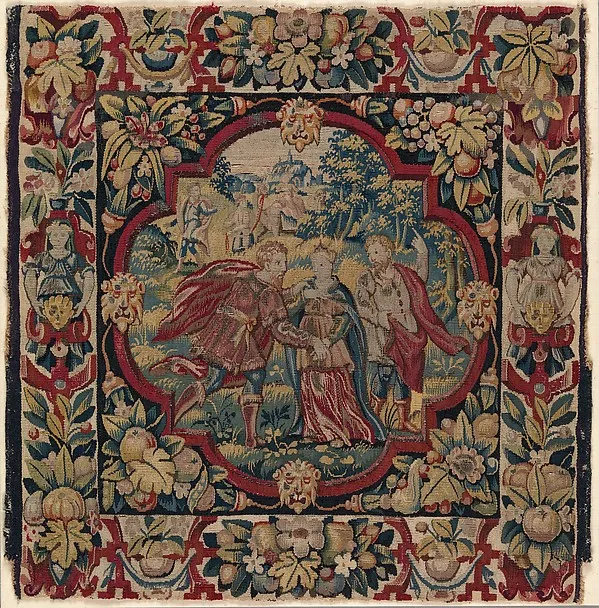
Deuteronomy 29:1-8The Second Covenant in Moab
1These are the words of the covenant, which the LORD commanded Moses to make with the children of Israel in the land of Moab, beside the covenant which he made with them in Horeb.
The word "beside" here means "in addition to," not "instead of." This covenant does not replace Horeb - it renews and deepens it. Horeb was the thunder and the fire, the terror of God's presence. Here, after forty years of God's faithfulness in the wilderness, Moses gathers Israel again to say: this is still your God. This covenant still holds.
2And Moses called unto all Israel, and said unto them, Ye have seen all that the LORD did before your eyes in the land of Egypt unto Pharaoh, and unto all his servants, and unto all his land;
Moses asks them to remember what they already witnessed. The plagues, the parting of the sea, the pillar of fire - these are memories their own eyes hold. The whole foundation of covenant renewal is: God has already proven Himself.
4Yet the LORD hath not given you an heart to perceive, and eyes to see, and ears to hear, unto this day.
This is the most honest line in the chapter. Israel has seen the works of God, and seeing has not been enough. Eyes and ears have limits. You can witness real power and still lack the heart to grasp what it means or to lean your weight on what it promises - and if you have ever known a truth in your head that never quite reached the place where you actually live, you know exactly the gap Moses is naming. Only God can close it. He can give the heart that mere evidence never could.
5And I have led you forty years in the wilderness: your clothes are not waxen old upon you, and thy shoe is not waxen old upon thy foot.
The wilderness was not punishment alone - it was a classroom. Every need met, every step sustained, clothes that did not wear, sandals that did not fail. In the desert, where natural supply lines collapse, God became their only source. That knowledge - the knowing itself - is what the forty years taught.
Deuteronomy 29:9-15All Gathered - Present and Future
10Ye stand this day all of you before the LORD your God; your captains of your tribes, your elders, and your officers, with all the men of Israel,
The covenant list is absolute: captains and elders; men and little ones; wives and strangers and the lowest servant (hewer of wood, drawer of water). Every social rank, every age, every outsider within the camp - all stand together before God. In this moment, covenant levels all hierarchy. A stranger has the same standing before God as an elder.
11Your little ones, your wives, and thy stranger that is in thy camp, from the hewer of thy wood unto the drawer of thy water:
14Neither with you only do I make this covenant and this oath;
This is the heartbeat of the chapter. The covenant is not sealed just with those standing in Moab. It reaches beyond them - to generations not yet born. It reaches to us. We are the ones "not here with us this day" who are now reading these words. The promise is not merely a historical relic; we inherit it as our own covenant with God.
Deuteronomy 29:16-21The Root That Bears Gall and Wormwood
16(For ye know how we have dwelt in the land of Egypt; and how we came through the nations which ye passed by;
The word "idols" here is literally false gods - but Moses catalogs their substance: wood, stone, silver, gold. Things made by human hands. Things that cannot speak, see, or move. The point is not subtle: you have walked through nations and watched men bow to objects.
17And ye have seen their abominations, and their idols, wood and stone, silver and gold, which were among them:)
The image is of a poisoned root planted in the soil of the community. One heart that turns away becomes a plant that spreads poison to the whole. This is not abstract. In a small covenant community where everyone eats from the same well, where the spirit of faithfulness shapes the culture, one person's apostasy becomes everyone's temptation.
18Lest there should be among you man, or woman, or family, or tribe, whose heart turneth away this day from the LORD our God, to go and serve the gods of these nations; lest there should be among you a root that beareth gall and wormwood;
Here is the deception of the root: it does not say "I am damned." It says "I shall have peace." The man who turns away does not curse himself. He blesses himself. He imagines that he can serve other gods, walk his own path, indulge his appetites - and somehow still have peace and prosperity. He adds "drunkenness to thirst," meaning he takes what already feeds one appetite and feeds it more. The lie is not "this will destroy me." The lie is "this will satisfy me and bring me peace anyway."
20The LORD will not spare him, but then the anger of the LORD and his jealousy shall smoke against that man, and all the curses that are written in this book shall lie upon him, and the LORD shall blot out his name from under heaven.
The curses are specific, detailed, and in the book. This is the covenant structure: blessing for obedience, curse for apostasy. The one who turns away does not get to define his own consequences. He takes the curse because covenant has a form, and breaking it has a shape.
Deuteronomy 29:22-28The Question of the Next Generation
22So that the generation to come of your children that shall rise up after you, and the stranger that shall come from a far land, shall say, when they see the plagues of that land, and the sicknesses which the LORD hath laid upon it;
24Even all nations shall say, Wherefore hath the LORD done thus unto this land? what meaneth the heat of this great anger?
The future is watching. When judgment falls on Israel, the nations will ask: why did this happen? And the answer will have to be given. The story is not hidden. It is written in ruin. This is why the covenant moment matters: what happens next will tell the story of what Israel chose today.
25Then men shall say, Because they have forsaken the covenant of the LORD God of their fathers, which he made with them when he brought them forth out of the land of Egypt:
The answer is clear and irrevocable: they forsook the covenant. They did not merely stumble or wander. They actively chose other gods. And these were gods "whom he had not given unto them" - meaning the Lord never authorized this worship, never invited it. It was pure apostasy.
27And the anger of the LORD was kindled against this land, to bring upon it all the curses that are written in this book:
These words were written in Moses' day, but they were written to be read in a future day when judgment had already come. "As it is this day" is a voice from exile speaking back to the reader: this is what happened. The warning came true. The words were not hollow. Whoever reads this in exile knows that the covenant was real, the warnings were real, and the consequences were real.
Deuteronomy 29:29The Secret Things Belong to the Lord
29The secret things belong unto the LORD our God: but those things which are revealed belong unto us and to our children for ever, that we may do all the words of this law.
This verse is the answer to all the unanswered questions in Deuteronomy. Why does God allow suffering? Why does evil sometimes flourish? Why did judgment take so long to come? Those questions belong to God. They are nistarot, hidden, secret. But what is revealed - the law, the covenant, the call to obedience - that belongs to us. We are not called to understand the secret things. We are called to do the revealed things.
Research trail
Sources & further study
These references support the historical, linguistic, manuscript, and contextual notes in this chapter. Scripture remains the primary text; external sources are provided so readers can inspect the research directly.
Where this echoes in Scripture
The Second Covenant in Moab
- Ezekiel 36:26A new heart also will I give you, and a new spirit will I put within you.The same promise as Jeremiah 31 - God supplying the very heart Deuteronomy 29:4 says Israel lacks.
- 2 Corinthians 3:3Written not with ink, but with the Spirit of the living God; not in tables of stone, but in fleshy tables of the heart.Paul says the promised inward writing has begun - the law moved off stone and into people.
- Deuteronomy 8:3-4He humbled thee, and suffered thee to hunger… thy raiment waxed not old upon thee.The wilderness as classroom: every need met so that they might know the LORD.
- Romans 8:3-4What the law could not do, in that it was weak through the flesh, God… sending his own Son.Names plainly what Deuteronomy hints: the law could announce the standard but not produce the heart.
The Secret Things Belong to the Lord
- Luke 22:42Not my will, but thine, be done.Deuteronomy 29:29 lived out: the secret left with God, the revealed will obeyed.
- Hebrews 5:8Though he were a Son, yet learned he obedience by the things which he suffered.Obedience held even through what was not explained.
- John 13:7What I do thou knowest not now; but thou shalt know hereafter.Jesus to Peter - some things stay hidden for now; trust comes first.
- Deuteronomy 30:11-14This commandment… is not hidden from thee… the word is very nigh unto thee.The flip side of the secret things: what God asks of you is not out of reach.