Who was Joshua in the Bible?
Joshua was the leader who took Moses’ place and led Israel across the Jordan River into the promised land.
Leader of the Conquest
c. 1400 BC
Joshua was the leader who took Moses’ place and led Israel across the Jordan River into the promised land.
Follow the reading trailBEYOND THE NAME
Joshua served Moses faithfully for years, fought Amalek, and was one of only two spies who trusted God to give Israel the land. After Moses died, God commissioned him to lead the people across the Jordan and into Canaan, beginning with the fall of Jericho. He divided the land among the tribes and, at the end of his life, called Israel to choose whom they would serve, pledging that he and his house would serve the Lord.
Themes in the authored commentary
These are other entries using this name. Compare their source passages before treating them as the same or different historical people.
These entries connect the study to the source’s recorded family context. Read their cautions when the family records or identifications differ.
FOLLOW THE PASSAGES
Selected passages and introductions help you read this person’s story in context.
newly commissioned leader charged to bring Israel into Canaan
After Moses’s death, Joshua receives the commission to lead Israel across the Jordan. The repeated call to courage is joined to an instruction to attend to the law. Leadership is presented as both practical responsibility and faithful obedience.
directs the seven-day march and the shout that brings down Jericho's walls
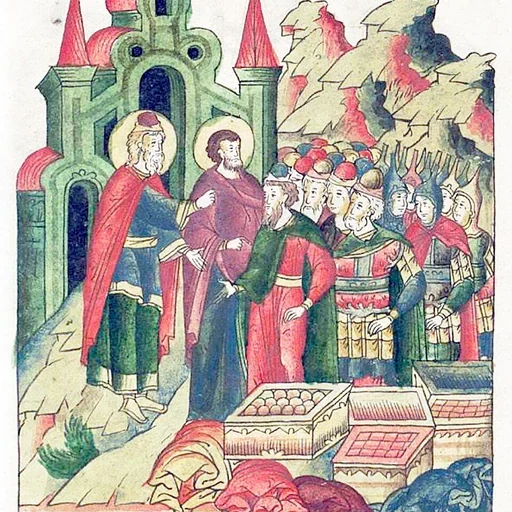
The account of Jericho follows Israel’s actions around the city and the city’s fall. Rahab and her household are brought out according to the earlier agreement with the spies. The chapter connects Joshua’s leadership with that preserved promise.
leads Israel in covenant renewal at Shechem and delivers his final charge before his death
Joshua gathers the people, recounts God’s dealings with their ancestors, and calls for a decision about whom they will serve. The covenant renewal places his own household’s commitment within the larger history of Israel.
THE PEOPLE AROUND THE PERSON
Relationships follow the source graph. Some are interpretive or uncertain, and individual verse citations are not yet available for every connection.
STUDY & INTERPRETATION
Joshua bridges the wilderness generation and the settled nation, carrying forward the promise that God first made to Abraham. His name means “the Lord saves,” and under his hand the people received the inheritance they had long awaited, won through obedience and the faithfulness of God rather than their own strength. The book bearing his name holds together both the gift of rest in the land and the call to keep covenant once it is received. His name is the Hebrew form of the name later given to Jesus, and the rest he led Israel into points beyond the land to the deeper rest secured by the One who shares his name.
From the Learn of Christ person commentary. Read alongside the linked Scripture passages.KEEP SCRIPTURE CLOSE
41 authored chapter guides feature this person. This is guide coverage, not an exhaustive count of biblical mentions.
ASK A BETTER QUESTION
Identity, story, early-life sources, family, and where to read.
Names and spellings in the source: Joshua · Hoshea · Oshea · Jeshua · Jesus
Joshua was the leader who took Moses’ place and led Israel across the Jordan River into the promised land.
Joshua served Moses faithfully for years, fought Amalek, and was one of only two spies who trusted God to give Israel the land. After Moses died, God commissioned him to lead the people across the Jordan and into Canaan, beginning with the fall of Jericho. He divided the land among the tribes and, at the end of his life, called Israel to choose whom they would serve, pledging that he and his house would serve the Lord.
The individualized passage index associates this Joshua record with Exodus, Numbers, Deuteronomy, Joshua, Judges, 1 Kings, Nehemiah, Hebrews. There are 186 distinct indexed verse references in the 66-book Bible. Browse the book-by-book list below; it separates this identity from other people who share the name. Source assignments and textual identifications can require interpretation.
A separate childhood account for Joshua is not provided in our current authored profile sources. Begin with Exodus 17:9 and the passages linked here for the evidence that is available. The first indexed reference to a name is not a birth record. This profile does not establish a birth date, schooling, or childhood events beyond what its sources state.
The current source graph does not list immediate family for Joshua. That is a limit of this data, not evidence that Joshua had no relatives. Read the cited passages for the details they actually give.
Joshua bridges the wilderness generation and the settled nation, carrying forward the promise that God first made to Abraham. His name means “the Lord saves,” and under his hand the people received the inheritance they had long awaited, won through obedience and the faithfulness of God rather than their own strength.
Answers draw on our existing authored biography and linked chapter studies. Where supplied, verse assignments come from the individualized STEP Bible index. Childhood answers distinguish documented events from gaps in the available sources.
FIND THE PERSON IN THE TEXT
186 distinct verse references in the source’s 66-book index. These are indexed name assignments, rather than every indirect allusion to this person. A name may also refer to descendants, a tribe, or a nation; read each passage to distinguish that usage from the individual.
“And Moses said unto Joshua, Choose us out men, and go out, fight with Amalek: to morrow I will stand on the top of the hill with the rod of God in mine hand.”
Exodus 17:9 · King James Version
“And it came to pass at the seventh time, when the priests blew with the trumpets, Joshua said unto the people, Shout; for the LORD hath given you the city.”
Joshua 6:16 · King James Version
“Then Horam king of Gezer came up to help Lachish; and Joshua smote him and his people, until he had left him none remaining.”
Joshua 10:33 · King James Version
“For if Jesus had given them rest, then would he not afterward have spoken of another day.”
Hebrews 4:8 · King James Version
References are adapted from STEP Bible / Tyndale House TIPNR (CC BY 4.0). Deduplicated, matched to this identity, and checked against the bundled KJV’s verse bounds. Interpretive assignments and translation/versification differences may remain. This index is separate from evidence for individual family relationships.
YOUR OWN OBSERVATIONS
Notes, saved people, and study marks stay in this browser. They do not sync to your account.
KEEP EXPLORING
People featured in the same study guides. Sharing a chapter does not establish a family relationship.