Joshua 21
People in this chapter
Joshua 211 is the last room in the long house of the land-division - the chapters in which Canaan has been measured out, tribe by tribe, to the children of Israel. And it is given to the tribe that was deliberately left out of all that measuring. The Levites had received no territory; instead, the LORD Himself had been named their inheritance. So now, with every other tribe settled, the heads of the Levites come to Eleazar the priest, and unto Joshua the son of Nun, and unto the heads of the fathers of the tribes, at Shiloh, where the tabernacle stood.
They do not come empty-handed and anxious. They come holding a promise: The LORD commanded by the hand of Moses to give us cities to dwell in, with the suburbs thereof for our cattle.
Tap any highlighted phrase to jump to the commentary that unpacks it.
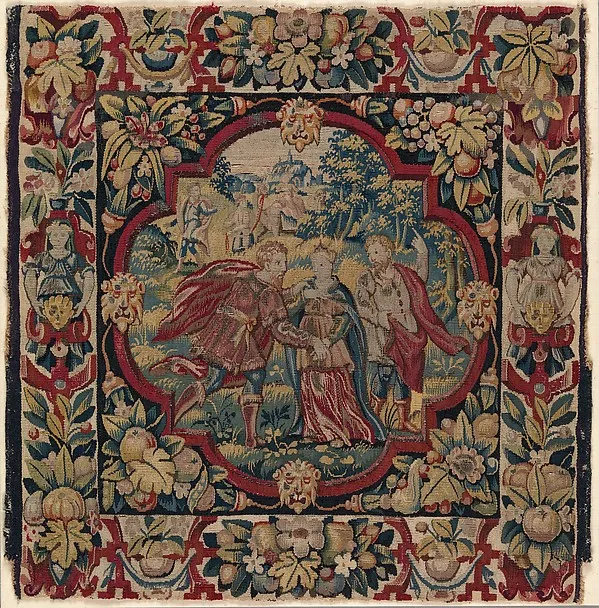
Joshua 21:1-8The Levites Ask for Their Cities
1Then came near the heads of the fathers of the Levites unto Eleazar the priest, and unto Joshua the son of Nun, and unto the heads of the fathers of the tribes of the children of Israel; 2And they spake unto them at Shiloh in the land of Canaan, saying, The LORD commanded by the hand of Moses to give us cities to dwell in, with the suburbs thereof for our cattle. 3And the children of Israel gave unto the Levites out of their inheritance, at the commandment of the LORD, these cities and their suburbs. 4And the lot came out for the families of the Kohathites: and the children of Aaron the priest, which were of the Levites, had by lot out of the tribe of Judah, and out of the tribe of Simeon, and out of the tribe of Benjamin, thirteen cities. 5And the rest of the children of Kohath had by lot out of the families of the tribe of Ephraim, and out of the tribe of Dan, and out of the half tribe of Manasseh, ten cities. 6And the children of Gershon had by lot out of the families of the tribe of Issachar, and out of the tribe of Asher, and out of the tribe of Naphtali, and out of the half tribe of Manasseh in Bashan, thirteen cities. 7The children of Merari by their families had out of the tribe of Reuben, and out of the tribe of Gad, and out of the tribe of Zebulun, twelve cities. 8And the children of Israel gave by lot unto the Levites these cities with their suburbs, as the LORD commanded by the hand of Moses.
There is a quiet confidence in how the Levites make their request. They come holding a promise and state it plainly: The LORD commanded by the hand of Moses to give us cities to dwell in. The whole appeal rests on God's word, spoken long before through Moses (Num. 35:1-8). They had watched eleven tribes receive their territories and the priestly line its standing, and through all of it they themselves had held nothing - and yet here they come, not as suppliants hoping for a favour, but as those who have a claim grounded in what God Himself had said.
To ask God for what He has promised is faith taking Him at His word. And the place they ask it matters: at Shiloh, where the tabernacle stood, before the LORD, in the centre of His appointed worship.
Three times in these few verses the same phrase falls: by lot. The cities came out by lot, the ancient way of letting the decision rest in God's hand rather than man's. And the lot does something beautiful: it scatters the Levites everywhere. The children of Aaron draw cities in Judah, Simeon, and Benjamin; the rest of the Kohathites in Ephraim, Dan, and Manasseh; the Gershonites in the far north among Issachar, Asher, and Naphtali; the Merarites east of Jordan in Reuben and Gad, and in Zebulun.
No region of Israel is without them. The lot is the design of God expressed in an unexpected way - the tribe with no land of its own is sown into the land of all the others, so that wherever an Israelite lived, the law of God and the worship of God were near. What looks at first like landlessness is a strategy of grace.
Joshua 21:9-42The Forty-Eight Cities, and the Six Refuges
11And they gave them the city of Arba the father of Anak, which city is Hebron, in the hill country of Judah, with the suburbs thereof round about it. 13Thus they gave to the children of Aaron the priest Hebron with her suburbs, to be a city of refuge for the slayer; and Libnah with her suburbs, 21For they gave them Shechem with her suburbs in mount Ephraim, to be a city of refuge for the slayer; and Gezer with her suburbs, 32And out of the tribe of Naphtali, Kedesh in Galilee with her suburbs, to be a city of refuge for the slayer; and Hammothdor with her suburbs, and Kartan with her suburbs; three cities. 41All the cities of the Levites within the possession of the children of Israel were forty and eight cities with their suburbs. 42These cities were every one with their suburbs round about them: thus were all these cities.
The long roll of cities - thirteen for the children of Aaron, ten for the rest of the Kohathites, thirteen for the Gershonites, twelve for the Merarites - is not mere bookkeeping, and the first city named tells you why. The priestly line of Aaron is settled first, and at the head of their list stands Hebron, in the hill country of Judah, the ancient city of Arba where Abraham, Isaac, and Jacob were buried. Of all the towns in Israel, the priests are given the most storied ground in the south - though the text is careful to note that the open fields and villages around it had already gone to Caleb (v. 12), so that the priests received the city and Caleb kept his reward.
Every name in this list is a real place where, from now on, a son of Levi would live: a man who knew the law and could teach it, who could answer a question about clean and unclean, who could point a troubled conscience toward the mercy of God. The list is long because the mercy is wide. There was to be no corner of Israel out of reach of someone who carried the word of God.
The chapter pauses to count: All the cities of the Levites within the possession of the children of Israel were forty and eight cities with their suburbs. Not forty, not fifty - forty-eight, exactly the number Moses had commanded a generation before in the wilderness (Num. 35:6-7). The arithmetic is its own quiet sermon. What God had spoken through Moses, down to the precise total, Joshua now carries out to the city. There is no rounding, no improvising, no falling short of the figure the LORD had named.
And the careful repetition that every one came with their suburbs round about them presses the same point: the provision was complete, each city with its pasture, nothing left half-done. The God who keeps His promises keeps them in full and in detail - and the dry-looking ledger of city names is, read rightly, a register of exact faithfulness. This precision is the very thing the chapter's closing verses will lift up and name.
Joshua 21:43-45Not One Word Fell to the Ground
43And the LORD gave unto Israel all the land which he sware to give unto their fathers; and they possessed it, and dwelt therein. 44And the LORD gave them rest round about, according to all that he sware unto their fathers: and there stood not a man of all their enemies before them; the LORD delivered all their enemies into their hand. 45There failed not ought of any good thing which the LORD had spoken unto the house of Israel; all came to pass.
After the long, patient roll of cities and tribes and lots, the book draws a breath and speaks in summary - and the word that governs the whole summary is all. The LORD gave unto Israel all the land which he sware… according to all that he sware… all their enemies… all came to pass. It tolls four times across three verses, and each time it shuts another door against doubt. All the land, all the promise, exactly as He had sworn.
The land that had been promised to Abraham centuries before, when he owned not a foot of it (cf. Gen. 23), is now possessed and dwelt in by his offspring. The arc that began with a single old man and a bare word from God has closed: they possessed it, and dwelt therein. The promise has become an address. What God said in the hearing of the patriarchs, Israel now lives inside.1
Two great gifts are named together here: the land, and rest. The LORD gave them rest round about… and there stood not a man of all their enemies before them. The conquest had been long and hard, and the books before this one are full of marching and battle; but the end God had in view was rest - a settled people, dwelling securely, no enemy able to stand before them. This is the goal toward which the whole story had been moving since the deliverance from Egypt: into rest.
And the wording is careful to give the credit where it belongs: the LORD delivered all their enemies into their hand. The rest they enjoyed was a gift, given freely, - granted, according to all that He had sworn, by the One who had promised it. Israel rested because God had finished what God had begun.
Research trail
Sources & further study
These references support the historical, linguistic, manuscript, and contextual notes in this chapter. Scripture remains the primary text; external sources are provided so readers can inspect the research directly.
- Joshua 21 - Translators' NotesThe NET Bible's detailed footnotes on Joshua 21 - the meaning of the “suburbs” or pasture-lands, the casting of lots for the Levitical cities, the role of the cities of refuge, and the force of the sweeping summary in verses 43-45 that not one of God's promises had fallen to the ground.
- Joshua 21 · Hebrew + classical Jewish commentaryThe Hebrew text of Joshua 21 with Rashi, Radak, and other classical commentators side by side - useful for migrash (the “suburbs,” the open pasture-land round each city), for miqlat (the cities of “refuge”), and for the pairing of davar (word, thing) with naphal (to fall) in the great summary of verse 45.
- Joshua 21 ↔ Hebrews 6 · 2 Corinthians 1 · Matthew 24Traces the threads tying the cities of refuge to those who have fled for refuge to lay hold upon the hope set before us (Heb. 6:18), and the “not one word failed” of verse 45 to all the promises of God in him are yea, and in him Amen (2 Cor. 1:20) and my words shall not pass away (Matt. 24:35).
Where this echoes in Scripture
The Levites Ask for Their Cities
- Numbers 18:20I am thy part and thine inheritance among the children of Israel.The LORD's own word to Aaron - the reason the Levites have cities but no land of their own.
- Joshua 13:33But unto the tribe of Levi Moses gave not any inheritance: the LORD God of Israel was their inheritance.The principle behind the whole chapter - their portion was God, not a territory.
- Numbers 35:6Among the cities... there shall be six cities for refuge... and to them ye shall add forty and two cities.The original command by Moses that Joshua 21 carries out - forty-eight cities, six of them refuge.
- Lamentations 3:24The LORD is my portion, saith my soul; therefore will I hope in him.The Levite's inheritance made the cry of every believer - God Himself as the portion that cannot be lost.
The Forty-Eight Cities, and the Six Refuges
- Hebrews 6:18That... we might have a strong consolation, who have fled for refuge to lay hold upon the hope set before us.The New Testament reads the cities of refuge directly - the guilty fleeing to safety, fulfilled in fleeing to Christ.
- Hebrews 6:19Which hope we have as an anchor of the soul, both sure and stedfast, and which entereth into that within the veil.The hope laid hold of at the refuge - an anchor that enters where Christ has gone before.
- Numbers 35:25And the congregation shall deliver the slayer out of the hand of the revenger of blood.The mercy built into the law - the manslayer received and protected at the city gate.
- Deuteronomy 19:3Thou shalt prepare thee a way... that every slayer may flee thither.The roads to the cities kept clear - refuge placed within reach of all, as in the chapter's six cities.
Not One Word Fell to the Ground
- 1 Kings 8:56There hath not failed one word of all his good promise, which he promised by the hand of Moses his servant.Solomon echoes verse 45 almost word for word - the “nothing fails” that itself never failed.
- 2 Corinthians 1:20For all the promises of God in him are yea, and in him Amen, unto the glory of God by us.Every promise that did not fall to the ground finds its “yes” in Christ.
- Matthew 24:35Heaven and earth shall pass away, but my words shall not pass away.Christ takes the claim of verse 45 onto His own lips - a word that outlasts the world.
- Isaiah 55:11So shall my word be that goeth forth out of my mouth: it shall not return unto me void.The same picture as not one word fell - God's word that accomplishes all He sends it to do.