
Who was Aaron in the Bible?
Moses’ older brother, who spoke for him before Pharaoh and became Israel’s first high priest.
Moses’ brother and spokesman; first high priest
c. 1400 BC
Moses’ older brother, who spoke for him before Pharaoh and became Israel’s first high priest.
Follow the reading trailBEYOND THE NAME
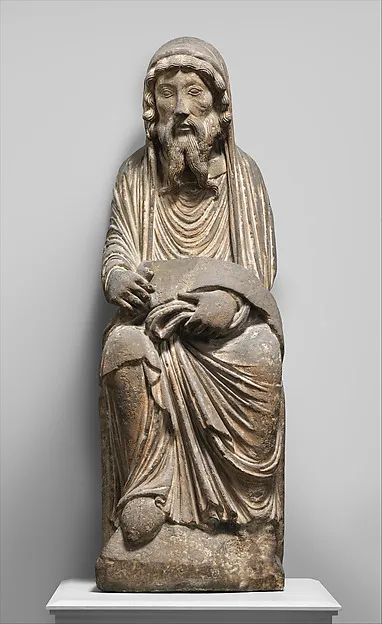
The elder brother of Moses, sent to be his "mouth" before Pharaoh when Moses pleaded he was not eloquent. Wielded the rod in the early signs and plagues, later made an idol at Sinai when the people pressed him, yet was set apart as the first high priest of Israel.
Themes in the authored commentary
FOLLOW THE PASSAGES
Selected passages and introductions help you read this person’s story in context.
summoned by God to meet Moses in the wilderness and serve as his spokesman
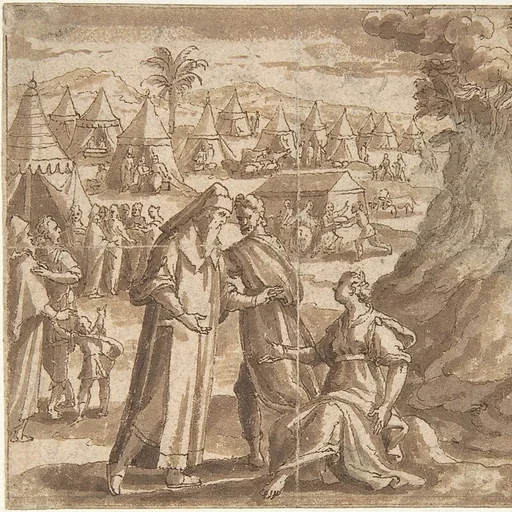
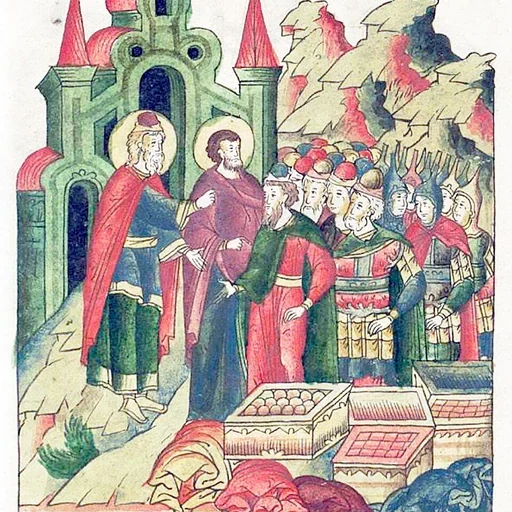
When Moses objects to his commission, God names Aaron as the one who will speak with him. Aaron meets Moses and accompanies him to the elders. Their partnership becomes central to the confrontation with Pharaoh.
designated by God as high priest, with sacred garments prescribed for his glory
The instructions for Aaron’s garments describe the responsibilities and symbolism of the priestly office. His sons are also named. The chapter helps explain why Aaron’s family becomes important in later accounts of worship and priesthood.
After a challenge to leadership, staffs representing the tribes are placed before the Lord. Aaron’s staff buds, blossoms, and produces almonds. The sign addresses the dispute over his household’s priestly role.
THE PEOPLE AROUND THE PERSON
Recorded parents
Recorded spouses
Recorded children
Relationships follow the source graph. Some are interpretive or uncertain, and individual verse citations are not yet available for every connection.
STUDY & INTERPRETATION
Aaron stands at the head of Israel’s priesthood - the line that would offer the sacrifices and bear the people’s names into the holy place. His story holds both failure (the golden calf) and grace (his rod that budded, his vestments, his intercession that stayed a plague). Hebrews sets the whole Aaronic priesthood as a shadow of the greater and perpetual priesthood of Christ, who needs no successor and offers Himself once for all.
From the Learn of Christ person commentary. Read alongside the linked Scripture passages.KEEP SCRIPTURE CLOSE
63 authored chapter guides feature this person. This is guide coverage, not an exhaustive count of biblical mentions.
ASK A BETTER QUESTION
Identity, story, early-life sources, family, and where to read.
Moses’ older brother, who spoke for him before Pharaoh and became Israel’s first high priest.
The elder brother of Moses, sent to be his "mouth" before Pharaoh when Moses pleaded he was not eloquent. Wielded the rod in the early signs and plagues, later made an idol at Sinai when the people pressed him, yet was set apart as the first high priest of Israel.
The individualized passage index associates this Aaron record with Exodus, Leviticus, Numbers, Deuteronomy, Joshua, Judges, 1 Samuel, 1 Chronicles, 2 Chronicles, Ezra, Nehemiah, Psalms, Micah, Luke, Acts, Hebrews. There are 333 distinct indexed verse references in the 66-book Bible. Browse the book-by-book list below; it separates this identity from other people who share the name. Source assignments and textual identifications can require interpretation.
A separate childhood account for Aaron is not provided in our current authored profile sources. Begin with Exodus 4:14 and the passages linked here for the evidence that is available. The first indexed reference to a name is not a birth record. This profile does not establish a birth date, schooling, or childhood events beyond what its sources state.
Aaron’s source record lists Amram (father), Jochebed (mother), Elisheba (spouse), Nadab (son of Aaron) (child), Abihu (child), Ithamar (child), Eleazar (child). These are source-graph relationships; legal family, uncertain identifications, and ancestral language require the cautions below. Individual verse evidence is not yet retained for every family edge.
Aaron stands at the head of Israel’s priesthood - the line that would offer the sacrifices and bear the people’s names into the holy place. His story holds both failure (the golden calf) and grace (his rod that budded, his vestments, his intercession that stayed a plague).
Answers draw on our existing authored biography and linked chapter studies. Where supplied, verse assignments come from the individualized STEP Bible index. Childhood answers distinguish documented events from gaps in the available sources.
FIND THE PERSON IN THE TEXT
333 distinct verse references in the source’s 66-book index. These are indexed name assignments, rather than every indirect allusion to this person. A name may also refer to descendants, a tribe, or a nation; read each passage to distinguish that usage from the individual.
“And the anger of the LORD was kindled against Moses, and he said, Is not Aaron the Levite thy brother? I know that he can speak well. And also, behold, he cometh forth to meet thee: and when he seeth thee, he will be glad in his heart.”
Exodus 4:14 · King James Version
“And the sons of Aaron the priest shall put fire upon the altar, and lay the wood in order upon the fire:”
Leviticus 1:7 · King James Version
“And Aaron shall offer the Levites before the LORD for an offering of the children of Israel, that they may execute the service of the LORD.”
Numbers 8:11 · King James Version
“Which had the golden censer, and the ark of the covenant overlaid round about with gold, wherein was the golden pot that had manna, and Aaron’s rod that budded, and the tables of the covenant;”
Hebrews 9:4 · King James Version
References are adapted from STEP Bible / Tyndale House TIPNR (CC BY 4.0). Deduplicated, matched to this identity, and checked against the bundled KJV’s verse bounds. Interpretive assignments and translation/versification differences may remain. This index is separate from evidence for individual family relationships.
YOUR OWN OBSERVATIONS
Notes, saved people, and study marks stay in this browser. They do not sync to your account.
KEEP EXPLORING
People featured in the same study guides. Sharing a chapter does not establish a family relationship.