Sirach 50
People in this chapter
The whole book of Sirach has been building to this chapter. After pages of proverbs and a long honor roll of the great men of Israel, from Enoch and Noah to the prophets, the book reaches its summit in a single human portrait: Simon the high priest, the son of Onias, the man who in his day propped up the house of God and fortified the temple. The chapter does not describe him in plain words.
It reaches for the brightest things in creation, the morning star and the full moon, the sun shining and the rainbow, roses and lilies and frankincense, gold and precious stones, the olive and the cypress. Simon in his priestly robes is glory walking, and the writer wants us to feel it.
Tap any highlighted phrase to jump to the commentary that unpacks it.
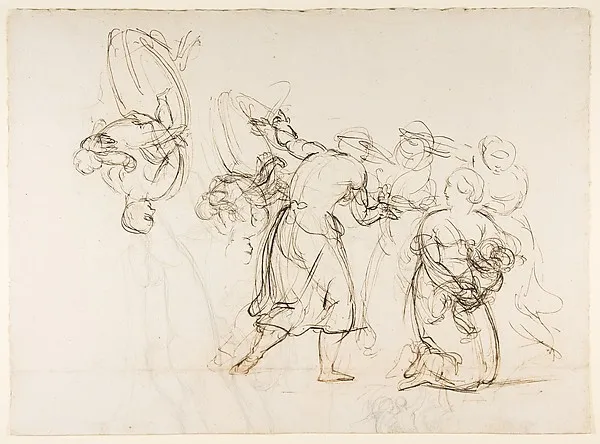
Sirach 50:1-5The High Priest Who Propped Up the House
1Simon the high priest, the son of Onias, who in his life propped up the house, and in his days fortified the temple. 4He took care of his nation, and delivered it from destruction.
The book that began with the praise of wisdom ends with the praise of a man, and the man is a priest. Simon, the son of Onias, served as high priest in Jerusalem, and the writer remembers him above all for one thing: he held up the house of God. "In his life propped up the house, and in his days fortified the temple." The image is of a man who finds the sanctuary in need of repair and pours his life into restoring it.
Of all the things a leader could be remembered for, Sirach chooses this. The greatest legacy is to have strengthened the place where God's people meet Him, to have left the worship of God stronger than you found it.
Simon is not only a builder of stone. He "took care of his nation, and delivered it from destruction," enlarging the city and securing it against ruin. The priest who tends the altar also tends the people. In Israel the sanctuary and the nation were never two separate concerns, for the well-being of the people flowed from their right standing before God. To care for the house of worship and to care for the vulnerable city were a single calling.
The chapter quietly insists that true priesthood looks outward, that the man closest to the altar is also the man most responsible for the safety of those he serves.
5He prevailed to enlarge the city, and obtained glory in his conversation with the people: and enlarged the entrance of the house and the court.
Simon "obtained glory in his conversation with the people," that is, in the way he carried himself among them, his bearing and his dealings in the sight of the whole community. His honor was not won in secret. It was visible in how he moved through the daily life of the nation, and it was crowned by his enlarging the entrance of the house and the court, opening wider the way into the place of worship.
A leader of God's people earns a glory that the people can see, and the truest of that glory is measured by how much wider he has opened the door to God.
Sirach 50:6-11As the Sun Shining in the Temple of God
6He shone in his days as the morning star in the midst of a cloud, and as the moon at the full. 7And as the sun when it shineth, so did he shine in the temple of God.
Now the writer abandons plain description and reaches for the heavens. Simon shone "as the morning star in the midst of a cloud, and as the moon at the full." These are images of light breaking through, of a brightness that pierces darkness and grows to its fullness. The morning star rises when the night is nearly over; the full moon floods the dark with borrowed light. The high priest, robed and serving in the sight of the people, becomes a sign of the light of God shining into the world, a reflection of a radiance not his own.
The images climb from star to moon to the sun itself: "as the sun when it shineth, so did he shine in the temple of God." This is the brightest comparison the writer can make, and he places it precisely "in the temple of God." Simon's glory is liturgical glory, glory that belongs to the place of worship and the act of worship. He shines most when he is serving God before the people.
The light he gives off is the light of a life turned toward God in the very act of leading others to Him, and that is the only glory that ever truly shines.
8And as the rainbow giving light in the bright clouds, and as the flower of roses in the days of the spring, and as the lilies that are on the brink of the water, and as the sweet smelling frankincense in the time of summer. 11As an olive tree budding forth, and a cypress tree rearing itself on high, when he put on the robe of glory, and was clothed with the perfection of power.
The comparisons pour out in a flood: the rainbow, roses in spring, lilies by the water, frankincense in summer, the budding olive, the rising cypress. Creation at its most beautiful is gathered up to describe one man putting on his robes for worship. And the phrase that gathers it all is striking: he "put on the robe of glory, and was clothed with the perfection of power." The high priest's vestments were no ordinary garment.
To put them on was to be clothed in the glory of his office, to wear, in cloth and gold, the holiness of the God he served. The robe declares what the man is called to be: a visible bearer of the beauty of holiness.
Sirach 50:12-21The Trumpets Sound and the People Fall Down
13And when he took the portions out of the hands of the priests, he himself stood by the altar. And about him was the ring of his brethren: and as the cedar planted in mount Libanus, 16He stretched forth his hand to make a libation, and offered of the blood of the grape.
The scene becomes a living tableau. Simon stands by the altar, and "about him was the ring of his brethren," the sons of Aaron gathered around him like branches of palm trees, like cedars on the mountain. Worship in the house of God is never a solitary act. The high priest stands at the center, but he is surrounded by a ring of fellow priests, and beyond them the whole congregation. The chapter paints worship as a great encircling, the people of God gathered around the place where heaven and earth meet, each in their order, all turned toward the same altar.
At the center of the service is an offering poured out. Simon "stretched forth his hand to make a libation, and offered of the blood of the grape," pouring the drink offering at the foot of the altar as "a divine odour to the most high Prince." The phrase "the blood of the grape" is an old and tender way of speaking of wine, and here it is poured out before God. The whole drama of Israel's worship turns on something given up, something poured out and surrendered to God.
The lifted hand, the cup emptied at the altar, becomes the very heart of the act, an offering that rises before God as a pleasing fragrance.
18Then the sons of Aaron shouted, they sounded with beaten trumpets, and made a great noise to be heard for a remembrance before God. 19Then all the people together made haste, and fell down to the earth upon their faces, to adore the Lord their God, and to pray to the Almighty God the most High.
As the offering is made, the trumpets sound. The sons of Aaron blow the beaten trumpets and raise a great noise "for a remembrance before God." The trumpets are not mere ceremony. They are a memorial, a way of bringing the people before God's attention, of saying with sound what the heart longs to say: remember us, look upon us, receive this worship. Worship reaches upward, and the blast of the trumpets is Israel lifting its whole self toward heaven, asking to be held in the memory of God.
Then comes the response of the whole congregation, and it is the natural answer to the glory described all through the chapter: "all the people together made haste, and fell down to the earth upon their faces, to adore the Lord their God." This is worship in its bodily fullness, the entire nation prostrate before the Most High. The singers lift their voices, sweet melody fills the great house, and the people pray until the worship is perfected.
The chapter shows what the presence of God draws out of a people who truly see Him: not a casual nod, but faces to the ground, voices raised, the whole body bowed in adoration.
Sirach 50:22-26He Lifted His Hands Over All the Congregation
22Then coming down, he lifted up his hands over all the congregation of the children of Israel, to give glory to God with his lips, and to glory in his name: 24And now pray ye to the God of all, who hath done great things in all the earth, who hath increased our days from our mother’s womb, and hath done with us according to his mercy.
After the offering and the adoration comes the crown of the whole chapter. Simon comes down from the altar and "lifted up his hands over all the congregation of the children of Israel" to bless them. This is the high priest's greatest act, the blessing of the people in the name of the Lord. Israel knew the words of this blessing: "The LORD bless thee, and keep thee... The LORD lift up his countenance upon thee, and give thee peace" (Numbers 6:24-26).
The whole splendor of the chapter, the robes, the light, the trumpets, the worship, leads to this moment when God's favor is spoken over His people through the lifted hands of His priest. Glory bends down into blessing.
The blessing calls the people to prayer and grounds it in memory: pray to "the God of all, who hath done great things in all the earth, who hath increased our days from our mother's womb, and hath done with us according to his mercy." Before any petition, the chapter rehearses what God has already done. He has watched over each life from its very beginning, multiplying days, dealing with His people not according to their deserving but according to His mercy.
This is the bedrock under every prayer: we ask God for what is to come because we have already tasted His goodness in all that has been.
25May he grant us joyfulness of heart, and that there be peace in our days in Israel for ever: 26That Israel may believe that the mercy of God is with us, to deliver us in his days.
The priest's blessing asks for two things above all: "joyfulness of heart, and that there be peace." These are the deep gifts the worship of God is meant to leave in a people, gladness within and wholeness without, joy in the heart and peace in the land. And the aim of it all is faith: "that Israel may believe that the mercy of God is with us." The point of the whole glorious liturgy is not display but trust, a people sent home from the house of God more sure of His mercy than when they came.
The truest fruit of worship is a heart that believes God is near and good.
Sirach 50:27-31Blessed Is the One Who Treasures These Things
29Jesus the son of Sirach, of Jerusalem, hath written in this book the doctrine of wisdom and instruction, who renewed wisdom from his heart. 30Blessed is he that is conversant in these good things: and he that layeth them up in his heart, shall be wise always.
Here the author signs his work. "Jesus the son of Sirach, of Jerusalem, hath written in this book the doctrine of wisdom and instruction, who renewed wisdom from his heart." After the soaring vision of the high priest, the writer steps forward to name himself and his purpose. He has not invented his wisdom; he has "renewed" it, drawing the ancient wisdom of his people up out of his own heart and setting it down for those who come after.
It is a humble and honest seal: a man offering what he has gathered, hoping it will guide others toward the God whose glory he has just described.
The book ends where it began, with a blessing on wisdom: "Blessed is he that is conversant in these good things: and he that layeth them up in his heart, shall be wise always." Wisdom is not gained by a single reading. It is laid up, stored, treasured in the heart until it becomes part of the one who keeps it. The person who lives close to these "good things," turning them over, returning to them, hiding them within, becomes wise not for a moment but always.
The whole book has been an invitation to this: not merely to admire the glory of God's house, but to carry its wisdom home in the heart.
31For if he do them, he shall be strong to do all things: because the light of God guideth his steps.
The final line gathers up the whole book into a single promise: "if he do them, he shall be strong to do all things: because the light of God guideth his steps." Wisdom is for doing, not only for knowing, and the one who does it is given strength and a light to walk by. The chapter that opened with a priest shining like the sun in the temple closes by promising that same light to the ordinary believer who keeps God's wisdom.
The glory does not stay locked in the sanctuary. It becomes a lamp for the feet of anyone who treasures these things and lives by them, leading their steps all the way home.
Where this echoes in Scripture
The High Priest Who Propped Up the House
- Psalm 26:8LORD, I have loved the habitation of thy house, and the place where thine honour dwelleth.The same love for the house of God that drove Simon to repair it.
- Nehemiah 2:18Let us rise up and build. So they strengthened their hands for this good work.Another leader who poured his life into restoring the city and its worship.
- John 2:17The zeal of thine house hath eaten me up.Jesus too is consumed by devotion to His Father's house.
As the Sun Shining in the Temple of God
- Exodus 28:2And thou shalt make holy garments for Aaron thy brother for glory and for beauty.The robe of glory traces back to the vestments God Himself designed for the priest.
- Matthew 17:2And his face did shine as the sun, and his raiment was white as the light.On the mount, Christ shines with the glory Simon could only reflect.
- Revelation 1:16And his countenance was as the sun shineth in his strength.John sees the true High Priest, shining like the sun this chapter describes.
The Trumpets Sound and the People Fall Down
- Leviticus 9:24Which when all the people saw, they shouted, and fell on their faces.The same response to God's glory at the altar: the people fall on their faces.
- 2 Chronicles 7:3They bowed themselves with their faces to the ground... and worshipped, and praised the LORD.When glory filled the temple, Israel bowed exactly as this chapter describes.
- Revelation 7:11And fell before the throne on their faces, and worshipped God.The worship of the house of God on earth is a rehearsal for the throne.
He Lifted His Hands Over All the Congregation
- Numbers 6:24-26The LORD bless thee, and keep thee... and give thee peace.The very blessing Simon spoke with lifted hands over the people.
- Luke 24:50And he lifted up his hands, and blessed them.The risen Christ leaves His people exactly as the high priest did, with lifted hands.
- Numbers 6:27And they shall put my name upon the children of Israel; and I will bless them.God Himself stands behind the priest's blessing; the words carry His name.
Blessed Is the One Who Treasures These Things
- Psalm 119:11Thy word have I hid in mine heart, that I might not sin against thee.The same treasuring of wisdom in the heart that this chapter blesses.
- Psalm 119:105Thy word is a lamp unto my feet, and a light unto my path.The light of God that guides the steps of the one who keeps His wisdom.
- John 8:12I am the light of the world: he that followeth me shall not walk in darkness, but shall have the light of life.The light that guides every step is finally a Person, Christ Himself.