Sirach 51
People in this chapter
A book of teaching ends with a prayer. After fifty chapters of counsel on friendship and money, speech and humility, the fear of the Lord and the praise of the fathers, the son of Sirach lays down the teacher's voice and lifts up the worshiper's. "I will give glory to thee, O Lord, O King, and I will praise thee, O God my Saviour." What follows is a thanksgiving for rescue, the testimony of a man who was surrounded by lying tongues and enemies and the gates of death, and who found that when no human help came, the Lord did.
Memory of past mercy becomes the ground of present praise.
Tap any highlighted phrase to jump to the commentary that unpacks it.
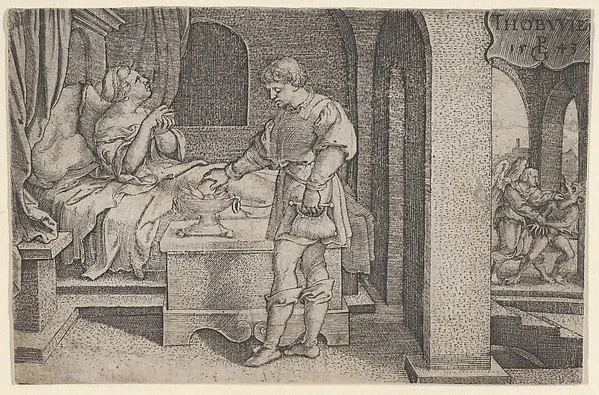
Sirach 51:1-5I Will Give Glory to Thee, O God My Saviour
1A prayer of Jesus the son of Sirach. I will give glory to thee, O Lord, O King, and I will praise thee, O God my Saviour. 2I will give glory to thy name: for thou hast been a helper and protector to me.
The book ends where wisdom always begins, in the praise of God. The teacher who has spent the whole work telling others what to do now turns and addresses the Lord directly. He names Him King and Saviour in the same breath, the sovereign over all and the one who personally reaches down to rescue. There is a deep order in this. A lifetime of instruction does not graduate a person beyond worship; it leads them into it. The wisest thing the wise man does in his final chapter is to give glory away.
The praise is not abstract. It rests on what God has actually been to him: a helper and a protector, words that carry the memory of real danger survived. This is the language of the Psalms, where God is again and again "my helper" and "my shield." Gratitude here is specific. It looks back over the rescues of a life and names them, refusing to let past deliverance fade into a vague good feeling. The God who helped is worth praising by name.
3And hast preserved my body from destruction, from the snare of an unjust tongue, and from the lips of them that forge lies, and in the sight of them that stood by, thou hast been my helper. 4And thou hast delivered me, according to the multitude of the mercy of thy name, from them that did roar, prepared to devour. 5Out of the hands of them that sought my life, and from the gates of afflictions, which compassed me about:
The first peril named is the tongue. Before swords and kings, the writer remembers being caught in "the snare of an unjust tongue" and the lips of those who "forge lies." A whole book that warned repeatedly about the danger of slander now testifies that the teacher himself was its target. He knows the wound from the inside. And his rescue came "in the sight of them that stood by," in public, where the lie had done its damage. God vindicated him openly, before the very onlookers who had heard the accusation.
The images intensify. Enemies "roar, prepared to devour," like lions circling prey. Hands reach for his life. He stands at "the gates of afflictions" that surround him on every side. This is the language of someone genuinely cornered, with no visible way out. And the steady note under all of it is mercy, "the multitude of the mercy of thy name." He does not credit his escape to his own cunning or strength. He credits it to the abundance of God's mercy, which reached him where nothing else could.
Sirach 51:6-12When No One Helped, I Remembered Thy Mercy
6From the oppression of the flame which surrounded me, and in the midst of the fire I was not burnt. 8My soul shall praise the Lord even to death. 9And my life was drawing near to hell beneath.
The trial is pictured as fire that surrounds and oppresses, and yet "in the midst of the fire I was not burnt." Any reader of Scripture hears in this the echo of three men in a Babylonian furnace who walked unharmed because a fourth figure walked with them. The writer may mean fierce affliction rather than literal flame, but the truth is the same: God's people are not promised exemption from the fire, they are promised His presence within it. The fire that should have consumed him did not, because he was not in it alone.
Here is a vow that reaches as far as a vow can reach: "My soul shall praise the Lord even to death." Praise will not be a fair-weather thing, abandoned when the trial grows dark. It will go all the way to the edge of life. And the very next line shows how close that edge had come, for "my life was drawing near to hell beneath," near to the grave, to the realm of the dead.
He praises God not from a place of safety but from the brink. The vow is costly because it is made in the dark, and that is what makes it real.
10They compassed me on every side, and there was no one that would help me. I looked for the succour of men, and there was none. 11I remembered thy mercy, O Lord, and thy works, which are from the beginning of the world. 12How thou deliverest them that wait for thee, O Lord, and savest them out of the hands of the nations.
The loneliness is total. "There was no one that would help me. I looked for the succour of men, and there was none." This is one of the hardest places a person can stand, surrounded by trouble and abandoned by every human ally. The writer does not pretend it was otherwise or rush past the pain. He lets the emptiness be exactly as empty as it was. It is precisely here, where human help runs out, that the next verse turns. The end of self-reliance and the end of every other rescuer is often the beginning of God.
In the moment of utter abandonment, he does one thing: he remembers. "I remembered thy mercy, O Lord, and thy works, which are from the beginning of the world." His mind reaches back past his own crisis to the long record of what God has always done, how He "deliverest them that wait for thee." This is how faith survives the dark. It refuses to be trapped in the present emergency and instead recalls the whole history of God's faithfulness.
Memory becomes a lifeline. The God who has delivered from the beginning of the world is the God who can deliver now.
Sirach 51:13-20From My Youth I Sought After Wisdom
13Thou hast exalted my dwelling place upon the earth and I have prayed for death to pass away. 14I called upon the Lord, the father of my Lord, that he would not leave me in the day of my trouble, and in the time of the proud without help. 15I will praise thy name continually, and will praise it with thanksgiving, and my prayer was heard.
The prayer reaches for God with a tender phrase, calling upon "the father of my Lord." It is the cry of a child appealing to a father not to be left alone "in the day of my trouble." The image of God as Father runs all through Scripture, and here it carries the confidence that a child can ask a father for help and expect to be heard. Faith is not only believing God is powerful; it is believing He is fatherly, that the King who rules the nations also bends to the cry of one of His own.
Then comes one of the quiet hinges of the chapter: "my prayer was heard." Everything the thanksgiving has been building toward rests on this simple fact. The cry from the gates of death did not vanish into silence. It was heard. This is why the writer can promise to praise "continually," with "thanksgiving," for praise is the natural answer of a heart that has learned its prayers reach God. A heard prayer turns a person into a worshiper for life.
18When I was yet young, before I wandered about, I sought for wisdom openly in my prayer. 19I prayed for her before the temple, and unto the very end I will seek after her, and she flourished as a grape soon ripe. 20My heart delighted in her, my foot walked in the right way, from my youth up I sought after her.
Now the chapter turns from thanksgiving to memoir. The teacher tells how wisdom came to him, and the first thing he reports is that he sought her young, "before I wandered about," before the distractions and detours of adult life. And he sought her "openly in my prayer," before the temple, not as a private hobby but as a holy pursuit brought to God. Wisdom, in this telling, is not stumbled upon. She is asked for, prayed for, pursued from the start. The pursuit that began in youth he vows to continue "unto the very end."
The language grows warm and personal. "My heart delighted in her, my foot walked in the right way." This is not grim duty but love. Seeking wisdom shaped not only his mind but his steps, his whole way of walking through the world. And the verse repeats the refrain that beats through this whole section, "from my youth up I sought after her." A life is being summed up here, and the summary is a single sustained pursuit. What a person seeks early and seeks long is what finally shapes them.
Sirach 51:21-30My Soul Hath Wrestled for Her
23To him that giveth me wisdom, will I give glory. 25My soul hath wrestled for her, and in doing it I have been confirmed. 26I stretched forth my hands on high, and I bewailed my ignorance of her.
Even in the middle of describing his own effort, the writer keeps the credit straight: "To him that giveth me wisdom, will I give glory." Wisdom was pursued, yes, with everything he had, and yet it remains a gift. He sought her and God gave her, and these two truths sit side by side without contradiction. The seeking was real and the giving was real. He labored as if everything depended on him and gave thanks as one who knows it was granted from above.
The cost of the search now comes into full view: "My soul hath wrestled for her." This is no gentle browsing. It is a struggle of the soul, the kind of effort that leaves a person spent. He "stretched forth my hands on high," the posture of urgent prayer, and "bewailed my ignorance," grieving over how little he understood. Wisdom did not fall into his lap. He fought for her with prayers and tears. And the fruit of that wrestling was that "I have been confirmed," made firm, established. What we struggle for, under God, takes deep root in us.
27I directed my soul to her, and in knowledge I found her. 28I possessed my heart with her from the beginning: therefore I shall not be forsaken. 30The Lord hath given me a tongue for my reward: and with it I will praise him.
The wrestling ends in finding. "I directed my soul to her, and in knowledge I found her." The verbs are deliberate, directed, found, the language of someone who aimed his whole inner life at one thing and reached it. Wisdom rewards the person who orders their soul toward her. This is the steady promise that runs through all the wisdom writings: seek and you will find, ask and it will be given. The search is not a gamble. For the one who truly directs the soul toward wisdom, finding is sure.
Because he took wisdom into his heart "from the beginning," he can say, "therefore I shall not be forsaken." Wisdom held early and held deep becomes a stability nothing can take away. And the closing note ties the whole life together: "The Lord hath given me a tongue for my reward, and with it I will praise him." The very faculty of teaching, the tongue that produced this whole book, is received as a gift and returned as praise. The reward for seeking wisdom is the power to give wisdom away, and to bless the One who gave it.
Sirach 51:31-38Buy Her Without Silver; Bend Your Neck to Her Yoke
31Draw near to me, ye unlearned, and gather yourselves together into the house of discipline. 32Why are ye slow? and what do you say of these things? your souls are exceeding thirsty. 33I have opened my mouth, and have spoken: buy her for yourselves without silver,
Having told his own story, the teacher throws the door open to everyone else. "Draw near to me, ye unlearned." He does not address the already wise; he calls the ones who know they lack, inviting them into "the house of discipline," the school of formation where wisdom is learned. There is great gentleness in this. The one qualification for coming is to admit you have not yet arrived. Wisdom's house is not for the accomplished. It is for the willing.
The teacher reads the hearts of the slow and names what they will not say: "your souls are exceeding thirsty." Beneath the hesitation is a real thirst, a hunger the soul cannot satisfy on its own. The prophets used the same image to call the spiritually parched to come and drink. Here is the diagnosis behind every invitation in Scripture: the human soul is thirsty by design, and only what God offers will quench it. The question "why are ye slow?" is the urgency of a teacher who sees the thirst and cannot understand the delay.
Then comes the great paradox: "buy her for yourselves without silver." Wisdom is to be bought, treated as something of supreme value, sought with the seriousness one gives to a costly purchase. And yet she costs no money. She cannot be purchased with silver, only received by the soul willing to seek her. This is the same astonishing offer Isaiah held out, "come, buy wine and milk without money and without price." What is most precious is held out freely, and the only currency that obtains it is a thirsty, willing heart.
34And submit your neck to the yoke, and let your soul receive discipline: for she is near at hand to be found. 35Behold with your eyes how I have laboured a little, and have found much rest to myself. 38Work your work before the time, and he will give you your reward in his time.
The invitation asks for a yoke. "Submit your neck to the yoke, and let your soul receive discipline." A yoke means a willingness to be guided, to walk under direction rather than wander free. It sounds like a cost, and it is, yet it comes wrapped in the gentlest of promises: "she is near at hand to be found." Wisdom is not hidden on a far mountain or locked behind impossible study. She is close, within reach of anyone who will take the yoke.
The discipline asked is real, but the reward stands right beside the seeker, waiting to be found.
The book's last great promise is rest. "Behold how I have laboured a little, and have found much rest to myself." The teacher offers his own life as evidence. A little labor, much rest. The effort of seeking wisdom is not endless toil; it is the short road to a deep peace. And the closing counsel completes it: "Work your work before the time, and he will give you your reward in his time."
Do your part now, in the day given to you, and trust the reward to God's timing. The labor is ours; the harvest is His to give, and He gives it surely.
Where this echoes in Scripture
I Will Give Glory to Thee, O God My Saviour
- Psalm 18:6In my distress I called upon the LORD, and cried unto my God: he heard my voice out of his temple, and my cry came before him, even into his ears.The same shape: distress, a cry to God, and a rescue worth remembering aloud.
- Psalm 34:6This poor man cried, and the LORD heard him, and saved him out of all his troubles.When no human help came, the Lord became the helper this prayer praises.
- Luke 1:46-47My soul doth magnify the Lord, and my spirit hath rejoiced in God my Saviour.Mary takes up the same title, God my Saviour, in a song of deliverance.
When No One Helped, I Remembered Thy Mercy
- Daniel 3:25Lo, I see four men loose, walking in the midst of the fire, and they have no hurt; and the form of the fourth is like the Son of God.In the midst of the fire and not burned, because they were not alone.
- Psalm 77:11I will remember the works of the LORD: surely I will remember thy wonders of old.The same survival strategy in the dark: remember His works from the beginning.
- 2 Corinthians 1:9-10We had the sentence of death in ourselves, that we should not trust in ourselves, but in God which raiseth the dead.When human help fails and death draws near, trust turns to the God who delivers.
From My Youth I Sought After Wisdom
- Proverbs 8:17I love them that love me; and those that seek me early shall find me.Wisdom herself promises that those who seek her early will find her.
- 1 Kings 3:9Give therefore thy servant an understanding heart to judge thy people, that I may discern between good and bad.Solomon, too, sought wisdom in prayer rather than treating it as his own achievement.
- James 1:5If any of you lack wisdom, let him ask of God, that giveth to all men liberally, and upbraideth not; and it shall be given him.Wisdom is still sought the same way: asked of God, who gives it freely.
My Soul Hath Wrestled for Her
- Genesis 32:26And he said, I will not let thee go, except thou bless me.Jacob wrestling through the night for a blessing, as the soul here wrestles for wisdom.
- Colossians 2:3In whom are hid all the treasures of wisdom and knowledge.The wisdom sought at such cost is found whole in Christ.
- Matthew 7:7Ask, and it shall be given you; seek, and ye shall find; knock, and it shall be opened unto you.The soul that directs itself toward wisdom is promised the finding.
Buy Her Without Silver; Bend Your Neck to Her Yoke
- Isaiah 55:1Ho, every one that thirsteth, come ye to the waters, and he that hath no money; come ye, buy, and eat... without money and without price.The same free purchase for the thirsty: what is priceless, held out without cost.
- Matthew 11:28-29Come unto me, all ye that labour and are heavy laden, and I will give you rest. Take my yoke upon you, and learn of me... and ye shall find rest unto your souls.Jesus takes up this chapter's very words: the yoke, the learning, the rest.
- Proverbs 9:5Come, eat of my bread, and drink of the wine which I have mingled.Wisdom keeps an open house and calls the simple to come in and be fed.