1 Kings 3
People in this chapter
A young king goes up to Gibeon to worship, and God meets him in a dream with the most dangerous offer ever made: Ask what I shall give thee. Solomon could have anything. Long life. Riches. The death of his rivals. He asks for none of it. He asks for a listening heart, because the people are too many and he is too small. God is delighted, and gives him the wisdom plus everything he did not ask for.1
Tap any highlighted phrase to jump to the commentary that unpacks it.
1 Kings 3:1-3A Mixed Beginning
1And Solomon made affinity with Pharaoh king of Egypt, and took Pharaoh’s daughter, and brought her into the city of David, until he had made an end of building his own house, and the house of the LORD, and the wall of Jerusalem round about. 2Only the people sacrificed in high places, because there was no house built unto the name of the LORD, until those days. 3And Solomon loved the LORD, walking in the statutes of David his father: only he sacrificed and burnt incense in high places.
Solomon's first political act is a marriage to Pharaoh's daughter - a strategic alliance with Egypt, the great power of the ancient world. This is practical statecraft. But it immediately signals a tension: Solomon is making his own way, aligning himself with foreign powers, building his own house before the house of the Lord is complete. The new king is politically savvy, but the text notes this alignment with a certain coolness. We are meant to notice that Solomon has made "affinity" - a covenant of kinship - with a foreign king.123
For generations, Israel has sacrificed at high places - local altars on hilltops, scattered throughout the land. There is no centralized temple yet. Solomon will build one, but for now, the worship of Israel is dispersed. The text is clear: the high places are permitted, even necessary, because the house of the Lord has not yet been built. This is a provisional arrangement, one the building of the temple will supersede.
And yet, in the same breath, real devotion. He walks in the statutes of David his father. He sacrifices and burns incense. The tension in Solomon's character is already here: a genuine lover of God who is also a working politician, the two pulling against each other. His heart is not yet single. If that mix sounds familiar, it is because most of us live there too - loving God truly and hedging our bets at the same time.
1 Kings 3:4-7The Dream at Gibeon
4And the king went to Gibeon to sacrifice there; for that was the great high place: a thousand burnt offerings did Solomon offer upon that altar. 5In Gibeon the LORD appeared to Solomon in a dream by night: and God said, Ask what I shall give thee. 6And Solomon said, Thou hast shewed unto thy servant David my father great mercy, according as he walked before thee in truth, and in righteousness, and in uprightness of heart with thee; and thou hast kept for him this great kindness, that thou hast given him a son to sit on his throne, as it is this day. 7And now, O LORD my God, thou hast made thy servant king instead of David my father: and I am but a little child: I know not how to go out or come in.
Solomon goes to Gibeon, the greatest of the high places, and offers a thousand burnt offerings. This is a public act of worship on a massive scale - an act that declares Solomon's piety to all Israel. He is invoking heaven. And heaven responds.
God appears to Solomon in a dream, in sleep, when the ordinary defenses of the mind are lowered. In dreams, God often speaks to those who are open to Him. And His first word to Solomon is an invitation: "Ask what I shall give thee." It is a moment of absolute openness - God is offering Solomon anything he desires. The young king must choose.
Handed anything he wants, Solomon does not lead with a request. He leads with memory. He recalls his father David, the mercy God showed him, the faithfulness David walked in. He is not asking God to do something new; he is reminding himself who God has already proved Himself to be. This is the prayer of a man who knows the kingdom in his hands is a gift, never a possession.
He has just been handed a kingdom, and the first thing he says about himself is that he is small. The "little child" is not his age but his honest sense of being in over his head. To "go out or come in" is an old idiom for leading a people, for knowing which way to move them - and he confesses he does not know how. That confession is exactly where wisdom begins.
1 Kings 3:8-10The Prayer for Wisdom
8And thy servant is in the midst of thy people which thou hast chosen, a great people, that cannot be numbered nor counted for multitude. 9Give therefore thy servant an understanding heart to judge thy people, that I may discern between good and bad: for who is able to judge this thy so great a people? 10And the speech pleased the LORD, that Solomon had asked this thing.
Solomon looks at the task before him - a nation uncounted and uncountable, chosen by God, vast in numbers and complexity. He does not shrink from the description. He does not minimize the challenge. He sees clearly what lies ahead.
Solomon asks to discern between good and bad - not merely between right and wrong in the legal sense, but between what serves life and what serves death, what builds and what tears down. The judge must do more than apply law. He must perceive the hidden character of things and people. He must see what is truly good even when it wears the mask of evil, and what is truly evil even when it wears the mask of good.
Something about the request delights God. A young man with a blank check spends it on the one gift that turns a ruler into a servant. He does not ask to be feared or enriched or kept safe from his rivals. He asks to be able to see his people, to understand them, to judge them rightly. That is the heart of a true king, and God knows it when He hears it.
1 Kings 3:11-14God's Pleasure and the Gifts Beyond Asking
11And God said unto him, Because thou hast asked this thing, and hast not asked for thyself long life; neither hast asked riches for thyself, nor hast asked the life of thine enemies; but hast asked for thyself understanding to discern judgment; 12Behold, I have done according to thy words: lo, I have given thee a wise and an understanding heart; so that there was none like thee before thee, neither after thee shall any arise like unto thee. 13And I have also given thee that which thou hast not asked, both riches, and honour: so that there shall not be any among the kings like unto thee all thy days. 14And if thou wilt walk in my ways, to keep my statutes and my commandments, as thy father David did walk, then I will lengthen thy days.
Notice what God lingers on: the three things Solomon passed over. Long life, the safe reign stretching out for decades. Riches, the treasury that would bankroll any ambition. The death of his enemies, the cold comfort of knowing no rival is left standing. These are the first three petitions almost any new king would have made, the natural reflexes of power. Solomon wanted none of them.
The phrase "life of thine enemies" is worth pausing over. A young king, newly made, might reasonably fear the persons who could challenge his rule - older generals, ambitious princes, supporters of his older brothers. But Solomon asks for none of this security. He turns his request toward the wisdom to judge his people rightly, trusting God's providence with everything else.
Then God adds what was never requested - riches and honor on top. There is a pattern here that runs all through Scripture: seek first the kingdom of God and His righteousness, and the rest gets added in. Solomon asked for wisdom alone; God handed him wisdom and threw in the very things that usually crowd wisdom out. He tends to give past the edge of what we dare to ask.
Honor - the respect and recognition of the peoples around him - comes because he is wise. Wisdom draws honor to itself. A king who judges justly, who listens to his people, who sees truly, will be honored by his people and his neighbors. It is a fruit that grows naturally from the root of wisdom.
One word hangs over all of it: if. The long life is tied to a walk - keeping God's ways as David did. The wisdom is granted outright, but the years are conditional on faithfulness. Choosing wisdom once, however well, is not the same as choosing God daily. Solomon made a beautiful start. The rest of his story will turn on whether he keeps making it.
1 Kings 3:15-18The Two Women at the Gate
15And Solomon awoke; and, behold, it was a dream. And he came to Jerusalem, and stood before the ark of the covenant of the LORD, and offered up burnt offerings, and offered peace offerings, and made a feast to all his servants. 16Then came there two women, that were harlots, unto the king, and stood before him. 17And the one woman said, O my lord, I and this woman dwell in one house; and I was delivered of a child with her in the house. 18And it came to pass the third day after that I was delivered, that this woman was delivered also: and we were together; there was no stranger with us in the house, save we two in the house.
Solomon awakes from the dream. What he has seen and heard is real - the presence of God is real, the promise is real - but it came to him in sleep. He returns immediately to Jerusalem and stands before the ark of the covenant, the visible sign of God's presence among His people. And he offers sacrifices - burnt offerings (wholly given to God) and peace offerings (shared between altar and worshippers). The dream has changed him. He is now a man in covenant with God.
Almost at once, the gift is put to the test. Two women come before Solomon, women of the lowest standing (harlots, the text says plainly), with a case no contract or statute can settle - only one mother's word against the other's. These are the people of the kingdom no one usually defends. And yet they walk straight up to the king. They believe he will listen. They believe Solomon will see them.
The two women share a house. They are poor enough that two women must live together, sharing a space. One gives birth to a son. Three days later, the other also gives birth. And then, in the night, one of the women smothers her own child in her sleep (or, as the older woman will later claim, deliberately) and exchanges the living child for the dead one. By morning, a terrible question has arisen: which child is the living one? Which woman is the true mother? The law provides no clear answer.
1 Kings 3:19-27The Sword Test Reveals the True Mother
19And this woman’s child died in the night; because she overlaid it. 20And she arose at midnight, and took my son from beside me, while thine handmaid slept, and laid it in her bosom, and laid her dead child in my bosom. 21And when I rose in the morning to give my child suck, behold, it was dead: but when I had considered it in the morning, behold, it was not my son, which I did bear. 22And the other woman said, Nay; but the living is my son, and the dead is thy son. And this said, No; but the dead is thy son, and the living is my son. Thus they spake before the king.
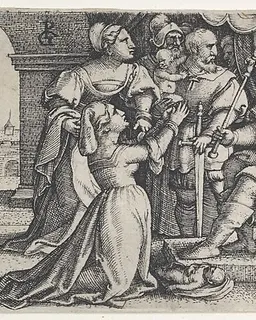
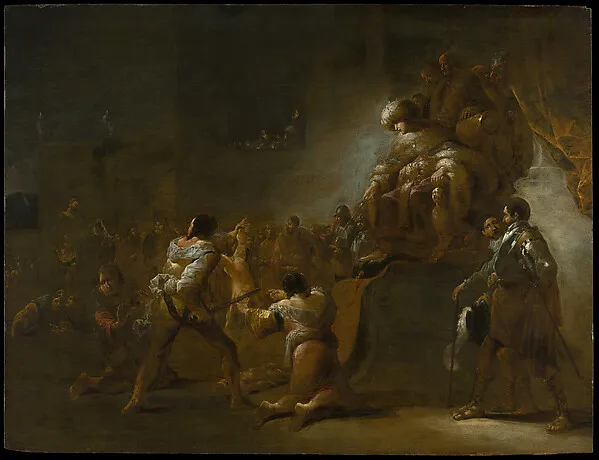
Solomon prays for wisdom; the Lord grants not only wisdom but riches and honor - the prayer is answered beyond the asking.
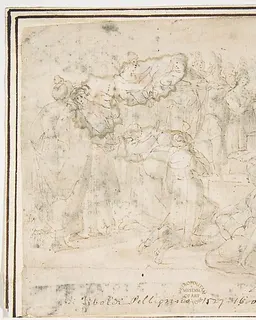
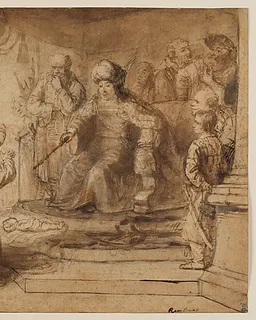
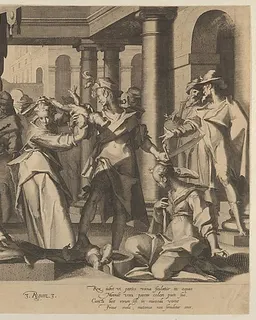
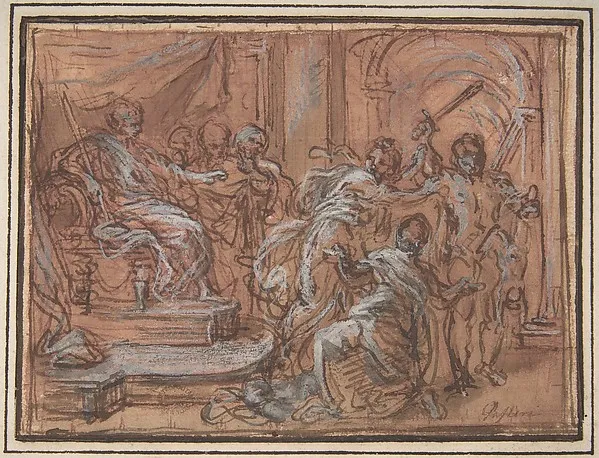
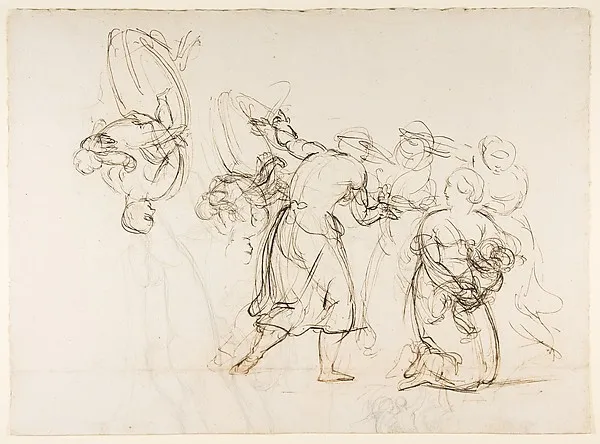
23Then said the king, The one saith, This is my son that liveth, and thy son is the dead: and the other saith, Nay; but thy son is the dead, and my son is the living. 24And the king said, Bring me a sword. And they brought a sword before the king. 25And the king said, Divide the living child in two, and give half to the one, and half to the other. 26Then spake the woman whose the living child was unto the king, for her bowels yearned upon her son, and she said, O my lord, give her the living child, and in no wise slay it. But the other said, Let it be neither mine nor thine, but divide it. 27Then the king answered and said, Give her the living child, and in no wise slay it: she is the mother thereof.
One woman tells the story: my child died in the night through an accident. I was asleep. I rolled over, and he was beneath me. When I woke, he was dead. In my grief, in the darkness, I took her living child and laid it in my bosom, and my dead child in hers. In the morning, when I looked carefully, I saw it was not my son I held.
The other woman contradicts her flatly. No, the living child is mine. You took my son. You laid your dead child in my arms. The contradiction is total. Both women cannot be telling the truth. One of them is lying - either about the exchange, or about the accident itself. The king cannot know which simply by hearing the two accounts.
Solomon's judgment is shocking. He orders the child divided in two - half to each woman. It is a test. The king is saying: if you both claim this child, and you both believe your claims are just, then perhaps we should split the difference. But no just mother could accept this solution.
This is the moment everything turns on. The real mother hears the sentence and something in her gives way - she would rather lose the case, rather watch her rival walk off with her son, than see him touched. The verdict she is supposed to want would kill the very thing she loves, so she throws the case away: give the child to the other woman, only let him live. She cannot keep that love hidden, and she does not try. It simply spills out of her.
The other woman shrugs at the sword. Let it be neither hers nor her rival's; divide it. She would sooner see the child destroyed than let the other have him. In one cold sentence her heart stands fully exposed. She never loved the child. She loved winning.
Word of the verdict runs through the whole nation, and the people are left in awe of their king. Here is the thing they could finally see: wisdom is proven by the power to see into a human heart and judge in a way that holds justice and mercy together. The facts were a standoff - both women swore opposite stories. Solomon went past the facts to the truth, and only love had the power to flush it into the open.
Research trail
Sources & further study
These references support the historical, linguistic, manuscript, and contextual notes in this chapter. Scripture remains the primary text; external sources are provided so readers can inspect the research directly.
- Solomon's Reign and TempleSolomon's ascension to the throne and his building of the first temple.
- Solomonic Period ArtifactsMuseum collection of objects from Solomon's era revealing 10th-century Iron Age culture.
- Archaeology of the Solomonic PeriodExcavation evidence for urban centers and building projects attributed to Solomon.
Where this echoes in Scripture
The Prayer for Wisdom
- Matthew 12:42The queen of the south shall rise up in the judgment... for she came... to hear the wisdom of Solomon; and, behold, a greater than Solomon is here.Jesus pointing back to the wisdom Solomon prayed for in verse 9 - and naming Himself the greater.
- 1 Corinthians 1:24Christ the power of God, and the wisdom of God.The understanding heart Solomon asked for, named by the apostle as a Person.
- James 1:5If any of you lack wisdom, let him ask of God, that giveth to all men liberally... and it shall be given him.Solomon's prayer of verse 9 opened to everyone - wisdom given to all who ask.
- John 7:24Judge not according to the appearance, but judge righteous judgment.The discernment between good and bad (v. 9) - seeing past the surface to the truth.
- Isaiah 11:2-3the spirit of wisdom and understanding... shall make him of quick understanding... and he shall not judge after the sight of his eyes.The promised King who judges with the hearing heart Solomon asked for.
The Sword Test Reveals the True Mother
- John 10:11I am the good shepherd: the good shepherd giveth his life for the sheep.The love proved by what it surrenders - the King who lays down His life to keep His own.
- Matthew 27:40If thou be the Son of God, come down from the cross.Solomon's test thrown the other way - and the King who would not save Himself.
- 1 Kings 3:28they feared the king: for they saw that the wisdom of God was in him, to do judgment.The verdict on the whole scene - wisdom proven by what it revealed.
- Hebrews 4:12the word of God is quick, and powerful, and sharper than any twoedged sword... a discerner of the thoughts and intents of the heart.The sword that divides not the child but the heart, laying bare what each woman truly wanted.