Psalms 78
People in this chapter
Psalm 78 carries the heading Maschil of Asaph - an instruction, a teaching-song - and it opens like a parent gathering the children to hear something they must never lose: Give ear, O my people, to my law… I will open my mouth in a parable: I will utter dark sayings of old.
What follows is the longest backward look in the Psalter, the whole story of Israel from Egypt to the throne of David, told for one reason above all: so that the next generation will set their hope in God, and not forget the works of God. It is not a victory song. It is an honest family history, in which God is faithful and His people are not, told precisely so the children will not repeat what the fathers did.1
Tap any highlighted phrase to jump to the commentary that unpacks it.
Psalm 78:1-5 · Maschil of AsaphGive Ear to the Words of My Mouth
1Give ear, O my people, to my law: incline your ears to the words of my mouth. 2I will open my mouth in a parable: I will utter dark sayings of old: 3Which we have heard and known, and our fathers have told us. 4We will not hide them from their children, shewing to the generation to come the praises of the LORD, and his strength, and his wonderful works that he hath done. 5For he established a testimony in Jacob, and appointed a law in Israel, which he commanded our fathers, that they should make them known to their children:
The psalm opens not with God but with a decision: We will not hide them from their children. Asaph is not a soldier recounting a triumph or a poet admiring a sunset; he is a teacher with the next generation in front of him, and he has resolved that the story will not stop with him.
Notice the careful chain of handing-down: the fathers told us (v. 3), we will tell our children (v. 4), so that the generation to come might know them, even the children which should be born; who should arise and declare them to their children (v. 6). Faith here is pictured as a relay, passed from hand to hand across generations, and each runner is responsible to reach the next.
What gets passed is specific: the praises of the LORD, and his strength, and his wonderful works that he hath done. Not opinions, not traditions for their own sake, but the record of what God actually did. The whole psalm is, in a sense, that record being handed over - spoken aloud so it cannot quietly die out in one forgetful generation.
Psalm 78:6-8That They Might Set Their Hope in God
6That the generation to come might know them, even the children which should be born; who should arise and declare them to their children: 7That they might set their hope in God, and not forget the works of God, but keep his commandments: 8And might not be as their fathers, a stubborn and rebellious generation; a generation that set not their heart aright, and whose spirit was not stedfast with God.
Verse 7 gives the whole reason for the telling, and it is worth dwelling on because it explains everything that follows: the children are taught the past that they might set their hope in God, and not forget the works of God, but keep his commandments. Memory, hope, and obedience are bound together here in a single strand.
The point of remembering what God has done is not nostalgia; it is to anchor present hope in a God with a track record, and to keep that hope from curdling into the disobedience that comes when people forget who has carried them. This is the psalm's quiet logic: a people who remember God's works will hope in Him, and a people who hope in Him will keep faith with Him - while a people who forget will drift into rebellion almost without noticing. Tell the story, Asaph says, so that hope has somewhere solid to stand.
The charge ends with a warning drawn from the fathers themselves: teach the children that they might not be as their fathers, a stubborn and rebellious generation; a generation that set not their heart aright, and whose spirit was not stedfast with God (v. 8). This is striking honesty. Asaph does not hold up the ancestors as heroes to imitate; he holds them up, in part, as a warning to avoid.
The generation that saw the most - the sea, the cloud, the manna - was also stubborn and rebellious, its heart unfixed, its spirit not steadfast. Seeing great things is no guarantee of a steady heart. What undid the fathers was not lack of evidence but an inward unsteadiness, a heart that would not stay set on God. So the prayer underneath the whole psalm is for the children to have what the fathers lacked - not more wonders, but a steadfast spirit; not better proof, but a heart set aright.
Psalm 78:9-11They Kept Not the Covenant of God
9The children of Ephraim, being armed, and carrying bows, turned back in the day of battle. 10They kept not the covenant of God, and refused to walk in his law; 11And forgat his works, and his wonders that he had shewed them.
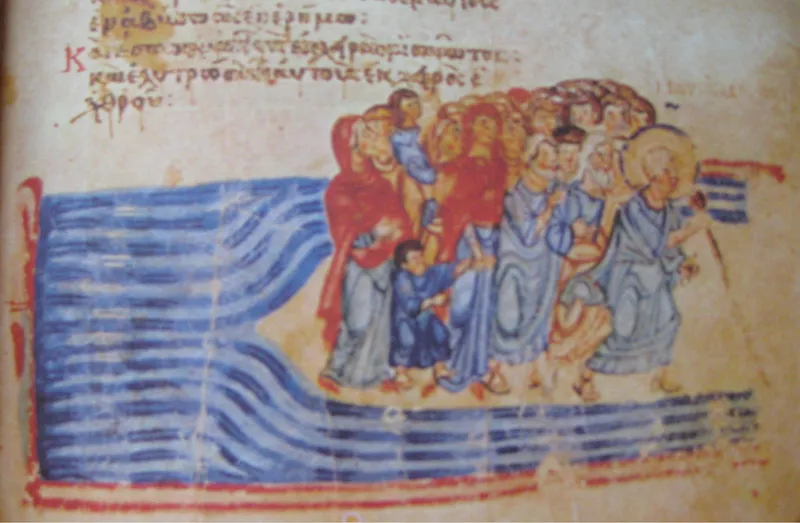
Psalm 78:13-17He Divided the Sea, and Clave the Rocks
13He divided the sea, and caused them to pass through; and he made the waters to stand as an heap. 14In the daytime also he led them with a cloud, and all the night with a light of fire. 15He clave the rocks in the wilderness, and gave them drink as out of the great depths. 16He brought streams also out of the rock, and caused waters to run down like rivers. 17And they sinned yet more against him by provoking the most High in the wilderness.
Now the psalm begins its long catalogue of wonders, and the list is meant to overwhelm. He divided the sea, and caused them to pass through; and he made the waters to stand as an heap (v. 13). In the daytime also he led them with a cloud, and all the night with a light of fire (v. 14). He clave the rocks in the wilderness and gave them water like rivers (vv. 15-16).
Each line recalls a deliverance no Israelite should ever have been able to forget - the sea standing up in walls, the pillar of cloud and fire that never left them, water bursting from dry stone.
These are not small mercies; they are the founding miracles of the nation, the very evidence Asaph said must be handed down. And the psalm piles them up deliberately, because the weight of the list makes what comes next so shocking. With all of this behind them - freshly behind them - the people sinned yet more against him (v. 17). The catalogue of grace is set right beside the catalogue of rebellion, so that the reader feels the scandal of it: how could a people who had seen so much trust so little?
Psalm 78:19-22Can God Furnish a Table in the Wilderness?
19Yea, they spake against God; they said, Can God furnish a table in the wilderness? 20Behold, he smote the rock, that the waters gushed out, and the streams overflowed; can he give bread also? can he provide flesh for his people? 22Because they believed not in God, and trusted not in his salvation:
The rebellion in this section is given a voice, and it is worth hearing exactly what it says: they spake against God; they said, Can God furnish a table in the wilderness? (v. 19), and then, having just watched water gush from the rock, can he give bread also? can he provide flesh for his people? (v. 20). This is the heart of the forgetting laid bare. It is not that the people doubted God could do anything; they had seen the sea divide.
It is that each new need felt like a fresh reason to doubt, as if the last miracle proved nothing about the next.
He gave us water - but can He give bread? The God who had just split a rock was suddenly on trial again over dinner. There is something painfully familiar in it: the way a fresh worry can wipe out the memory of every past rescue, the way we ask can God really come through? about the very thing He has come through on a hundred times before. The wilderness question - can He furnish a table? - is the unbelief of a heart that treats God's faithfulness as expiring the moment a new trouble arrives.
The psalm names the root beneath all the forgetting, and it is not stupidity or even ingratitude but something deeper: they believed not in God, and trusted not in his salvation (v. 22; and again, believed not for his wondrous works, v. 32). This is the diagnosis the whole catalogue has been driving toward. Behind every grumble and every can God…? lies a failure to trust - not a gap in the evidence but a refusal of the heart to rest on it.
It is a sobering thing to see stated so plainly, because it cuts off the excuse we most want to make. The fathers did not lack proof; they lacked faith.
And the New Testament reads this section of Israel's story as a standing warning to every later generation: Take heed, brethren, lest there be in any of you an evil heart of unbelief… harden not your hearts, as in the provocation (Heb. 3:12, 15). The wilderness is not just ancient history; it is a mirror. The danger it exposes is not out there in the desert - it is the unbelief that can take root in a heart that has seen much and trusted little.
Psalm 78:24-32Man Did Eat Angels' Food
24And had rained down manna upon them to eat, and had given them of the corn of heaven. 25Man did eat angels’ food: he sent them meat to the full. 32For all this they sinned still, and believed not for his wondrous works.
Psalm 78:35-39Full of Compassion, He Forgave
35And they remembered that God was their rock, and the high God their redeemer. 38But he, being full of compassion, forgave their iniquity, and destroyed them not: yea, many a time turned he his anger away, and did not stir up all his wrath. 39For he remembered that they were but flesh; a wind that passeth away, and cometh not again.
It is worth lingering on the tenderness of verse 39, because it is one of the gentlest things said about God in the whole Psalter: he remembered that they were but flesh; a wind that passeth away, and cometh not again. This is not the language of a judge weighing crimes; it is the language of a Father looking at a child and seeing how small and breakable it is. Flesh here means everything frail about us - mortal, weak, soon tired, soon gone.
A wind that passeth away is a breath that is here and then simply not, a gust that does not return.
And the astonishing thing is what God does with that knowledge: He lets it temper His anger. He does not hold His people to the standard of angels; He remembers they are dust, and shows mercy accordingly. There is deep comfort in this for anyone weary of their own failures. God is not surprised by your weakness, and He is not waiting for you to stop being frail before He shows you compassion. He knows exactly what you are made of - like as a father pitieth his children, so the LORD pitieth them that fear him; for he knoweth our frame; he remembereth that we are dust (Ps. 103:13-14).
The same remembering that spared Israel is bent toward you.
Psalm 78:40-52They Remembered Not His Hand
40How oft did they provoke him in the wilderness, and grieve him in the desert! 42They remembered not his hand, nor the day when he delivered them from the enemy. 52But made his own people to go forth like sheep, and guided them in the wilderness like a flock.
Before the psalm turns to its hopeful ending, it gives the diagnosis one more time, and the wording is precise: they remembered not his hand, nor the day when he delivered them from the enemy (v. 42; cf. v. 40, how oft did they provoke him… and grieve him in the desert). The whole long story has come down to this single failure repeated - they remembered not. Notice that what they forgot was specifically his hand and the day when he delivered them. They did not forget that troubles existed; they forgot the rescuing power that had met those troubles before.
And the psalm says God was not merely displeased by this but grieved - the forgetting wounded Him, the way ingratitude wounds love.
The verses that follow (here passed over) recount the plagues on Egypt and the bringing of Israel into the land, the whole sweep of deliverance the people kept failing to hold on to. But the psalm is laying the groundwork for its turn. After all this forgetting, the question hanging over the story is: what will God do with a people like this? The answer is not abandonment. The answer is a shepherd.
Psalm 78:68-72He Took Him From the Sheepfolds
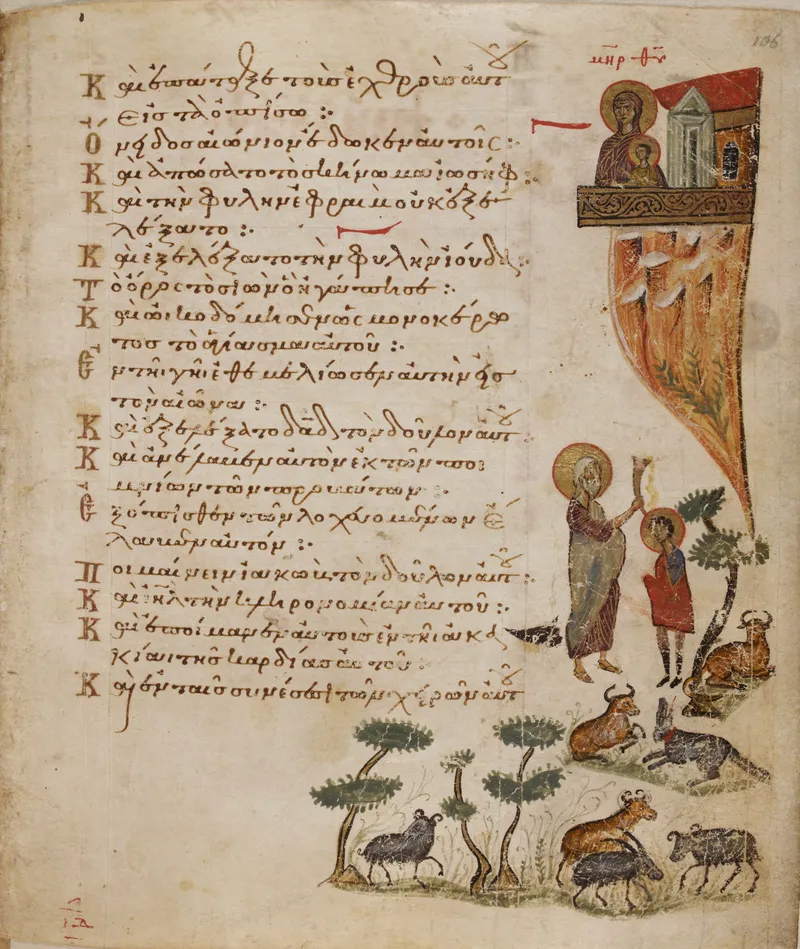
68But chose the tribe of Judah, the mount Zion which he loved. 70He chose David also his servant, and took him from the sheepfolds: 71From following the ewes great with young he brought him to feed Jacob his people, and Israel his inheritance. 72So he fed them according to the integrity of his heart; and guided them by the skilfulness of his hands.
The psalm's last word about David is not about his power or his victories but his character: So he fed them according to the integrity of his heart; and guided them by the skilfulness of his hands (v. 72). Two things are held together here - an integrity of heart and a skilfulness of hands, an inward uprightness and an outward competence. The shepherd-king leads not by force or cunning but by a heart that is whole toward God and a hand that knows how to tend the flock.
It is a deliberate contrast with everything that came before. The fathers had hearts that were not stedfast (v. 37); David has a heart of integrity. After the long history of a people who could not stay faithful, God's answer is to raise up one whose heart is whole - a single faithful man to shepherd a faithless flock. And yet even David's integrity was real but not perfect; he too would stumble and fail.
The psalm sets the pattern and leaves a longing it cannot quite fill: for a shepherd whose integrity has no flaw at all, who could feed and guide the people of God without ever once falling short himself.
Research trail
Sources & further study
These references support the historical, linguistic, manuscript, and contextual notes in this chapter. Scripture remains the primary text; external sources are provided so readers can inspect the research directly.
- Psalm 78 - Translators' NotesThe NET Bible's detailed footnotes on Psalm 78 - the sense of the heading Maschil, the teaching purpose of the opening charge, the geography of the field of Zoan in the Egypt section, and the textual force of the closing description of David as a shepherd of integrity.
- Psalm 78 · Hebrew + classical Jewish commentaryThe full Hebrew text of Psalm 78 with Rashi, Ibn Ezra, and other classical commentators side by side - useful for mashal (v. 2, “parable, dark saying”), for the twin verbs shakach (vv. 11, 42, “forgat”) and zakar (vv. 35, 39, “remembered”) that drive the whole psalm, and for the long Jewish reflection on a history told to instruct the generation to come.
- Psalm 78 ↔ Matthew 13 · John 6 · 1 Corinthians 10Traces the verbal threads tying Psalm 78 to the New Testament - the parable-teaching of verse 2 fulfilled in Jesus (Matt. 13:34-35), the manna and bread of heaven of verses 24-25 taken up in the bread of life discourse (John 6), and the rock that gave water (vv. 15-16) read by Paul as Christ (1 Cor. 10:4).
Where this echoes in Scripture
That They Might Set Their Hope in God
- Matthew 13:34-35without a parable spake he not unto them: that it might be fulfilled... I will open my mouth in parables.Verse 2 read of Jesus, who taught the kingdom of God in parables - the great Teacher who would not hide the works of God.
- Deuteronomy 6:6-7thou shalt teach them diligently unto thy children, and shalt talk of them when thou sittest in thine house.The command behind the relay of verses 4-6 - God's works handed from one generation to the next.
- Psalm 145:4One generation shall praise thy works to another, and shall declare thy mighty acts.The same handing-down of praise the psalm sets out to secure (v. 4).
- Exodus 12:26-27when your children shall say unto you, What mean ye by this service?... ye shall say, It is the sacrifice of the LORD's passover.The story told to the children at the table - the pattern of teaching the generation to come.
Can God Furnish a Table in the Wilderness?
- 1 Corinthians 10:1-4they drank of that spiritual Rock that followed them: and that Rock was Christ.Paul reads the wilderness rock of verses 15-16, 20 as Christ - the source of the water that saved a dying people.
- Hebrews 3:12-19harden not your hearts, as in the provocation... they could not enter in because of unbelief.The wilderness unbelief of verse 22 read as a standing warning to every later generation.
Full of Compassion, He Forgave
He Took Him From the Sheepfolds
- John 10:11I am the good shepherd: the good shepherd giveth his life for the sheep.The shepherd-king of verses 70-72 fulfilled in the Son of David, who shepherds the flock by laying down His life.
- Micah 5:2out of thee shall he come forth unto me that is to be ruler in Israel.The Governor from Judah and Bethlehem - the line from David (v. 70) carried on to the Messiah (Matt. 2:6).
- 1 Samuel 16:11-13There remaineth yet the youngest, and, behold, he keepeth the sheep... and the Spirit of the LORD came upon David.David taken from the sheepfolds (v. 70) - God passing over the obvious and choosing the shepherd boy.
- Ezekiel 34:23I will set up one shepherd over them, and he shall feed them, even my servant David.The promise of the coming David-shepherd who would feed the flock - the hope verse 72 reaches toward.