Psalms 77
People in this chapter
Psalm 77 opens in the dark, and it stays there for a long time before any light comes. The man praying it - Asaph, one of the temple's appointed singers - is awake in the night and cannot be consoled: In the day of my trouble I sought the Lord: my sore ran in the night, and ceased not: my soul refused to be comforted (v. 2).
He is doing everything right. He is seeking God, crying out, reaching for comfort. And none of it is working. Thou holdest mine eyes waking: I am so troubled that I cannot speak (v. 4). This is the prayer of someone in the experience the believers of every age have called the dark night - pressing into God and finding, for a time, only silence.1
Tap any highlighted phrase to jump to the commentary that unpacks it.
Psalm 77:1-9 · To the chief Musician, to Jeduthun, A Psalm of AsaphMy Soul Refused to Be Comforted
1I cried unto God with my voice, even unto God with my voice; and he gave ear unto me. 2In the day of my trouble I sought the Lord: my sore ran in the night, and ceased not: my soul refused to be comforted. 3I remembered God, and was troubled: I complained, and my spirit was overwhelmed. Selah. 4Thou holdest mine eyes waking: I am so troubled that I cannot speak. 5I have considered the days of old, the years of ancient times. 6I call to remembrance my song in the night: I commune with mine own heart: and my spirit made diligent search. 7Will the Lord cast off for ever? and will he be favourable no more? 8Is his mercy clean gone for ever? doth his promise fail for evermore? 9Hath God forgotten to be gracious? hath he in anger shut up his tender mercies? Selah.
The psalm begins with a cry repeated for sheer desperation: I cried unto God with my voice, even unto God with my voice. He says it twice because once is not enough to carry the weight of it; he has cried and cried. And then the first verse ends on a quiet word of faith - and he gave ear unto me - the settled conviction, looking back, that God did hear.
But verse 2 plunges straight into the trouble as it actually felt at the time: In the day of my trouble I sought the Lord: my sore ran in the night, and ceased not: my soul refused to be comforted. Here is the honest gap that the whole psalm lives inside. God hears - and yet, in the moment, the sufferer cannot feel it. He is seeking, reaching, doing everything a believer is supposed to do, and consolation will not come. His sore - his wound, his grief - runs all night and does not stop.
This is not the prayer of someone who has wandered from God; it is the prayer of someone clinging to God in the dark and finding the dark does not lift.1
In verses 5 and 6 the sufferer turns his sleepless hours into a search: I have considered the days of old, the years of ancient times. I call to remembrance my song in the night: I commune with mine own heart: and my spirit made diligent search. Lying awake, he goes looking - back into the past, back to the songs he once sang in better seasons, deep into his own heart. The phrase my spirit made diligent search pictures a man turning his soul over and over, examining it, hunting for some answer to the dark.
It is worth noticing that the very memory that will rescue him at the end of the psalm is, here at the start, a source of pain rather than comfort: I remembered God, and was troubled (v. 3). The same act - remembering - will move from torment to healing over the course of the psalm. For now the search yields only the questions. But the searching itself matters: he does not numb the night or flee it. He stays in it, awake before God, looking.
Then the search breaks out into the open as a string of questions, and they are some of the most desolate in all of Scripture: Will the Lord cast off for ever? and will he be favourable no more? Is his mercy clean gone for ever? doth his promise fail for evermore? Hath God forgotten to be gracious? hath he in anger shut up his tender mercies? (vv. 7-9). Six questions, each one widening the wound.
Notice the word that keeps recurring: for ever… no more… for ever… for evermore. This is what acute suffering does to the sense of time - it makes the present darkness feel permanent, as though God's favour, once withdrawn, can never return. The questions are not careful theology; they are the raw fear of a believer who cannot square his pain with the God he has known. And the psalm lets them stand, unanswered, on the page.
It does not rush to correct him. There is a deep mercy in that: the inspired prayer book of God's people contains a place for the question Hath God forgotten to be gracious? - which means you are allowed to ask it too, out loud, in the dark, without being struck down for it.
Psalm 77:10-15I Will Remember the Works of the LORD
10And I said, This is my infirmity: but I will remember the years of the right hand of the most High. 11I will remember the works of the LORD: surely I will remember thy wonders of old. 12I will meditate also of all thy work, and talk of thy doings. 13Thy way, O God, is in the sanctuary: who is so great a God as our God? 14Thou art the God that doest wonders: thou hast declared thy strength among the people. 15Thou hast with thine arm redeemed thy people, the sons of Jacob and Joseph. Selah.
Verse 10 is the hinge of the whole psalm, and everything turns on it: And I said, This is my infirmity: but I will remember the years of the right hand of the most High. First, a naming. Asaph looks at his own despair - the sleeplessness, the refusal of comfort, the terrible questions - and gives it a name: this is my infirmity. He recognizes that the feeling, however overwhelming, is a weakness in him, not a verdict from God.
The darkness has been telling him that God has changed; now he begins to suspect that what has changed is his own frail grip, his infirmity.
And then comes the single most important word in the psalm: but. But I will remember. He does not wait for the feeling to lift. He does not argue himself out of the dark with clever reasoning. He makes a decision of the will, in the teeth of his emotions, to turn his mind toward the years of the right hand of the most High - the long history of what God's mighty hand has actually done.
This is the most practical thing the psalm teaches: when feeling fails, the will can still choose where to look. Asaph cannot summon comfort, but he can direct his memory - and he points it, deliberately, at God's works.1
As the memory takes hold, the psalm changes its whole posture. It stops asking anxious questions and starts making confident declarations: Thy way, O God, is in the sanctuary: who is so great a God as our God? Thou art the God that doest wonders (vv. 13-14). The very mind that an hour ago was asking is his mercy clean gone for ever? is now asking a different kind of question entirely - who is so great a God as our God? - a question that already knows its answer.
Notice the phrase thy way… is in the sanctuary. God's way - how He works, where He moves - is bound up with His holiness; it is a holy way, a set-apart way, not always traceable by us but always pure. The God whose dealings seemed so dark in verse 9 has not become less mysterious, but He has become, in Asaph's sight, unmistakably great and holy again. Remembering has not explained the suffering.
It has done something better: it has restored the sufferer's sense of who God is. And once you know again that your God is the God who doest wonders, the unanswered questions become bearable.
Psalm 77:16-20Thy Way Is in the Sea
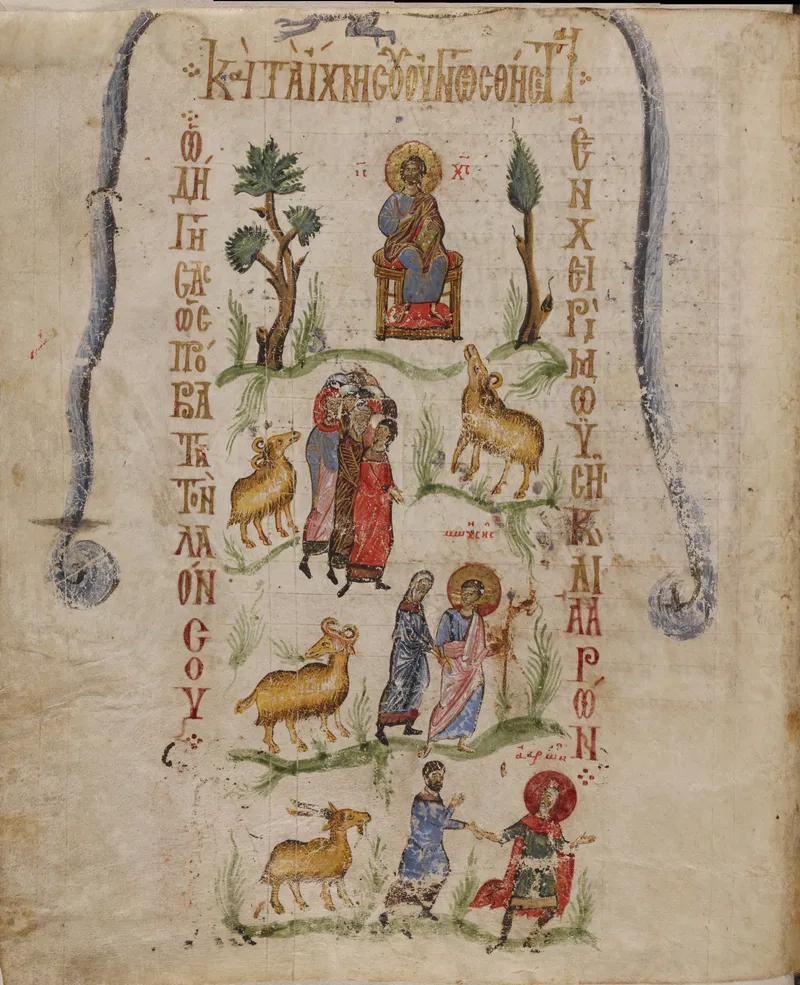
16The waters saw thee, O God, the waters saw thee; they were afraid: the depths also were troubled. 17The clouds poured out water: the skies sent out a sound: thine arrows also went abroad. 18The voice of thy thunder was in the heaven: the lightnings lightened the world: the earth trembled and shook. 19Thy way is in the sea, and thy path in the great waters, and thy footsteps are not known. 20Thou leddest thy people like a flock by the hand of Moses and Aaron.
Now the remembering becomes vision, and Asaph paints the founding rescue of his people in colors of storm and majesty: The waters saw thee, O God, the waters saw thee; they were afraid: the depths also were troubled (v. 16). He is recalling the night at the Red Sea, when God drove the waters back and Israel walked through on dry ground. But he tells it as a theophany - a coming of God so overwhelming that creation itself recoils.
The sea, that ancient image of chaos and terror across the whole world of the Near East, sees God and is afraid; the very depths shudder.2
Then the heavens join in: the clouds poured out water: the skies sent out a sound… the voice of thy thunder was in the heaven: the lightnings lightened the world: the earth trembled and shook (vv. 17-18). This is the God Asaph had been quietly accusing in verse 9 of having shut up his tender mercies. Look at Him now - the One before whom the sea panics and the earth quakes.
The remembering has done its work. The God who felt absent and powerless in the dark night is revealed, in memory, as the God who once split the sea with the thunder of His coming. Nothing about the present trouble has changed. But the One who holds the present trouble is suddenly very large again.3
In the middle of all this thunder comes one of the most quietly profound lines in the Psalter: thy way is in the sea, and thy path in the great waters, and thy footsteps are not known (v. 19). At the Red Sea, God made a road where there had never been one - a path straight through the deep. And yet when the waters closed again behind His people, that path left no trace. His footsteps are not known. You could not go back afterward and find the road; the sea kept no record of where God had walked.
Here is the very thing that had tormented Asaph turned, now, into comfort. In the dark night, God's hiddenness felt like absence - if I cannot trace His way, perhaps He is not there at all. But memory has reframed it. God's way being untraceable is not a sign that He is absent; it is the very signature of how He works. He makes a path through the deep precisely where there is no path, and He does it without leaving footprints we can follow or predict.
The mystery is not solved - it is honored. God's ways are past finding out (Rom. 11:33), and that is not cause for despair but for awe. The same God who walked an untraceable path through the sea is walking one, even now, through whatever deep water you cannot see the bottom of.
Research trail
Sources & further study
These references support the historical, linguistic, manuscript, and contextual notes in this chapter. Scripture remains the primary text; external sources are provided so readers can inspect the research directly.
- Psalm 77 - Translators' NotesThe NET Bible's detailed footnotes on Psalm 77 - the force of the sleepless lament in verses 1-9, the structural hinge of verse 10 (“this is my infirmity”), the deliberate turn to remembrance, and the storm-theophany language of verses 16-19 that recalls the parting of the Red Sea.
- Art of the Ancient Near East · Heilbrunn TimelineThe Met's curated overview of the ancient Near Eastern world - the storm-gods, enthroned deities, and sea-and-chaos imagery of the cultures around Israel, the backdrop against which Psalm 77 paints its theophany at the sea (vv. 16-19): the waters that saw thee, O God… and were afraid, and the God whose way… is in the sea.
- Psalm 77 ↔ Exodus 15 · Matthew 14 · Hebrews 13Traces the verbal threads tying Psalm 77 to the Song of the Sea in Exodus 15 (the waters that saw God and were afraid), to the Gospel scenes of Jesus walking on the sea (Matt. 14; Mark 6), and to the imagery of the great Shepherd who leads His flock (Heb. 13:20) - the path through the deep and the led flock that the psalm remembers from the Exodus.
- Psalm 77 · Hebrew + classical Jewish commentaryThe Hebrew text of Psalm 77 with Rashi, Ibn Ezra, and other classical commentators side by side - useful for nacham (v. 2, the comfort the soul “refused”), for zakar (vv. 6, 11, the “remembering” on which the whole psalm turns), and for ga'al (v. 15, the “redeeming” of God's people with His outstretched arm), and for the long Jewish reading of this psalm as the cry of the people in exile.
Where this echoes in Scripture
My Soul Refused to Be Comforted
- Matthew 27:46My God, my God, why hast thou forsaken me?The cry from the dark of verse 7 taken up by Christ on the cross - the silence that broke open on the third day.
- Psalm 13:1How long wilt thou forget me, O LORD? for ever? how long wilt thou hide thy face from me?The same “for ever” fear of verses 7-9 - suffering that makes the dark feel permanent.
- Lamentations 3:8Also when I cry and shout, he shutteth out my prayer.The felt silence of verse 2 - crying out and seeming to receive no answer.
- 2 Corinthians 1:3-4the God of all comfort; Who comforteth us in all our tribulation.The comfort the soul could not receive in verse 2 - offered by the God who keeps offering it.
I Will Remember the Works of the LORD
- Luke 9:31spake of his decease which he should accomplish at Jerusalem.The word for “decease” is literally exodus - the cross as the true redemption the Red Sea of verse 15 foreshadowed.
- Deuteronomy 26:8the LORD brought us forth out of Egypt with a mighty hand, and with an outstretched arm.The “arm” that redeemed the people in verse 15 - the founding rescue Asaph reaches back to remember.
- Luke 22:19this do in remembrance of me.The deliberate remembering of verse 11 (zakar) at the table of the Lord - calling the one great rescue to mind.
- 1 Peter 1:18-19ye were not redeemed with corruptible things... but with the precious blood of Christ.The redeeming arm of verse 15 stretched out at last on the cross - a people bought back from sin and death.
Thy Way Is in the Sea
- Matthew 14:25-27in the fourth watch of the night Jesus went unto them, walking on the sea... Be of good cheer; it is I; be not afraid.The untraceable path through the great waters (v. 19) walked at last by the Lord Jesus, coming to His own across the deep.
- John 10:11I am the good shepherd: the good shepherd giveth his life for the sheep.The flock led by the hand of Moses and Aaron (v. 20) shepherded now by the One who lays down His life.
- Hebrews 13:20that great shepherd of the sheep, through the blood of the everlasting covenant.The led flock of verse 20 brought through death itself by the Shepherd God raised from the dead.
- Exodus 15:8with the blast of thy nostrils the waters were gathered together... the depths were congealed in the heart of the sea.The Song of the Sea behind verses 16-19 - the waters that saw God and were afraid.