Deuteronomy 26
People in this chapter
A farmer walks into the sanctuary with a basket of the first ripe fruit, and before he sets it down he has to talk. Not a private thank-you. A memorized confession, said out loud where Israel can hear: “A Syrian ready to perish was my father… the Lord brought us out.” Worship here is remembered rescue, told back to the One who did the rescuing. The Sefaria notes 1 trace how every generation recited it.
Tap any highlighted phrase to jump to the commentary that unpacks it.
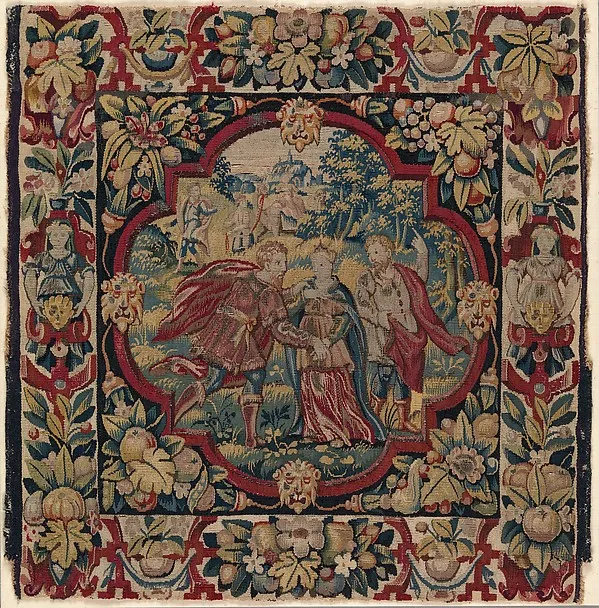
Deuteronomy 26:1-4The Basket of Firstfruits
1And it shall be, when thou art come in unto the land which the LORD thy God giveth thee for an inheritance, and possessest it, and dwellest therein;
Timing is the whole point. You bring the first fruit the moment it ripens, before you know how the rest of the season will go. That is an act of trust as much as thanks. With your hands full of early produce you are saying: this blessing was never mine first. It is His, and He gets the firstborn of it.
2That thou shalt take of the first of all the fruit of the earth, which thou shalt bring of thy land that the LORD thy God giveth thee, and shalt put it in a basket, and shalt go unto the place which the LORD thy God shall choose to place his name there.
The verb is "to confess" - to speak out loud, in the presence of the priest, a declaration that lands this harvest in the history of promise. You are not thanking God in private. You are saying it where Israel hears. You are placing your basket in a story much longer than your own life.
3And thou shalt go unto the priest that shall be in those days, and say unto him, I profess this day unto the LORD thy God, that I am come unto the country which the LORD sware unto our fathers for to give us.
Deuteronomy 26:5-11"A Syrian Ready to Perish": The Credo of Remembered Rescue
5And thou shalt speak and say before the LORD thy God, A Syrian ready to perish was my father, and he went down into Egypt, and sojourned there with a few, and became there a nation, great, mighty, and populous:
The passage uses "Aramean" - the phrase likely refers to Abraham, who lived in Aram before God called him down to the land of Canaan. Or it could mean Jacob, who fled to Aram and returned broken. "Ready to perish" - oved in Hebrew - is the language of utter destitution. Israel's father was helpless. From that helplessness, God made a nation. This is Israel's true name: we were rescued from nothing.
6And the Egyptians evil entreated us, and afflicted us, and laid upon us hard bondage: 7And when we cried unto the LORD God of our fathers, the LORD heard our voice, and looked on our affliction, and our labour, and our oppression: 8And the LORD brought us forth out of Egypt with a mighty hand, and with an outstretched arm, and with great terribleness, and with signs, and with wonders:
The credo compresses the exodus narrative into its essential rhythm: oppression, cry, hearing, deliverance. There is no middle part - no clever escape, no negotiation. God heard. God acted. The "mighty hand" appears throughout Deuteronomy; it is the signature of who God is to Israel. An intervener. A rescuer.
9And he hath brought us into this place, and hath given us this land, even a land that floweth with milk and honey. 10And now, behold, I have brought the firstfruits of the land, which thou, O LORD, hast given me. And thou shalt set it before the LORD thy God, and worship before the LORD thy God:
The credo completes its arc. From "a Syrian ready to perish" to "this place" to "this land." And now, standing in that land, holding fruit that land has produced, the worshiper says: I bring this back to You. The circle closes. The promise is fulfilled. And gratitude demands an offering.
11And thou shalt rejoice in every good thing which the LORD thy God hath given unto thee, and unto thine house, thou, and the Levite, and the stranger that is among you.
What does the chapter call worship? Telling the truth about rescue and handing over the firstborn of your blessing. No music is mentioned, no ecstasy. And the moment the story is spoken, it spills outward into a meal: the Levite who owns no land, the stranger passing through, all of them pulled up to the table. Gratitude that stays in your chest is not yet gratitude. The rescued man feeds people. That is how you can tell he remembers.
Deuteronomy 26:12-15The Third-Year Tithe: Declaration of Obedience
12When thou hast made an end of tithing all the tithes of thine increase the third year, which is the year of tithing, and hast given it unto the Levite, the stranger, the fatherless, and the widow, that they may eat within thy gates, and be filled;
In the third year of the seven-year cycle, the tithe stayed close to home, given within thy gates to the Levite and to the landless - the stranger, the fatherless, and the widow. The Levite serves at the sanctuary and holds no inheritance of his own; the alien, the orphan, and the widow have no land to feed them. So the increase of the harvest flows to those whose hands cannot grow it, and the law provides for their survival.
And before God, the giver must declare it, must name it, must make it real by speaking. "I have given it. I have not kept it for myself."
13Then thou shalt say before the LORD thy God, I have brought away the hallowed things out of mine house, and also have given them unto the Levite, and unto the stranger, to the fatherless, and to the widow, according to all thy commandments which thou hast commanded me: I have not transgressed thy commandments, neither have I forgotten them: 14I have not eaten thereof in my mourning, neither have I taken away ought thereof for any unclean use, nor given ought thereof for the dead: but I have hearkened to the voice of the LORD my God, and have done according to all that thou hast commanded me.
This is an astonishing moment. The worshiper comes before God and declares, with complete assurance, that he has obeyed. Not "I hope I obeyed," not "I tried to obey," but "I have done all that You commanded." This is only possible because of careful, deliberate obedience. The man has marked every boundary God set - he has not eaten the tithe in mourning (mixing sacred and unclean), has not used it for burial practices (a Canaanite temptation), has kept himself clean. His declaration is a testimony. He is saying: I have done this hard thing, and I testify to it.
15Look down from thy holy habitation, from heaven, and bless thy people Israel, and the land which thou hast given us, as thou swarest unto our fathers, a land that floweth with milk and honey.
Having declared obedience, the worshiper asks God to bless. "Look down from heaven" - see what we have done. See that we have set apart the vulnerable. See that we are becoming a people who obey. And then bless us. The prayer circles back to the promise made to the fathers, the land promised, the milk and honey. Obedience draws down blessing. The rhythm is: faithfulness, declaration, prayer, blessing.
Deuteronomy 26:16-19The Mutual Avouching: Covenant Sealed by Speaking
16This day the LORD thy God hath commanded thee to do these statutes and judgments: thou shalt therefore keep and do them with all thine heart, and with all thy soul.
The command covers not just the outward act but the inward orientation - heart and soul. This is Deuteronomic language. It echoes the Shema: "Love the Lord your God with all your heart, and all your soul, and all your might." Obedience here is love, the law demanding devotion from the whole person.
17Thou hast avouched the LORD this day to be thy God, and to walk in his ways, and to keep his statutes, and his commandments, and his judgments, and to hearken unto his voice: 18And the LORD hath avouched thee this day to be his peculiar people, as he hath promised thee, and that thou shouldest keep all his commandments;
The word "avouched" appears twice - you avouch God, and God avouches you. It is a mutual declaration. "I claim You as my God." "I claim you as My people." It is a covenant made audible by both parties speaking. You become His by saying so. He becomes yours by saying so. The kingdom is built on reciprocal commitment spoken aloud.
19And to make thee high above all nations which he hath made, in praise, and in name, and in honour; and that thou mayest be an holy people unto the LORD thy God, as he hath spoken.
Being claimed as God's segulah has a purpose: to be exalted above the nations in praise, in fame, in honor - because you are holy. The nations will see Israel and say: this people is set apart. They are devoted to their God in a way no other people are. Holiness becomes witness. The call to obedience is a call to visibility.
Deuteronomy 26 · The Whole ChapterThe Holy People Praised Among Nations
Deuteronomy 26 teaches that worship is witness to the world. You bring the firstfruits publicly. You speak your credo in the sanctuary where Israel hears. You declare your obedience. You make vows in the presence of God and your people. The nations will see. And when they see a people who remember their rescue, who give their firstborn to God, who keep covenant, who care for the alien and the orphan - the nations will know that Israel's God is real. Holiness is visible faithfulness, the fruit that speaks.
Research trail
Sources & further study
These references support the historical, linguistic, manuscript, and contextual notes in this chapter. Scripture remains the primary text; external sources are provided so readers can inspect the research directly.
- Deuteronomy 26Open-access source text and rabbinic commentary on firstfruits offering [res:sefaria-deuteronomy-26], tithe declaration, and the recitation of covenant history.
- The Creed of Ancient Israel: Covenant MemoryExamines how the recitation of Deuteronomy 26:5-9 forms Israel's foundational narrative identity [res:creed-confession-ancient-israel-identity-memory] from slavery to promised land.
Where this echoes in Scripture
"A Syrian Ready to Perish": The Credo of Remembered Rescue
- Exodus 2:23-25And their cry came up unto God… and God heard their groaning, and God remembered his covenant.The credo's “we cried… the Lord heard” in its first telling - God hearing the groaning of slaves.
- Deuteronomy 7:7-8The Lord did not set his love upon you… because ye were more in number… but because the Lord loved you.The same logic the basket confesses: rescue rests on God's love alone.
- Ephesians 2:12-13Ye were without Christ… having no hope… but now… are made nigh by the blood of Christ.“Ready to perish” carried into the gospel - the far-off brought near.
- Titus 3:5Not by works of righteousness which we have done, but according to his mercy he saved us.The grammar of one-way rescue stated plainly.
The Mutual Avouching: Covenant Sealed by Speaking
- 1 Corinthians 15:20-23Now is Christ risen from the dead, and become the firstfruits of them that slept… afterward they that are Christ's at his coming.The firstfruits basket read forward - one raised first, the rest of the field to follow.
- 1 Peter 2:9Ye are a chosen generation… an holy nation, a peculiar people… that ye should shew forth the praises of him.The “peculiar people… high in praise” of vv. 18-19, claimed for the church.
- Titus 2:14Who gave himself for us… and purify unto himself a peculiar people, zealous of good works.The same segulah word - a treasured people, claimed at cost.
- Romans 8:23Which have the firstfruits of the Spirit… waiting for the adoption.A second firstfruit already given as down payment on the harvest still coming.