Exodus 15
People in this chapter
After the sea closes over Pharaoh's host, Moses and the children of Israel break into the first hymn recorded in Scripture - the Song of the Sea. It is not a calm reflection composed long afterward; it is praise erupting on the shore from people who an hour ago were running for their lives. I will sing unto the LORD, for he hath triumphed gloriously; the horse and his rider hath he thrown into the sea (v. 1).
The song moves from what the LORD did - the chariots cast into the depths, the floods standing upright as a wall - to what the LORD is: Who is like unto thee, O LORD, among the gods? who is like thee, glorious in holiness, fearful in praises, doing wonders? (v. 11). And it reaches past the wilderness to a settled future, a people planted in the mountain of thine inheritance under a King whose throne does not fall: The LORD shall reign for ever and ever (v. 18).1
Tap any highlighted phrase to jump to the commentary that unpacks it.
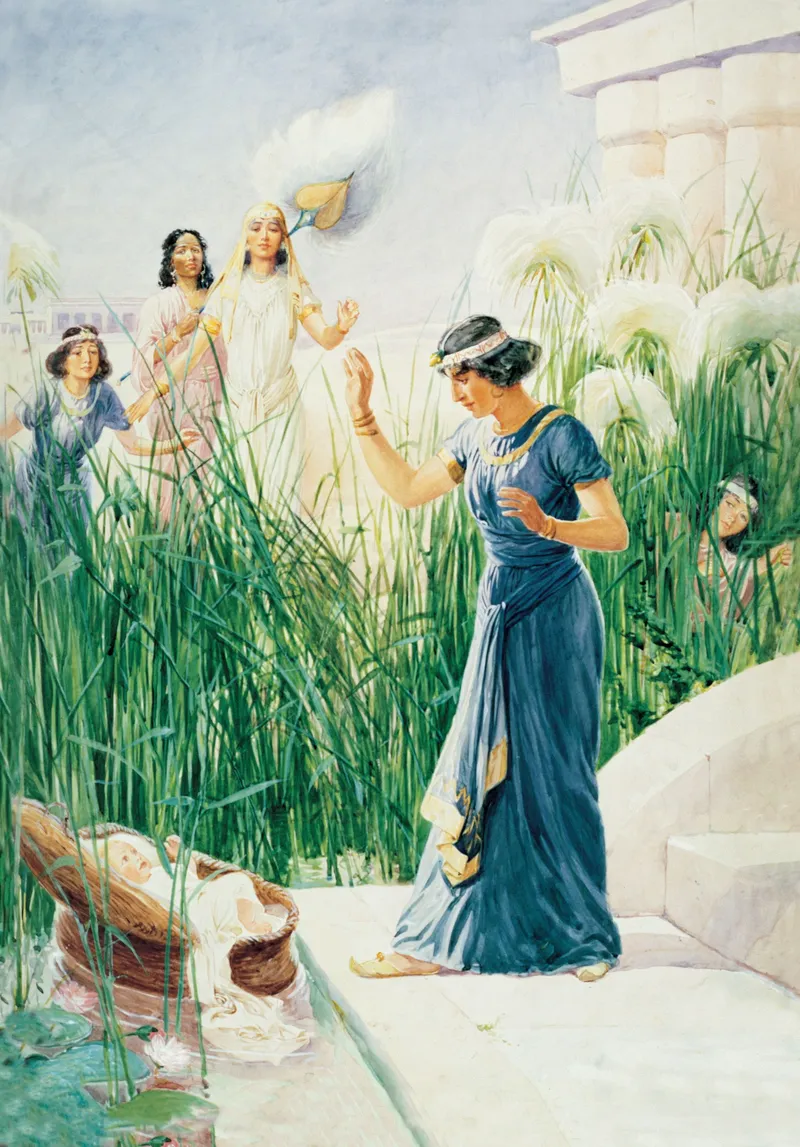
Exodus 15:1-3Then Sang Moses · I Will Sing unto the LORD
1Then sang Moses and the children of Israel this song unto the LORD, and spake, saying, I will sing unto the LORD, for he hath triumphed gloriously: the horse and his rider hath he thrown into the sea. 2The LORD is my strength and song, and he is become my salvation: he is my God, and I will prepare him an habitation; my father’s God, and I will exalt him. 3The LORD is a man of war: the LORD is his name.
The very first word sets the tone: Then sang Moses and the children of Israel this song unto the LORD (v. 1). This is the first hymn anywhere in the Bible, and it is born not in a temple but on a beach, the moment after deliverance. The people do not begin by analyzing what happened; they sing it. And the song's opening line gives the whole reason for the music: he hath triumphed gloriously: the horse and his rider hath he thrown into the sea. The threat that had thundered behind them in iron chariots is gone, swallowed, and the only fitting response is full-voiced praise.
Worship here is what the rescue overflows into. A people who have just watched the impossible cannot stay quiet about it.
At the song's center stands its great confession: The LORD is my strength and song, and he is become my salvation (v. 2). Notice each piece. He is Israel's strength - not the supplier of strength from a distance, but their strength itself. He is their song - the very content of their praise, not merely its occasion. And then the line that the whole Bible will keep echoing: he is become my salvation. The song does not say the LORD provided a salvation, as one hands over a gift and steps back; it says He is become it.
The deliverance and the Deliverer are not two things. And the response this draws out is worship that runs in both directions of time: I will prepare him an habitation looks ahead to building God a dwelling, and my father's God looks back to the covenant made with Abraham, Isaac, and Jacob. The God who saved at the sea is the same God who promised long ago.
The song then takes a name onto its lips that can sound startling: The LORD is a man of war: the LORD is his name (v. 3). It is the language of a freed people praising the God who fought for them. They had no army, no chariots, no power to break Egypt's grip; what they had was the LORD, who took up their cause and overthrew the oppressor at the sea. To call Him a man of war here is to confess that their rescue was not luck or nature but His own doing - He is the warrior who acted on behalf of the helpless.
The line is sober, not gleeful: it sets the LORD against tyranny and oppression, on the side of slaves who could not save themselves. And it anchors all of this in His name, the covenant name by which He had revealed Himself to Moses. The One who delivered is the One who is, and He is not ashamed of what He has done.
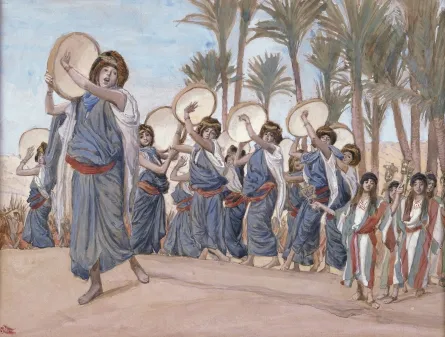
Exodus 15:4-7Thy Right Hand, O LORD · Dashed in Pieces the Enemy
4Pharaoh’s chariots and his host hath he cast into the sea: his chosen captains also are drowned in the Red sea. 5The depths have covered them: they sank into the bottom as a stone. 6Thy right hand, O LORD, is become glorious in power: thy right hand, O LORD, hath dashed in pieces the enemy. 7And in the greatness of thine excellency thou hast overthrown them that rose up against thee: thou sentest forth thy wrath, which consumed them as stubble.
The song now retells the overthrow itself, and it does so as worship, not as a battle report: Pharaoh's chariots and his host hath he cast into the sea… The depths have covered them: they sank into the bottom as a stone (vv. 4-5). The credit goes nowhere but to God - it is His doing, His right hand, that is named over and over: Thy right hand, O LORD, is become glorious in power: thy right hand, O LORD, hath dashed in pieces the enemy (v. 6).
In the language of the time, the right hand is the hand of strength and action; to say the LORD's right hand dashed in pieces the enemy is to say the deliverance was wholly His, and decisive. The proud army that seemed unstoppable sank like a stone (v. 5), like lead (v. 10) - heavy, helpless, straight to the bottom. The song is about God's power: the people who had no strength of their own watched the strength of God do what they never could.
Exodus 15:8-10The Floods Stood Upright as an Heap
8And with the blast of thy nostrils the waters were gathered together, the floods stood upright as an heap, and the depths were congealed in the heart of the sea. 9The enemy said, I will pursue, I will overtake, I will divide the spoil; my lust shall be satisfied upon them; I will draw my sword, my hand shall destroy them. 10Thou didst blow with thy wind, the sea covered them: they sank as lead in the mighty waters.
Two images in this stretch are worth pausing over. First, the water itself becomes a monument to God's power: with the blast of thy nostrils the waters were gathered together, the floods stood upright as an heap, and the depths were congealed in the heart of the sea (v. 8). The picture is of the sea standing up like a wall, holding itself vertical at the LORD's breath - nature bent to the Maker's will.
Second, the song lets the enemy speak, and the contrast is devastating: The enemy said, I will pursue, I will overtake, I will divide the spoil… I will draw my sword, my hand shall destroy them (v. 9). Five short boasts, each beginning with I will, the swagger of a power sure it cannot lose. And the answer fits in a single breath: Thou didst blow with thy wind, the sea covered them (v. 10).
All of Pharaoh's I wills against one breath of God. The boast is not even finished before the water closes over it.
Exodus 15:11-12Who Is Like Unto Thee, O LORD?
11Who is like unto thee, O LORD, among the gods? who is like thee, glorious in holiness, fearful in praises, doing wonders? 12Thou stretchedst out thy right hand, the earth swallowed them.
Here the song lifts its eyes from what God did to who God is: Who is like unto thee, O LORD, among the gods? who is like thee, glorious in holiness, fearful in praises, doing wonders? (v. 11). The question expects no answer; there is none. It is the high point of the hymn - not a boast on Israel's behalf but their honest awe before a God who has no rival. And notice what He is praised for. The song reaches first for being glorious in holiness - set apart, utterly other, clean in a way nothing else is.
He is fearful in praises, so great that even the praise offered Him trembles. The deliverance at the sea showed that He is holy, and that holiness is itself awesome. The song moves, as true worship always does, from the gift to the Giver, and is left undone before Him.
Exodus 15:13-16Guided in Thy Strength unto Thy Holy Habitation
13Thou in thy mercy hast led forth the people which thou hast redeemed: thou hast guided them in thy strength unto thy holy habitation. 14The people shall hear, and be afraid: sorrow shall take hold on the inhabitants of Palestina. 15Then the dukes of Edom shall be amazed; the mighty men of Moab, trembling shall take hold upon them; all the inhabitants of Canaan shall melt away. 16Fear and dread shall fall upon them; by the greatness of thine arm they shall be as still as a stone; till thy people pass over, O LORD, till the people pass over, which thou hast purchased.
The song now turns from the rescue behind to the road ahead, and the key word is led: Thou in thy mercy hast led forth the people which thou hast redeemed: thou hast guided them in thy strength unto thy holy habitation (v. 13). God saves His people from something and leads them toward something. The redemption at the sea is not the end of the story but its beginning - the people are being guided to a holy habitation, a place where God Himself will dwell among them.
And the song is so sure of this future that it sings the fear of the nations as already accomplished: when the surrounding peoples - Philistia, Edom, Moab, Canaan - hear what the LORD has done, dread will fall on them and they will be as still as a stone (vv. 14-16). Israel will not march in as an unknown band of runaways; they will come as the people whose God has already announced Himself by drowning the greatest army in the world.
The deliverance at the sea is, in a sense, the whole conquest already begun.
Exodus 15:17-18The LORD Shall Reign for Ever and Ever
17Thou shalt bring them in, and plant them in the mountain of thine inheritance, in the place, O LORD, which thou hast made for thee to dwell in, in the Sanctuary, O LORD, which thy hands have established. 18The LORD shall reign for ever and ever.
The song ends not where it began but far beyond it - on a planting and a throne. Thou shalt bring them in, and plant them in the mountain of thine inheritance, in the place, O LORD, which thou hast made for thee to dwell in, in the Sanctuary, O LORD, which thy hands have established (v. 17). The image is agricultural and permanent: a people planted, rooted, settled for good in the place God has prepared - and that place is not finally about them but about Him, a Sanctuary where the LORD will dwell among His own.
Then comes the last line, the highest note of the whole hymn: The LORD shall reign for ever and ever (v. 18). The song does not end with the sea, or even with the promised land, but with a kingdom that has no end. Israel walked out of the water that morning into far more than freedom; they walked into the reign of an everlasting King. Every year they would sing this song again - and every year it would point further forward still, to a throne whose subjects would one day be drawn from every nation under heaven.
Exodus 15:19-21Miriam and the Women · Sing Ye to the LORD
19For the horse of Pharaoh went in with his chariots and with his horsemen into the sea, and the LORD brought again the waters of the sea upon them; but the children of Israel went on dry land in the midst of the sea. 20And Miriam the prophetess, the sister of Aaron, took a timbrel in her hand; and all the women went out after her with timbrels and with dances. 21And Miriam answered them, Sing ye to the LORD, for he hath triumphed gloriously; the horse and his rider hath he thrown into the sea.
Verse 19 pauses the music to state plainly what the singing is about: the horse of Pharaoh went in with his chariots and with his horsemen into the sea, and the LORD brought again the waters of the sea upon them; but the children of Israel went on dry land in the midst of the sea. The contrast is the whole point. The same sea, the same waters - death for the pursuer, a dry road for the redeemed.
Egypt's might went in and the waters came back over it; Israel went through and came out the other side. This single sentence holds the difference between the two peoples that morning: the LORD made a way through the deep for His own and let it close on the oppressor. It is the bare fact that all the song's poetry is built on, set down here without ornament so no one mistakes what they are singing about.
Now a second voice takes up the song. And Miriam the prophetess, the sister of Aaron, took a timbrel in her hand; and all the women went out after her with timbrels and with dances (v. 20). She is named with a weighty title - the prophetess, one who hears and speaks for God, the first woman in Scripture given that name. And she leads not with argument but with a timbrel, the small hand-drum of celebration, and with dance, the body itself caught up in the praise.
The whole company of women comes out after her, and the shore fills with rhythm and movement. The women are not bystanders to this deliverance; they are leaders of its worship. Salvation that stays only in the head has not yet become a song; here it has become drumbeat and dance, joy that the body cannot contain.
Miriam's words are a giving-back of the song already sung: And Miriam answered them, Sing ye to the LORD, for he hath triumphed gloriously; the horse and his rider hath he thrown into the sea (v. 21). She takes the opening line of Moses' song almost word for word and hands it to the people as a refrain - short enough to repeat, to sing back, to carry. The word answered suggests call and response: Moses and the men sing, and the women answer; one voice begins and the whole camp echoes.
This is how a deliverance becomes the whole community's possession. Miriam's gift is multiplication - she makes the salvation Moses sang about into a song small enough for everyone to own and loud enough to fill the shore. The praise of the few becomes the praise of the many.
Exodus 15:22-27The Bitter Water Made Sweet · I Am the LORD That Healeth Thee
22So Moses brought Israel from the Red sea, and they went out into the wilderness of Shur; and they went three days in the wilderness, and found no water. 23And when they came to Marah, they could not drink of the waters of Marah, for they were bitter: therefore the name of it was called Marah. 24And the people murmured against Moses, saying, What shall we drink?
The song is barely over before the road turns hard: So Moses brought Israel from the Red sea… and they went three days in the wilderness, and found no water (v. 22). Three days - long enough for thirst to grow real, for the glow of the shore to fade. And when water finally appears, it is worse than none: they could not drink of the waters of Marah, for they were bitter: therefore the name of it was called Marah (v. 23).
The place is named for its taste; Marah means “bitter,” and the bitterness is both in the water and in the moment. So the people who sang on the shore now turn on Moses: What shall we drink? (v. 24). It is worth noticing how short the distance is from the song to the murmur - from triumph to complaint, just three days. The path into freedom does not skirt around hardship; it runs straight through it.
And the same hearts that can soar in worship can sour quickly when the next thirst comes, which is a truer picture of us than we like to admit.
25And he cried unto the LORD; and the LORD shewed him a tree, which when he had cast into the waters, the waters were made sweet: there he made for them a statute and an ordinance, and there he proved them,
Moses does the one right thing: he cried unto the LORD (v. 25). He does not argue the people down or despair; he takes the bitterness to God. And the answer is strange in its smallness: the LORD shewed him a tree, which when he had cast into the waters, the waters were made sweet. Not a sermon, not a rebuke of the grumblers, not a miracle out of empty air - just a tree, shown to him, and the instruction to throw it in.
The sweetness does not come from the people's effort, for no effort of theirs could touch the problem; bitter water stays bitter no matter how hard you wish it sweet. It comes from what the LORD provides and Moses obeys. And the text adds that there he made for them a statute and an ordinance, and there he proved them - Marah becomes not only a rescue but a school. The bitter place is where God begins to teach His people to trust and to obey, testing whether they will listen to the One who turned the water sweet.
26And said, If thou wilt diligently hearken to the voice of the LORD thy God, and wilt do that which is right in his sight, and wilt give ear to his commandments, and keep all his statutes, I will put none of these diseases upon thee, which I have brought upon the Egyptians: for I am the LORD that healeth thee. 27And they came to Elim, where were twelve wells of water, and threescore and ten palm trees: and they encamped there by the waters.
With the water now sweet, the LORD gives a promise bound to a name: If thou wilt diligently hearken to the voice of the LORD thy God… I will put none of these diseases upon thee, which I have brought upon the Egyptians: for I am the LORD that healeth thee (v. 26). The promise is set in the language of listening and keeping - the same trust and obedience the LORD has just begun to teach them at Marah.
And it closes with a self-revelation: God names Himself the Healer. He is not only the warrior who overthrew Egypt and the One who made the bitter sweet; He is, in His own nature, the One who heals. Healing here is not a distant favor He might grant; it is part of who He is, declared as His name. The very water that was bitter, now made sweet, becomes a sign of it - to drink it is to taste the truth that the God who saves is also the God who heals body and soul.
The section ends with a quiet, lavish gift: And they came to Elim, where were twelve wells of water, and threescore and ten palm trees: and they encamped there by the waters (v. 27). After the three dry days and the bitter spring, here is abundance - not one well but twelve, not bare survival but seventy palm trees offering shade, and water enough to make camp beside. The numbers feel almost deliberate in their generosity.
The God who made the bitter water just drinkable does not stop at the minimum; He leads His people on to a place of springs and shade, and lets them rest. Elim is the answer to Marah. The lesson the chapter leaves is not that the redeemed will never taste bitterness - they tasted it three verses ago - but that the bitter place is not the destination. There is an Elim past every Marah for those the LORD is leading, a place of rest and plenty on the far side of the proving.
Research trail
Sources & further study
These references support the historical, linguistic, manuscript, and contextual notes in this chapter. Scripture remains the primary text; external sources are provided so readers can inspect the research directly.
- Exodus 15 - Translators' NotesThe NET Bible's detailed footnotes on Exodus 15 - the archaic, exalted Hebrew of the song, the wall of waters in verses 8 and 10, the future-tense praise of the nations' dread (vv. 14-16), and the wordplay of Marah (“bitter”) and the tree that makes the water sweet (vv. 23-25).
- Exodus 15 · Hebrew + classical Jewish commentaryThe Hebrew text of Exodus 15 with Rashi, Ibn Ezra, and other classical commentators side by side - useful for yeshuah (v. 2, “my salvation”), for the song's naming of God as ish milchamah (v. 3, “a man of war”), and for rophe'eka (v. 26, “that healeth thee”).
- Exodus 15 ↔ Revelation 15 · 1 Corinthians 10 · 1 Peter 2Traces the threads tying Exodus 15 to the rest of Scripture - the Song of the Sea (vv. 1-18) read beside the song of Moses… and the song of the Lamb (Rev. 15:3), the passage through the sea (v. 19) beside being baptized… in the sea (1 Cor. 10:1-2), and the healing LORD of verse 26 beside by whose stripes ye were healed (1 Pet. 2:24).
Where this echoes in Scripture
The LORD Shall Reign for Ever and Ever
- Revelation 15:3they sing the song of Moses the servant of God, and the song of the Lamb, saying, Great and marvellous are thy works, Lord God Almighty.The song of verse 1 sung again at the end of all things - the Red Sea and the Lamb's deliverance become one hymn.
- Psalm 118:14The LORD is my strength and song, and is become my salvation.The confession of verse 2 taken up word for word as Israel's standing praise.
- Isaiah 12:2the LORD JEHOVAH is my strength and my song; he also is become my salvation.The same line as verse 2, sung again by the prophet - the salvation the LORD becomes.
- Exodus 14:13-14stand still, and see the salvation of the LORD... The LORD shall fight for you, and ye shall hold your peace.The deliverance the whole song celebrates - the LORD as the man of war (v. 3) who fought for a people who could not fight.
- Luke 1:33he shall reign over the house of Jacob for ever; and of his kingdom there shall be no end.The everlasting reign of verse 18 named in person - the King whose kingdom does not fall.
Miriam and the Women · Sing Ye to the LORD
- Matthew 28:7go quickly, and tell his disciples that he is risen from the dead.Women first sent to announce the great deliverance - as Miriam leads the song of deliverance in verses 20-21.
- Psalm 68:25The singers went before, the players on instruments followed after; among them were the damsels playing with timbrels.The same scene as verse 20 - women leading God's people in instrumented praise.
- Judges 4:4And Deborah, a prophetess, the wife of Lapidoth, she judged Israel at that time.Another woman named prophetess and leader of a victory song (Judg. 5) - as Miriam is in verse 20.
- Psalm 150:4Praise him with the timbrel and dance: praise him with stringed instruments and organs.The timbrel and dance of verse 20 commanded as fitting worship for the God who saves.
- Micah 6:4I sent before thee Moses, Aaron, and Miriam.Miriam (v. 20) remembered alongside Moses and Aaron as one God set at the head of His people.
The Bitter Water Made Sweet · I Am the LORD That Healeth Thee
- 1 Peter 2:24Who his own self bare our sins in his own body on the tree... by whose stripes ye were healed.The Healer of verse 26 and the tree of verse 25 brought together - healing borne on the wood.
- Galatians 3:13Christ hath redeemed us from the curse of the law, being made a curse for us: for it is written, Cursed is every one that hangeth on a tree.The tree that turns bitterness to life (v. 25) - the wood by which the curse is borne.
- 1 Corinthians 10:1-2our fathers... were all baptized unto Moses in the cloud and in the sea.The passage through the sea (v. 19) read as the picture of deliverance - the old bondage left behind in the water.
- Psalm 23:2He maketh me to lie down in green pastures: he leadeth me beside the still waters.The rest of Elim's wells and palms (v. 27) - the LORD leading His people to water and rest beyond the bitter place.
- Exodus 16:2-3the whole congregation of the children of Israel murmured against Moses and Aaron in the wilderness.The murmuring of verse 24 surfacing again - the pattern Marah begins to expose and the LORD keeps answering.