2 Chronicles 29
People in this chapter
The doors of God's house are shut. Ahaz had bolted them, put out the lamps, stopped the offerings, and thrown away the sacred vessels.1 The wrath of God had come on Judah, and the people could see it with their own eyes. The house at the center of the nation stood dark and locked. Then Hezekiah takes the throne at twenty-five, and in the first month of his reign he does what no king of that generation had dared. He opens them.
Tap any highlighted phrase to jump to the commentary that unpacks it.
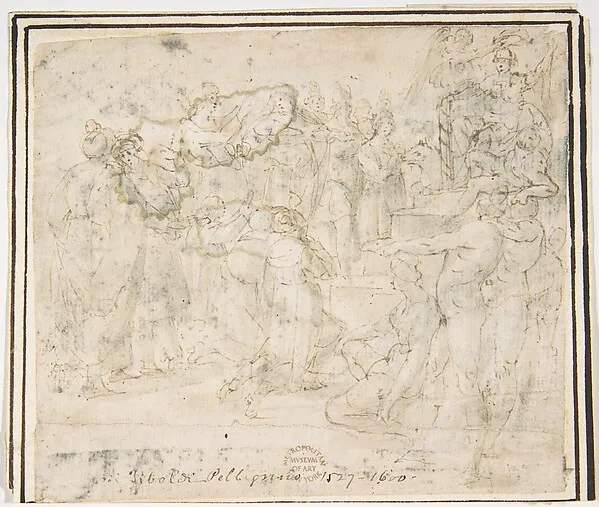
2 Chronicles 29:1-5Hezekiah Opens the Doors, in the First Month
1Hezekiah began to reign when he was five and twenty years old, and he reigned nine and twenty years in Jerusalem. And his mother’s name was Abijah, the daughter of Zechariah. 2And he did that which was right in the sight of the LORD, according to all that David his father had done. 3He in the first year of his reign, in the first month, opened the doors of the house of the LORD, and repaired them. 4And he brought in the priests and the Levites, and gathered them together into the east street, 5And said unto them, Hear me, ye Levites, sanctify now yourselves, and sanctify the house of the LORD God of your fathers, and carry forth the filthiness out of the holy place.
The dating carries the whole point. Most kings spend their first year securing a throne - consolidating power, rewarding allies, taking stock. Hezekiah spends his first month on a locked building. Before anything else a new ruler might think to grab, the doors of the house of the LORD are open and the priests are gathered. His father Ahaz had reigned sixteen years and left that house dark and bolted; the son will not live with it for even one.
The very first act of the reign is to reverse the central act of the last. There is an urgency here that the rest of the chapter will vindicate - the conviction that a kingdom out of fellowship with God cannot afford to wait, and that the place to begin is the place that had been abandoned.23
The word for what must be removed - filthiness - is strong, and it names more than dust. Under Ahaz the holy place had been allowed to fill with what did not belong there, the visible residue of a generation that had turned its back on its God. To carry forth the filthiness out of the holy place is to undo, physically, a spiritual abandonment. Hezekiah grasps what his father never did: that worship cannot simply be declared back into existence while the place of worship lies defiled.
The defilement has to be carried out - named, gathered, and removed - before the house can be what it was made to be. This is a striking picture of how restoration actually works. Wanting a renewed relationship with God is the beginning; the accumulated debris of neglect has to be dealt with honestly and carried away before there is room for what is meant to fill the cleansed space.
2 Chronicles 29:6-9"Our Fathers Have Trespassed"
6For our fathers have trespassed, and done that which was evil in the eyes of the LORD our God, and have forsaken him, and have turned away their faces from the habitation of the LORD, and turned their backs. 7Also they have shut up the doors of the porch, and put out the lamps, and have not burned incense nor offered burnt offerings in the holy place unto the God of Israel. 8Wherefore the wrath of the LORD was upon Judah and Jerusalem, and he hath delivered them to trouble, to astonishment, and to hissing, as ye see with your eyes. 9For, lo, our fathers have fallen by the sword, and our sons and our daughters and our wives are in captivity for this.
Hezekiah speaks for his people: our fathers have trespassed. He names the failure plainly - they forsook the LORD, turned their faces away from His habitation, turned their backs - but he says our, binding himself to the very people whose sin he is confessing. This is the posture of a true representative. He carries his nation's guilt as his own, without standing apart to congratulate himself on being different. And he reads the present trouble in light of that abandonment: the sword, the captivity, the astonishment are the consequence the people see with their eyes, the direct harvest of the forsaking.
Honest confession of this kind - owning the failure, refusing to soften it, refusing to stand apart from it - is the ground on which any real return to God is built. Hezekiah opens the reformation with confession.
2 Chronicles 29:10-11"My Sons, Be Not Now Negligent" - The Covenant Resolved
10Now it is in mine heart to make a covenant with the LORD God of Israel, that his fierce wrath may turn away from us. 11My sons, be not now negligent: for the LORD hath chosen you to stand before him, to serve him, and that ye should minister unto him, and burn incense.
For Hezekiah the cleansing of the house is the outward beginning of a renewed relationship - a covenant deliberately taken up so that the fierce wrath of God may turn away from us. And watch how he recruits the Levites for it. He could have laid the weight of guilt on them, demanded they repair the damage their fathers caused. His word is all dignity instead: My sons, be not now negligent: for the LORD hath chosen you to stand before him, to serve him. He appeals to calling.
The Levites are summoned to remember what they are for. This is how Hezekiah moves a kingdom - by setting before the willing the honor of the service they were chosen to render. Reformation framed as recovered purpose.
2 Chronicles 29:12-19The House Cleansed and Sanctified
12Then the Levites arose, Mahath the son of Amasai, and Joel the son of Azariah, of the sons of the Kohathites: and of the sons of Merari, Kish the son of Abdi, and Azariah the son of Jehalelel: and of the Gershonites; Joah the son of Zimmah, and Eden the son of Joah: 13And of the sons of Elizaphan; Shimri, and Jeiel: and of the sons of Asaph; Zechariah, and Mattaniah: 14And of the sons of Heman; Jehiel, and Shimei: and of the sons of Jeduthun; Shemaiah, and Uzziel. 15And they gathered their brethren, and sanctified themselves, and came, according to the commandment of the king, by the words of the LORD, to cleanse the house of the LORD.
The text could have said simply that the Levites went to work; instead it names them, family by family - Mahath and Joel of the Kohathites, Kish and Azariah of the sons of Merari, Joah and Eden of the Gershonites, and on through the sons of Elizaphan, Asaph, Heman, and Jeduthun. These are not faceless laborers. They are named men with traced lineages, the great singing and serving families of Levi, each one a person who heard the king's charge and rose.
And that is exactly the verb the narrative chooses: Then the Levites arose. There is no debate recorded, no negotiation, no waiting to see whether the new king's zeal would last. They arose - and they did the unglamorous first thing, gathering their brethren and sanctifying themselves before they so much as touched the defiled house. The reformation Hezekiah commands from the throne becomes real only because particular, named people answer it with their own hands.
16And the priests went into the inner part of the house of the LORD, to cleanse it, and brought out all the uncleanness that they found in the temple of the LORD into the court of the house of the LORD. And the Levites took it, to carry it out abroad into the brook Kidron. 17Now they began on the first day of the first month to sanctify, and on the eighth day of the month came they to the porch of the LORD: so they sanctified the house of the LORD in eight days; and in the sixteenth day of the first month they made an end. 18Then they went in to Hezekiah the king, and said, We have cleansed all the house of the LORD, and the altar of burnt offering, with all the vessels thereof, and the shewbread table, with all the vessels thereof. 19Moreover all the vessels, which king Ahaz in his reign did cast away in his transgression, have we prepared and sanctified, and, behold, they are before the altar of the LORD.
The narrator keeps a careful tally, and it is worth pausing over: eight days to cleanse the inner house, eight more to finish the work out to the porch, an end made by the sixteenth day of the first month. Sixteen days, total. Years of accumulated defilement - the inner sanctuary, the altar, the vessels, all of it - undone in barely more than two weeks. Focused, coordinated, urgent labor, the whole company of named Levites pulling in one direction.
And there is a quiet beauty in the timing: the work begins on the first day of the first month and finishes in time for the offerings to resume. The cleansing is not endless. When a people sets itself to it wholeheartedly, the thing that looked impossible - a generation's worth of neglect reversed - is finished, and finished quickly.
The Levites' report to the king ends on a detail easy to rush past. Ahaz had not merely neglected the sacred vessels; he had cast away the very instruments of worship, treating them as worthless, discarding them in the course of his rebellion. The Levites refused to write them off as lost. They sought them out, prepared them, sanctified them, and set them back before the altar where they belonged. Nothing meant for God's service turned out to be beyond recovery.
This is the gentle undercurrent of the whole cleansing: what a faithless generation threw out as garbage, a faithful generation gathered up and restored to its purpose. The deliberate damage of the past did not get the final word over these vessels. They stand again, prepared and sanctified, before the altar.
2 Chronicles 29:20-24The Sin Offering, Made for All Israel
20Then Hezekiah the king rose early, and gathered the rulers of the city, and went up to the house of the LORD. 21And they brought seven bullocks, and seven rams, and seven lambs, and seven he goats, for a sin offering for the kingdom, and for the sanctuary, and for Judah. And he commanded the priests the sons of Aaron to offer them on the altar of the LORD. 22So they killed the bullocks, and the priests received the blood, and sprinkled it on the altar: likewise, when they had killed the rams, they sprinkled the blood upon the altar: they killed also the lambs, and they sprinkled the blood upon the altar. 23And they brought forth the he goats for the sin offering before the king and the congregation; and they laid their hands upon them: 24And the priests killed them, and they made reconciliation with their blood upon the altar, to make an atonement for all Israel: for the king commanded that the burnt offering and the sin offering should be made for all Israel.
With the house cleansed, the cleansing now reaches the altar - and it does so through blood. The offering is deliberate and complete: seven bullocks, and seven rams, and seven lambs, and seven he goats, for a sin offering for the kingdom, and for the sanctuary, and for Judah. The sevenfold count signals fullness; this is no token gesture. And the three objects of the offering map exactly onto what had been defiled - the kingdom that had turned away, the sanctuary that had been profaned, and the people of Judah themselves.
Each had to be reconciled. The priests received the blood, and sprinkled it on the altar, the same altar the Levites had just scrubbed clean. The pattern of the whole chapter holds: a tidy house is the beginning, and sin still has to be answered. In the order God established, sin is answered by the laying on of hands and the shedding of blood. The defilement is covered.
Twice the text insists on the scope: the offering is made for all Israel. This is remarkable given the moment. The northern kingdom had broken from the house of David generations earlier; by Hezekiah's day its tribes were under Assyrian shadow and soon scattered. By every political reckoning, “Israel” was no longer Hezekiah's concern - he was king of Judah. Yet he commands that the burnt offering and the sin offering be made for all Israel, reaching past the division to the whole covenant people of God.
It is an act of longing and of unity in a season of fracture - a refusal to let political reality define the boundaries of God's people. The king prays, in effect, for everyone who belongs to the LORD, not merely for those who happen to fall under his own throne. The cleansing of one house in Jerusalem is offered on behalf of all.
2 Chronicles 29:25-27The Song of the LORD Begins
25And he set the Levites in the house of the LORD with cymbals, with psalteries, and with harps, according to the commandment of David, and of Gad the king’s seer, and Nathan the prophet: for so was the commandment of the LORD by his prophets. 26And the Levites stood with the instruments of David, and the priests with the trumpets. 27And Hezekiah commanded to offer the burnt offering upon the altar. And when the burnt offering began, the song of the LORD began also with the trumpets, and with the instruments ordained by David king of Israel.
Here is the hinge of the chapter's worship, and the timing is everything. The music does not strike up before the offering, as if praise could be summoned by instruments alone. It does not wait until after, a celebration of work completed. It begins at the exact instant the burnt offering begins - atonement and song rising together. The harps and psalteries David had appointed, silent through all the years of Ahaz, sound again the moment the offering ascends, and the whole congregation worships until it is finished.
And the song itself is the song of the LORD, the words of David and Asaph, the old worship restored - ancient and proven, carried back out of silence. When the barrier is dealt with, the music that had been silenced for a generation breaks out on its own.
2 Chronicles 29:28-30The Congregation Worships
28And all the congregation worshipped, and the singers sang, and the trumpeters sounded: and all this continued until the burnt offering was finished. 29And when they had made an end of offering, the king and all that were present with him bowed themselves, and worshipped. 30Moreover Hezekiah the king and the princes commanded the Levites to sing praise unto the LORD with the words of David, and of Asaph the seer. And they sang praises with gladness, and they bowed their heads and worshipped.
2 Chronicles 29:31-33Sacrifices "As Many As Were of a Free Heart"
31Then Hezekiah answered and said, Now ye have consecrated yourselves unto the LORD, come near and bring sacrifices and thank offerings into the house of the LORD. And the congregation brought in sacrifices and thank offerings; and as many as were of a free heart burnt offerings. 32And the number of the burnt offerings, which the congregation brought, was threescore and ten bullocks, an hundred rams, and two hundred lambs: all these were for a burnt offering to the LORD. 33And the consecrated things were six hundred oxen and three thousand sheep.
Hezekiah does not command the flood that follows; he opens the way to it. Come near and bring sacrifices and thank offerings, he says - and then the telling phrase: as many as were of a free heart burnt offerings. What pours in is staggering. Seventy bullocks, a hundred rams, two hundred lambs as burnt offerings, and six hundred oxen and three thousand sheep among the consecrated things. From a people who had been starved of the chance to worship at all, the thank offerings come pouring out of a free heart. This is the overflow of a kingdom that has been given its God back.
When worship is restored, the response comes abundant beyond what anyone organized. A people who have been brought home give because they cannot help it - the gratitude has nowhere else to go.
2 Chronicles 29:34-36"The Thing Was Done Suddenly"
34But the priests were too few, so that they could not flay all the burnt offerings: wherefore their brethren the Levites did help them, till the work was ended, and until the other priests had sanctified themselves: for the Levites were more upright in heart to sanctify themselves than the priests. 35And also the burnt offerings were in abundance, with the fat of the peace offerings, and the drink offerings for every burnt offering. So the service of the house of the LORD was set in order. 36And Hezekiah rejoiced, and all the people, that God had prepared the people: for the thing was done suddenly.
The abundance produces a curious, honest detail: the priests were too few, so that they could not flay all the burnt offerings, and the Levites had to step in to help - for the Levites were more upright in heart to sanctify themselves than the priests. A plain observation about readiness: when Hezekiah first gave the charge, the Levites arose at once and sanctified themselves; some of the priests were slower, still in the process of making themselves ready when the work was already overflowing.2 So those who had prepared their hearts carried the day, and the unprepared had to catch up.
There is a quiet lesson in it. Position is the same as readiness only when a person has made themselves ready in time. The priests held the higher office, but it was the Levites' promptness of heart - their willingness to consecrate themselves without delay - that made them useful when the moment came. When others hesitate, the ones who have already set themselves apart are the ones the work can rely on.
The chapter closes on shared joy and a quiet theological key. Two things stand out in that final verse. First, the gladness belongs to everyone at once - a king and a people rejoicing together at having found their way home. And second, the narrator slips in where the credit lands: God had prepared the people. Hezekiah opened the doors, gave the charge, commanded the offerings - but the readiness of the people's hearts to respond so fully, so fast, was God's own doing.
The king set things in motion. God had already been at work in the people, in secret, making the swift return possible. It is a fitting end to a chapter about restoration: the human action is real and necessary, but the deep cause of the sudden, joyful turning is the hand of God preparing a people to come home.
Research trail
Sources & further study
These references support the historical, linguistic, manuscript, and contextual notes in this chapter. Scripture remains the primary text; external sources are provided so readers can inspect the research directly.
- LMLK royal storage-jar handles · the reign of HezekiahThe royal “LMLK” (“belonging to the king”) stamped jar handles, widely associated with Hezekiah's administration of Judah, anchor the king of this chapter in the material world of Iron Age Jerusalem - the same reign that reopened and repaired the house of the LORD.
- 2 Chronicles 29 - Translators' NotesThe NET Bible's detailed footnotes on 2 Chronicles 29 - the force of Ahaz shutting the doors and putting out the lamps (vv. 6-7), the idiom of carrying the uncleanness out to the brook Kidron (v. 16), and the note that the Levites were more upright in heart to sanctify themselves than the priests (v. 34).
- 2 Chronicles 29 · Hebrew + classical Jewish commentaryThe Hebrew text of 2 Chronicles 29 with Rashi, Radak, and other classical commentators side by side - useful for the verbs of cleansing and consecration (taher, to purify, and qadash, to sanctify) that run through Hezekiah's charge and the Levites' work, and for the precise eight-day reckoning of verse 17.
- 2 Chronicles 29 ↔ John 2 · Hebrews 9 · Psalm 51Traces the threads tying the cleansing of the house (vv. 5, 15-16) and the atonement for all Israel (v. 24) to the Lord Jesus cleansing the temple (John 2:16-17), the blood that purges the conscience (Heb. 9:14), and the cry create in me a clean heart (Ps. 51:10).
Where this echoes in Scripture
"My Sons, Be Not Now Negligent" - The Covenant Resolved
- 2 Chronicles 28:24And Ahaz… shut up the doors of the house of the LORD.The very act Hezekiah reverses - the doors his father closed, now thrown open in the first month of the reign.
- Psalm 51:10Create in me a clean heart, O God; and renew a right spirit within me.The inward counterpart to the cleansing of the house - the cry to have the holy place within made clean.
- 2 Chronicles 7:14If my people… shall humble themselves, and pray… then will I hear from heaven… and will heal their land.The promise Hezekiah leans into - turning back so the fierce wrath of God may turn away.
- Haggai 1:4Is it time for you… to dwell in your cieled houses, and this house lie waste?The same neglect of God's house under a later generation - and the same call to set it right without delay.
The House Cleansed and Sanctified
- Psalm 51:7Purge me with hyssop, and I shall be clean: wash me, and I shall be whiter than snow.The same verb of cleansing turned inward - the heart longing to be made pure, as the house was made pure.
- Malachi 3:3And he shall purify the sons of Levi, and purge them as gold and silver.The Levites who purified the house here are themselves the objects of a deeper purifying yet to come.
- Ezekiel 36:25Then will I sprinkle clean water upon you, and ye shall be clean: from all your filthiness… will I cleanse you.The filthiness carried out of the holy place foreshadows a cleansing of the people themselves that only God can work.
- 2 Timothy 2:21If a man therefore purge himself… he shall be a vessel unto honour, sanctified, and meet for the master's use.The cast-away vessels prepared and sanctified again - nothing meant for God's service is beyond recovery.
The Congregation Worships
- Hebrews 10:12But this man, after he had offered one sacrifice for sins for ever, sat down on the right hand of God.The one offering that need not be repeated, against Hezekiah's sevenfold sin offering made again and again.
- Leviticus 17:11For it is the blood that maketh an atonement for the soul.The principle behind the sprinkled blood - life given for life, the covering of sin upon the altar.
- 1 Chronicles 16:7Then on that day David delivered first this psalm to thank the LORD into the hand of Asaph.The song of the LORD restored here - the worship of David and Asaph, silenced under Ahaz and now begun again.
- 1 John 2:2And he is the propitiation for our sins: and not for ours only, but also for the sins of the whole world.The atonement “for all Israel” widened to its fullest reach - the offering for the whole world.
- Hebrews 9:14How much more shall the blood of Christ… purge your conscience from dead works to serve the living God?The blood sprinkled on Hezekiah's altar pointed toward a blood that reaches the conscience itself.
"The Thing Was Done Suddenly"
- John 2:16And said unto them that sold doves, Take these things hence; make not my Father's house an house of merchandise.The Lord Jesus cleansing the temple - the same zeal for His Father's house that moved Hezekiah to open the doors.
- 1 Corinthians 6:19Know ye not that your body is the temple of the Holy Ghost which is in you?The cleansing of the house Hezekiah scrubbed reaches its fulfillment in the body of the believer, made clean as a temple of the Holy Ghost.
- Psalm 51:10Create in me a clean heart, O God; and renew a right spirit within me.The inward cleansing the whole chapter foreshadows - the holy place within carried clean by God alone.
- Nehemiah 12:43Also that day they offered great sacrifices, and rejoiced: for God had made them rejoice with great joy.The same sudden, God-given gladness of a people restored to worship - joy that is the LORD's own doing.