2 Chronicles 30
People in this chapter
The land has been split for two hundred years. The ten northern tribes broke from the house of David long ago, and Assyria has since broken them. Then Hezekiah, king only of the south, sends couriers the whole length of the country - from Beer-sheba even to Dan - and what he sends north, into the heartland of the old rebellion, is an invitation: come to the house of the LORD at Jerusalem, to keep the passover.1 Most of the north mocks the messengers. Some bend, and come.
Tap any highlighted phrase to jump to the commentary that unpacks it.
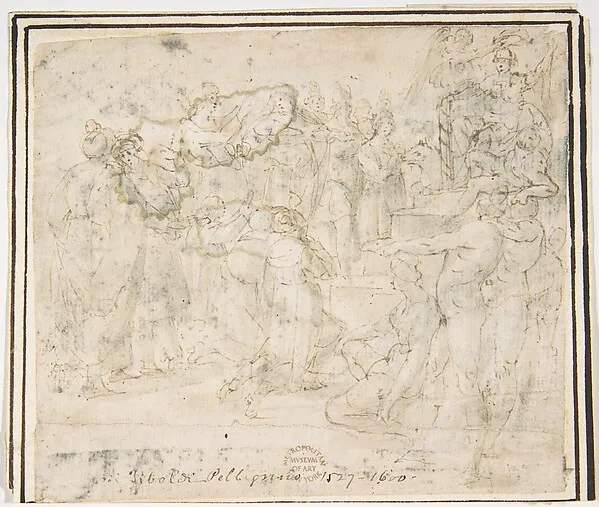
2 Chronicles 30:1-5The Letters Sent to All Israel
1And Hezekiah sent to all Israel and Judah, and wrote letters also to Ephraim and Manasseh, that they should come to the house of the LORD at Jerusalem, to keep the passover unto the LORD God of Israel. 2For the king had taken counsel, and his princes, and all the congregation in Jerusalem, to keep the passover in the second month. 3For they could not keep it at that time, because the priests had not sanctified themselves sufficiently, neither had the people gathered themselves together to Jerusalem. 4And the thing pleased the king and all the congregation. 5So they established a decree to make proclamation throughout all Israel, from Beersheba even to Dan, that they should come to keep the passover unto the LORD God of Israel at Jerusalem: for they had not done it of a long time in such sort as it was written.
The first thing to notice is who receives the letters. Hezekiah is king of Judah, the southern kingdom; the northern tribes had split off under Jeroboam two centuries earlier and set up their own sanctuaries precisely so their people would not go up to Jerusalem. By Hezekiah's day that northern kingdom had been broken and largely carried away by Assyria. And it is to them - to Ephraim and Manasseh, the very heartland of the old rebellion - that Hezekiah writes an invitation: come to the house of the LORD at Jerusalem. This is a king who understands that the true Israel is a covenant people, and that the deepest division between the tribes was a divided worship.
He reaches across two hundred years of separation with an invitation, carrying a reform that ran the full breadth of the land he governed.2
There is a problem of timing, and how Hezekiah handles it is itself a lesson. The passover was appointed for the first month; but the priests had not sanctified themselves sufficiently, and the people had not had time to gather. Rather than cancel the feast for another year, the king and his princes take counsel and keep it in the second month - an exception the law itself made room for, originally for those unclean or far off (Num. 9:10-11), now applied to a whole nation that simply was not ready in time.3 The principle underneath is quietly profound: the law is given to serve the covenant relationship, not to strangle it.
When rigid adherence to the calendar would have meant no passover at all, Hezekiah chooses the gracious provision the law itself supplies - and the thing pleased the king and all the congregation. What matters most is that the people draw near to God; the timing bends to make that possible.
That sweep of the decree - the southernmost town to the northernmost - is an ancient formula for the whole land, the entire span of Israel from end to end.1 The phrase usually appears when Scripture wants to say everyone, the whole nation, no one left out (Judg. 20:1; 1 Sam. 3:20). Hezekiah deliberately casts the net the full length of the land. He is not gathering a faction or a remnant of the loyal; he is summoning the scattered totality of God's people to one table.
And the closing clause names what is at stake: they had not done it of a long time in such sort as it was written. The feast had lapsed; the memory had grown dim. A whole generation had grown up without keeping the meal that told them who they were. To revive the passover is to revive Israel's very identity.
2 Chronicles 30:6-9Turn Again, and He Will Return
6So the posts went with the letters from the king and his princes throughout all Israel and Judah, and according to the commandment of the king, saying, Ye children of Israel, turn again unto the LORD God of Abraham, Isaac, and Israel, and he will return to the remnant of you, that are escaped out of the hand of the kings of Assyria. 7And be not ye like your fathers, and like your brethren, which trespassed against the LORD God of their fathers, who therefore gave them up to desolation, as ye see. 8Now be ye not stiffnecked, as your fathers were, but yield yourselves unto the LORD, and enter into his sanctuary, which he hath sanctified for ever: and serve the LORD your God, that the fierceness of his wrath may turn away from you. 9For if ye turn again unto the LORD, your brethren and your children shall find compassion before them that lead them captive, so that they shall come again into this land: for the LORD your God is gracious and merciful, and will not turn away his face from you, if ye return unto him.
The message the posts carry is more than an invitation to a feast; it is a call to return, and it is built on a beautiful reciprocity. Turn again unto the LORD… and he will return to the remnant of you. The turning of the people and the returning of God are bound together in a single sentence - a promise of how God responds to those who come back. Notice, too, who is being addressed: the remnant… that are escaped out of the hand of the kings of Assyria. These are the survivors of judgment, the ones left after the northern kingdom was shattered.
They stand there by the mercy of God, preserved through catastrophe. And the call now is to let that preservation become a turning - to answer the mercy that spared them by coming home to the One who spared them.
The message does not flatter. It names plainly what the fathers did - they trespassed against the LORD… who therefore gave them up to desolation, as ye see - and it sets that failure before the present generation as a warning and a fork in the road: be ye not stiffnecked, as your fathers were. To be stiffnecked is the image of an animal that will not bend its neck to the yoke, that stiffens against every pull of the hand that would guide it.
It is the posture of a people who will not yield, who harden themselves against the call. Over against it the message sets the opposite posture: yield yourselves unto the LORD… and serve. The choice is laid out with stark clarity. They can repeat their fathers' refusal and share their fathers' desolation, or they can bend - soften the neck, yield the self - and find that the fierceness of his wrath may turn away.
2 Chronicles 30:10-12Mocked by Many; the Humble Come
10So the posts passed from city to city through the country of Ephraim and Manasseh even unto Zebulun: but they laughed them to scorn, and mocked them. 11Nevertheless divers of Asher and Manasseh and of Zebulun humbled themselves, and came to Jerusalem. 12Also in Judah the hand of God was to give them one heart to do the commandment of the king and of the princes, by the word of the LORD.
The first response to the invitation is contempt. As the posts pass from city to city through the north, the people laughed them to scorn, and mocked them. It is worth asking why mockery, of all reactions. The messengers came from a southern king, calling people to a sanctuary their fathers had taught them to despise; to the proud, the invitation could only sound like an insult or a power-play, an assertion of religious authority they did not recognize.
Mockery is the reflex of a heart that feels challenged and will not bend - it is easier to laugh at a call than to reckon with it. Scorn lets a person dismiss the summons without ever having to face what it asks. And so the majority of the north laughs the couriers out of town. The reform of a generation, the open door to the house of the LORD, the offer of return - met with a joke.
And then the hinge of the whole chapter, a single word the King James sets like a hinge in the door: Nevertheless. Against the tide of scorn, something else happens. Divers of Asher and Manasseh and of Zebulun humbled themselves, and came to Jerusalem. Divers means various, some, scattered individuals - here and there a man, a household, a few from this tribe and that. The Hebrew behind humbled themselves (kana) means to bow, to bend low, to make oneself small.
These are the ones who did not stiffen the neck. While their neighbors laughed, they bent - and they came, some of them on a long road south, into a city and a sanctuary they had been raised to avoid. They are easy to overlook against the noise of the mockers, but they are the ones in whom the whole purpose of the chapter is fulfilled. God's work almost always begins with the divers who humble themselves while the crowd is still laughing.
Judah's response sits in a completely different register. Where the north is split - some mocking, some bending low - Judah is given one heart to obey, and the text traces that unity straight back to its source: the hand of God and the word of the LORD. This is a gift, a work of God that draws many wills into a single glad obedience, the precise undoing of the scattering and division that has marked the whole nation since the kingdom split.
When God gathers a people, He does more than assemble bodies in one place; He gives them one heart. The same hand that summons the scattered is the hand that knits them together - and the unity, like the gathering, is His doing.
2 Chronicles 30:13-20The Passover Kept, and the King's Prayer
13And there assembled at Jerusalem much people to keep the feast of unleavened bread in the second month, a very great congregation. 14And they arose and took away the altars that were in Jerusalem, and all the altars for incense took they away, and cast them into the brook Kidron. 15Then they killed the passover on the fourteenth day of the second month: and the priests and the Levites were ashamed, and sanctified themselves, and brought in the burnt offerings into the house of the LORD. 16And they stood in their place after their manner, according to the law of Moses the man of God: the priests sprinkled the blood, which they received of the hand of the Levites. 17For there were many in the congregation that were not sanctified: therefore the Levites had the charge of the killing of the passovers for every one that was not clean, to sanctify them unto the LORD.
The feast begins, fittingly, with an act of clearing away. The great congregation arises and took away the altars that were in Jerusalem, and all the altars for incense… and cast them into the brook Kidron - the rival altars, the apparatus of false worship, hauled out of the holy city and dumped in the ravine outside. This is the physical shape of Hezekiah's whole reform: before the true worship can fill the house, the counterfeit must be carried out and thrown away.
And there is a touching detail in the priests and Levites who were ashamed, and sanctified themselves. Their unreadiness was the reason the feast had to be moved to the second month in the first place; now, confronted by the people's eagerness, they are shamed into action and consecrate themselves at last. The leaders who lagged are stirred by the very crowd they were meant to lead. The cleansing of the sanctuary moves forward - but the spiritual cleansing of all the people has not yet caught up to it, and that gap is about to become the heart of the chapter.
18For a multitude of the people, even many of Ephraim, and Manasseh, Issachar, and Zebulun, had not cleansed themselves, yet did they eat the passover otherwise than it was written. But Hezekiah prayed for them, saying, The good LORD pardon every one 19That prepareth his heart to seek God, the LORD God of his fathers, though he be not cleansed according to the purification of the sanctuary. 20And the LORD hearkened to Hezekiah, and healed the people.
Here is the tension the whole chapter has been building toward. A great multitude - especially the newcomers from the north, many of Ephraim, and Manasseh, Issachar, and Zebulun - had not cleansed themselves. They had come in a rush, from far off, out of a region long cut off from the temple and its rites; there had been no time, perhaps no knowledge, to undergo the ceremonial purification the law required before eating the passover. And so they ate it anyway - otherwise than it was written.1 The phrase is precise and unflinching: they did not keep the rule.
By the letter, this was a real transgression; the law attached serious consequences to eating the holy meal in an unclean state. And yet - this is the point the narrative will not let us miss - these are the very ones who humbled themselves and came, who traveled the long road south, whose hearts were set on seeking the God of their fathers. They got the ritual wrong precisely because they wanted so much to be there.
And so the king does something extraordinary. He stands between the people and the holiness they have not properly approached, and intercedes: The good LORD pardon every one that prepareth his heart to seek God, the LORD God of his fathers, though he be not cleansed according to the purification of the sanctuary. Weigh every clause. He openly grants the violation - though he be not cleansed - and asks that mercy reach past the unmet requirement to the thing underneath it: the prepared heart, the genuine seeking.
He appeals to God's goodness: the good LORD. The whole prayer rests on the conviction that what God most looks for in a worshiper is a heart turned toward Him in earnest - and that where He finds such a heart, He will pardon what the hands could not get right.
The answer comes in a single, weighty line, and God acts on the king's intercession the moment it is offered. The healing here is the lifting of the harm that would otherwise have come from eating the holy meal unworthily - the averting of the consequence the broken rule would have brought. God Himself closes the gap between the prepared heart and the unmet requirement. His holiness stands; His mercy extends to cover what that holiness would otherwise have charged against them.
And He does it in response to a prayer - one man standing in the gap for a whole multitude, appealing to the goodness of God on their behalf, and being heard. The verse is a quiet revelation of the kind of God this is: One who would rather heal a seeking people than hold their imperfect approach against them, and who answers the intercessor who pleads for mercy over judgment.
2 Chronicles 30:21-27Great Joy, Since the Days of Solomon
21And the children of Israel that were present at Jerusalem kept the feast of unleavened bread seven days with great gladness: and the Levites and the priests praised the LORD day by day, singing with loud instruments unto the LORD. 22And Hezekiah spake comfortably unto all the Levites that taught the good knowledge of the LORD: and they did eat throughout the feast seven days, offering peace offerings, and making confession to the LORD God of their fathers. 23And the whole assembly took counsel to keep other seven days: and they kept other seven days with gladness.
The mood of the feast is unmistakable: great gladness. The Levites and the priests praised the LORD day by day, singing with loud instruments - the sanctuary fills with music, day after day, for a week. And the king moves through it as an encourager: Hezekiah spake comfortably unto all the Levites that taught the good knowledge of the LORD. The phrase spake comfortably means he spoke to their heart - he heartened them, the same leaders who had been ashamed of their unreadiness, now affirmed and strengthened in their teaching work.
Notice the texture of the worship: praise and music, yes, but also peace offerings, and making confession. Joy and confession are not at odds here; the gladness of a forgiven people and the honest acknowledgment of sin rise together. This is what restored worship looks like: the overflowing gladness of those who have been pardoned and know it.
24For Hezekiah king of Judah did give to the congregation a thousand bullocks and seven thousand sheep; and the princes gave to the congregation a thousand bullocks and ten thousand sheep: and a great number of priests sanctified themselves. 25And all the congregation of Judah, with the priests and the Levites, and all the congregation that came out of Israel, and the strangers that came out of the land of Israel, and that dwelt in Judah, rejoiced. 26So there was great joy in Jerusalem: for since the time of Solomon the son of David king of Israel there was not the like in Jerusalem. 27Then the priests the Levites arose and blessed the people: and their voice was heard, and their prayer came up to his holy dwelling place, even unto heaven.
When the seven appointed days are over, the people will not let the joy end. The whole assembly took counsel to keep other seven days: and they kept other seven days with gladness. The feast that was prescribed for one week is doubled to two - an overflow of the gladness, so full it refuses to stop on schedule. And the generosity matches the joy: the king gives a thousand bullocks and seven thousand sheep, and the princes add a thousand bullocks and ten thousand sheep. The lavishness is itself a form of worship; abundance poured out for the congregation so that the celebration can continue.
Joy of this kind is naturally extravagant - it gives more than required, lasts longer than appointed, and draws everyone in. A people that has truly grasped what it has been forgiven looks for ways to prolong the gratitude.
Then the chronicler reaches all the way back to Solomon to find anything to compare it to. Recall what Solomon's day represented - the temple newly built, the kingdom at the zenith of its wealth and power and reach, the golden height of Israel's national glory. In every generation since, he says, the joy of that era had never been equaled - until now. But look closely at what now surpasses it. This is a diminished people, a shrunken realm, the north already shattered by Assyria, the worshipers including newcomers who only weeks ago were strangers to the temple.
And the congregation is strikingly mixed: all the congregation of Judah… and all the congregation that came out of Israel, and the strangers… rejoiced - old enemies, scattered tribes, and outsiders, all glad together. The joy that outshines Solomon's golden age is the joy of a turned, gathered, forgiven people. That is the chronicler's quiet verdict on where the deepest joy is really found.
Research trail
Sources & further study
These references support the historical, linguistic, manuscript, and contextual notes in this chapter. Scripture remains the primary text; external sources are provided so readers can inspect the research directly.
- 2 Chronicles 30 - Translators' NotesThe NET Bible's detailed footnotes on 2 Chronicles 30 - the warrant for keeping the passover in the second month, the idiom laughed them to scorn, the phrase otherwise than it was written in verse 18, and the force of prepareth his heart in Hezekiah's prayer.
- Iron Age Judah · Hezekiah's JerusalemThe museum's archaeology wing holds inscriptions, seals, and cultic objects from the Judah of Hezekiah's day - the political and religious world behind a king who could send couriers from Beer-sheba even to Dan and call a scattered people back to one sanctuary.
- 2 Chronicles 30 · Hebrew + classical Jewish commentaryThe Hebrew text of 2 Chronicles 30 with Rashi, Radak, and other classical commentators side by side - useful for pesach (the passover Hezekiah revives), for the second-month exception and its warrant in the law, and for the long discussion of how the unclean could eat and yet be healed in verses 18-20.
- 2 Chronicles 30 ↔ 1 Corinthians 5 · John 1 · Matthew 8Traces the threads tying Hezekiah's passover to Christ our passover… sacrificed for us (1 Cor. 5:7-8) and the Lamb of God (John 1:29), and the gathering of the scattered tribes to the table of many shall come from the east and west in the kingdom (Matt. 8:11).
Where this echoes in Scripture
The Letters Sent to All Israel
- Exodus 12:13And when I see the blood, I will pass over you, and the plague shall not be upon you to destroy you.The night the passover remembers - the LORD passing over the blood-marked houses, the meal Hezekiah now revives.
- Numbers 9:10-11If any man of you… be unclean… or be in a journey afar off… he shall keep the passover unto the LORD… in the second month.The law's own provision Hezekiah leans on - the second-month passover, mercy written into the calendar.
- 1 Samuel 3:20And all Israel from Dan even to Beer-sheba knew that Samuel was established to be a prophet of the LORD.The phrase for the whole land, end to end - the full span Hezekiah's decree deliberately covers.
- 1 Corinthians 5:7For even Christ our passover is sacrificed for us.What the lamb of the passover was always pointing toward - the sparing accomplished once for all in Christ.
Turn Again, and He Will Return
- James 4:8Draw nigh to God, and he will draw nigh to you.The reciprocity of verse 6 made a command for every reader - the turning that is always met by a returning.
- Luke 15:20But when he was yet a great way off, his father saw him, and had compassion, and ran, and fell on his neck.The father watching the road - the picture of a God whose face is already turned toward the one who turns home.
- Joel 2:13Turn unto the LORD your God: for he is gracious and merciful, slow to anger, and of great kindness.The same word and the same ground - turn, because the One you turn to is gracious and merciful.
- Zechariah 1:3Turn ye unto me, saith the LORD of hosts, and I will turn unto you.The prophets' echo of the posts' message - the road that runs both ways between God and the returning heart.
Mocked by Many; the Humble Come
- 2 Chronicles 7:14If my people… shall humble themselves, and pray, and seek my face, and turn from their wicked ways; then will I hear from heaven.The same verb - the humbling (kana) God promised to answer, now lived out by the divers who came.
- James 4:6God resisteth the proud, but giveth grace unto the humble.The two responses of the chapter in one line - the proud who mock, and the humble who receive grace and come.
- Matthew 22:5But they made light of it, and went their ways, one to his farm, another to his merchandise.The same scorn for a king's invitation to a feast - the call made light of, while a few still come to the table.
- Philippians 2:13For it is God which worketh in you both to will and to do of his good pleasure.The hand of God giving Judah “one heart” - the unity and the willing obedience are His work, not theirs.
The Passover Kept, and the King's Prayer
- 1 Samuel 16:7For the LORD seeth not as man seeth… man looketh on the outward appearance, but the LORD looketh on the heart.The ground of Hezekiah's prayer - the God who judges by the prepared heart, not the outward state.
- Matthew 9:13But go ye and learn what that meaneth, I will have mercy, and not sacrifice.The principle the Lord Jesus pressed on the rule-keepers - the very mercy Hezekiah prayed for the unclean multitude.
- Psalm 51:17The sacrifices of God are a broken spirit: a broken and a contrite heart, O God, thou wilt not despise.What the good LORD hearkens to - the heart set on Him, accepted past the ceremony it could not complete.
- John 6:37And him that cometh to me I will in no wise cast out.The welcome Hezekiah could only pray for, made an unbreakable promise - no seeking heart turned away.
Great Joy, Since the Days of Solomon
- Matthew 8:11That many shall come from the east and west, and shall sit down with Abraham, and Isaac, and Jacob, in the kingdom of heaven.The gathering of the scattered to one table - Hezekiah's feast as a foretaste of the feast of the kingdom.
- Isaiah 35:10And the ransomed of the LORD shall return, and come to Zion with songs and everlasting joy upon their heads.The simchah of the returned - the joy of the gathered, forgiven people that the chapter foreshadows.
- Nehemiah 8:10The joy of the LORD is your strength.The same gladness of a people restored to worship - joy given freely to the turning heart.
- Revelation 19:9Blessed are they which are called unto the marriage supper of the Lamb.The feast every kept passover pointed toward - the ransomed of every tribe gathered home to the table that never ends.