Haggai 1
People in this chapter
Haggai speaks to the remnant that came back from Babylon - the people who returned under Zerubbabel to rebuild what Babylon had torn down. Years have passed. The altar stands and sacrifices are offered, but the temple itself, the house of God, still lies in ruins; the work begun with such hope has stalled and gone quiet. The chapter opens by anchoring the moment precisely: In the second year of Darius the king, in the sixth month, in the first day of the month, came the word of the LORD by Haggai the prophet (v. 1).
And the people have an answer ready for anyone who asks why the building has stopped: The time is not come, the time that the LORD'S house should be built (v. 2). A deferral, endlessly extended.1
Tap any highlighted phrase to jump to the commentary that unpacks it.
Haggai 1:1-4The Time Is Not Come
1In the second year of Darius the king, in the sixth month, in the first day of the month, came the word of the LORD by Haggai the prophet unto Zerubbabel the son of Shealtiel, governor of Judah, and to Joshua the son of Josedech, the high priest, saying, 2Thus speaketh the LORD of hosts, saying, This people say, The time is not come, the time that the LORD’s house should be built. 3Then came the word of the LORD by Haggai the prophet, saying, 4Is it time for you, O ye, to dwell in your cieled houses, and this house lie waste?
The chapter opens by fixing the moment with unusual care: In the second year of Darius the king, in the sixth month, in the first day of the month (v. 1). This is no timeless parable; it is a word that landed on a particular day, to particular people, through a named prophet. And it comes to the two men who together carried the life of the returned community - Zerubbabel the governor, of the royal line of David, and Joshua the high priest.
Crown and altar, civic leadership and worship, are addressed side by side, because the failure Haggai names belongs to the whole people. Their stalled work has hardened into a saying that travels from mouth to mouth: This people say, The time is not come, the time that the LORD'S house should be built (v. 2). Notice how reasonable it sounds. They do not say the house should never be built; they say not yet.
The economy is hard, the opposition is real, the moment is not right. It is the most ordinary way in the world to abandon something: an indefinite delay, a later that quietly becomes never. The LORD answers that later head-on.1
The LORD's reply is a single, exposing question: Is it time for you, O ye, to dwell in your cieled houses, and this house lie waste? (v. 4). The word cieled means panelled - walls finished and lined with wood, the kind of work a person undertakes only after the necessities are met, when there is margin left over for comfort and finish. The contrast is devastating in its plainness. The people had said there was no time, no resource, no right moment for God's house - yet there had been time and resource enough to panel their own.
The excuse collapses under the weight of their own front doors. What Haggai exposes is not that comfortable homes are sinful; he never says they have no right to a roof. He asks a sharper question: is it fitting, is it time, for them to enjoy the finished comforts of their own houses while the house meant for the worship of God sits a ruin? The issue is order. They have not refused God so much as ranked Him - placed Him after their own settling-in, behind their own walls.
And a thing ranked last is, in practice, a thing left undone.
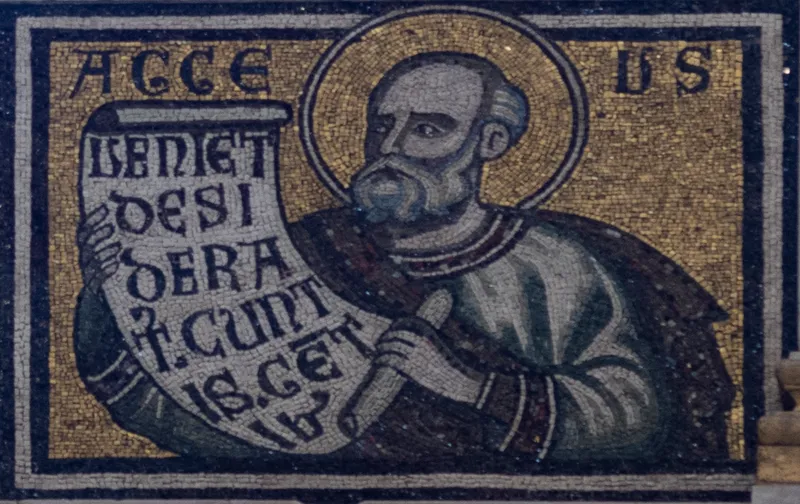
Haggai 1:5-11Consider Your Ways · A Bag With Holes
5Now therefore thus saith the LORD of hosts; Consider your ways. 6Ye have sown much, and bring in little; ye eat, but ye have not enough; ye drink, but ye are not filled with drink; ye clothe you, but there is none warm; and he that earneth wages earneth wages to put it into a bag with holes. 7Thus saith the LORD of hosts; Consider your ways. 8Go up to the mountain, and bring wood, and build the house; and I will take pleasure in it, and I will be glorified, saith the LORD. 9Ye looked for much, and lo, it came to little; and when ye brought it home, I did blow upon it. Why? saith the LORD of hosts. Because of mine house that is waste, and ye run every man unto his own house. 10Therefore the heaven over you is stayed from dew, and the earth is stayed from her fruit. 11And I called for a drought upon the land, and upon the mountains, and upon the corn, and upon the new wine, and upon the oil, and upon that which the ground bringeth forth, and upon men, and upon cattle, and upon all the labour of the hands.
Twice in three verses the LORD sounds the same charge: Consider your ways (vv. 5, 7). The repetition is the hinge of the whole chapter, a summons to stop and actually look. The Hebrew underneath says, literally, set your heart upon your ways - a deliberate, unhurried examination of how life is actually going. And then the LORD gives them the very evidence to examine, and it is uncomfortably familiar: Ye have sown much, and bring in little; ye eat, but ye have not enough; ye drink, but ye are not filled with drink; ye clothe you, but there is none warm (v. 6).
Every line names hard work that fails to deliver. They plant generously and harvest meagrely; they eat and stay hungry; they drink and stay dry; they put on clothes and cannot get warm. This is the ache of effort that never quite pays off - the gnawing sense of running hard and getting nowhere. The people would have felt every word of it; what they had not done was connect it to anything. The LORD is teaching them to read their own frustration as a message with a source.
Before He tells them what to build, He tells them to look - because a heart that will not first consider its ways will never truly change them.2
After the diagnosis comes the remedy, and it is wonderfully concrete: Go up to the mountain, and bring wood, and build the house; and I will take pleasure in it, and I will be glorified, saith the LORD (v. 8). The command is physical, specific, do-able: climb the hill, cut and carry timber, raise the building. He asks for the next obedient step - go, bring, build. And He attaches two promises to it that reveal what He is really after.
First, I will take pleasure in it - the work will be genuinely delighted in by the God for whom it is done. Second, I will be glorified. The house is cedar and stone in service of something higher: that the glory of God might have a place among His people. The wages that had drained away were the symptom; the cure is to give themselves to a work whose center is God's pleasure and God's glory.
What looks like one more burden is in fact the doorway out of futility.
Now the LORD draws the line the people had failed to draw, and He does it as a question and answer: Ye looked for much, and, lo, it came to little; and when ye brought it home, I did blow upon it. Why? saith the LORD of hosts. Because of mine house that is waste, and ye run every man unto his own house (v. 9). The little phrase I did blow upon it is striking - the harvest brought home did not merely fall short by accident; the LORD Himself breathed it away, as a man scatters chaff with a breath.
And then the plain reason: mine house… waste, while ye run every man unto his own house. The verb run is telling. They were not idle; they were busy - hurrying, each to his own concerns, full of energy for the wrong order of things. The chapter then widens the lens: the heaven over you is stayed from dew, and the earth is stayed from her fruit (v. 10), and I called for a drought upon land, grain, wine, oil, livestock, and all the labour of the hands (v. 11).
This is sobering, and it must be held with care: the LORD is reading this people's this hardship as bound up with their neglect, calling them to repentance. It is not a formula that every drought anywhere is a verdict on someone's sin - Scripture itself refuses that flattening. Here the meaning is specific and pastoral: their misplaced priority had consequences they could feel, and the God who let them feel it did so to turn them home.
Haggai 1:12-15I Am With You
12Then Zerubbabel the son of Shealtiel, and Joshua the son of Josedech, the high priest, with all the remnant of the people, obeyed the voice of the LORD their God, and the words of Haggai the prophet, as the LORD their God had sent him, and the people did fear before the LORD. 13Then spake Haggai the LORD’s messenger in the LORD’s message unto the people, saying, I am with you, saith the LORD. 14And the LORD stirred up the spirit of Zerubbabel the son of Shealtiel, governor of Judah, and the spirit of Joshua the son of Josedech, the high priest, and the spirit of all the remnant of the people; and they came and did work in the house of the LORD of hosts, their God, 15In the four and twentieth day of the sixth month, in the second year of Darius the king.
Then comes the turn that makes Haggai rare among the prophets - the people actually listen. Then Zerubbabel… and Joshua… with all the remnant of the people, obeyed the voice of the LORD their God… and the people did fear before the LORD (v. 12). So many prophets cried out and were met with hardened hearts; here, within a single chapter, the word lands and the people bend to it. Two things are worth weighing. First, the obedience is whole and shared: the governor, the high priest, and all the remnant together - leaders and people moving as one, a community turning together.
Second, the text names what stood beneath the obedience: the people did fear before the LORD. Their compliance was reverence. They heard, in Haggai's plain words, the actual voice of the living God, and they were moved to a holy seriousness. And notice how the text frames Haggai himself: he speaks as the LORD their God had sent him. The prophet's authority is borrowed entirely; what gripped the people was the God behind him.
To fear the LORD and to obey His voice are, here, the same single motion.
What the LORD does next is easy to read past and is in fact the most tender thing in the chapter: And the LORD stirred up the spirit of Zerubbabel… and the spirit of Joshua… and the spirit of all the remnant of the people; and they came and did work in the house of the LORD of hosts, their God (v. 14). Look at the order. The people obey in verse 12; the LORD says I am with you in verse 13; and then in verse 14 the LORD Himself stirred up the spirit of the very people who had just resolved to obey.
Their willingness, it turns out, was not finally their own achievement - God awakened it. This is no contradiction of their genuine choice; both are true at once. They truly obeyed, and God truly moved them to it. The same God who commanded the work supplied the very desire to do it, breathing energy into hearts that had grown sluggish. And the result is beautifully plain: they came and did work. People on the mountain, carrying wood, building.
The chapter that began with a stalled, dispirited community ends with hands busy at the house of God, and the date is recorded with care - the four and twentieth day of the sixth month (v. 15) - because the day a people finally answers God is a day worth remembering.
Research trail
Sources & further study
These references support the historical, linguistic, manuscript, and contextual notes in this chapter. Scripture remains the primary text; external sources are provided so readers can inspect the research directly.
- Haggai 1 - Translators' NotesThe NET Bible's detailed footnotes on Haggai 1 - the precise dating in the reign of Darius (v. 1), the people's excuse that the time is not come (v. 2), the meaning of cieled or panelled houses (v. 4), and the agricultural futility curses gathered in verses 6, 9-11.
- Haggai 1 · Hebrew + classical Jewish commentaryThe Hebrew text of Haggai 1 with Rashi, Radak, and other classical commentators side by side - useful for the twice-repeated charge simu levavchem al darkeichem (vv. 5, 7, literally “set your heart upon your ways”), for the picture of the wages dropped into a pierced bag (v. 6), and for the verb behind stirred up the spirit in verse 14.
- Haggai 1 ↔ Matthew 6 · Luke 12 · Matthew 28 · 1 Peter 2Traces the threads tying Haggai 1 to the rest of Scripture - the leaking bag and unsatisfied labour (v. 6) read beside seek ye first the kingdom of God (Matt. 6:33) and the bags which wax not old (Luke 12:33), and the promise I am with you (v. 13) read alongside God with us (Matt. 1:23) and the temple Christ raises in His people (1 Pet. 2:5).
Where this echoes in Scripture
The Time Is Not Come
- Ezra 4:24Then ceased the work of the house of God which is at Jerusalem. So it ceased unto the second year of the reign of Darius king of Persia.The very stall Haggai confronts - the work on the house halted until the second year of Darius (v. 1).
- Matthew 6:33But seek ye first the kingdom of God, and his righteousness; and all these things shall be added unto you.The cure for the disorder of verse 4 - God ranked first, and everything else added in its place.
- 2 Samuel 7:2See now, I dwell in an house of cedar, but the ark of God dwelleth within curtains.David's instinct reversed here - he was troubled to live in cedar while God's ark sat in a tent; the people of verse 4 are not.
- Luke 12:18-21I will pull down my barns, and build greater... So is he that layeth up treasure for himself, and is not rich toward God.The panelled houses of verse 4 in another key - building for self while poor toward God.
Consider Your Ways · A Bag With Holes
- Luke 12:33-34provide yourselves bags which wax not old, a treasure in the heavens that faileth not... For where your treasure is, there will your heart be also.The leaking bag of verse 6 answered - a purse and a treasure that cannot drain away.
- Deuteronomy 28:38-40Thou shalt carry much seed out into the field, and shalt gather but little in... thou shalt not anoint thyself with the oil; for thine olive shall cast his fruit.The futility curses of verses 6, 10-11 spoken long before - sown much, gathered little, the harvest failing.
- Matthew 6:19-21Lay not up for yourselves treasures upon earth... But lay up for yourselves treasures in heaven... For where your treasure is, there will your heart be also.The remedy for the bag with holes (v. 6) - treasure stored where moth and rust do not reach.
- Proverbs 3:9-10Honour the LORD with thy substance, and with the firstfruits of all thine increase: so shall thy barns be filled with plenty.The counterpart to verses 6 and 9 - God given the first place, and the barns filled with plenty.
- Haggai 2:18-19consider from this day and upward... from the day that the foundation of the LORD’s temple was laid... from this day will I bless you.The promise on the far side of obedience - the blessing withheld in verses 9-11 restored once the house is begun.
I Am With You
- Matthew 1:23they shall call his name Emmanuel, which being interpreted is, God with us.The promise of verse 13 made flesh - the LORD’s "I am with you" gathered into a name.
- Matthew 28:20and, lo, I am with you alway, even unto the end of the world. Amen.The same promise as verse 13, stretched to the end of time - the presence of God with those He sends to work.
- Philippians 2:13For it is God which worketh in you both to will and to do of his good pleasure.The stirring of verse 14 named outright - the willingness to obey worked in us by God.
- Ezra 1:1the LORD stirred up the spirit of Cyrus king of Persia, that he made a proclamation.The same verb as verse 14 - the LORD rousing a spirit to set His purposes moving.
- 1 Peter 2:5Ye also, as lively stones, are built up a spiritual house, an holy priesthood.The house of verse 8 reaching its end - God’s people themselves built into His dwelling.