Ezra 4
People in this chapter
The return from exile is a moment of fragile hope. The captives have come home under the decree of Cyrus, the altar has been rebuilt, and the foundation of the temple has been laid with shouting and weeping (Ezra 3). The work has begun. And then, at the very threshold of restoration, opposition arrives with a handshake. The adversaries of Judah and Benjamin come to Zerubbabel and the chief fathers with what sounds like the friendliest of proposals: Let us build with you; for we seek your God, as ye do. The danger of the chapter is that the first threat to the work does not look like a threat at all.1
Tap any highlighted phrase to jump to the commentary that unpacks it.
Ezra 4:1-3Ye Have Nothing to Do With Us to Build
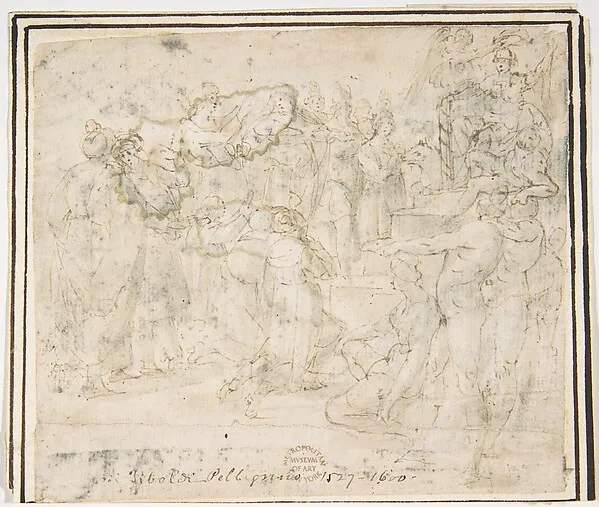
1Now when the adversaries of Judah and Benjamin heard that the children of the captivity builded the temple unto the LORD God of Israel; 2Then they came to Zerubbabel, and to the chief of the fathers, and said unto them, Let us build with you: for we seek your God, as ye do; and we do sacrifice unto him since the days of Esarhaddon king of Assur, which brought us up hither. 3But Zerubbabel, and Jeshua, and the rest of the chief of the fathers of Israel, said unto them, Ye have nothing to do with us to build an house unto our God; but we ourselves together will build unto the LORD God of Israel, as king Cyrus the king of Persia hath commanded us.
The chapter opens by naming the people who will trouble the rest of it: the adversaries of Judah and Benjamin (v. 1). They come with words, and the words are warm. These are the peoples whom the kings of Assyria had resettled in the land after the northern kingdom fell - foreigners brought in to replace exiled Israel, who over the generations had folded the worship of the LORD into the worship of the gods they carried with them.
When they hear that the children of the captivity builded the temple unto the LORD God of Israel, they understand at once what it means: the returned exiles are staking everything on their own God, the God of their fathers, and on Him alone. And so the adversaries do the shrewdest thing opposition ever does. Before they oppose the work, they offer to join it.1
The offer is almost disarming: Let us build with you: for we seek your God, as ye do; and we do sacrifice unto him since the days of Esar-haddon king of Assur, which brought us up hither (v. 2). On its face it is a claim of common faith and a long résumé to back it - we worship your God, and we have been sacrificing to Him for generations. But the claim, weighed carefully, will not hold.
These were the peoples who, by the account in 2 Kings 17, feared the LORD, and served their own gods - a worship of the LORD set alongside the idols of Babylon, Cuth, and Hamath, never instead of them. What they propose is not the faith of the fathers of Israel but a blending of it with everything else. And that is precisely the peril. A temple built by hands whose worship is already divided would be a divided house from its first stone.
The danger is that the offer is plausible. The deadliest threat to the purity of the work comes dressed as a brother.2
The answer of Zerubbabel and Jeshua and the chief fathers is immediate and unsparing: Ye have nothing to do with us to build an house unto our God; but we ourselves together will build unto the LORD God of Israel, as king Cyrus the king of Persia hath commanded us (v. 3). It can sound harsh to a modern ear, and it is worth being clear about what it is and is not. It is not a verdict on the worth of these people, nor a wall built out of pride of blood.
It is a fence set around worship. The concern is the one the prophets had fought for centuries: that the LORD will not share His house with other gods, that a faith mingled with idols is not faith in Him at all. To accept the partnership would be to write that mingling into the very foundation of the temple. The builders also ground their refusal in the actual commission they were given - as king Cyrus… hath commanded us. The charge was specific, and it was theirs.
There are moments when the most faithful thing a person can do is to decline help, and stand, if need be, alone.
Ezra 4:4-5They Weakened the Hands of the People
4Then the people of the land weakened the hands of the people of Judah, and troubled them in building, 5And hired counsellors against them, to frustrate their purpose, all the days of Cyrus king of Persia, even until the reign of Darius king of Persia.
The offer refused, the adversaries turn to a quieter weapon: Then the people of the land weakened the hands of the people of Judah, and troubled them in building (v. 4). This is the slow erosion of will. The image is bodily and exact: weakened the hands. Hands that hang slack cannot grip a tool or lift a stone. The opposition aims not at the walls but at the workers - at their courage, their stamina, their belief that the work is worth the cost.
They troubled them in building, which is to say they made the building itself a misery: harassment, obstruction, the steady raising of difficulty until the effort felt pointless. This is how the work of God is most often hindered: by a thousand small discouragements that wear faithful people down until the tools, almost without a decision, go quiet.
When intimidation alone proves not enough, the campaign escalates into the machinery of the state: they hired counsellors against them, to frustrate their purpose, all the days of Cyrus king of Persia, even until the reign of Darius king of Persia (v. 5). These are men with access - advisers, officials, people who could reach the king's ear and bend his policy. The verb hired is telling: this opposition is funded, organized, deliberate, a sustained lobbying effort paid for out of someone's pocket.
And note the span of time the verse quietly measures: all the days of Cyrus… even until the reign of Darius. This is not a single bad season. It is a campaign that outlasts a king and runs for years. The aim is named plainly - to frustrate their purpose, to break the will behind the work so thoroughly that the purpose itself collapses. Opposition to God's work, the verse warns, can be patient. It is prepared to wait a builder out.
Ezra 4:6-16The Rebellious and the Bad City
6And in the reign of Ahasuerus, in the beginning of his reign, wrote they unto him an accusation against the inhabitants of Judah and Jerusalem. 7And in the days of Artaxerxes wrote Bishlam, Mithredath, Tabeel, and the rest of their companions, unto Artaxerxes king of Persia; and the writing of the letter was written in the Syrian tongue, and interpreted in the Syrian tongue. 8Rehum the chancellor and Shimshai the scribe wrote a letter against Jerusalem to Artaxerxes the king in this sort: 9Then wrote Rehum the chancellor, and Shimshai the scribe, and the rest of their companions; the Dinaites, the Apharsathchites, the Tarpelites, the Apharsites, the Archevites, the Babylonians, the Susanchites, the Dehavites, and the Elamites, 10And the rest of the nations whom the great and noble Asnapper brought over, and set in the cities of Samaria, and the rest that are on this side the river, and at such a time.
Here the narrative widens its lens. Verses 6 through 23 gather up the long history of written opposition that the rebuilt city would face - reaching forward across the reigns of Ahasuerus and Artaxerxes to set down, in one place, the whole pattern of how letters were used to attack the work. A reader should not be confused by the parade of royal names; the passage is a kind of dossier, laying the accusations side by side.
Verse 6 notes an accusation under Ahasuerus; verse 7 a letter under Artaxerxes from Bishlam and his companions; and then, at verse 8, the text itself shifts - the original turns from Hebrew into Aramaic, the official language of the Persian empire, as if to let the reader hold the imperial correspondence in the very tongue it was filed in. The accusers assemble their full weight in verses 9 and 10: Rehum the chancellor, and Shimshai the scribe, and behind them a long roll of resettled peoples - Dinaites, Apharsathchites, and the rest - whom the great and noble Asnappar brought over, and set in the cities of Samaria. The opposition is no longer a few neighbors at the foundation.
It is a coalition with a chancellor at its head and the machinery of empire at its disposal.1
11This is the copy of the letter that they sent unto him, even unto Artaxerxes the king; Thy servants the men on this side the river, and at such a time. 12Be it known unto the king, that the Jews which came up from thee to us are come unto Jerusalem, building the rebellious and the bad city, and have set up the walls thereof, and joined the foundations. 13Be it known now unto the king, that, if this city be builded, and the walls set up again, then will they not pay toll, tribute, and custom, and so thou shalt endamage the revenue of the kings. 14Now because we have maintenance from the king’s palace, and it was not meet for us to see the king’s dishonour, therefore have we sent and certified the king; 15That search may be made in the book of the records of thy fathers: so shalt thou find in the book of the records, and know that this city is a rebellious city, and hurtful unto kings and provinces, and that they have moved sedition within the same of old time: for which cause was this city destroyed. 16We certify the king that, if this city be builded again, and the walls thereof set up, by this means thou shalt have no portion on this side the river.
The body of the letter is a small masterpiece of accusation, and it is worth watching how it works. It opens with a fact dressed as an alarm: the Jews… are come unto Jerusalem, building the rebellious and the bad city, and have set up the walls thereof, and joined the foundations (v. 12). The deeds described are simply true - people have returned, walls are rising, a foundation has been laid. What the accusers add is the loaded label: this is the rebellious and the bad city. The plain act of laying a foundation, an act of faith, is recast as the first move of a revolt.
Then comes the argument calculated to make a king care: money. if this city be builded… then will they not pay toll, tribute, and custom, and so thou shalt endamage the revenue of the kings (v. 13). A walled city is a city that can refuse to pay. The accusers have found the king's nerve, exactly as the adversaries found the builders'.
The letter then does three more things, each calculated for effect. It drapes raw self-interest in the language of loyalty: because we have maintenance from the king's palace, and it was not meet for us to see the king's dishonour (v. 14) - we are only protecting your honor, the accusers say, while what they are protecting is their own position. It appeals to the authority of the archive: search… the book of the records… and know that this city is a rebellious city… for which cause was this city destroyed (v. 15) - let the official record prove our case for us.
And it closes with a threat sharpened to a point: if this city be builded again… thou shalt have no portion on this side the river (v. 16) - rebuild Jerusalem and you will lose the whole province. It is a model of how accusation persuades: a grain of truth, an appeal to fear, a cloak of loyalty, and the weight of the record - all marshaled to make a false conclusion feel like simple prudence. When the work of God is opposed, the charge against it will rarely sound absurd.
It will sound responsible.
Ezra 4:17-24Then Ceased the Work - Unto the Second Year of Darius
17Then sent the king an answer unto Rehum the chancellor, and to Shimshai the scribe, and to the rest of their companions that dwell in Samaria, and unto the rest beyond the river, Peace, and at such a time. 18The letter which ye sent unto us hath been plainly read before me. 19And I commanded, and search hath been made, and it is found that this city of old time hath made insurrection against kings, and that rebellion and sedition have been made therein. 20There have been mighty kings also over Jerusalem, which have ruled over all countries beyond the river; and toll, tribute, and custom, was paid unto them.
The king's reply shows the accusation has done its work. He opens with the formal courtesy of empire - Peace - and reports that the letter hath been plainly read before me (vv. 17-18). Then he grants the accusers exactly the verdict they asked for: I commanded, and search hath been made, and it is found that this city of old time hath made insurrection against kings, and that rebellion and sedition have been made therein (v. 19).
The record, consulted, confirms the charge - and here is the painful thing: the record is not lying. Jerusalem genuinely had a history of resisting empires. The accusers had built their case on a true foundation and a false inference, and the king accepts both. He even concedes the city's former greatness: There have been mighty kings also over Jerusalem, which have ruled over all countries beyond the river (v. 20). But that admission only deepens his resolve.
A city that great, once rebellious, is a city worth keeping unwalled.
21Give ye now commandment to cause these men to cease, and that this city be not builded, until another commandment shall be given from me. 22Take heed now that ye fail not to do this: why should damage grow to the hurt of the kings? 23Now when the copy of king Artaxerxes’ letter was read before Rehum, and Shimshai the scribe, and their companions, they went up in haste to Jerusalem unto the Jews, and made them to cease by force and power. 24Then ceased the work of the house of God which is at Jerusalem. So it ceased unto the second year of the reign of Darius king of Persia.
The decree comes down hard and fast: Give ye now commandment to cause these men to cease, and that this city be not builded (v. 21), with a warning to the officials not to be slack about it - Take heed now that ye fail not to do this: why should damage grow to the hurt of the kings? (v. 22). The accusers waste no time. When the copy of king Artaxerxes' letter was read before Rehum… they went up in haste to Jerusalem unto the Jews, and made them to cease by force and power (v. 23).
Notice the word haste. Opposition that had waited years now sprints, eager to enforce the order while it is fresh. And notice by force and power. The stopping is not voluntary; the builders do not lay down their tools by choice. They are stopped - men with imperial authority arrive and shut the work down. This is opposition at its high-water mark: the naked machinery of the state turned against the house of God.
And so the chapter ends where opposition always hopes to drive the work of God: to a full stop. Then ceased the work of the house of God which is at Jerusalem. So it ceased unto the second year of the reign of Darius king of Persia (v. 24). The temple stands unfinished. Years pass with the foundation exposed and the walls unbuilt, a monument, it would seem, to the triumph of the adversaries. To anyone standing in Jerusalem in those years, the verdict looked settled: the work was over.
But the last clause of the chapter quietly refuses that reading. The work ceased unto the second year of Darius. A terminus is built into the very sentence that records the defeat: an until, not a forever. The narrator, looking back, knows what the builders in their discouragement could not yet see: that the stopping had an expiry date, that a coming reign would speak a coming word, and that the silence over the temple was a long-held breath, waiting for the word that would end it.
Research trail
Sources & further study
These references support the historical, linguistic, manuscript, and contextual notes in this chapter. Scripture remains the primary text; external sources are provided so readers can inspect the research directly.
- Ezra 4 - Translators' NotesThe NET Bible's detailed footnotes on Ezra 4 - the identity of the adversaries settled in the land (vv. 1-2), the shift from Hebrew into Aramaic at verse 8 for the body of the official correspondence, the list of resettled peoples (vv. 9-10), and the legal and fiscal force of the charges about toll, tribute, and custom (vv. 13, 20).
- Ezra 4 · Hebrew + classical Jewish commentaryThe Hebrew text of Ezra 4 with Rashi, Ibn Ezra, and other classical commentators side by side - useful for tsarei (v. 1, “adversaries,” those who press in), for the idiom rippu yedei (v. 4, “weakened the hands”), and for the Aramaic marda' behind rebellious in the letter (vv. 12, 15), the section of the book written in imperial Aramaic.
- Ezra 4 ↔ 2 Corinthians 6 · 1 Thessalonians 2 · Luke 23 · Matthew 16Traces the threads tying Ezra 4 to the rest of Scripture - the refusal to share the work with mingled worship (vv. 2-3) beside come out from among them, and be ye separate (2 Cor. 6:17), the hindered building (vv. 4-5) read with Satan hindered us (1 Thess. 2:18), and the holy city slandered as rebellious (v. 12) set against the King falsely charged with forbidding to give tribute to Caesar (Luke 23:2).
Where this echoes in Scripture
Ye Have Nothing to Do With Us to Build
- 2 Kings 17:33They feared the LORD, and served their own gods, after the manner of the nations whom they carried away from thence.The mingled worship of the resettled peoples (v. 2) - the LORD honored alongside idols, never alone.
- 2 Corinthians 6:14-17Be ye not unequally yoked together with unbelievers... come out from among them, and be ye separate, saith the Lord.The principle behind the refusal of verse 3 - the temple of God has no agreement with idols.
- Exodus 34:12-14Take heed to thyself, lest thou make a covenant with the inhabitants of the land... for thou shalt worship no other god.The old warning the builders are obeying - alliances that would compromise undivided worship.
- Nehemiah 2:20The God of heaven, he will prosper us; therefore we his servants will arise and build: but ye have no portion... in Jerusalem.The same refusal in the same city a generation later - the work of God is not shared with its opposers.
- Matthew 6:24No man can serve two masters... Ye cannot serve God and mammon.The whole-hearted devotion the refusal protects - worship cannot be divided between the LORD and a rival.
They Weakened the Hands of the People
- Nehemiah 4:10-11The strength of the bearers of burdens is decayed... And our adversaries said, They shall not know.The same weakening of the builders' hands (v. 4) in the same city - discouragement aimed at the workers.
- Isaiah 35:3-4Strengthen ye the weak hands, and confirm the feeble knees. Say to them that are of a fearful heart, Be strong, fear not.God's answer to weakened hands (v. 4) - courage put back into the arms of the discouraged.
- 1 Thessalonians 2:18We would have come unto you, even I Paul, once and again; but Satan hindered us.The hindering of God's work (vv. 4-5) named in the New Testament - the purpose frustrated, the worker opposed.
- Jeremiah 38:4He weakeneth the hands of the men of war... this man seeketh not the welfare of this people.The exact idiom of verse 4 - to weaken the hands is to drain the courage out of those who must act.
- Galatians 6:9Let us not be weary in well doing: for in due season we shall reap, if we faint not.The counter to the slow discouragement of verses 4-5 - the call not to let the hands grow weary.
The Rebellious and the Bad City
- Luke 23:2We found this fellow perverting the nation, and forbidding to give tribute to Caesar, saying that he himself is Christ a King.The same slander as verses 12-13 - faithfulness recast as sedition, the tribute charge laid against the King Himself.
- Nehemiah 6:6-7It is reported... that thou and the Jews think to rebel... and thou wouldest be their king.The identical accusation in the same city - building the walls branded as a plot to revolt.
- Acts 24:5We have found this man a pestilent fellow, and a mover of sedition among all the Jews throughout the world.The brand of verses 12-15 laid on Paul - the servant of God charged before a governor as a stirrer of revolt.
- Psalm 31:13For I have heard the slander of many... while they took counsel together against me, they devised to take away my life.The experience behind the letter (vv. 11-16) - counsel taken together, slander crafted to destroy.
- 1 Peter 2:12Having your conversation honest among the Gentiles: that, whereas they speak against you as evildoers... they may... glorify God.The answer to being branded bad and rebellious (v. 12) - let an honest life outlast the accusation.
Then Ceased the Work - Unto the Second Year of Darius
- Ezra 5:1-2Then the prophets... prophesied... Then rose up Zerubbabel... and began to build the house of God which is at Jerusalem.The until of verse 24 fulfilled - the work that was made to cease taken up again at God's word.
- Haggai 1:14The LORD stirred up the spirit of Zerubbabel... and they came and did work in the house of the LORD of hosts.How the stopped work resumed - by the LORD stirring the builders to build again.
- Matthew 16:18Upon this rock I will build my church; and the gates of hell shall not prevail against it.The promise behind the until (v. 24) - the house God builds may be opposed, but never finally stopped.
- Philippians 1:6He which hath begun a good work in you will perform it until the day of Jesus Christ.The pattern of verse 24 made personal - the work God begins, He carries through to completion.
- Psalm 118:22The stone which the builders refused is become the head stone of the corner.The deeper reversal the chapter foreshadows - what is rejected and stopped becomes, in God's hand, the cornerstone.