Jeremiah 38
People in this chapter
For years Jeremiah's message has not bent: Jerusalem will fall to Babylon, and the only way to live through it is to surrender and go out to the Chaldeans. With the city now under siege, that word lands like treason. He that remaineth in this city shall die… but he that goeth forth to the Chaldeans shall live (vv. 2-3). To the men holding the wall it sounds like a prophet trying to break their nerve, and they go to the king with a verdict already decided: let this man be put to death… for this man seeketh not the welfare of this people, but the hurt (v. 4).
They are not answering whether Jeremiah is right. They are silencing the voice that tells them what they do not want to be true.1
Tap any highlighted phrase to jump to the commentary that unpacks it.
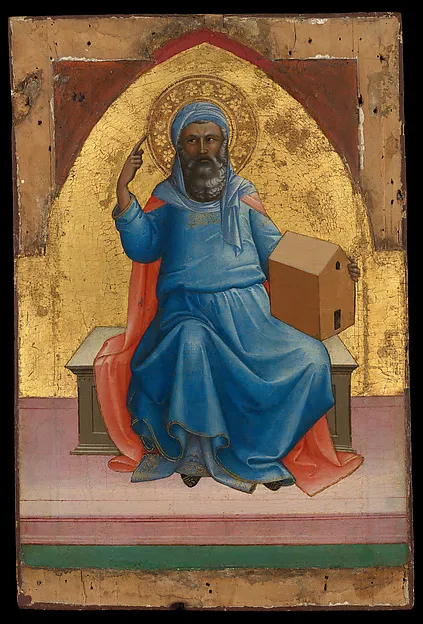
Jeremiah 38:1-6They Cast Him Into the Dungeon
1Then Shephatiah the son of Mattan, and Gedaliah the son of Pashur, and Jucal the son of Shelemiah, and Pashur the son of Malchiah, heard the words that Jeremiah had spoken unto all the people, saying, 2Thus saith the LORD, He that remaineth in this city shall die by the sword, by the famine, and by the pestilence: but he that goeth forth to the Chaldeans shall live; for he shall have his life for a prey, and shall live. 3Thus saith the LORD, This city shall surely be given into the hand of the king of Babylon’s army, which shall take it. 4Therefore the princes said unto the king, We beseech thee, let this man be put to death: for thus he weakeneth the hands of the men of war that remain in this city, and the hands of all the people, in speaking such words unto them: for this man seeketh not the welfare of this people, but the hurt. 5Then Zedekiah the king said, Behold, he is in your hand: for the king is not he that can do any thing against you. 6Then took they Jeremiah, and cast him into the dungeon of Malchiah the son of Hammelech, that was in the court of the prison: and they let down Jeremiah with cords. And in the dungeon there was no water, but mire: so Jeremiah sunk in the mire.
Four named officials - men of standing in Jerusalem - bring a charge against Jeremiah, and it is worth hearing exactly what the charge is. They do not say he has lied; they do not say his word is false. Their complaint is its effect: he weakeneth the hands of the men of war… and the hands of all the people, in speaking such words unto them (v. 4). The prophet's message - he that goeth forth to the Chaldeans shall live (v. 2) - sounds to the men holding the wall like a call to desert, a poison dripped into the resolve of the soldiers.
So they conclude: this man seeketh not the welfare of this people, but the hurt. It is a striking inversion. The one man telling them the truth that could spare their lives is accused of seeking their hurt; the leaders steering the whole city toward destruction count themselves its true friends. But weakened hands are not Jeremiah's doing. The hands were already failing because the cause was already lost - he only named the reality the siege itself was forcing.
Silencing the messenger does nothing to the message. The Babylonians outside the wall did not need Jeremiah's permission to take the city.1
The king's answer is one of the most quietly damning lines in the book: Behold, he is in your hand: for the king is not he that can do any thing against you (v. 5). Zedekiah does not condemn Jeremiah, but he does not protect him either. He simply steps aside - he is in your hand - and pleads his own helplessness against his princes. A king sits on a throne precisely so that he can do something; authority exists to restrain the powerful and shield the weak.
Yet here the king confesses he cannot, or will not, withstand the men who want a prophet dead. It is fear dressed as inability, the same fear that will surface plainly later when he admits, I am afraid of the Jews (v. 19). This is the portrait the chapter is building of Zedekiah from the start: a man with the title of authority and none of its courage, who hands a righteous man over rather than face the displeasure of the people around him.
Pilate will one day wash his hands in the same gesture. To refuse to act, when you have the power to act, is itself an act.
Given a free hand, the princes do not kill Jeremiah outright; they do something slower. They lower him by cords into the dungeon of Malchiah the son of Hammelech, that was in the court of the prison - an empty cistern, a deep bell-shaped pit cut into rock to hold rainwater. And in the dungeon there was no water, but mire: so Jeremiah sunk in the mire (v. 6). The detail is precise and cruel.
There is no water to drown him quickly; there is only mud at the bottom, deep enough to swallow a man to the waist and hold him fast. He cannot lie down, cannot climb out, cannot escape the cold and the dark. Left there, he would die by inches of hunger and exposure - a death with no executioner's hand on it, so that no one need feel responsible. The last clause sits heavily: Jeremiah sunk in the mire. This is the prophet of the LORD, faithful for forty years, beaten, slandered, and now abandoned to a slow death at the bottom of a hole for the crime of telling the truth.
It is the lowest point of his long suffering - and, as the next verses show, the very place from which God will raise him.
Jeremiah 38:7-13Ebedmelech the Ethiopian
7Now when Ebedmelech the Ethiopian, one of the eunuchs which was in the king’s house, heard that they had put Jeremiah in the dungeon; the king then sitting in the gate of Benjamin; 8Ebedmelech went forth out of the king’s house, and spake to the king, saying, 9My lord the king, these men have done evil in all that they have done to Jeremiah the prophet, whom they have cast into the dungeon; and he is like to die for hunger in the place where he is: for there is no more bread in the city. 10Then the king commanded Ebedmelech the Ethiopian, saying, Take from hence thirty men with thee, and take up Jeremiah the prophet out of the dungeon, before he die. 11So Ebedmelech took the men with him, and went into the house of the king under the treasury, and took thence old cast clouts and old rotten rags, and let them down by cords into the dungeon to Jeremiah. 12And Ebedmelech the Ethiopian said unto Jeremiah, Put now these old cast clouts and rotten rags under thine armholes under the cords. And Jeremiah did so. 13So they drew up Jeremiah with cords, and took him up out of the dungeon: and Jeremiah remained in the court of the prison.
Rescue comes from the one person in the story with the least reason to risk anything. Ebedmelech the Ethiopian, one of the eunuchs which was in the king's house (v. 7), is an outsider on every count. He is a foreigner, a man from Cush far up the Nile; he is a eunuch, a servant in the palace household; he holds no rank that lets him command anyone. And yet, when he hears that Jeremiah has been dropped into the pit, he is the only one who acts.
He does not send a quiet word of sympathy; he went forth… and spake to the king, and he names the deed for exactly what it is: these men have done evil in all that they have done to Jeremiah the prophet (v. 9). To say evil to a king's face, against the very princes who run the war, is no small thing for a foreign servant whose own position depends on royal favor.
The contrast is the whole point. The native princes, the men of standing and power, used their position to murder a prophet; the foreign eunuch, with nothing but his courage, uses what little voice he has to save one. Through the whole long history of God's people, again and again, faith and right action turn up where they were least expected - in the outsider who simply sees what is true and does something about it.1
The manner of the rescue is as lowly as the man who carries it out, and the chapter lingers on it with unusual care. Ebedmelech does not return with royal cordage and a litter; he went into the house of the king under the treasury, and took thence old cast clouts and old rotten rags (v. 11) - worn-out, discarded scraps of cloth, the kind of thing kept in a storeroom because it is good for nothing else.
Then comes a small, tender instruction shouted down into the dark: Put now these old cast clouts and rotten rags under thine armholes under the cords (v. 12). The bare ropes would have cut into a starving man's flesh as they hauled him up the pit's rough walls; the rags, padded under his arms, keep the cords from tearing him. It is the touch of someone thinking carefully about the suffering of the one he is saving.
Nothing here is impressive - a foreign servant, a handful of helpers, a bundle of rotten rags - and yet by these the prophet of the LORD is lifted out of the grave-pit and set back in the light. God's deliverances are often like this: the means look like nothing, the rescuer counts for nothing in the world's eyes, and the discarded thing becomes the very instrument of salvation.
Jeremiah 38:14-23Obey, I Beseech Thee, the Voice of the LORD
14Then Zedekiah the king sent, and took Jeremiah the prophet unto him into the third entry that is in the house of the LORD: and the king said unto Jeremiah, I will ask thee a thing; hide nothing from me. 15Then Jeremiah said unto Zedekiah, If I declare it unto thee, wilt thou not surely put me to death? and if I give thee counsel, wilt thou not hearken unto me? 16So Zedekiah the king sware secretly unto Jeremiah, saying, As the LORD liveth, that made us this soul, I will not put thee to death, neither will I give thee into the hand of these men that seek thy life. 17Then said Jeremiah unto Zedekiah, Thus saith the LORD, the God of hosts, the God of Israel; If thou wilt assuredly go forth unto the king of Babylon’s princes, then thy soul shall live, and this city shall not be burned with fire; and thou shalt live, and thine house: 18But if thou wilt not go forth to the king of Babylon’s princes, then shall this city be given into the hand of the Chaldeans, and they shall burn it with fire, and thou shalt not escape out of their hand. 19And Zedekiah the king said unto Jeremiah, I am afraid of the Jews that are fallen to the Chaldeans, lest they deliver me into their hand, and they mock me. 20But Jeremiah said, They shall not deliver thee. Obey, I beseech thee, the voice of the LORD, which I speak unto thee: so it shall be well unto thee, and thy soul shall live. 21But if thou refuse to go forth, this is the word that the LORD hath shewed me: 22And, behold, all the women that are left in the king of Judah’s house shall be brought forth to the king of Babylon’s princes, and those women shall say, Thy friends have set thee on, and have prevailed against thee: thy feet are sunk in the mire, and they are turned away back. 23So they shall bring out all thy wives and thy children to the Chaldeans: and thou shalt not escape out of their hand, but shalt be taken by the hand of the king of Babylon: and thou shalt cause this city to be burned with fire.
Zedekiah sends for Jeremiah a final time, secretly, to the third entry that is in the house of the LORD, and the meeting lays the king's divided heart completely open. I will ask thee a thing; hide nothing from me (v. 14), he says - a man who genuinely wants the word of the LORD. But Jeremiah knows him too well to speak freely, and answers with two pointed questions: if I tell you the truth, will you not kill me? and if I give you counsel, wilt thou not hearken unto me? (v. 15).
The prophet has learned that this king will neither protect the messenger nor obey the message. So Zedekiah swears an oath, and the form of it is striking: As the LORD liveth, that made us this soul (v. 16). He invokes the living God who fashioned the very breath of life in them both - the One who gives and sustains the soul - and on that solemn ground promises not to put Jeremiah to death. It is a real oath, sincerely meant.
And it shows the tragedy of the man: he can swear truly by the living God, he can long to hear God's word, and he can still lack the one thing that matters - the will to do it. Reverence that stops short of obedience saved neither the king nor his city.
Jeremiah's answer is, once more, exactly what it has always been - the same word he spoke from the streets, from the prison, from the bottom of the pit. He sets it before the king as a plain fork in the road. If thou wilt assuredly go forth unto the king of Babylon's princes, then thy soul shall live, and this city shall not be burned… and thou shalt live, and thine house (v. 17).
Surrender, and you and your household and the city are spared. But if thou wilt not go forth… then shall this city be given into the hand of the Chaldeans, and they shall burn it with fire, and thou shalt not escape (v. 18). Refuse, and everything burns. The mercy in this is easy to miss: even now, this late, with the armies at the wall, the LORD is still holding a door open. The judgment Jeremiah has prophesied for decades is not yet sealed against Zedekiah personally; there remains a way to live. But the way is humbling - it means giving up the throne, walking out to the enemy, surrendering the city.
The choice is genuinely the king's to make. God sets life and death before him, names the path to life, and waits to see what he will choose. Few verses show so clearly that the word of warning is also, at its heart, an offer of life.
When the king balks, Jeremiah shows him the future his refusal will buy, and the picture is sharp with sorrow. The women left in the palace will be led out to Babylon's officers, and as they go they will sing a bitter taunt-song against the king: Thy friends have set thee on, and have prevailed against thee: thy feet are sunk in the mire, and they are turned away back (v. 22). The image is unmistakable, and it is the chapter's great irony made plain.
Jeremiah's feet were sunk in literal mire, in the pit - and God lifted him out. Now the king who would not heed him is warned that his feet will be sunk in the mire of ruin, betrayed by the very friends and advisers he feared to cross, with no one to draw him up. The flatterers who pushed him to resist, the men whose approval he chose over the word of the LORD, will have led him straight into the bog and abandoned him there.
The prophet sank in mud and was rescued because he was faithful; the king will sink in a deeper mire because he was afraid. It is a solemn reversal: the same image of sinking, two opposite ends, decided by whether a man obeyed the voice of the LORD or feared the faces of men.
Jeremiah 38:24-28Let No Man Know
24Then said Zedekiah unto Jeremiah, Let no man know of these words, and thou shalt not die. 25But if the princes hear that I have talked with thee, and they come unto thee, and say unto thee, Declare unto us now what thou hast said unto the king, hide it not from us, and we will not put thee to death; also what the king said unto thee: 26Then thou shalt say unto them, I presented my supplication before the king, that he would not cause me to return to Jonathan’s house, to die there. 27Then came all the princes unto Jeremiah, and asked him: and he told them according to all these words that the king had commanded. So they left off speaking with him; for the matter was not perceived. 28So Jeremiah abode in the court of the prison until the day that Jerusalem was taken: and he was there when Jerusalem was taken.
The interview ends as secretly as it began, and the king's last words finish his portrait. Let no man know of these words, and thou shalt not die (v. 24). Zedekiah's closing concern is this: keeping the princes from learning that he met with Jeremiah at all, while the city, the will of God, and the open door he has just been offered go unheeded. He coaches the prophet on what to say if questioned, a partial account that conceals the real subject of their talk (vv. 25-26).
The man who fears the faces of his own officials is reduced to managing rumors while his kingdom slips away. Jeremiah, for his part, does as the king directs, and tells the princes only that he had begged not to be sent back to die in Jonathan's house - which was true, as far as it went - and they left off speaking with him; for the matter was not perceived (v. 27). The prophet protects the king's confidence even though the king will not protect his own soul.
The tragedy of the scene is its smallness: a ruler given a clear path to life by the living God, spending his energy instead on the petty work of not getting caught. Fear shrinks a man. Zedekiah ends the chapter still hiding, still afraid, still unwilling to do the one thing that would have saved him.
The chapter closes on a single quiet sentence about Jeremiah: So Jeremiah abode in the court of the prison until the day that Jerusalem was taken: and he was there when Jerusalem was taken (v. 28). After the pit and the rescue and the secret midnight counsel, this is where the prophet comes to rest - still in custody, still in the court of the prison, simply abiding. No vindication yet, no release, no crowd turning to honor the man who told the truth.
He waits, in confinement, through the slow tightening of the siege, until the very day the city falls. And there is a deep faithfulness in that plain word abode. Jeremiah does not escape, does not recant to win his freedom, does not stop being the prophet of the LORD because the reward for it is a prison cell. He stays where God has him and waits. The line also closes the long question the chapter raised: the word he spoke was true.
Jerusalem was taken, exactly as he had said for forty years against every threat to silence him. The men who threw him in the pit to stop that word could not stop it; the king who feared to obey it could not escape it. The prophet abides, the city falls, and the word of the LORD stands - which is how it always ends.
Research trail
Sources & further study
These references support the historical, linguistic, manuscript, and contextual notes in this chapter. Scripture remains the primary text; external sources are provided so readers can inspect the research directly.
- Jeremiah 38 - Translators' NotesThe NET Bible's detailed footnotes on Jeremiah 38 - the charge that Jeremiah weakeneth the hands of the soldiers (v. 4), the empty cistern and its mire (v. 6), the role of Ebedmelech the Ethiopian eunuch (vv. 7-13), and Zedekiah's fear of those who had already deserted to Babylon (v. 19).
- Jeremiah 38 · Hebrew + classical Jewish commentaryThe Hebrew text of Jeremiah 38 with Rashi, Radak, and other classical commentators side by side - useful for bor (v. 6, the “dungeon,” an empty water-cistern) and for the name Ebedmelech (v. 7), which reads in Hebrew as eved-melekh, “servant of the king.”
- Jeremiah 38 ↔ Psalm 40 · Psalm 69 · Matthew 8Traces the threads tying Jeremiah 38 to the rest of Scripture - the righteous man sunk in the mire (v. 6) read alongside he brought me up… out of the miry clay (Ps. 40:2) and I sink in deep mire (Ps. 69:2), and the foreigner whose bold faith saves the prophet (vv. 7-13; 39:18) read beside the faith Jesus found outside Israel (Matt. 8:10).
Where this echoes in Scripture
They Cast Him Into the Dungeon
- Genesis 37:24they took him, and cast him into a pit: and the pit was empty, there was no water in it.The same word and nearly the same scene as verse 6 - a righteous man let down into a waterless pit by those who should have protected him.
- Psalm 40:2He brought me up also out of an horrible pit, out of the miry clay, and set my feet upon a rock.The answer to the mire of verse 6 - the LORD drawing the sinking one up and setting his feet on solid ground.
- Psalm 69:14-15Deliver me out of the mire, and let me not sink... let not the pit shut her mouth upon me.The cry of the righteous sufferer sunk in the mire (v. 6) - a psalm the Gospel reads as the prayer of Christ.
- Jeremiah 26:11This man is worthy to die; for he hath prophesied against this city, as ye have heard with your ears.The same charge as verses 1-4 - Jeremiah condemned for the truth he spoke, his only offense being faithfulness.
- Lamentations 3:55I called upon thy name, O LORD, out of the low dungeon.The voice of one praying from the very pit of verse 6 - calling on the LORD from the lowest place.
Ebedmelech the Ethiopian
- Jeremiah 39:16-18I will surely deliver thee... because thou hast put thy trust in me, saith the LORD.Ebedmelech's reward - the foreign rescuer of verses 7-13 spared in the day of judgment for trusting the LORD.
- Matthew 8:10I have not found so great faith, no, not in Israel.The surprise of verses 7-9 - bold faith found in an outsider, where the people of God showed none.
- Luke 17:18There are not found that returned to give glory to God, save this stranger.The same pattern as Ebedmelech's deed - the foreigner who responds rightly while insiders do not.
- 1 Corinthians 1:27-28God hath chosen the weak things of the world to confound the things which are mighty.The shape of this rescue (vv. 11-13) - a lowly servant and rotten rags made the means of deliverance.
- Proverbs 24:11If thou forbear to deliver them that are drawn unto death, and those that are ready to be slain.What Ebedmelech did and the princes refused - rescuing one being dragged toward death (vv. 8-13).
Obey, I Beseech Thee, the Voice of the LORD
- Proverbs 29:25The fear of man bringeth a snare: but whoso putteth his trust in the LORD shall be safe.The exact trap Zedekiah falls into (v. 19) and the way out of it - trust in the LORD over fear of people.
- John 12:42-43they did not confess him, lest they should be put out of the synagogue: for they loved the praise of men more than the praise of God.Zedekiah's fear of mockery (v. 19) playing out in others - the truth held back for fear of human disapproval.
- Matthew 10:28Fear not them which kill the body, but are not able to kill the soul: but rather fear him.The remedy to verse 19 - the fear of God set rightly above the fear of man.
- Deuteronomy 30:19I have set before you life and death... therefore choose life, that both thou and thy seed may live.The fork Jeremiah lays before the king (vv. 17-18) - life and death set out, with a plea to choose life.
- Jeremiah 52:7-11Then the city was broken up... and they took the king, and... slew the sons of Zedekiah before his eyes.The ruin foretold in verses 18-23 come to pass - the king who would not go forth taken and his house destroyed.
Let No Man Know
- Isaiah 40:8The grass withereth, the flower fadeth: but the word of our God shall stand for ever.The truth the chapter ends on (v. 28) - the word that no pit or fear could overthrow stands for ever.
- Matthew 24:35Heaven and earth shall pass away, but my words shall not pass away.The endurance of God's word that vindicated Jeremiah (v. 28) - spoken now by the Word made flesh.
- Hebrews 13:5I will never leave thee, nor forsake thee.The comfort under the prophet's long abiding (v. 28) - God's nearness to the one who must wait in a hard place.
- 2 Timothy 2:9wherein I suffer trouble, as an evil doer, even unto bonds; but the word of God is not bound.The very pattern of verse 28 - the messenger in chains, the word of God still free and standing.
- Jeremiah 1:19And they shall fight against thee; but they shall not prevail against thee; for I am with thee, saith the LORD, to deliver thee.The promise made to Jeremiah at his call, kept through the pit and the prison of this chapter (vv. 6, 13, 28).