Jeremiah 39
People in this chapter
For roughly four decades Jeremiah had carried one message to a city that did not want to hear it: Jerusalem would fall under the weight of its own refusal, and the only path through was surrender to the judgment God had announced. He was mocked for it, imprisoned for it, lowered into a miry cistern to die for it (Jer. 38). Now, in this chapter, the word becomes history. The siege that began in Zedekiah's ninth year grinds on until, in his eleventh, the city was broken up (v. 2).
What follows is told with the flat, terrible plainness of an eyewitness: the princes of Babylon take their seats in the gate, the king flees by night and is run down in the plains of Jericho, his sons are killed before him and then his eyes are put out, the houses are burned and the walls broken, the people are marched away.1
Tap any highlighted phrase to jump to the commentary that unpacks it.
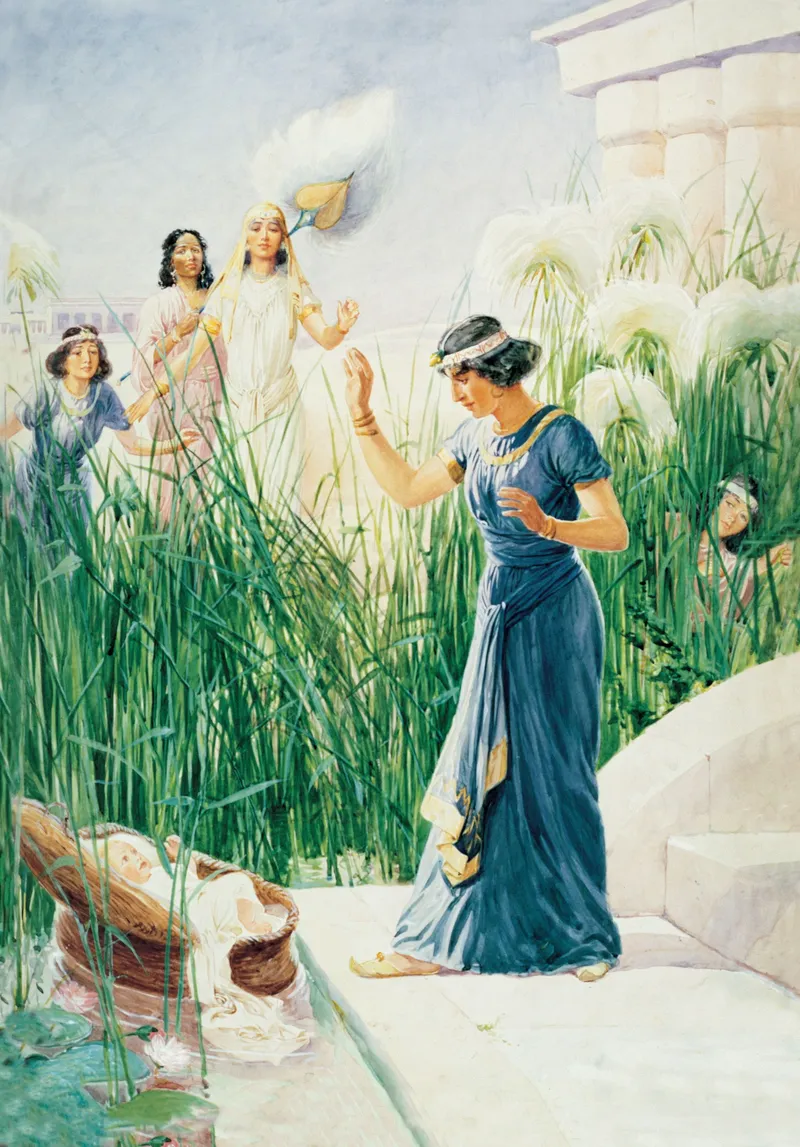
Jeremiah 39:1-10The City Was Broken Up
1In the ninth year of Zedekiah king of Judah, in the tenth month, came Nebuchadrezzar king of Babylon and all his army against Jerusalem, and they besieged it. 2And in the eleventh year of Zedekiah, in the fourth month, the ninth day of the month, the city was broken up. 3And all the princes of the king of Babylon came in, and sat in the middle gate, even Nergalsharezer, Samgarnebo, Sarsechim, Rabsaris, Nergalsharezer, Rabmag, with all the residue of the princes of the king of Babylon. 4And it came to pass, that when Zedekiah the king of Judah saw them, and all the men of war, then they fled, and went forth out of the city by night, by the way of the king’s garden, by the gate betwixt the two walls: and he went out the way of the plain. 5But the Chaldeans’ army pursued after them, and overtook Zedekiah in the plains of Jericho: and when they had taken him, they brought him up to Nebuchadnezzar king of Babylon to Riblah in the land of Hamath, where he gave judgment upon him. 6Then the king of Babylon slew the sons of Zedekiah in Riblah before his eyes: also the king of Babylon slew all the nobles of Judah. 7Moreover he put out Zedekiah’s eyes, and bound him with chains, to carry him to Babylon. 8And the Chaldeans burned the king’s house, and the houses of the people, with fire, and brake down the walls of Jerusalem. 9Then Nebuzaradan the captain of the guard carried away captive into Babylon the remnant of the people that remained in the city, and those that fell away, that fell to him, with the rest of the people that remained. 10But Nebuzaradan the captain of the guard left of the poor of the people, which had nothing, in the land of Judah, and gave them vineyards and fields at the same time.
The chapter opens with the precision of a chronicle, and the precision is the point: In the ninth year of Zedekiah… in the tenth month, came Nebuchadrezzar… and all his army against Jerusalem, and they besieged it (v. 1); And in the eleventh year of Zedekiah, in the fourth month, the ninth day of the month, the city was broken up (v. 2). Year, month, day - the dates are nailed down because this is the moment everything Jeremiah had said for forty years either proves true or proves empty.
The siege had ground on for roughly a year and a half; people had starved inside the walls (Jer. 38:9). And then, in a single flat clause, it ends: the city was broken up. The walls of Jerusalem, the visible sign of God's protection, the thing the people had trusted in place of God Himself (Jer. 7:4), are breached. There is no drama in the wording, and that is exactly what makes it terrible.
A word that had been resisted, mocked, and silenced for four decades simply comes to pass, on a dated day, in a sentence. The God who said I will hasten my word to perform it (Jer. 1:12) has done so.1
When the breach is made, the Babylonian commanders do something deliberately symbolic: they came in, and sat in the middle gate (v. 3). The city gate was where Judah's own elders had sat to judge, to govern, to rule - and now foreign princes occupy that seat. Authority has changed hands in the most public way possible. And Zedekiah, the king who had secretly consulted Jeremiah but had never the courage to obey him (Jer. 38:14-19), does what he had always done: he runs.
When Zedekiah the king of Judah saw them… then they fled, and went forth out of the city by night, by the way of the king's garden (v. 4). He slips out under cover of darkness, by a hidden gate between two walls, taking the road toward the plain. It is the flight of a man who would not face the truth when it was spoken to him and now cannot face the consequence.
He had been told plainly that surrender meant life and resistance meant ruin (Jer. 38:17-18); he chose neither faith nor surrender, only escape - and escape, for a man who has run from God's word the whole way, is the one thing that will not work.
The flight fails. The Chaldeans' army pursued after them, and overtook Zedekiah in the plains of Jericho (v. 5) - the same plains where, centuries before, Israel had first entered the land in triumph, now the place where its last king is run down. He is dragged north to Riblah, to Nebuchadnezzar's field headquarters, and there judgment is passed. What follows is among the bleakest scenes the prophets record, and the text refuses to look away from it: Then the king of Babylon slew the sons of Zedekiah in Riblah before his eyes… Moreover he put out Zedekiah's eyes, and bound him with chains, to carry him to Babylon (vv. 6-7).
The cruelty is calculated: the last sight ever granted to Zedekiah's eyes is the killing of his own children, and then those eyes are destroyed, so that the horror is the one image he carries blind into exile. There is a grim, unspoken justice threaded through it. This is the king who would not see - who had eyes and would not read the plain word of God, who had ears and would not hear the prophet he kept summoning in secret.
The blinding makes outward and literal what had long been true inwardly. It is not presented as anything but appalling; the chapter lets it stand in its full weight, a warning written in the dark of how a long refusal to see ends.
Then the city itself is undone, stone by stone and house by house: And the Chaldeans burned the king's house, and the houses of the people, with fire, and brake down the walls of Jerusalem (v. 8). The parallel accounts add what this verse leaves implicit - that the house of the LORD, the temple itself, went up in the same fire (2 Kgs. 25:9). Everything the people had counted on as permanent is gone: the palace of the king, the homes of the people, the walls that had felt like a guarantee, and the sanctuary they had treated as a charm that made them untouchable no matter how they lived (Jer. 7:9-11).
And the people are carried off: Nebuzaradan the captain of the guard carried away captive into Babylon the remnant of the people (v. 9). The exile Jeremiah had announced for so long - seventy years in Babylon (Jer. 25:11) - has begun. The completeness of the loss is the measure of how fully the warning had been ignored. Nothing is left standing that the people had trusted in place of trusting God.
In the very middle of total catastrophe, a small and surprising clause opens like a window: But Nebuzaradan the captain of the guard left of the poor of the people, which had nothing, in the land of Judah, and gave them vineyards and fields at the same time (v. 10). The mighty are carried away; the nobles are slain; the king is blinded and bound. But the poor… which had nothing - those with no power, no status, nothing worth seizing - are left in the land, and not merely left but given the very vineyards and fields that once belonged to the great.
The reversal is quietly stunning and runs all through Scripture: the proud are scattered and the lowly are lifted, the empty are filled and the rich sent away (1 Sam. 2:7-8; Luke 1:52-53). Even in a chapter dominated by judgment, the eye of God is on the ones who had nothing. The land is not emptied to a wasteland; a seed of the poor remains in it, holding the soil, a small living pledge that the story is not over.
Judgment has fallen with terrible thoroughness - and even here, mercy keeps its foothold among the least.
Jeremiah 39:11-14Look Well to Him, and Do Him No Harm
11Now Nebuchadrezzar king of Babylon gave charge concerning Jeremiah to Nebuzaradan the captain of the guard, saying, 12Take him, and look well to him, and do him no harm; but do unto him even as he shall say unto thee. 13So Nebuzaradan the captain of the guard sent, and Nebushasban, Rabsaris, and Nergalsharezer, Rabmag, and all the king of Babylon’s princes; 14Even they sent, and took Jeremiah out of the court of the prison, and committed him unto Gedaliah the son of Ahikam the son of Shaphan, that he should carry him home: so he dwelt among the people.
The scene shifts from the king who lost everything to the prophet everyone had written off. Now Nebuchadrezzar king of Babylon gave charge concerning Jeremiah to Nebuzaradan the captain of the guard, saying, Take him, and look well to him, and do him no harm; but do unto him even as he shall say unto thee (vv. 11-12). The contrast with the verses just before is total. Zedekiah, Judah's own anointed king, is bound and blinded by Babylon; Jeremiah, the prisoner Judah's own court had jailed and tried to kill, is to be guarded, kept from harm, and granted whatever he asks.
The orders come from the top - from Nebuchadnezzar himself - which means the prophet's reputation had carried even into the enemy's war councils. Likely the Babylonians knew that this was the one voice in Jerusalem that had urged surrender, the one man who had said their coming was God's doing. The deeper truth reaches past politics. The God who had promised at Jeremiah's call that He would be with him - they shall fight against thee; but they shall not prevail against thee; for I am with thee… to deliver thee (Jer. 1:19) - is keeping that promise on the very day the city falls.
The hand that brought the judgment also shelters the one who announced it.
Jeremiah is brought up out of confinement by the highest officers of Babylon - the same kind of princes who had taken the seat of judgment in the gate now formally release the prophet - and he is placed in trustworthy hands: they… took Jeremiah out of the court of the prison, and committed him unto Gedaliah the son of Ahikam the son of Shaphan, that he should carry him home: so he dwelt among the people (v. 14).
The names matter. Ahikam, Gedaliah's father, was the man who had once stood between Jeremiah and a mob that wanted him dead (Jer. 26:24); Shaphan, the grandfather, was the scribe who had read the rediscovered book of the law to King Josiah in the days of reform (2 Kgs. 22). This is a family that had honored God's word across generations, and now Gedaliah - soon to be appointed governor over the remnant left in the land - takes the prophet into his care.
And note the last clause: Jeremiah dwelt among the people. Offered safety, he stays with the broken remnant in a ruined land rather than seeking comfort elsewhere. The shepherd does not abandon the flock when the walls come down. His calling was to be among his people in their suffering, carrying still the word of consolation that would follow the word of judgment.
Jeremiah 39:15-18Because Thou Hast Put Thy Trust in Me
15Now the word of the LORD came unto Jeremiah, while he was shut up in the court of the prison, saying, 16Go and speak to Ebedmelech the Ethiopian, saying, Thus saith the LORD of hosts, the God of Israel; Behold, I will bring my words upon this city for evil, and not for good; and they shall be accomplished in that day before thee. 17But I will deliver thee in that day, saith the LORD: and thou shalt not be given into the hand of the men of whom thou art afraid. 18For I will surely deliver thee, and thou shalt not fall by the sword, but thy life shall be for a prey unto thee: because thou hast put thy trust in me, saith the LORD.
The chapter ends with a flashback and a private promise, and the placement is deliberate. Now the word of the LORD came unto Jeremiah, while he was shut up in the court of the prison (v. 15) - so this word had reached the prophet earlier, while he was still imprisoned, before the city fell. It is set here, at the close, so that the great public catastrophe and this one quiet personal rescue stand side by side, the second answering the first.
The word is for one man: Go and speak to Ebedmelech the Ethiopian (v. 16) - the foreign servant, the African eunuch, who in the previous chapter had risked his own neck to plead for Jeremiah and to haul him up out of the miry cistern with cords and rags (Jer. 38:7-13). He had done one brave, merciful thing in a city of cowards, and God had seen it. The message first confirms the judgment in the plainest terms: Behold, I will bring my words upon this city for evil, and not for good; and they shall be accomplished in that day before thee (v. 16).
Ebed-melech is not promised that the disaster will be cancelled. He is told it is coming, and that he will witness it. The promise that follows is preservation through the day of trouble.
Then comes the promise itself, and it is intensely personal: But I will deliver thee in that day, saith the LORD: and thou shalt not be given into the hand of the men of whom thou art afraid. For I will surely deliver thee, and thou shalt not fall by the sword, but thy life shall be for a prey unto thee (vv. 17-18). Notice the doubling - I will deliver thee… I will surely deliver thee - the emphatic Hebrew way of making a thing certain.
And notice the tenderness in the men of whom thou art afraid. Ebed-melech had a particular dread; he had stuck his neck out for the prophet and surely feared the reprisal of the very princes who wanted Jeremiah dead. God names the fear exactly and answers it exactly. The strange, vivid phrase thy life shall be for a prey unto thee means his life will be the spoil he carries off - like a soldier who escapes a lost battle with nothing but his own skin, counting bare survival as treasure won.
In a day when kings are blinded and nobles slaughtered and a whole people marched into exile, this one foreign servant is promised that he will come through alive. The contrast with Zedekiah could not be more pointed: the king inside the walls, hiding behind everything, is destroyed; the outsider with no walls at all is kept.
Everything in the promise hangs on the final clause, and the whole chapter has been built to land on it: because thou hast put thy trust in me, saith the LORD (v. 18). Here is the reason Ebed-melech is delivered, and it is worth weighing every word. He was an Ethiopian, a foreigner and servant, a eunuch with no standing in any of the systems that mattered in that world. The crowd surrounding him was the very crowd being judged.
He is delivered because he trusted. His courage in the cistern had not been mere kindness; it was the visible fruit of a real trust in the God whose prophet he risked himself to save. While the people of the covenant had put their confidence in walls and temple and political schemes - in everything except the LORD - this outsider had quietly staked his life on God, and God says so plainly. The chapter that proves God's word certain in judgment ends by proving it certain in mercy, and it tells you exactly who the mercy is for: the one who trusts.
That is the gospel logic, written in the rubble of a falling city.
Research trail
Sources & further study
These references support the historical, linguistic, manuscript, and contextual notes in this chapter. Scripture remains the primary text; external sources are provided so readers can inspect the research directly.
- Jeremiah 39 - Translators' NotesThe NET Bible's detailed footnotes on Jeremiah 39 - the chronology of the siege in verses 1-2, the route of Zedekiah's flight and capture (vv. 4-5), the fate of the king at Riblah (vv. 6-7), and the personal oracle to Ebed-melech that closes the chapter (vv. 15-18).
- Jeremiah 39 · Hebrew + classical Jewish commentaryThe Hebrew text of Jeremiah 39 with Rashi, Radak, and other classical commentators side by side - useful for the verb behind the city was broken up (v. 2, the root baqa, “to breach, cleave open”) and for batach (v. 18, “put thy trust”), the word that carries the chapter's closing promise.
- Jeremiah 39 ↔ 2 Kings 25 · Jeremiah 52 · Romans 11Traces the threads tying Jeremiah 39 to the parallel fall-of-Jerusalem accounts (2 Kings 25; Jer. 52) and to the New Testament's language of a remnant kept by grace (Rom. 11:5) and deliverance by faith (Rom. 1:17; 10:11) - the logic of Ebed-melech's rescue in verse 18.
Where this echoes in Scripture
The City Was Broken Up
- 2 Kings 25:1-10they brake up the city... burnt the house of the LORD, and the king’s house... and brake down the walls of Jerusalem round about.The parallel account of the same fall - verses 1-8 told again, with the temple's burning named explicitly.
- Jeremiah 1:12Thou hast well seen: for I will hasten my word to perform it.The promise this chapter fulfills - God watching over His word until it comes to pass (v. 2).
- Luke 19:41-44they shall lay thee even with the ground... and they shall not leave in thee one stone upon another.A later weeping over the same city, foretelling another breaking - the pattern of verses 1-8 reaching forward.
- Matthew 24:35Heaven and earth shall pass away, but my words shall not pass away.The certainty proved here - that what God speaks comes to pass to the letter.
- Luke 1:52-53He hath put down the mighty from their seats, and exalted them of low degree... the rich he hath sent empty away.The reversal of verse 10 - the nobles carried off, the poor who had nothing left in the land and given fields.
Look Well to Him, and Do Him No Harm
- Jeremiah 1:18-19they shall fight against thee; but they shall not prevail against thee; for I am with thee, saith the LORD, to deliver thee.The promise at Jeremiah's call, kept on the day the city falls - he is delivered (v. 12).
- John 1:11He came unto his own, and his own received him not.The rejected-messenger pattern Jeremiah lived - opposed by his own, then vindicated (v. 12).
- Jeremiah 26:24the hand of Ahikam the son of Shaphan was with Jeremiah, that they should not give him into the hand of the people to put him to death.The family into whose care Jeremiah is now given (v. 14) - Gedaliah is Ahikam's son.
- Romans 1:4declared to be the Son of God with power... by the resurrection from the dead.The vindication of the rejected One - the pattern of verse 12 carried to its fullness.
- John 13:1having loved his own which were in the world, he loved them unto the end.The shepherd who stays - Jeremiah dwelling among the people (v. 14) as a faint sketch of it.
Because Thou Hast Put Thy Trust in Me
- Jeremiah 38:7-13So they drew up Jeremiah with cords, and took him up out of the dungeon.The deed behind the promise - Ebed-melech risking himself to rescue the prophet, now answered in verses 16-18.
- Habakkuk 2:4the just shall live by his faith.The principle of verse 18 in a sentence - life held by trust in the LORD.
- Proverbs 3:5Trust in the LORD with all thine heart; and lean not unto thine own understanding.The trust that delivered Ebed-melech (v. 18) - the full weight leaned on God alone.
- Romans 10:11-12Whosoever believeth on him shall not be ashamed. For there is no difference between the Jew and the Greek.The breadth of verse 18 made explicit - deliverance by trust, with no distinction of nation.
- Romans 11:5Even so then at this present time also there is a remnant according to the election of grace.The remnant kept while judgment falls on the many - the pattern of the poor (v. 10) and Ebed-melech (v. 18).