Ezra 5
People in this chapter
The work of rebuilding the temple had stopped. Years before, the returned exiles had laid the foundation with shouting and tears (Ezra 3), but opposition and discouragement had ground the project to a halt, and for a long stretch nothing rose on the site at all. Then, in a single moment, that changed. The prophets, Haggai the prophet, and Zechariah the son of Iddo, prophesied unto the Jews… in the name of the God of Israel, and immediately Zerubbabel the governor and Jeshua the priest rose up and began to build the house of God. The word of God, spoken through His prophets, did what no decree or strategy had managed: it raised a discouraged people back to their feet.1
Tap any highlighted phrase to jump to the commentary that unpacks it.
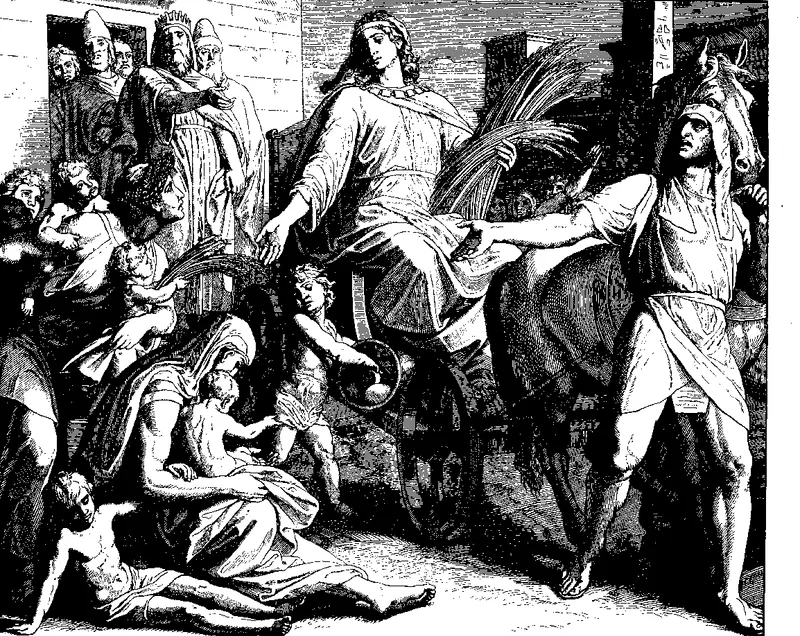
Ezra 5:1-2The Prophets Arise and the Work Resumes
1Then the prophets, Haggai the prophet, and Zechariah the son of Iddo, prophesied unto the Jews that were in Judah and Jerusalem in the name of the God of Israel, even unto them. 2Then rose up Zerubbabel the son of Shealtiel, and Jeshua the son of Jozadak, and began to build the house of God which is at Jerusalem: and with them were the prophets of God helping them.
The chapter opens with no transition and no warning - just a word breaking into a silence. Then the prophets, Haggai the prophet, and Zechariah the son of Iddo, prophesied unto the Jews… in the name of the God of Israel. These are not anonymous voices; both men left books that stand in our Bibles, and from those books we know what they said. The temple work had stalled, and the people had told themselves the time was not right (Hag. 1:2).
Into that excuse the prophets spoke God's own challenge and God's own promise - Is it time for you, O ye, to dwell in your cieled houses, and this house lie waste? (Hag. 1:4), and I am with you, saith the LORD (Hag. 1:13). The phrase in the name of the God of Israel matters: the prophets did not come with their own opinions about civic priorities. They came carrying the authority of the One who had brought the people out of Babylon, and that authority is what moved a stalled nation.
The response is immediate and unhesitating. Then rose up Zerubbabel the son of Shealtiel, and Jeshua the son of Jozadak, and began to build the house of God. Notice the two men who rise: Zerubbabel, the governor in the line of David, and Jeshua, the high priest - the leadership of state and the leadership of worship, moving together at the word of God. There is no record of debate, no committee, no delay. The prophetic word lands and the builders are on their feet.
And then comes a clause easy to read past but full of comfort: and with them were the prophets of God helping them. The word that called the work into being did not then withdraw and leave the builders alone. The prophets stayed - present on the site, sustaining the work with the ongoing word of God. A command from heaven comes with the One who stays to help the builders build.2
Ezra 5:3-5Tatnai's Challenge and the Eye of God
3At the same time came to them Tatnai, governor on this side the river, and Shetharboznai, and their companions, and said thus unto them, Who hath commanded you to build this house, and to make up this wall? 4Then said we unto them after this manner, What are the names of the men that make this building? 5But the eye of their God was upon the elders of the Jews, that they could not cause them to cease, till the matter came to Darius: and then they returned answer by letter concerning this matter.
No sooner has the work resumed than the opposition arrives in official form. At the same time came to them Tatnai, governor on this side the river, and Shethar-boznai, and their companions. Tatnai is no local troublemaker; he is the Persian satrap over the whole province beyond the river - the vast region west of the Euphrates that included Judah - and his name appears in Persian records of the period as a real provincial official.1 His question is correct, calm, and dangerous: Who hath commanded you to build this house, and to make up this wall? On its face it is mere administration: by what authority is this construction proceeding?
But the returned exiles knew how such questions had gone before. An earlier inquiry, in the days of Artaxerxes, had ended with the work shut down by royal order (Ezra 4:23). A small, fragile community is being asked to justify itself to the empire, and everything could turn on the answer.
And then the narrative does something remarkable. Before it tells us a single word of the elders' reply, before the letters and the legal process, it lifts our eyes to what is really happening: But the eye of their God was upon the elders of the Jews, that they could not cause them to cease, till the matter came to Darius. That little word but turns the whole scene. Tatnai has the authority; Tatnai has the precedent; Tatnai could, by every earthly reckoning, order the work to stop on the spot.
But the eye of their God was upon them - and so the one thing the governor had the power to do, he could not do. The work was not halted while the inquiry went forward; it continued, uninterrupted, till the matter came to Darius. The text is careful to tell us the protection was the eye of God. He was watching, and because He was watching, no power on earth could close down what He had commanded.
Ezra 5:6-17The Letter to Darius and the Elders' Confession
6The copy of the letter that Tatnai, governor on this side the river, and Shetharboznai, and his companions the Apharsachites, which were on this side the river, sent unto Darius the king: 7They sent a letter unto him, wherein was written thus; Unto Darius the king, all peace. 8Be it known unto the king, that we went into the province of Judea, to the house of the great God, which is builded with great stones, and timber is laid in the walls, and this work goeth fast on, and prospereth in their hands. 9Then asked we those elders, and said unto them thus, Who commanded you to build this house, and to make up these walls? 10We asked their names also, to certify thee, that we might write the names of the men that were the chief of them. 11And thus they returned us answer, saying, We are the servants of the God of heaven and earth, and build the house that was builded these many years ago, which a great king of Israel builded and set up. 12But after that our fathers had provoked the God of heaven unto wrath, he gave them into the hand of Nebuchadnezzar the king of Babylon, the Chaldean, who destroyed this house, and carried the people away into Babylon. 13But in the first year of Cyrus the king of Babylon the same king Cyrus made a decree to build this house of God. 14And the vessels also of gold and silver of the house of God, which Nebuchadnezzar took out of the temple that was in Jerusalem, and brought them into the temple of Babylon, those did Cyrus the king take out of the temple of Babylon, and they were delivered unto one, whose name was Sheshbazzar, whom he had made governor; 15And said unto him, Take these vessels, go, carry them into the temple that is in Jerusalem, and let the house of God be builded in his place. 16Then came the same Sheshbazzar, and laid the foundation of the house of God which is in Jerusalem: and since that time even until now hath it been in building, and yet it is not finished. 17Now therefore, if it seem good to the king, let there be search made in the king’s treasure house, which is there at Babylon, whether it be so, that a decree was made of Cyrus the king to build this house of God at Jerusalem, and let the king send his pleasure to us concerning this matter.
The rest of the chapter is Tatnai's own letter to Darius, and it is a careful, fair-minded report - not the venomous accusation that an earlier set of opponents had sent (Ezra 4). Even in his official caution, Tatnai cannot help describing what he saw with something like respect: the house is builded with great stones, and timber is laid in the walls, and this work goeth fast on, and prospereth in their hands. What the governor offers as evidence requiring investigation is, read another way, an unintended testimony.
This is no small, furtive project thrown up in a corner. It is solid, substantial, advancing rapidly, and prospering - the very word the writer chooses. The builders had nothing to hide; they had worked openly and well. And the prospering Tatnai notes is the visible trace of the invisible eye: the work goes fast on precisely because the God whose eye is upon it will not let it cease.
Here is the heart of the elders' reply, and it is breathtaking in what it puts first. Asked who commanded you to build, they could have led with Cyrus - the royal decree was, after all, their legal ground, and they will come to it. But that is not where they begin. They begin with allegiance: We are the servants of the God of heaven and earth. Before a Persian official, in a report bound for the king of the most powerful empire on earth, the first thing they declare is not a legal permit but whose they are.
This is confession, not strategy. They name their God as the God of heaven and earth - not a local deity of a conquered people, but the Maker of all that the empire itself stands upon. And they locate themselves as His servants. Everything that follows - the temple, the history, even the appeal to Cyrus - flows from that single, fearless starting point. They know who they are because they know whose they are.
Then the elders do something striking: they tell the king's officer the whole truth, including the parts that do not flatter them. They could have presented an edited history - a noble people restoring an ancient shrine. Instead they say, after that our fathers had provoked the God of heaven unto wrath, he gave them into the hand of Nebuchadnezzar… who destroyed this house, and carried the people away into Babylon. They confess the sin of their fathers, the wrath of their God, and the catastrophe of the exile, all in a single sentence.
This is remarkable honesty in an official document. And it is also profound theology: they understand that the destruction of the first temple was the act of their God in judgment - something Babylon could not have accomplished apart from His hand. The same God who gave them into Babylon's hand is the God now rebuilding His house through Cyrus. Their candor about judgment is precisely what makes their hope credible. They are not pretending; they are testifying - and the testimony runs from their fathers' failure straight through to God's faithfulness.
Only now, having confessed their God and told their history, do the elders produce the legal ground: in the first year of Cyrus the king of Babylon the same king Cyrus made a decree to build this house of God. The order of things is the whole point. The decree was real - Cyrus had not only authorized the rebuilding but had returned the very gold and silver vessels Nebuchadnezzar carried off, delivering them to Sheshbazzar to carry back to Jerusalem.3 What was taken in judgment is being restored by the hand of a foreign king who does not even worship Israel's God - a vivid sign that the LORD bends the policies of empires to accomplish His purposes.
So the elders close the letter with quiet confidence: let there be search made in the king's treasure house… whether it be so, that a decree was made of Cyrus the king. They are not afraid of an investigation; they invite one. They know the record will hold, because the One whose eye is upon them has been arranging the evidence in the archives of Babylon long before Tatnai ever asked his question.
Research trail
Sources & further study
These references support the historical, linguistic, manuscript, and contextual notes in this chapter. Scripture remains the primary text; external sources are provided so readers can inspect the research directly.
- Ezra 5 - Translators' NotesThe NET Bible's detailed footnotes on Ezra 5 - the shift into Aramaic, the title “governor on this side the river” (vv. 3, 6), the idiom behind “the eye of their God was upon” (v. 5), and the spelling of the Persian-era names Tatnai, Shethar-boznai, and Sheshbazzar.
- Ezra 5 · Hebrew + Aramaic text with classical Jewish commentaryThe text of Ezra 5 - this portion is written in Aramaic, the diplomatic language of the Persian court - alongside Rashi, Ibn Ezra, and other classical commentators; useful for the image of God's “eye” upon the elders (v. 5) and the exact wording of the elders' confession in verse 11.
- The Cyrus CylinderThe clay cylinder, written for Cyrus after he took Babylon in 539 BC, records his policy of restoring deported peoples and rebuilding their sanctuaries - the same kind of royal decree the elders appeal to in verses 13-17 and ask Darius to verify in the archives.
- Ezra 5 ↔ Psalm 33 · Zechariah 4 · Acts 5Traces the chapter's threads outward - the watching eye of God (v. 5) to the eye of the LORD is upon them that fear him (Ps. 33:18), the prophets driving the work to not by might, nor by power, but by my spirit (Zech. 4:6), and the unstoppable work of God to Gamaliel's if it be of God, ye cannot overthrow it (Acts 5:38-39).
Where this echoes in Scripture
The Prophets Arise and the Work Resumes
- Haggai 1:14And the LORD stirred up the spirit of Zerubbabel… and they came and did work in the house of the LORD of hosts, their God.The same moment from the prophet's own book - it was the LORD who stirred the builders up to resume the work.
- Zechariah 4:6Not by might, nor by power, but by my spirit, saith the LORD of hosts.The word given to Zerubbabel by one of this chapter's very prophets - the temple would rise by God's Spirit, not human strength.
- Philippians 1:6He which hath begun a good work in you will perform it until the day of Jesus Christ.The promise behind the prophets' help - the God who begins a work sustains it to completion.
- Ezra 3:11They sang together by course… because the foundation of the house of the LORD was laid.Where the work began - the foundation laid years before, now finally rising again at the prophets' word.
Tatnai's Challenge and the Eye of God
- Psalm 33:18Behold, the eye of the LORD is upon them that fear him, upon them that hope in his mercy.The watching eye of Ezra 5 made a promise - the LORD's eye upon those who fear Him and hope in His mercy.
- 1 Peter 3:12For the eyes of the Lord are over the righteous, and his ears are open unto their prayers.The same guardianship carried into the church under pressure - the Lord's eyes over the righteous.
- Psalm 121:4Behold, he that keepeth Israel shall neither slumber nor sleep.Why the eye over the builders never closed - the Keeper of Israel does not sleep.
- Matthew 10:29Are not two sparrows sold for a farthing? and one of them shall not fall on the ground without your Father.The eye of God brought down to the smallest detail - the Father who notices a sparrow watches over His laboring people.
The Letter to Darius and the Elders' Confession
- Acts 5:39But if it be of God, ye cannot overthrow it; lest haply ye be found even to fight against God.The law beneath the chapter - a work that is of God cannot be stopped by the powers that oppose it.
- Matthew 16:18Upon this rock I will build my church; and the gates of hell shall not prevail against it.The greater house raised against greater opposition - the church the Lord Jesus builds and guards.
- Isaiah 44:28That saith of Cyrus, He is my shepherd, and shall perform all my pleasure: even saying to Jerusalem, Thou shalt be built.The decree the elders appeal to - foretold long before, the LORD bending a foreign king to rebuild His house.
- Proverbs 21:1The king's heart is in the hand of the LORD, as the rivers of water: he turneth it whithersoever he will.Why the archives would hold - the hearts of Cyrus and Darius alike are turned by the God whose eye guards the work.