Ezra 3
People in this chapter
Ezra 3 picks up the story months after the first wave of Jewish exiles has walked the long road home from Babylon. King Cyrus of Persia had issued the decree in 538 BC ending the seventy-year exile Jeremiah had prophesied (Jer. 25:11-12; 29:10), and roughly fifty thousand people had made the journey - led by Zerubbabel, grandson of King Jehoiachin and heir to David's throne, and by Joshua (Jeshua), grandson of the last pre-exile high priest Seraiah whom Nebuchadnezzar had executed (2 Kgs 25:18-21).
They arrive to a Jerusalem that has been a ruin for half a century. The temple is rubble. The altar is gone. The festival calendar has been only a memory for two generations.
Tap any highlighted phrase to jump to the commentary that unpacks it.
Ezra 3:1-3As One Man, the Altar First
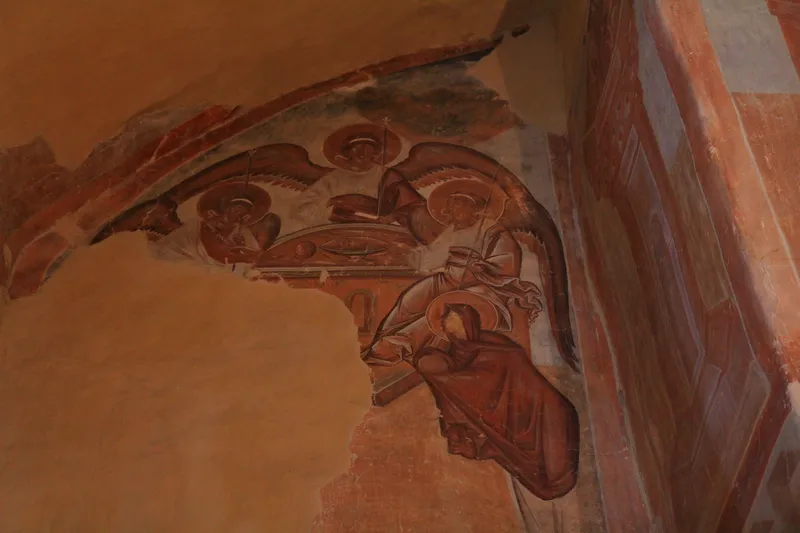
1And when the seventh month was come, and the children of Israel were in the cities, the people gathered themselves together as one man to Jerusalem. 2Then stood up Jeshua the son of Jozadak, and his brethren the priests, and Zerubbabel the son of Shealtiel, and his brethren, and builded the altar of the God of Israel, to offer burnt offerings thereon, as it is written in the law of Moses the man of God. 3And they set the altar upon his bases; for fear was upon them because of the people of those countries: and they offered burnt offerings thereon unto the LORD, even burnt offerings morning and evening.
Notice who stands up in v. 21. Jeshua the son of Jozadak is the high priest - grandson of Seraiah, the last pre-exile high priest, whom Nebuchadnezzar executed at Riblah after Jerusalem fell (2 Kgs 25:18-21). Zerubbabel the son of Shealtiel is the grandson of King Jehoiachin (1 Chr 3:17-19) and the heir to David's throne. The two offices that ran the kingdom before the exile - priesthood and Davidic kingship - are standing side by side again, in the persons of the grandsons of the men exile took.
The chapter is the priesthood and the line of David, finally home, finally on the altar.
The detail in v. 3 is unsparing2. Fear was upon them because of the people of those countries. The Samaritan-type populations who had been living in the land for half a century did not welcome the return; the next several chapters will record their organized opposition. The Bible does not pretend that the morning offering on the rebuilt altar was offered in a calm and safe environment. It was offered while looking over the shoulder.
The fear was real. The offering went up anyway. Faithfulness in this chapter is not the absence of fear; it is the morning sacrifice offered under it.
Ezra 3:4-7Tabernacles in a City Without Walls
4They kept also the feast of tabernacles, as it is written, and offered the daily burnt offerings by number, according to the custom, as the duty of every day required; 5And afterward offered the continual burnt offering, both of the new moons, and of all the set feasts of the LORD that were consecrated, and of every one that willingly offered a freewill offering unto the LORD. 6From the first day of the seventh month began they to offer burnt offerings unto the LORD. But the foundation of the temple of the LORD was not yet laid. 7They gave money also unto the masons, and to the carpenters; and meat, and drink, and oil, unto them of Zidon, and to them of Tyre, to bring cedar trees from Lebanon to the sea of Joppa, according to the grant that they had of Cyrus king of Persia.
Tabernacles in the ruins. The feast in which Israel was commanded to dwell in temporary booths for seven days to remember the wilderness wandering (Lev. 23:42-43) is kept by a people who are actually living in temporary shelter - in a city whose walls are still down, in houses still mostly unbuilt, surrounded by hostile neighbors. Every Israelite reader heard the irony. The feast that had been a memorial of the wilderness was being kept in conditions exactly like the wilderness.
God's timing in restoring the calendar at this specific point of the rebuild is part of the gift.
Verse 7 is the chapter's archaeologically richest detail. The returnees pay Phoenician masons and carpenters, ship cedar from Lebanon, land it at the port of Joppa, and do all of this according to the grant that they had of Cyrus king of Persia. This is the exact supply chain Solomon used to build the first temple in 1 Kings 5:8-11 - same cedars, same Tyrian workers, same Joppa port - funded this time by the Persian crown.3 The Cyrus Cylinder in the British Museum preserves the official Persian-language account of the same restoration policy.
The chapter is showing the reader that God recreates the resources of Solomon's era inside the constraints of Persian-imperial reality - same materials, same builders, the Persian treasury replacing Solomon's gold.
Ezra 3:8-11Foundation Laid; the Old Antiphon Sung Again
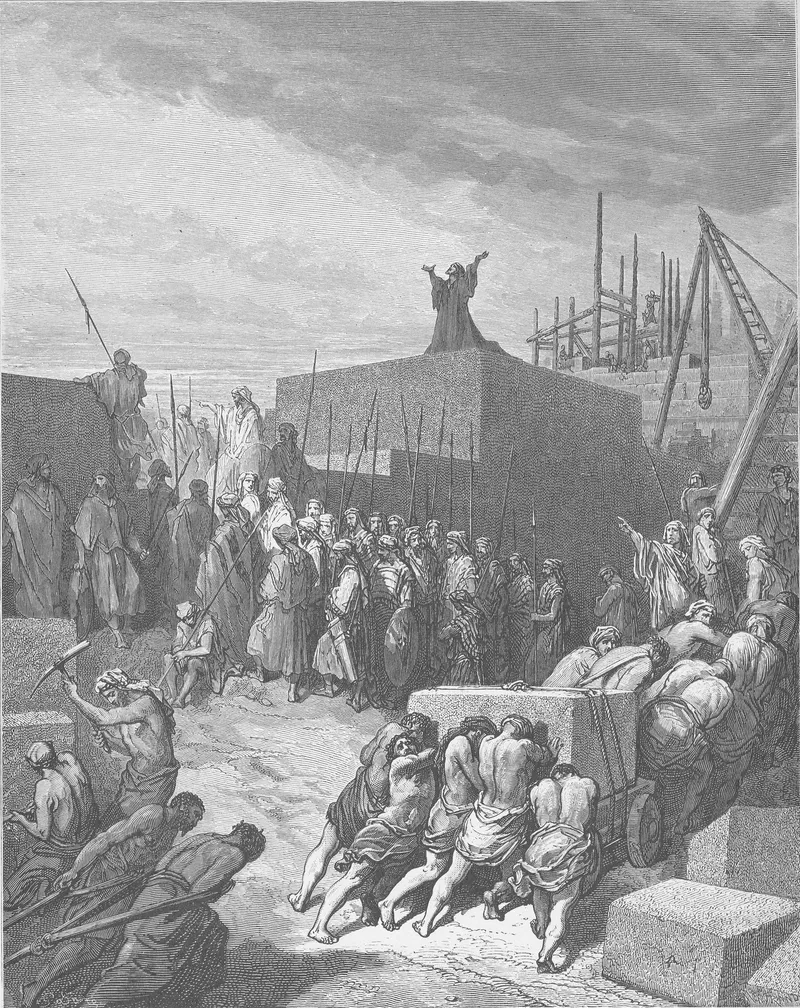
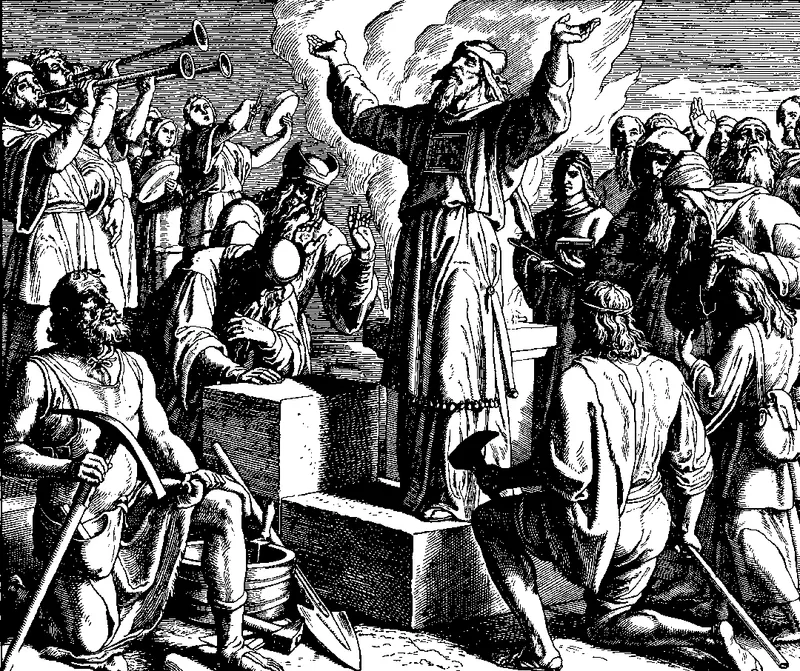
8Now in the second year of their coming unto the house of God at Jerusalem, in the second month, began Zerubbabel the son of Shealtiel, and Jeshua the son of Jozadak, and the remnant of their brethren the priests and the Levites, and all they that were come out of the captivity unto Jerusalem; and appointed the Levites, from twenty years old and upward, to set forward the work of the house of the LORD. 9Then stood Jeshua with his sons and his brethren, Kadmiel and his sons, the sons of Judah, together, to set forward the workmen in the house of God: the sons of Henadad, with their sons and their brethren the Levites. 10And when the builders laid the foundation of the temple of the LORD, they set the priests in their apparel with trumpets, and the Levites the sons of Asaph with cymbals, to praise the LORD, after the ordinance of David king of Israel. 11And they sang together by course in praising and giving thanks unto the LORD; because he is good, for his mercy endureth for ever toward Israel. And all the people shouted with a great shout, when they praised the LORD, because the foundation of the house of the LORD was laid.
The date is not random. The second month of the second year of the return - and 1 Kings 6:1 records that Solomon began the first temple in the fourth year of his reign, in the month Zif, which is the second month. The Chronicler-Ezra is deliberately matching dates. The foundation of the second temple goes down in the same month of the year as the foundation of the first. The reader is being told that what begins here is the continuation of the same work, by the same God, at the same time of year, by the grandchildren of the people who first did it.
The priests stand in their apparel with trumpets. The Levites strike the cymbals. They sing “after the ordinance of David king of Israel.” The whole liturgical scene is borrowed from David's organization of temple worship in 1 Chronicles 16 - the same priestly orders, the same instruments, even the same psalm refrain David appointed when the ark first came into Jerusalem (1 Chr 16:34, 41). The exile did not erase David's ordinance. It went into Babylon with the captives and came back out with them.
The chapter is showing that the things God establishes through faithful kings survive imperial catastrophe.
Ezra 3:12-13The Sound No One Could Tell Apart
12But many of the priests and Levites and chief of the fathers, who were ancient men, that had seen the first house, when the foundation of this house was laid before their eyes, wept with a loud voice; and many shouted aloud for joy: 13So that the people could not discern the noise of the shout of joy from the noise of the weeping of the people: for the people shouted with a loud shout, and the noise was heard afar off.
The math of the verse is poignant. The first temple was destroyed in 586 BC; the foundation of the second is being laid in 536. Anyone old enough to have seen the first house at its glory has to be at least sixty years old - and most are much older, in their seventies or eighties, having spent the meat of their adult lives in Babylon. They have walked or been carried home for this exact moment, and what they see is a much smaller, much poorer outline than what they remember.
The prophets are about to address them directly. Haggai 2:3 - “Who is left among you that saw this house in her first glory? and how do ye see it now? is it not in your eyes in comparison of it as nothing?”4 Zechariah 4:10 - “For who hath despised the day of small things?” The weeping in v. 12 is real, and the prophets do not shame it; they pastor it.
And the young people are shouting. They were born in Babylon. They have never seen a temple in their lives. What is going up in front of them is the biggest building project of their generation and the most explicit answer to prayer they have ever witnessed. Both responses are honest. The chapter, remarkably, does not adjudicate. It refuses to tell the old men they should be more grateful or the young men they should be more reverent.
It records the two sounds and notes that the people standing on the hillside could not tell them apart. The most psychologically truthful verse in the chapter is the one that says the noise was indistinguishable. Sometimes grief and joy share a single pitch.
Research trail
Sources & further study
These references support the historical, linguistic, manuscript, and contextual notes in this chapter. Scripture remains the primary text; external sources are provided so readers can inspect the research directly.
- Ezra 3 · Hebrew + Jewish commentaryHebrew text with Rashi, Ibn Ezra, and Metzudat David on the altar rebuilt, the Feast of Tabernacles kept in ruins, and the laying of the temple foundation with mingled shout and weeping.
- The Second Temple Period BeginsSBL overview of the post-exile rebuilding under Zerubbabel and Joshua, including the place of Haggai and Zechariah in the construction story Ezra 3 begins.
- The Cyrus Cylinder (BM 90920)The clay cylinder inscribed with the official Persian-language account of Cyrus's policy of returning displaced peoples to their homelands and restoring their sanctuaries - the extrabiblical confirmation of the decree that makes Ezra 1-6 possible.
- Ezra 3:12 ↔ Haggai 2:3, Zechariah 4:10Haggai 2:3 and Zechariah 4:10 address the same moment Ezra 3:12 describes from the other side - the prophets exhorting the people not to despise “the day of small things” while the old men weep at the comparison with the first temple.
Where this echoes in Scripture
As One Man, the Altar First
- Genesis 12:7And there builded he an altar unto the LORD, who appeared unto him.Abraham's pattern - the altar goes up before anything else. The chapter is recovering the deepest Old Testament instinct.
- Hebrews 10:11-14This man, after he had offered one sacrifice for sins for ever, sat down on the right hand of God.The daily Tamid Ezra restores - answered in full at the cross.
Tabernacles in a City Without Walls
- 1 Kings 5:8-11I will do all thy desire concerning timber of cedar… my servants shall bring them down from Lebanon unto the sea.Solomon's supply chain - recreated four centuries later in Ezra 3:7.
- John 1:14And the Word was made flesh, and dwelt (tabernacled) among us.The Greek verb literalizes Tabernacles into the Incarnation.
- John 7:37-39In the last day, that great day of the feast, Jesus stood and cried, saying, If any man thirst, let him come unto me, and drink.Jesus claiming the water of Tabernacles in His own voice.
Foundation Laid; the Old Antiphon Sung Again
- 1 Kings 6:1In the fourth year of Solomon's reign over Israel, in the month Zif, which is the second month, that he began to build the house of the LORD.The exact month-of-year Ezra 3:8 is matching - the second temple's foundation goes down in the same calendar slot as the first.
- 1 Chronicles 16:34, 41O give thanks unto the LORD; for he is good; for his mercy endureth for ever.David's original antiphon for the ark - the same line Ezra's singers reach for over the foundation.
- Psalm 136For his mercy endureth for ever.The whole psalm structured around the same refrain - repeated twenty-six times. The exile did not silence it.
The Sound No One Could Tell Apart
- Haggai 2:3, 9Who is left among you that saw this house in her first glory?… The glory of this latter house shall be greater than of the former.Haggai pastoring the very old men weeping in Ezra 3:12 - and promising the second house will exceed the first when the Desire of All Nations comes (cf. Hag 2:7).
- Zechariah 4:10For who hath despised the day of small things?Zechariah's answer to the same disappointment Ezra 3:12 records.
- John 11:35Jesus wept.The Lord at the tomb - knowing the resurrection He is about to perform, weeping anyway. The chapter's mingled sound at its deepest.
- 1 Corinthians 3:11For other foundation can no man lay than that is laid, which is Jesus Christ.Paul on the only foundation that finally outlasts both the weeping and the shouting.