Psalms 99
People in this chapter
Psalm 99 is the last in a remarkable run of songs - Psalms 93 and 95 through 99 - all of which announce the same staggering fact: the LORD reigneth. Earthly thrones rise and topple, empires come and go, but over them all sits a King whose rule never ends.
This psalm takes that announcement and presses it to its sharpest point. It is not chiefly about God's power, or even His justice, though both are here; it is about His holiness - the quality that sets Him utterly apart from everything He has made.1
Tap any highlighted phrase to jump to the commentary that unpacks it.
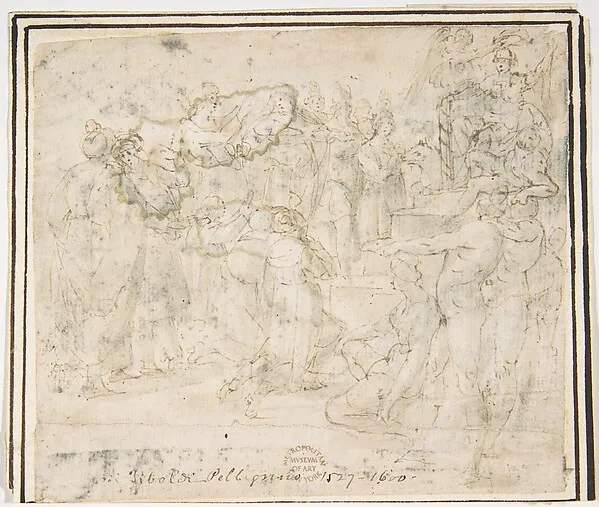
Psalm 99:1-3The LORD Reigneth; Let the People Tremble
1The LORD reigneth; let the people tremble: he sitteth between the cherubims; let the earth be moved. 2The LORD is great in Zion; and he is high above all the people. 3Let them praise thy great and terrible name; for it is holy.
The psalm opens like a herald's proclamation: The LORD reigneth. Two words in Hebrew, and they carry the weight of the whole song. This is not a wish or a hope; it is a present fact. Whatever else seems to be in charge of the world - armies, empires, the proud who rise against the weak - the truth underneath all appearances is that the LORD is on the throne, and His rule is unbroken.
And notice the immediate response the psalm calls for: let the people tremble… let the earth be moved. The Hebrew behind be moved pictures the ground shaking, staggering, unsteady before the presence of its King. This is not the cosy reign of a distant figurehead; it is the rule of a holiness so total that creation itself quivers in its presence - the trembling of awe before a King who will prove, by the psalm's end, to be merciful.
The LORD is great in Zion; and he is high above all the people (v. 2). Two directions of greatness stand side by side here. He is great in Zion - present, near, dwelling among His people in a particular place, the city where the ark stood and the worship rose. And He is high above all the people - exalted over every nation on earth, not the local deity of one city but the King of all.
This is the tension the whole psalm lives in. The God of Zion is not small because He is near; His nearness in one place does not shrink His rule over all places. He stoops to dwell with His people without ceasing for an instant to be high above them - fully present in Zion and fully exalted over the earth at once. The worshipper is meant to feel both: this is our God, and this is the God before whom the nations are nothing.
Psalm 99:4-6They Called Upon the LORD, and He Answered
4The king’s strength also loveth judgment; thou dost establish equity, thou executest judgment and righteousness in Jacob. 5Exalt ye the LORD our God, and worship at his footstool; for he is holy. 6Moses and Aaron among his priests, and Samuel among them that call upon his name; they called upon the LORD, and he answered them.
The psalm now tells us what this King does with His power: The king's strength also loveth judgment; thou dost establish equity, thou executest judgment and righteousness in Jacob (v. 4). It is a crucial line, because raw power without righteousness is the most frightening thing in the world - a throne that can do anything and answers to no one.
But the strength of this King loveth judgment. His power is wedded to justice; He does not merely have might, He loves what is right and bends His strength toward it. And the verbs are active and ongoing: He establishes equity, He executes judgment and righteousness - not as occasional acts but as the steady character of His reign. Equity means evenness, fairness, the straight measure that does not tilt toward the powerful.
So the holiness that made the earth tremble in verse 1 turns out to have a moral shape: it is the holiness of a King who cannot be bribed, who will not let the strong devour the weak, who governs Jacob with unbending fairness. This is why His holiness is good news and not merely terror. A holy King who loveth judgment is exactly the King the oppressed have always longed for - and exactly the King the proud have always had reason to fear.
Now the psalm does something tender and surprising. Having lifted God so high - enthroned above the cherubim, exalted over all peoples, holy beyond approach - it suddenly names three men: Moses and Aaron among his priests, and Samuel among them that call upon his name; they called upon the LORD, and he answered them (v. 6).
These are not legendary heroes summoned to display God's power; they are named as those who called, intercessors who stood before God on behalf of the people. Moses pleaded for Israel when judgment hung over them; Aaron stood between the living and the dead with his censer; Samuel cried to the LORD all night for a people who had rejected him. And the refrain over all three is the same: they called upon the LORD, and he answered them.
Here is the answer to any fear that holiness means distance. The most exalted God in all of Scripture is, in the same psalm, the God who answers when His people cry to Him. The trembling of verse 1 and the answered prayer of verse 6 are held in a single hand. He is not so high that He cannot hear; the height is precisely the measure of how astonishing it is that He bends to listen at all.
Psalm 99:7-9A God That Forgavest Them
7He spake unto them in the cloudy pillar: they kept his testimonies, and the ordinance that he gave them. 8Thou answeredst them, O LORD our God: thou wast a God that forgavest them, though thou tookest vengeance of their inventions. 9Exalt the LORD our God, and worship at his holy hill; for the LORD our God is holy.
The psalm reaches back to the founding memory of Israel: He spake unto them in the cloudy pillar: they kept his testimonies, and the ordinance that he gave them (v. 7). The cloudy pillar is the pillar of cloud that went before Israel out of Egypt, that stood at the door of the tent where Moses met with God, that filled the tabernacle so that none could enter. It was the visible sign that the holy God was present and yet veiled - near enough to lead, hidden enough that no eye could presume upon Him.
From within that cloud He spake: the transcendent King is also the speaking King, the One who does not leave His people to guess at His will but gives them His testimonies and His ordinance - His revealed word, His covenant instruction. Notice the response the verse records: they kept his testimonies. The God who speaks is to be obeyed; the word that comes from the cloud is not a suggestion but a charge.
This is the same pattern as the cherubim of verse 1 - a presence both guarded and given. God hides Himself in cloud and yet speaks from it; He is unapproachably holy and yet will not stay silent. The holiness and the self-revelation are, once again, two sides of one God.
The psalm closes where it began - on the holiness of God - but the call has deepened. Exalt the LORD our God, and worship at his holy hill; for the LORD our God is holy (v. 9). Three times now the refrain has sounded: for it is holy (v. 3), for he is holy (v. 5), and now, fullest of all, for the LORD our God is holy. The earlier refrains were brief; this final one spells out the whole confession - not just it, not just he, but the LORD our God.
And the place of worship has moved inward too: from the broad call to praise (v. 3), to His footstool (v. 5), to His holy hill (v. 9) - Zion, the mountain where He dwells. The whole psalm has been a steady approach: from the trembling earth, drawing nearer, until the worshipper stands on the holy hill itself, bowing before the King.
And the thing that draws us in is the thing that holds us in awe - His holiness. We do not worship in spite of His holiness, edging closer once the danger has passed; we worship because He is holy. The repetition is not the psalmist running out of words. It is the only adequate response to having seen the King: to say the one true thing again, and again, and again - holy.
Research trail
Sources & further study
These references support the historical, linguistic, manuscript, and contextual notes in this chapter. Scripture remains the primary text; external sources are provided so readers can inspect the research directly.
- Psalm 99 - Translators' NotesThe NET Bible's detailed footnotes on Psalm 99 - the enthronement formula behind the LORD reigneth, the image of God seated between the cherubims above the ark, the force of the threefold refrain on His holiness, and the difficult pairing of forgiveness and vengeance in verse 8.
- Psalm 99 · Hebrew + classical Jewish commentaryThe Hebrew text of Psalm 99 with Rashi, Ibn Ezra, and other classical commentators side by side - useful for qadosh (vv. 3, 5, 9, the thrice-sounded “holy” that is the spine of the psalm), for the keruvim (v. 1, the “cherubims” over which the LORD is enthroned), and for the long Jewish reflection on a God who both forgavest and tookest vengeance in the same breath (v. 8).
- Psalm 99 ↔ Isaiah 6 · Mark 2 · Revelation 4Traces the threads tying Psalm 99 to the rest of Scripture - the threefold “holy” (vv. 3, 5, 9) that becomes the seraphim's cry in Isaiah's vision (Isa. 6:3) and the unceasing song of heaven (Rev. 4:8), and the forgiving God enthroned above the cherubim (v. 8) met in the One who said thy sins be forgiven thee (Mark 2:5).
Where this echoes in Scripture
The LORD Reigneth; Let the People Tremble
- Isaiah 6:1-5Holy, holy, holy, is the LORD of hosts: the whole earth is full of his glory.The threefold “holy” of verses 3, 5, 9 heard from the seraphim above the throne.
- Revelation 4:8Holy, holy, holy, Lord God Almighty, which was, and is, and is to come.The same triple cry sung without ceasing in the worship of heaven.
- Exodus 25:22there I will meet with thee... from between the two cherubims which are upon the ark.The throne “between the cherubims” of verse 1 - the place where the holy God meets His people.
- Psalm 97:1The LORD reigneth; let the earth rejoice; let the multitude of isles be glad thereof.A companion enthronement psalm opening with the same proclamation as verse 1.
They Called Upon the LORD, and He Answered
- Matthew 5:34-35nor by the earth; for it is his footstool: neither by Jerusalem; for it is the city of the great King.The footstool of verse 5 named by Jesus - the whole earth beneath the throne of the great King.
- Isaiah 66:1The heaven is my throne, and the earth is my footstool.The throne and footstool of verse 5 - God exalted over a creation that lies beneath His feet.
- Exodus 32:11-14And Moses besought the LORD his God... And the LORD repented of the evil which he thought to do.Moses among those who “called upon the LORD, and he answered them” (v. 6) - the intercessor heard.
- 1 Samuel 12:18So Samuel called unto the LORD; and the LORD sent thunder and rain that day.Samuel among the intercessors of verse 6 whose call the holy God answered.
A God That Forgavest Them
- Mark 2:5-10thy sins be forgiven thee... who can forgive sins but God only?The forgiving God of verse 8 met in the One who spoke pardon, and proved His right to.
- Hebrews 4:16Let us therefore come boldly unto the throne of grace, that we may obtain mercy.The holy throne of verses 1 and 9 made a throne of grace we are bidden to approach.
- Exodus 33:9the cloudy pillar descended, and stood at the door of the tabernacle, and the LORD talked with Moses.The “cloudy pillar” of verse 7 - the veiled presence from which the holy God spoke.
- Isaiah 57:15the high and lofty One that inhabiteth eternity, whose name is Holy... with him also that is of a contrite... heart.The same union of verses 8-9 - the Holy One on high who dwells with the lowly He forgives.