2 Chronicles 35
People in this chapter
Josiah throws the greatest Passover since Samuel, and he pays for it himself. These were of the king's substance (v. 7): thirty thousand lambs out of his own flocks, so no family in Jerusalem is shut out of the feast. He sets the priests in their courses, returns the ark to Solomon's temple, gets the singers singing and the gatekeepers at their posts. For one shining week the nation worships the way it was always meant to.1
Tap any highlighted phrase to jump to the commentary that unpacks it.
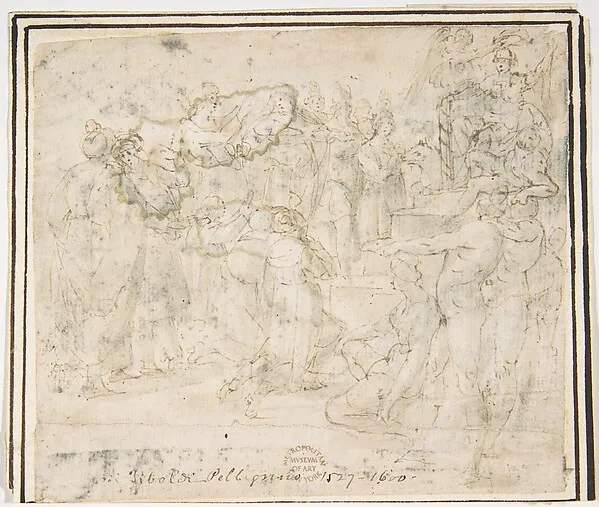
2 Chronicles 35:1-3Josiah Kept a Passover · Put the Holy Ark in the House
1Moreover Josiah kept a passover unto the LORD in Jerusalem: and they killed the passover on the fourteenth day of the first month. 2And he set the priests in their charges, and encouraged them to the service of the house of the LORD, 3And said unto the Levites that taught all Israel, which were holy unto the LORD, Put the holy ark in the house which Solomon the son of David king of Israel did build; it shall not be a burden upon your shoulders: serve now the LORD your God, and his people Israel,
Everything here is ordered and deliberate. The lamb is killed on the appointed day, the fourteenth day of the first month, exactly as the law required. Josiah does not merely permit the feast; he organizes it down to the courses and divisions, assigning every priest and Levite his place. And one verb is worth slowing down over: he encouraged them (v. 2). A king stirring up his ministers to the work, reminding them whose service this is.
The reform began by tearing down idols and recovering the Book of the Law; it reaches its summit in worship rightly restored. A nation is being gathered back to the feast that made it a nation in the first place.1
The ark was the most sacred object in Israel, the place of God's revealed presence, and for generations the Levites had carried it on their shoulders from camp to camp. Now the king tells them to set it down: it shall not be a burden upon your shoulders (v. 3). The house Solomon built is its home; the Levites are freed for a different work, to serve… the LORD… and his people. There is real gentleness in that.
The first thing Josiah hands those who minister is a lighter load. If you have ever felt that serving God is mostly weight - one more thing to carry, one more way to fall short - hear the word over the Levites: you were put here to serve and be freed for it. The priesthood is ordered, enabled, and pointed outward toward the people it exists to help draw near.2
2 Chronicles 35:4-6Stand in the Holy Place · Sanctify Yourselves
4And prepare yourselves by the houses of your fathers, after your courses, according to the writing of David king of Israel, and according to the writing of Solomon his son. 5And stand in the holy place according to the divisions of the families of the fathers of your brethren the people, and after the division of the families of the Levites. 6So kill the passover, and sanctify yourselves, and prepare your brethren, that they may do according to the word of the LORD by the hand of Moses.
2 Chronicles 35:7-9These Were of the King’s Substance
7And Josiah gave to the people, of the flock, lambs and kids, all for the passover offerings, for all that were present, to the number of thirty thousand, and three thousand bullocks: these were of the king’s substance. 8And his princes gave willingly unto the people, to the priests, and to the Levites: Hilkiah and Zechariah and Jehiel, rulers of the house of God, gave unto the priests for the passover offerings two thousand and six hundred small cattle, and three hundred oxen. 9Conaniah also, and Shemaiah and Nethaneel, his brethren, and Hashabiah and Jeiel and Jozabad, chief of the Levites, gave unto the Levites for passover offerings five thousand small cattle, and five hundred oxen.
The numbers are staggering - thirty thousand from the flock, three thousand bullocks - but the phrase that defines the whole feast is the last one: of the king's substance (v. 7). It came out of Josiah's own treasury, his own flocks and herds, given so that every family present could keep the feast, including those too poor to bring a lamb of their own. The king pays the cost of his people's worship.
And his generosity is contagious: his princes gave willingly (v. 8), the chief priests and Levites adding thousands more from their own holdings (vv. 8-9). The gift pours from the top down, until no one in Jerusalem is shut out of the table for lack of a lamb.
2 Chronicles 35:10-19No Passover Like It Since the Days of Samuel
10So the service was prepared, and the priests stood in their place, and the Levites in their courses, according to the king’s commandment. 11And they killed the passover, and the priests sprinkled the blood from their hands, and the Levites flayed them. 12And they removed the burnt offerings, that they might give according to the divisions of the families of the people, to offer unto the LORD, as it is written in the book of Moses. And so did they with the oxen. 13And they roasted the passover with fire according to the ordinance: but the other holy offerings sod they in pots, and in caldrons, and in pans, and divided them speedily among all the people. 14And afterward they made ready for themselves, and for the priests: because the priests the sons of Aaron were busied in offering of burnt offerings and the fat until night; therefore the Levites prepared for themselves, and for the priests the sons of Aaron.
Now the careful plans move into action and the whole house comes alive. Every hand has its work, and the work is precise. The blood, always the heart of the matter, is sprinkled by the priests; the Levites do the heavy labor of flaying; the offerings are sorted and given out according to the divisions of the families of the people… as it is written in the book of Moses (v. 12). That last phrase is the key to the scene - all of it done as the recovered law commanded.
This is the Book of the Law, lately found and read aloud, now being lived. The reform has moved out of the king's proclamations and into the courts, the kitchens, the hands of the ministers. Obedience here is not an idea; it is blood on the priests' hands and meat in the people's portions, an ancient text made flesh in a single ordered day.
A small phrase in verse 13 catches the spirit of the day: the offerings were divided… speedily among all the people. No one is left waiting, no family overlooked. And the verses that follow show a remarkable thing about how the work was shared: the priests the sons of Aaron were busied in offering of burnt offerings and the fat until night; therefore the Levites prepared for themselves, and for the priests (v. 14). The priests were so occupied serving the people that they had no time to prepare their own meal - so the Levites served the priests.
Service flows in every direction. The king provides for the people, the Levites provide for the priests, the priests labor for everyone until nightfall. It is a picture of a community in which the burden of worship is carried by many willing hands, each looking to the need of another. The feast runs smoothly because every person in the chain does his part and no one stands on his rank.
15And the singers the sons of Asaph were in their place, according to the commandment of David, and Asaph, and Heman, and Jeduthun the king’s seer; and the porters waited at every gate; they might not depart from their service; for their brethren the Levites prepared for them. 16So all the service of the LORD was prepared the same day, to keep the passover, and to offer burnt offerings upon the altar of the LORD, according to the commandment of king Josiah. 17And the children of Israel that were present kept the passover at that time, and the feast of unleavened bread seven days. 18And there was no passover like to that kept in Israel from the days of Samuel the prophet; neither did all the kings of Israel keep such a passover as Josiah kept, and the priests, and the Levites, and all Judah and Israel that were present, and the inhabitants of Jerusalem. 19In the eighteenth year of the reign of Josiah was this passover kept.
The picture widens to take in the whole house at once: the singers the sons of Asaph were in their place, according to the commandment of David… and the porters waited at every gate; they might not depart from their service (v. 15). The music goes up as it had in David's day; the gatekeepers hold their posts so faithfully that they cannot even leave to prepare their own food, and again the Levites serve them.
Then the summary line: So all the service of the LORD was prepared the same day… according to the commandment of king Josiah (v. 16). Everything converges - sacrifice, song, the guarding of the gates, the feeding of the ministers - into one fully ordered day of worship. And it does not end with the Passover meal: the children of Israel… kept the passover… and the feast of unleavened bread seven days (v. 17). They do not rush through the remembrance and return to ordinary life.
For a full week the nation's days are ordered around the memory of what God had done, the leaven of the old life swept out, the people dwelling in the deliverance rather than glancing at it.
Then the historian renders his verdict, and it is unrestrained: there was no passover like to that kept in Israel from the days of Samuel the prophet; neither did all the kings of Israel keep such a passover as Josiah kept (v. 18). The reach of the comparison is breathtaking. Not since Samuel - not since the prophet who anointed Saul and David, back near the dawn of the monarchy - had Israel kept a Passover like this.
And not one king in all the generations between, not David, not Solomon, not Hezekiah with his own great feast, had matched it. This is the high-water mark of the whole reform, perhaps the high-water mark of the kingdom of Judah. In the eighteenth year of the reign of Josiah was this passover kept (v. 19) - the date set down like a monument, a fixed point of national faithfulness. The reader is meant to feel how good this moment was, how nearly the kingdom had come back to what it was meant to be.
Which is exactly what makes the turn at verse 20 so hard. The apex and the fall stand side by side in a single chapter.
2 Chronicles 35:20-27He Hearkened Not · And Jeremiah Lamented for Josiah
20After all this, when Josiah had prepared the temple, Necho king of Egypt came up to fight against Charchemish by Euphrates: and Josiah went out against him. 21But he sent ambassadors to him, saying, What have I to do with thee, thou king of Judah? I come not against thee this day, but against the house wherewith I have war: for God commanded me to make haste: forbear thee from meddling with God, who is with me, that he destroy thee not. 22Nevertheless Josiah would not turn his face from him, but disguised himself, that he might fight with him, and hearkened not unto the words of Necho from the mouth of God, and came to fight in the valley of Megiddo. 23And the archers shot at king Josiah; and the king said to his servants, Have me away; for I am sore wounded. 24His servants therefore took him out of that chariot, and put him in the second chariot that he had; and they brought him to Jerusalem, and he died, and was buried in one of the sepulchres of his fathers. And all Judah and Jerusalem mourned for Josiah.
The turn is abrupt and sobering. Necho is marching far to the north against Carchemish by the Euphrates; he has no quarrel with Judah at all. Yet Josiah goes out to intercept him (v. 20). And then comes one of the strangest warnings in Scripture, and it is spoken by a pagan king: What have I to do with thee, thou king of Judah?… for God commanded me to make haste: forbear thee from meddling with God, who is with me, that he destroy thee not (v. 21).
Necho claims God Himself has sent him and tells Josiah, in God's name, to stand aside. By every expectation the chapter has built, Josiah - the most careful listener to God's word in generations - should hear this and stop. His whole reform began when he heard the Book of the Law and trembled at it. The question hanging over verse 21 is whether he can hear God now, arriving in a form he never asked for.
He will not. Nevertheless Josiah would not turn his face from him, but disguised himself, that he might fight with him, and hearkened not unto the words of Necho from the mouth of God, and came to fight in the valley of Megiddo (v. 22). The chronicler's judgment is plain and devastating: Necho's warning was from the mouth of God, and Josiah hearkened not. Here is the heart of the tragedy: the fall of a good king - one who had heard God so clearly through the prophet Huldah, who had kept the law so faithfully, who had just led the greatest Passover in centuries.
And yet he could not hear God's word when it came through a mouth he did not expect, in a moment he had not chosen. He even disguised himself, as if a change of clothes could hide him from the outcome a divine warning had named. The detail is quietly terrible: a man trying to slip past a word he has decided not to obey. The handling here must be sober. The text does not soften it, and neither should we - the best of kings died because he would not hearken.
The end comes quickly and without drama: the archers shot at king Josiah; and the king said… Have me away; for I am sore wounded (v. 23). He is carried from his battle chariot to a second, brought back to Jerusalem, and there he dies - in the city of his great Passover, in the city he had filled with the worship of God. And all Judah and Jerusalem mourned for Josiah (v. 24). The grief is national and total.
The king who had given his own substance so the people could keep the feast is now carried home to be buried, and the people he had served weep for him. This death carries no triumph, no martyr's glory: only the loss of a good man who would not listen, and a kingdom suddenly bereft of the one who had been holding it back from the brink. The mourning that fills the streets is the sound of a nation that knows, even if it cannot yet say so, that its best days have just ended.
25And Jeremiah lamented for Josiah: and all the singing men and the singing women spake of Josiah in their lamentations to this day, and made them an ordinance in Israel: and, behold, they are written in the lamentations. 26Now the rest of the acts of Josiah, and his goodness, according to that which was written in the law of the LORD, 27And his deeds, first and last, behold, they are written in the book of the kings of Israel and Judah.
The chapter closes with a song of grief, not a final entry in the royal annals: And Jeremiah lamented for Josiah: and all the singing men and the singing women spake of Josiah in their lamentations to this day, and made them an ordinance in Israel (v. 25). Jeremiah - the prophet who would soon be called to weep over the fall of Jerusalem itself - weeps first for this king. And his lament does not fade.
It becomes an ordinance in Israel, sung by the singing men and women generation after generation, set down in the lamentations. A prophet's grief is made into the nation's memory. The historian still wants us to know the good: the rest of the acts of Josiah, and his goodness, according to that which was written in the law of the LORD (v. 26) are recorded; his deeds first and last are in the book of the kings (v. 27).
His goodness is not erased by his last, fatal refusal. The final note of the chapter is a song of mourning - the sound of a people lamenting a king who could not, at the last, hear the voice he had spent his life serving.
Research trail
Sources & further study
These references support the historical, linguistic, manuscript, and contextual notes in this chapter. Scripture remains the primary text; external sources are provided so readers can inspect the research directly.
- 2 Chronicles 35 - Translators' NotesThe NET Bible's detailed footnotes on 2 Chronicles 35 - the ordering of priests and Levites in verses 2-6, the scale of the king's provision in verses 7-9, the difficult phrase from the mouth of God in verse 22, and the relation of this account to 2 Kings 23.
- 2 Chronicles 35 · Hebrew + classical Jewish commentaryThe Hebrew text of 2 Chronicles 35 with Rashi, Ibn Ezra, and other classical commentators side by side - useful for pesach (vv. 1, 6-19, the “passover” kept with such zeal) and for the language of mourning behind they are written in the lamentations (v. 25), where the singing men and women set Josiah's death into a fixed qinah.
- 2 Chronicles 35 ↔ Exodus 12 · 1 Corinthians 5 · John 1Traces the threads tying this chapter to the rest of Scripture - the Passover kept by Josiah (vv. 1-19) read back to its founding in Exodus 12 and forward to Christ our passover… sacrificed for us (1 Cor. 5:7) and the Lamb of God (John 1:29), and Josiah's death (vv. 20-24) read beside the parallel account in 2 Kings 23.
Where this echoes in Scripture
Josiah Kept a Passover · Put the Holy Ark in the House
These Were of the King’s Substance
- Exodus 12:21-27Draw out and take you a lamb according to your families, and kill the passover... it is the sacrifice of the LORD’s passover.The founding of the feast Josiah keeps in verses 1-6 - the lamb slain and the night Israel was spared.
- 2 Kings 23:21-23surely there was not holden such a passover from the days of the judges... nor in all the days of the kings of Israel.The parallel account of this same Passover - the king commanding the whole nation to keep it.
- 1 Corinthians 5:7Christ our passover is sacrificed for us.The Lamb of verse 7 named by the apostle - the King who provides the true Passover.
- 1 Peter 1:18-19ye were... redeemed... with the precious blood of Christ, as of a lamb without blemish and without spot.The blood that spares those it covers (v. 7) - now the spotless Lamb's own blood.
- Titus 2:14Who gave himself for us, that he might redeem us from all iniquity.Where Josiah supplied lambs from his flocks (v. 7), the true King gave Himself.
- 2 Chronicles 30:1-5Hezekiah sent to all Israel and Judah... to keep the passover unto the LORD God of Israel.Hezekiah's earlier great Passover - the reform Josiah now surpasses (v. 18).
No Passover Like It Since the Days of Samuel
- Hebrews 10:1-4the law having a shadow of good things to come... can never with those sacrifices... make the comers thereunto perfect.Why even the greatest Passover (v. 18) still pointed beyond itself - the shadow awaiting its substance.
- 1 Corinthians 5:7-8Christ our passover is sacrificed for us: therefore let us keep the feast.The feast Josiah kept (vv. 16-18) fulfilled - the one Lamb who need not be slain again.
- 1 Chronicles 25:1-6the sons of Asaph... should prophesy with harps, with psalteries, and with cymbals.The order of singers David appointed, kept in verse 15 - the music going up as in his day.
- Exodus 12:15-20seven days shall ye eat unleavened bread... there shall no leavened bread be seen with thee.The seven-day feast kept in verse 17 - the leaven of the old life swept out.
- 2 Chronicles 30:26there was great joy in Jerusalem: for since the time of Solomon... there was not the like in Jerusalem.Hezekiah's great feast, now surpassed - the verdict of verse 18 reaching back even further.
He Hearkened Not · And Jeremiah Lamented for Josiah
- 2 Kings 23:25-30like unto him was there no king before him, that turned to the LORD with all his heart... In his days Pharaohnechoh... slew him at Megiddo.The parallel account - the unmatched king of verse 22 and his death, set side by side.
- Luke 22:42saying, Father, if thou be willing, remove this cup from me: nevertheless not my will, but thine, be done.The King who hearkened to the end - over against Josiah, who would not hear (v. 22).
- Romans 6:9Christ being raised from the dead dieth no more; death hath no more dominion over him.The answer to the lament of verse 25 - the King who reigns and is not taken from his people.
- Hebrews 5:8-9Though he were a Son, yet learned he obedience by the things which he suffered.The obedience Josiah lacked at the last (v. 22) - the Son who hearkened all the way through suffering.
- Revelation 21:4God shall wipe away all tears from their eyes; and there shall be no more death, neither sorrow, nor crying.Where the mourning of verse 24 is finally answered - no more death, in the presence of the King.
- 2 Samuel 1:17-18David lamented with this lamentation over Saul and over Jonathan his son... behold, it is written in the book of Jasher.A lament set down and sung, like Jeremiah's for Josiah (v. 25) - grief made a lasting word.
- Zechariah 12:11In that day shall there be a great mourning in Jerusalem, as the mourning of Hadadrimmon in the valley of Megiddon.The mourning for Josiah at Megiddo (v. 24) became a byword for the deepest national grief.