Numbers 12
People in this chapter
Numbers 11 has just ended in fire and graves - the people complaining, craving meat, dying with the quail still between their teeth at a place named Kibroth-hattaavah, “the graves of lust.” The nation moves on to Hazeroth, and there the murmuring climbs higher up the chain than it ever has before. This time the murmuring comes from Miriam and Aaron - the prophetess who watched over the baby Moses in the reeds of the Nile, and the high priest who first spoke Moses' words to Pharaoh.
The two people who have stood closest to him from the beginning turn against him. And Miriam and Aaron spake against Moses because of the Ethiopian woman whom he had married.1
Tap any highlighted phrase to jump to the commentary that unpacks it.
Numbers 12:1-3The Complaint, and the Meekness of Moses
1And Miriam and Aaron spake against Moses because of the Ethiopian woman whom he had married: for he had married an Ethiopian woman. 2And they said, Hath the LORD indeed spoken only by Moses? hath he not spoken also by us? And the LORD heard it. 3(Now the man Moses was very meek, above all the men which were upon the face of the earth.)
Of all the murmurings in the wilderness, this one cuts closest to home. The complainers are Miriam and Aaron - named, and named in that order, with Miriam first. These are the people who have known Moses longest and stood nearest to him. Miriam is almost certainly the unnamed sister who watched the basket among the reeds and arranged for the baby's own mother to nurse him (Ex. 2:4-8); Aaron is the brother God gave Moses as a mouth before Pharaoh (Ex. 4:14-16).
And the stated occasion is the Ethiopian woman whom he had married - the Cushite wife. The text says remarkably little about her: not whether the marriage was recent or old, not whether the camp objected, not what was wrong with it in their eyes. The reticence is the point. Scripture lets the marriage stand as the surface complaint and moves immediately, in the next verse, to what is actually driving the attack. When the people closest to us turn critical, the first accusation is rarely the real one.
It is the door the deeper grievance walks through.
Here the mask comes off. Hath the LORD indeed spoken only by Moses? hath he not spoken also by us? The marriage is forgotten; the real question is one of standing. And it is worth being fair to Miriam and Aaron, because their premise is true: God has spoken through them. Miriam is called a prophetess (Ex. 15:20); Aaron is God's anointed priest and was made Moses' spokesman by the LORD's own command.
They are not nobodies grasping at a title they were never given. What they cannot abide is that Moses has more. Their gift is real, and still they resent the brother whose gift is greater. That is the particular bitterness of this sin: the envy of those who have much and cannot bear that someone else has more. And the verse ends with three words that change everything: And the LORD heard it. The complaint they thought was a private family conversation had an audience they had not reckoned with.
Numbers 12:4-8The LORD Comes Down and Vindicates His Servant
4And the LORD spake suddenly unto Moses, and unto Aaron, and unto Miriam, Come out ye three unto the tabernacle of the congregation. And they three came out. 5And the LORD came down in the pillar of the cloud, and stood in the door of the tabernacle, and called Aaron and Miriam: and they both came forth. 6And he said, Hear now my words: If there be a prophet among you, I the LORD will make myself known unto him in a vision, and will speak unto him in a dream. 7My servant Moses is not so, who is faithful in all mine house. 8With him will I speak mouth to mouth, even apparently, and not in dark speeches; and the similitude of the LORD shall he behold: wherefore then were ye not afraid to speak against my servant Moses?
One word sets the tone for the whole scene: suddenly. The LORD does not wait, does not deliberate, does not let the slander settle and spread. The moment the complaint is out of their mouths, He acts - And the LORD spake suddenly. There is a tenderness hidden in the speed of it. The man at the center of the attack has said nothing in his own defense, and so his Defender does not delay. He calls all three out to the tabernacle - not Moses alone to comfort him, not Miriam and Aaron alone to scold them, but all three together, because the matter is going to be settled in the open, face to face, in His own presence.
The meek do not have to chase their own vindication. When Moses keeps silent and leaves the matter with God, God Himself takes it up - and quickly.
The LORD draws the contrast with great care. To a true prophet - and Miriam and Aaron are true prophets - He comes in a vision… in a dream: real revelation, but mediated, wrapped in symbol and shadow, given at a certain distance. With Moses it is otherwise. Apparently means plainly, openly, in clear sight; not in dark speeches means without riddles, without enigmas to be puzzled out. Where other prophets received the word of God through a veil, Moses received it face uncovered.
This is the answer to the jealous question of verse 2. Miriam and Aaron had asked whether the LORD had spoken only by Moses, as if all prophetic speech were the same and Moses merely one voice among equals. God's reply is that the speech is not the same at all. Their gift is genuine; it is also of a different order than his. To resent the difference is not a quarrel with Moses.
It is a quarrel with the God who assigned it - which is why the rebuke lands as it does: wherefore then were ye not afraid to speak against my servant Moses?
Numbers 12:9-13The Leprosy, the Plea, and the Mediator's Prayer
9And the anger of the LORD was kindled against them; and he departed. 10And the cloud departed from off the tabernacle; and, behold, Miriam became leprous, white as snow: and Aaron looked upon Miriam, and, behold, she was leprous. 11And Aaron said unto Moses, Alas, my lord, I beseech thee, lay not the sin upon us, wherein we have done foolishly, and wherein we have sinned. 12Let her not be as one dead, of whom the flesh is half consumed when he cometh out of his mother’s womb. 13And Moses cried unto the LORD, saying, Heal her now, O God, I beseech thee.
The most frightening words in the chapter are the quietest. And the anger of the LORD was kindled against them; and he departed. And the cloud departed from off the tabernacle. God does not thunder; He leaves. The pillar of cloud that has gone before Israel by day, the visible sign that the living God dwells in their midst, simply lifts and withdraws. For a people in the wilderness there is no more terrible thing than this - not a storm, not an army, but the silent removal of the Presence.
And the order of events carries its own warning: it is only after the cloud departs, only after God has stepped back, that the judgment becomes visible on Miriam. So much of the damage of sin works exactly this way. It is not always a blow that falls from outside; it is what is exposed when the protecting Presence is grieved and draws back. The sister who reached for more standing finds herself, in an instant, with none at all.
Aaron breaks instantly. The high priest who moments ago was questioning Moses' standing now turns to that very brother in desperation: Alas, my lord, I beseech thee, lay not the sin upon us, wherein we have done foolishly, and wherein we have sinned. Two things are remarkable here. First, the confession is total and immediate - no excuse, no minimizing; he names it plainly as sin and folly, and he names it as ours, not hers, taking his full share though only Miriam was struck.
Second, and more telling still, is where he turns. He does not run into the tabernacle to plead with God directly. He pleads with Moses. The man they had just diminished as merely one prophet among several is suddenly the one they both know can reach God on their behalf. Their own theology of verse 2 collapses in verse 11. By attacking the mediator, they had only proved how desperately they needed him - and now, with Miriam's flesh wasting, Aaron throws himself on the mercy of the very brother he wronged, because he sees at last that there is no one else to go to.
Numbers 12:14-16Seven Days, and Israel Waits
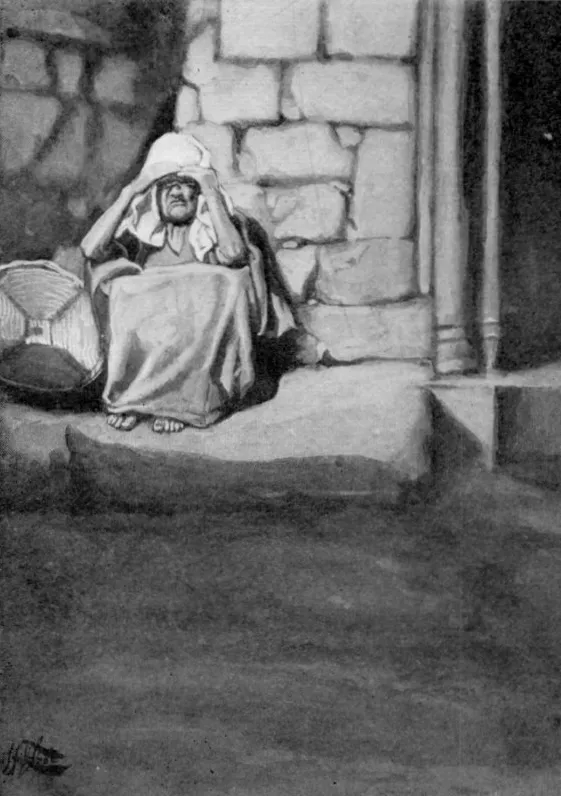
14And the LORD said unto Moses, If her father had but spit in her face, should she not be ashamed seven days? let her be shut out from the camp seven days, and after that let her be received in again. 15And Miriam was shut out from the camp seven days: and the people journeyed not till Miriam was brought in again. 16And afterward the people removed from Hazeroth, and pitched in the wilderness of Paran.
God answers Moses' prayer - but not by erasing every consequence. The healing is granted, yet Miriam must still bear seven days of shame outside the camp. The LORD frames it with a homely picture: If her father had but spit in her face, should she not be ashamed seven days? Even a parent's open rebuke would have left a daughter ashamed for a week; how much more the direct displeasure of God. Notice what the seven days are and are not.
They are not a death sentence - Aaron had feared Miriam would be consumed like a stillbirth, and that does not happen. But neither are they nothing. Sin forgiven is not always sin without aftermath; mercy can be real and a season of consequence can still run its course. The seven days are restorative - a measured time outside, after which the word is clear and gracious: let her be received in again. She is shut out for a week, with homecoming already spoken over her.
Even the discipline has the shape of homecoming built into it.1
And then a detail that is easy to pass over and rich with meaning: the people journeyed not till Miriam was brought in again. The entire nation halts. Hundreds of thousands of people, the cloud presumably ready to lead them onward, simply wait - a full week - for one disgraced woman to be healed and restored before anyone takes another step toward the promised land. There is a striking dignity in it. Miriam had sinned grievously and publicly, and she is not abandoned to journey behind alone or be left in the dust.
Israel waits for her. The community that she had wounded by her words bears the cost of her restoration with her, slowing the whole march of the nation so that she can come back in. It is a quiet picture of how a people of God is meant to handle one of its own who has fallen and been disciplined: to wait, to hold the journey open until the restored one can rejoin it. The chapter that began with words tearing the family apart ends with the whole family standing still, together, until the offender can be welcomed home.
Research trail
Sources & further study
These references support the historical, linguistic, manuscript, and contextual notes in this chapter. Scripture remains the primary text; external sources are provided so readers can inspect the research directly.
- Numbers 12 - Translators' NotesThe NET Bible's detailed footnotes on Numbers 12 - the identity of the Cushite woman, the force of the rare word 'anav in verse 3, the legal and ritual background of the seven-day exclusion, and the difficult clause behind “the similitude of the LORD shall he behold” in verse 8.
- Numbers 12 · Hebrew + classical Jewish commentaryThe Hebrew text of Numbers 12 with Rashi, Ibn Ezra, and other classical commentators side by side - useful for 'anav (v. 3, “very meek”), for the idiom peh 'el peh (v. 8, “mouth to mouth”), and for the long Jewish tradition reading Miriam's tsara'at as bound to the sin of speaking against a brother.
- Numbers 12 ↔ Hebrews 3 · Matthew 11 · Luke 23Traces the verbal threads tying My servant Moses… is faithful in all mine house (v. 7) to Moses verily was faithful… but Christ as a son over his own house (Heb. 3:5-6), and Moses' meekness and his prayer for those who wronged him toward the meek and lowly One who interceded for His accusers.
Where this echoes in Scripture
The Complaint, and the Meekness of Moses
- Exodus 2:4And his sister stood afar off, to wit what would be done to him.Almost certainly Miriam - the sister who watched over the infant Moses, now the one speaking against him.
- Matthew 11:29Take my yoke upon you, and learn of me; for I am meek and lowly in heart.The very word the narrator hangs on Moses (v. 3), owned in full by Christ Himself.
- Isaiah 53:7He was oppressed, and he was afflicted, yet he opened not his mouth.Moses' silence under attack, deepened - the Servant who does not defend Himself before His accusers.
- 1 Peter 2:23Who, when he was reviled, reviled not again… but committed himself to him that judgeth righteously.The meek man trusting God to vindicate him - the pattern of Moses, fulfilled in Christ.
The LORD Comes Down and Vindicates His Servant
- Exodus 33:11And the LORD spake unto Moses face to face, as a man speaketh unto his friend.The same unmediated nearness - the intimacy of verse 8 that Miriam and Aaron could not bear.
- Hebrews 3:5-6Moses verily was faithful in all his house, as a servant… but Christ as a son over his own house.The New Testament builds directly on verse 7 - the faithful servant pointing to the faithful Son.
- Deuteronomy 34:10And there arose not a prophet since in Israel like unto Moses, whom the LORD knew face to face.Israel's own verdict on the uniqueness God asserts here - no prophet ever matched his nearness.
- Hebrews 1:1-2God… hath in these last days spoken unto us by his Son.The greater nearness verse 8 hints at - God speaking at last not through a veil but in His Son.
The Leprosy, the Plea, and the Mediator's Prayer
- Luke 23:34Then said Jesus, Father, forgive them; for they know not what they do.Moses' five-word prayer for his offender, deepened - the Mediator interceding for those who crucified Him.
- Leviticus 13:46He shall dwell alone; without the camp shall his habitation be.The law behind Miriam's affliction - the leprous were set outside the community as unclean.
- Exodus 4:6His hand was leprous as snow.The same sign Moses once bore as a wonder before Pharaoh now falls on Miriam as a judgment.
- James 3:6And the tongue is a fire… it defileth the whole body.The sin written on Miriam's skin - the spoken word against another, and the defilement it spreads.
Seven Days, and Israel Waits
- Galatians 6:1Restore such an one in the spirit of meekness; considering thyself, lest thou also be tempted.The camp waiting for Miriam - the New Testament call to restore the fallen and wait for them.
- Deuteronomy 24:9Remember what the LORD thy God did unto Miriam by the way, after that ye were come forth out of Egypt.Israel told never to forget this chapter - the seriousness of speaking against God's servant.
- Micah 6:4I sent before thee Moses, Aaron, and Miriam.Miriam still honored among Israel's leaders - restored and welcomed back after the seven days.
- 2 Corinthians 2:7-8Ye ought rather to forgive him, and comfort him… that ye would confirm your love toward him.The spirit of “received in again” - welcoming back the disciplined one with gentleness.