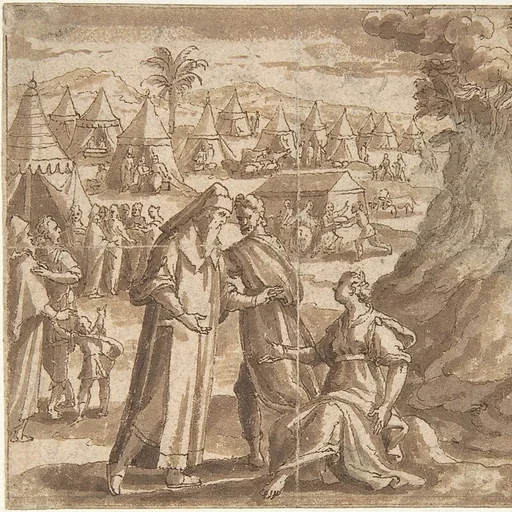
Who was Abihu in the Bible?
Abihu was a son of Aaron and one of the first priests of Israel, who saw God on the mountain and later died offering unauthorized fire.
Son of Aaron and Priest
Exodus generation
Abihu was a son of Aaron and one of the first priests of Israel, who saw God on the mountain and later died offering unauthorized fire.
Follow the reading trailBEYOND THE NAME
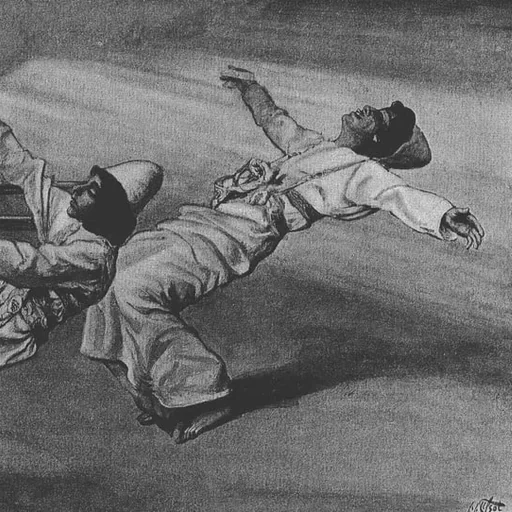
Abihu, second son of Aaron, was among the seventy-four who went up Sinai with Moses and Aaron and beheld the God of Israel, eating and drinking in His presence. He was consecrated as a priest with his brothers to serve at the tabernacle. Yet he and his brother Nadab offered “strange fire” that the Lord had not commanded, and fire came out from before the Lord and consumed them.
Themes in the authored commentary
FOLLOW THE PASSAGES
These are chapter studies associated with this record. Their order follows the books and chapters, rather than a reconstructed timeline of the person’s life.
Aaron's son who ascends the mountain with the elders and witnesses the divine vision
Exodus 24 tells how the covenant is sealed. For three chapters the LORD has been speaking the law from Sinai - the Ten Commandments, the case laws, the rules for altars and holy days. Now the people stand at the foot of the mountain and hear it all read aloud, and they answer with one voice: All the words which the LORD hath said will we do (v. 3). The answer commits the people to the words they have heard. The chapter opens with a carefully drawn order of nearness - Aaron, Nadab, Abihu, and seventy elders called to worship afar off, while Moses alone is to come near the LORD.
Chapter overview from the authored study guide.named alongside his brothers as one of Aaron's sons appointed to serve as priests
The Lord gives Moses instructions for the clothing Aaron will wear as high priest. The ephod holds the names of Israel’s twelve tribes on its shoulder stones, six names on each stone. Aaron carries the names on his shoulders when he comes before the Lord. The breastplate holds twelve more stones, one for each tribe, placed directly over the heart. The Urim and Thummim go in the breastplate too. Israel used them to seek God’s guidance. The hem of Aaron’s blue robe has cloth pomegranates and gold bells. The bells sound as he moves.
Chapter overview from the authored study guide.ordained alongside his brothers as one of Aaron's four sons entering the priesthood
Leviticus 8 is the enactment of Exodus 29. Where Exodus commanded the priesthood, Leviticus shows it happening. Aaron and his sons are brought to the door of the tabernacle, washed, dressed, anointed, and marked with blood - on the right ear to hear God’s word, on the right thumb to work His will, on the right big toe to walk His path. The people watch Moses set Aaron and his sons apart for the work of priests.
Chapter overview from the authored study guide.assists his father Aaron in the first offerings as a newly consecrated priest
Leviticus 9 is the eighth day - the morning after the seven days of consecration in chapter 8. For a week Aaron and his sons have been washed, robed, anointed, and kept at the door of the tabernacle, set apart but not yet serving. Now Moses gathers them and the elders of Israel, and Aaron begins to serve at the altar. Aaron is commanded to take a young calf for a sin offering, and a ram for a burnt offering (v. 2), and the reason is stated outright: for to day the LORD will appear unto you (v. 4). The earlier instructions tell Aaron how to make the offerings that day.
Chapter overview from the authored study guide.referenced by name alongside Nadab as the occasion for these solemn priestly access restrictions
Leviticus 16 is the book’s centerpiece - the one day each year when the high priest enters the Holy of Holies, the place where God’s presence dwells on the mercy seat. It is a day when the whole nation must afflict their souls. Aaron brings the blood of the offerings into the sanctuary and confesses Israel’s sins over the goat that is sent away. The chapter begins immediately after the death of Nadab and Abihu, two of Aaron’s own sons, who entered God’s presence carelessly and were consumed by holy fire. The LORD tells Aaron when and how he may enter the inner sanctuary.
Chapter overview from the authored study guide.son of Aaron who died alongside Nadab for offering unauthorized fire
Numbers opened with a census of the men of war, tribe by tribe, and a careful arrangement of the camp around the tabernacle. Now the LORD turns to the one tribe left out of that fighting count - Levi - and gives it a different vocation altogether. The chapter begins with Aaron and his sons, and with a memory that casts a long shadow: Nadab and Abihu died before the LORD, when they offered strange fire before the LORD (v. 4).
Chapter overview from the authored study guide.THE PEOPLE AROUND THE PERSON
Recorded parents
Relationships follow the source graph. Some are interpretive or uncertain, and individual verse citations are not yet available for every connection.
STUDY & INTERPRETATION
Abihu’s life holds together a startling height and a sobering fall, both rooted in the holiness of God. He is granted a vision of God on the mountain and a place among the consecrated priests, privileges given to very few in Israel. His death, alongside Nadab, when they bring fire the Lord did not command, underscores how the nearness of God is a gift to be received on God’s terms rather than improvised. The episode teaches that those who draw near to serve the holy God must honor His word, a reverence ultimately fulfilled in the one perfectly faithful High Priest who offered Himself exactly as the Father willed.
From the Learn of Christ person commentary. Read alongside the linked Scripture passages.KEEP SCRIPTURE CLOSE
8 authored chapter guides feature this person. This is guide coverage, not an exhaustive count of biblical mentions.
ASK A BETTER QUESTION
Identity, story, early-life sources, family, and where to read.
Abihu was a son of Aaron and one of the first priests of Israel, who saw God on the mountain and later died offering unauthorized fire.
Abihu, second son of Aaron, was among the seventy-four who went up Sinai with Moses and Aaron and beheld the God of Israel, eating and drinking in His presence. He was consecrated as a priest with his brothers to serve at the tabernacle. Yet he and his brother Nadab offered “strange fire” that the Lord had not commanded, and fire came out from before the Lord and consumed them.
The individualized passage index associates this Abihu record with Exodus, Leviticus, Numbers, 1 Chronicles. There are 12 distinct indexed verse references in the 66-book Bible. Browse the book-by-book list below; it separates this identity from other people who share the name. Source assignments and textual identifications can require interpretation.
A separate childhood account for Abihu is not provided in our current authored profile sources. Begin with Exodus 6:23 and the passages linked here for the evidence that is available. The first indexed reference to a name is not a birth record. This profile does not establish a birth date, schooling, or childhood events beyond what its sources state.
Abihu’s source record lists Aaron (father), Elisheba (mother). These are source-graph relationships; legal family, uncertain identifications, and ancestral language require the cautions below. Individual verse evidence is not yet retained for every family edge.
Abihu’s life holds together a startling height and a sobering fall, both rooted in the holiness of God. He is granted a vision of God on the mountain and a place among the consecrated priests, privileges given to very few in Israel.
Answers draw on our existing authored biography and linked chapter studies. Where supplied, verse assignments come from the individualized STEP Bible index. Childhood answers distinguish documented events from gaps in the available sources.
FIND THE PERSON IN THE TEXT
12 distinct verse references in the source’s 66-book index. These are indexed name assignments, rather than every indirect allusion to this person. A name may also refer to descendants, a tribe, or a nation; read each passage to distinguish that usage from the individual.
“And Aaron took him Elisheba, daughter of Amminadab, sister of Naashon, to wife; and she bare him Nadab, and Abihu, Eleazar, and Ithamar.”
Exodus 6:23 · King James Version
“And Nadab and Abihu, the sons of Aaron, took either of them his censer, and put fire therein, and put incense thereon, and offered strange fire before the LORD, which he commanded them not.”
Leviticus 10:1 · King James Version
“And unto Aaron was born Nadab, and Abihu, Eleazar, and Ithamar.”
Numbers 26:60 · King James Version
“But Nadab and Abihu died before their father, and had no children: therefore Eleazar and Ithamar executed the priest’s office.”
1 Chronicles 24:2 · King James Version
References are adapted from STEP Bible / Tyndale House TIPNR (CC BY 4.0). Deduplicated, matched to this identity, and checked against the bundled KJV’s verse bounds. Interpretive assignments and translation/versification differences may remain. This index is separate from evidence for individual family relationships.
YOUR OWN OBSERVATIONS
Notes, saved people, and study marks stay in this browser. They do not sync to your account.
KEEP EXPLORING
People featured in the same study guides. Sharing a chapter does not establish a family relationship.