Exodus 18
People in this chapter
Exodus 18 stands in a quiet hinge of the book. The plagues are behind, the sea has parted and closed, manna falls each morning, and Amalek has been beaten back; ahead lies Sinai, where the LORD will descend in fire and give the law. Into that pause comes a visitor from outside the camp - Jethro, the priest of Midian, Moses' father in law (v. 1). He has heard what God has done, and he comes bringing back Zipporah and Moses' two sons.
Their names carry the whole story to this point: Gershom, given because Moses said I have been an alien in a strange land, and Eliezer, given because the God of my father… was mine help, and delivered me from the sword of Pharaoh (vv. 3-4). Exile and help - the two halves of a deliverance - are written into the names of his children.1
Tap any highlighted phrase to jump to the commentary that unpacks it.
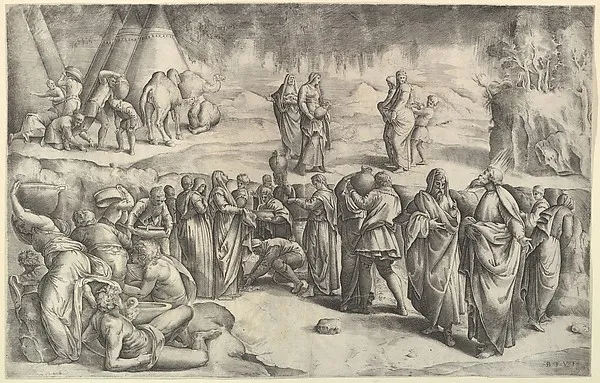
Exodus 18:1-4A Stranger in a Strange Land, a God Who Helped
1When Jethro, the priest of Midian, Moses’ father in law, heard of all that God had done for Moses, and for Israel his people, and that the LORD had brought Israel out of Egypt; 2Then Jethro, Moses’ father in law, took Zipporah, Moses’ wife, after he had sent her back, 3And her two sons; of which the name of the one was Gershom; for he said, I have been an alien in a strange land: 4And the name of the other was Eliezer; for the God of my father, said he, was mine help, and delivered me from the sword of Pharaoh:
The chapter opens by telling us who is coming and why: When Jethro, the priest of Midian, Moses' father in law, heard of all that God had done… and that the LORD had brought Israel out of Egypt (v. 1). Everything in this scene turns on that one verb - he heard.
Jethro is not an Israelite. He is a priest of Midian, a man whose world was full of other gods, and none of the exodus happened in front of him. What reaches him is a report - and the report alone is enough to set him moving toward the camp.
Israel's deliverance does not stay shut up inside Israel. It crosses borders, reaches a foreign priest, and draws him in. Long before Sinai, a man from outside the covenant is on the road to the mount of God because he has heard what God has done.
Jethro brings back Moses' wife and his two sons, and the boys' names are not incidental - they are a compressed account of everything Moses has lived through. The first is Gershom; for he said, I have been an alien in a strange land (v. 3); the name remembers the long years of exile, when Moses was a fugitive from Pharaoh, a stranger far from his people. The second is Eliezer - the name means my God is help - for the God of my father, said he, was mine help, and delivered me from the sword of Pharaoh (v. 4).
Set the two names side by side and you have the shape of the whole deliverance: first the exile, the strange land, the sword behind; then the help, the God who came near and delivered. Moses had been preaching the gospel of his own life every time he called his sons by name. The boy who embodies exile and the boy who embodies help walk into the camp together - a living reminder that the God who lets His people become strangers is the same God who delivers them from the sword.2
Exodus 18:5-8Moses Tells Him All the LORD Had Done
5And Jethro, Moses’ father in law, came with his sons and his wife unto Moses into the wilderness, where he encamped at the mount of God: 6And he said unto Moses, I thy father in law Jethro am come unto thee, and thy wife, and her two sons with her. 7And Moses went out to meet his father in law, and did obeisance, and kissed him; and they asked each other of their welfare; and they came into the tent. 8And Moses told his father in law all that the LORD had done unto Pharaoh and to the Egyptians for Israel’s sake, and all the travail that had come upon them by the way, and how the LORD delivered them.
When Jethro arrives, the meeting is marked by warmth and honour: And Moses went out to meet his father in law, and did obeisance, and kissed him; and they asked each other of their welfare; and they came into the tent (v. 7). This is the same Moses before whom Pharaoh's court trembled, the man God speaks with face to face - and he goes out to meet his father-in-law, bows down, and kisses him.
There is no standing on rank, no making the older man come to him. The detail rewards a moment's attention, because it tells us something about the Moses who will, a few verses on, be willing to take this man's correction. A leader who will go out and bow to honour another is a leader whose ear is still open. Then the two go into the tent, and what follows is not small talk but testimony: Moses sits the foreigner down to tell him what God has done.
Inside the tent, Moses gives a full and honest account: And Moses told his father in law all that the LORD had done unto Pharaoh and to the Egyptians for Israel's sake, and all the travail that had come upon them by the way, and how the LORD delivered them (v. 8). Notice the shape of the telling. It begins and ends with the LORD - all that the LORD had done at the start, how the LORD delivered them at the close - and the deliverance is the frame around everything else.
Moses names all the travail that had come upon them by the way - the fear at the sea, the thirst, the hunger, the enemy. An honest testimony tells of the trouble and the rescue together, because the rescue means little without the trouble it answered. And the whole account is told for Israel's sake: what God did to Egypt, He did for His people. Moses hands the foreigner a record of God's faithfulness, and lets it speak for itself.
Exodus 18:9-12Now I Know That the LORD Is Greater
9And Jethro rejoiced for all the goodness which the LORD had done to Israel, whom he had delivered out of the hand of the Egyptians. 10And Jethro said, Blessed be the LORD, who hath delivered you out of the hand of the Egyptians, and out of the hand of Pharaoh, who hath delivered the people from under the hand of the Egyptians. 11Now I know that the LORD is greater than all gods: for in the thing wherein they dealt proudly he was above them. 12And Jethro, Moses’ father in law, took a burnt offering and sacrifices for God: and Aaron came, and all the elders of Israel, to eat bread with Moses’ father in law before God.
Jethro's response to the testimony comes in three rising movements. First he rejoiced for all the goodness which the LORD had done to Israel (v. 9) - his initial reaction to another people's deliverance is gladness, not envy or indifference. Then he turns that joy into praise: Blessed be the LORD, who hath delivered you out of the hand of the Egyptians (v. 10). Hear how he hammers the point home - out of the hand of the Egyptians… out of the hand of Pharaoh… from under the hand of the Egyptians. Three times he names the hand that held Israel down, because three times he wants to magnify the deliverance that broke its grip.
This is the language of a man who grasps what has happened: a people pinned under an empire's hand, and a God strong enough to pry that hand open. Jethro blesses the One who did it, turning what he heard in the tent back to God as worship.
Then comes the line the whole chapter has been climbing toward: Now I know that the LORD is greater than all gods: for in the thing wherein they dealt proudly he was above them (v. 11). The two small words now I know carry the weight. This is a man who has weighed the evidence and reached a verdict. He has heard what happened to every power Egypt trusted - the river, the sun, the firstborn, the chariots, the sea - and he draws the conclusion the events demand: the LORD is greater than all gods. The reason he gives is sharp: in the thing wherein they dealt proudly he was above them. Egypt's gods and Egypt's Pharaoh had dealt proudly, exalting themselves, presuming to crush a helpless people - and precisely there, at the height of their arrogance, the LORD showed Himself above them.
Where pride reached up, He proved higher still. A Midianite priest, a man who came into this story devoted to other gods, becomes a witness against them. His confession is all the more striking for who makes it: an outsider compelled by what God has done.
The confession does not stay words; it moves to an altar and a table: And Jethro, Moses' father in law, took a burnt offering and sacrifices for God: and Aaron came, and all the elders of Israel, to eat bread with Moses' father in law before God (v. 12). Jethro does what a priest does - he offers a burnt offering, the sacrifice given wholly to God, and sacrifices, the kind shared in a fellowship meal.
And then something quietly remarkable happens: Aaron - Israel's own high priest - and all the elders of Israel come and eat bread with this Midianite before God. To share a meal in the ancient world was to share life; to eat before God was to do it in His presence, as an act of worship. The leaders of Israel are not standing apart from the foreigner; they are sitting down with him at a holy table.
A man from outside the covenant offers worship, and the covenant people receive him into fellowship. There is no record that anyone questions whether he belongs there. The chapter simply shows the meal, and lets the welcome speak.
Exodus 18:13-16Why Sittest Thou Thyself Alone?
13And it came to pass on the morrow, that Moses sat to judge the people: and the people stood by Moses from the morning unto the evening. 14And when Moses’ father in law saw all that he did to the people, he said, What is this thing that thou doest to the people? why sittest thou thyself alone, and all the people stand by thee from morning unto even? 15And Moses said unto his father in law, Because the people come unto me to enquire of God: 16When they have a matter, they come unto me; and I judge between one and another, and I do make them know the statutes of God, and his laws.
The scene shifts from worship to work, and the first thing Jethro sees is a problem: And it came to pass on the morrow, that Moses sat to judge the people: and the people stood by Moses from the morning unto the evening (v. 13). The picture is exhausting just to read. One man sits; the whole nation lines up; and the line does not move from dawn until dusk. Every dispute, every question, every quarrel between neighbours funnels to a single point.
Jethro asks the obvious question: why sittest thou thyself alone, and all the people stand by thee from morning unto even? (v. 14). And Moses' answer is sincere and even noble: the people come unto me to enquire of God… I judge between one and another, and I do make them know the statutes of God, and his laws (vv. 15-16). He genuinely wants to serve, to settle their cases rightly, to teach them God's ways.
But good intentions can build a crushing machine. Moses has made himself the only door through which the whole nation must pass, and the load of it is plain to everyone but him.
Exodus 18:17-18This Thing Is Too Heavy for Thee
17And Moses’ father in law said unto him, The thing that thou doest is not good. 18Thou wilt surely wear away, both thou, and this people that is with thee: for this thing is too heavy for thee; thou art not able to perform it thyself alone.
Jethro's verdict is blunt and loving at once: The thing that thou doest is not good (v. 17). He does not soften it; he does not flatter the great leader. He names the practice itself - Moses' method - as not good. Then he explains why, and his diagnosis cuts two ways: Thou wilt surely wear away, both thou, and this people that is with thee: for this thing is too heavy for thee; thou art not able to perform it thyself alone (v. 18).
The harm is double. Moses will wear away - the burden will grind him down. But so will this people - they stand all day waiting, their needs unmet, learning to depend on one overworked man instead of growing into a people who can settle their own small matters. This thing is too heavy for thee. It is one of the most honest sentences a leader ever needs to hear. There are loads that are simply too heavy for one person, and carrying them anyway is a slow ruin of both the carrier and the carried.
Exodus 18:19-23Able Men, Such As Fear God
19Hearken now unto my voice, I will give thee counsel, and God shall be with thee: Be thou for the people to God-ward, that thou mayest bring the causes unto God: 20And thou shalt teach them ordinances and laws, and shalt shew them the way wherein they must walk, and the work that they must do. 21Moreover thou shalt provide out of all the people able men, such as fear God, men of truth, hating covetousness; and place such over them, to be rulers of thousands, and rulers of hundreds, rulers of fifties, and rulers of tens: 22And let them judge the people at all seasons: and it shall be, that every great matter they shall bring unto thee, but every small matter they shall judge: so shall it be easier for thyself, and they shall bear the burden with thee. 23If thou shalt do this thing, and God command thee so, then thou shalt be able to endure, and all this people shall also go to their place in peace.
Having named the problem, Jethro offers a remedy - and it begins by clarifying Moses' calling rather than stripping it. Be thou for the people to God-ward, that thou mayest bring the causes unto God: and thou shalt teach them ordinances and laws, and shalt shew them the way wherein they must walk (vv. 19-20). Jethro is careful here. He tells Moses to do the work only he can do and to let go of the work others can share.
Moses is to stand God-ward for the people - their representative before God, the one who brings their hardest causes to Him - and he is to teach them, showing them the way wherein they must walk. That is the irreplaceable core: intercession and instruction. Everything else - the endless settling of small disputes - can be distributed. The counsel is: guard the work that is yours alone by handing off the work that others can carry. A leader spent on small matters has nothing left for the great ones.
Then Jethro gives the job description for those who will share the load, and it is worth weighing word by word: thou shalt provide out of all the people able men, such as fear God, men of truth, hating covetousness (v. 21). Four qualities, and notice what is and is not on the list. They must be able - competent, capable of the work. They must fear God - their first reckoning is with Him, which keeps them honest when no one is watching.
They must be men of truth - reliable, not swayed by flattery or fear, the kind whose word can be trusted. And they must be hating covetousness - men who cannot be bought, who will not bend a judgment for a bribe or a favour. What is missing is just as telling: nothing about rank, wealth, popularity, or eloquence. The standard is character before credentials. These leaders are then set over thousands… hundreds… fifties… tens - a whole structure of trustworthy people, so that justice reaches all the way down to the smallest cluster of families.
Where the burden had rested on one man, it is now carried by many, and every one of them is chosen for what they are more than for what they have.
The promise attached to the plan is the heart of it: every great matter they shall bring unto thee, but every small matter they shall judge: so shall it be easier for thyself, and they shall bear the burden with thee (v. 22). The arrangement is the load shared - the small matters judged below, the great ones still rising to him. The phrase they shall bear the burden with thee is the warm center of the whole counsel: the load carried alongside him, not removed from him.
And Jethro frames the outcome in terms of endurance and peace: If thou shalt do this thing, and God command thee so, then thou shalt be able to endure, and all this people shall also go to their place in peace (v. 23). Two results, matching the two harms of verse 18. Moses, no longer worn away, will endure - able to finish the long road ahead. And the people, no longer standing in an endless line, will go to their place in peace - their needs met, their lives unclogged.
Note too Jethro's humility: and God command thee so. He offers counsel; he does not presume to bind Moses. The final word is left with God.
Exodus 18:24-27So Moses Hearkened to the Voice of His Father in Law
24So Moses hearkened to the voice of his father in law, and did all that he had said. 25And Moses chose able men out of all Israel, and made them heads over the people, rulers of thousands, rulers of hundreds, rulers of fifties, and rulers of tens. 26And they judged the people at all seasons: the hard causes they brought unto Moses, but every small matter they judged themselves. 27And Moses let his father in law depart; and he went his way into his own land.
The chapter ends not with debate but with a single, weighty sentence: So Moses hearkened to the voice of his father in law, and did all that he had said (v. 24). This is the line that makes the whole episode shine. The man who spoke with God face to face, who led a nation out of Egypt, who had every reason to think he knew best, simply listens - and not to a fellow Israelite or a prophet, but to a Midianite priest, an outsider, his wife's father.
He does not argue, does not defend the system he had built, does not stand on his unmatched authority. He hearkened… and did all that he had said. Then the text shows him doing exactly what was counselled: he chose able men out of all Israel, made them heads over the people, and let them judge while the hard causes they brought unto Moses (vv. 25-26). The system Jethro described is now the system Israel runs.
And the chapter closes with the visitor going home: Moses let his father in law depart; and he went his way into his own land (v. 27). Jethro does not stay to oversee or take charge. He gives his counsel and returns to Midian, leaving Moses free to lead. The greatest leader in the Old Testament is shown, at the height of his calling, with his ear still open - and that may be the most instructive thing the chapter has to teach.
Research trail
Sources & further study
These references support the historical, linguistic, manuscript, and contextual notes in this chapter. Scripture remains the primary text; external sources are provided so readers can inspect the research directly.
- Exodus 18 · Hebrew + classical Jewish commentaryThe Hebrew text of Exodus 18 with Rashi, Ibn Ezra, and other classical commentators side by side - useful for the names Gershom and Eliezer (vv. 3-4), for Jethro's confession gadol mikkol-elohim, “greater than all gods” (v. 11), and for the doubled verb navol tibbol, “thou wilt surely wear away” (v. 18).
- Exodus 18 - Translators' NotesThe NET Bible's detailed footnotes on Exodus 18 - the meaning of the sons' names (vv. 3-4), the force of Jethro's declaration in verse 11, the burnt offering and the meal before God in verse 12, and the qualifications for the men set over the people in verse 21.
- Exodus 18 ↔ Matthew 8 · Acts 6 · Ephesians 4Traces the threads tying Exodus 18 to the rest of Scripture - a Gentile's confession and shared table (vv. 11-12) read alongside many shall come from the east and west (Matt. 8:11), and the sharing of a burden too heavy for one (vv. 21-22) read beside the appointing of the seven in Acts 6 and the gifts given for the work of the ministry in Ephesians 4.
Where this echoes in Scripture
Moses Tells Him All the LORD Had Done
- Exodus 2:21-22And she bare him a son, and he called his name Gershom: for he said, I have been a stranger in a strange land.The naming of Gershom that verse 3 recalls - the exile written into the son's name.
- Genesis 12:3I will bless them that bless thee... and in thee shall all families of the earth be blessed.The promise behind Jethro's coming - that the blessing on Israel was always meant to reach the nations.
- Genesis 25:1-2Then again Abraham took a wife... And she bare him... Midian.Midian's descent from Abraham through Keturah - Jethro stands at the edge of the family of promise.
- Matthew 8:10-11I have not found so great faith, no, not in Israel... many shall come from the east and west.The arc Jethro begins - an outsider's faith, and the nations gathered to the table of God.
- Psalm 66:16Come and hear, all ye that fear God, and I will declare what he hath done for my soul.The pattern of verse 8 - God's work for His people declared aloud so others may hear.
Now I Know That the LORD Is Greater
- Exodus 15:11Who is like unto thee, O LORD, among the gods? who is like thee, glorious in holiness.The truth Jethro confesses in verse 11 - the LORD incomparable among all the gods of the nations.
- Daniel 2:47Of a truth it is, that your God is a God of gods, and a Lord of kings.A later pagan ruler's confession echoing Jethro's - the outsider compelled to own the LORD as supreme.
- Luke 15:1-2This man receiveth sinners, and eateth with them.The shared table of verse 12 carried forward - the outsider welcomed to eat in the presence of God.
- Ephesians 2:19Now therefore ye are no more strangers and foreigners, but fellowcitizens with the saints, and of the household of God.What the meal of verse 12 foreshadows - the foreigner made a member of the household of God.
- Psalm 86:9-10All nations whom thou hast made shall come and worship before thee... thou art God alone.The horizon of this scene - the nations coming to worship the One who is greater than all gods.
So Moses Hearkened to the Voice of His Father in Law
- Numbers 11:14-17I am not able to bear all this people alone, because it is too heavy for me... they shall bear the burden of the people with thee.The same burden and the same remedy as verses 18 and 22 - the load shared so the leader is not crushed.
- Deuteronomy 1:15-17I took the chief of your tribes, wise men, and known, and made them heads over you... ye shall hear the small as well as the great.Moses' own later retelling of this chapter - the able men set over thousands, hundreds, fifties, and tens.
- Acts 6:2-4It is not reason that we should leave the word of God, and serve tables... we will give ourselves continually to prayer, and to the ministry of the word.Jethro's wisdom in the early church - the work distributed so the irreplaceable task is not neglected.
- Galatians 6:2Bear ye one another's burdens, and so fulfil the law of Christ.The principle of verse 22 made a command - the burden carried together, not alone.
- Hebrews 7:25Wherefore he is able also to save them to the uttermost that come unto God by him, seeing he ever liveth to make intercession for them.The contrast to a leader who wears away (v. 18) - the one Mediator who bears His people and never faints.