1 Chronicles 15
People in this chapter
The last time David set out to bring the ark of God home, the day ended in death. The ark rode on a new cart, the way Israel's old enemies had once sent it back. The oxen stumbled, Uzza put out his hand to steady it, and there he died before God. The music stopped. David left the ark in the house of Obed-edom and asked the question the whole story turns on: How shall I bring the ark of God home?1
Tap any highlighted phrase to jump to the commentary that unpacks it.
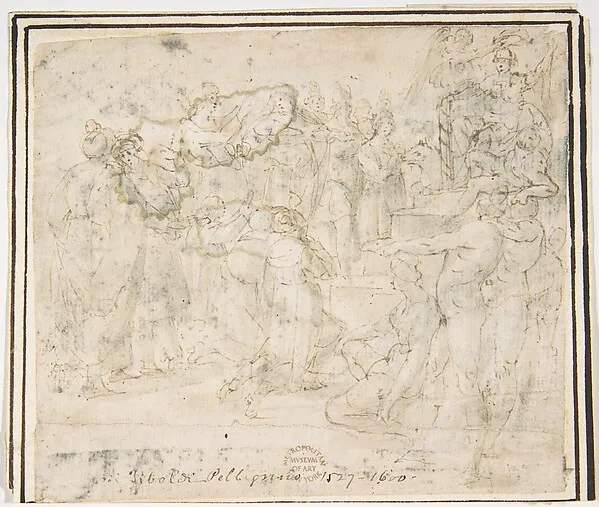
1 Chronicles 15:1-3None Ought to Carry the Ark but the Levites
1And David made him houses in the city of David, and prepared a place for the ark of God, and pitched for it a tent. 2Then David said, None ought to carry the ark of God but the Levites: for them hath the LORD chosen to carry the ark of God, and to minister unto him for ever. 3And David gathered all Israel together to Jerusalem, to bring up the ark of the LORD unto his place, which he had prepared for it.
The chapter opens quietly, with David doing the ordinary work of a settled king - And David made him houses in the city of David - and then, in the same breath, the extraordinary: and prepared a place for the ark of God, and pitched for it a tent. The contrast with chapter 13 is already visible in this one verse. There, the ark had been loaded onto a cart and set in motion with no settled destination prepared, no place readied to receive it.
Here, before a single step of the procession is taken, David first prepares a place. He has learned that the presence of God is not something to be improvised around. A place is made ready, deliberately, beforehand. The king who once asked in fear how shall I bring the ark of God home to me? now answers his own question by careful preparation. The reverence that the breach taught him has settled into method - and the first thing that method produces is not music or ceremony but a place set apart, waiting, for the One who is coming home.
Then David states the lesson of the whole previous chapter in a single sentence: None ought to carry the ark of God but the Levites. This is precisely what was missing the first time. The law had said it plainly - the ark was the burden of the sons of Kohath among the Levites, borne on the shoulder, never touched, never carted (Num. 4:15; 7:9). But a generation that had let the ark lie forgotten in Saul's day had also let slip the knowledge of how it was to be handled, and so it went up on a cart, and Uzza died.
Now David says None - not the king, not the captains, not the most eager and willing volunteer - but the Levites. Notice that this is not David's preference imposed on the nation; he grounds it not in his own authority but in the LORD's choice. The restriction is obedience: God had appointed who should bear His presence, and the appointment was not David's to revise. The cost of forgetting it had already been counted at the threshingfloor.1
Two things are bound together in the reason David gives, and both matter. The Levites carry - they bear the holy thing through the world. But deeper than that, they minister unto him for ever. Their calling was never merely to transport an object; it was to stand before God in service that does not expire. That little phrase for ever lifts the whole scene above the logistics of moving a chest. This is a people set apart for a perpetual nearness to God that the rest of Israel could not have.
The privilege is staggering, and so is the danger - the same nearness that is the Levites' honor is the nearness that struck Uzza when it was approached carelessly. To be chosen to bear and to minister is to be chosen for a holiness that can never be treated as common.
1 Chronicles 15:4-7The Levites Assemble by Their Houses
4And David assembled the children of Aaron, and the Levites: 5Of the sons of Kohath; Uriel the chief, and his brethren an hundred and twenty: 6Of the sons of Merari; Asaiah the chief, and his brethren two hundred and twenty: 7Of the sons of Gershom; Joel the chief, and his brethren an hundred and thirty:
1 Chronicles 15:8-11Zadok, Abiathar, and the Levite Chiefs Named
8Of the sons of Elizaphan; Shemaiah the chief, and his brethren two hundred: 9Of the sons of Hebron; Eliel the chief, and his brethren fourscore: 10Of the sons of Uzziel; Amminadab the chief, and his brethren an hundred and twelve. 11And David called for Zadok and Abiathar the priests, and for the Levites, for Uriel, Asaiah, and Joel, Shemaiah, and Eliel, and Amminadab,
David gathers the Levites by their houses, and the Chronicler lists them carefully - the sons of Kohath, Merari, Gershom, and three further families, each with its named chief and the count of his brethren. The roster is not filler. After the disaster of an ark handled by whoever was nearest, this naming of houses and heads is the picture of order restored: every family knows its place, every chief is accountable, the sacred work is given to a structured, identifiable people whose calling is clear.
Two priests are named at the head of it all - Zadok and Abiathar the priests - so that the whole enterprise is set under proper authority from the start. Where chapter 13 had improvised, chapter 15 organizes. The contrast is the Chronicler's sermon: the same goal, pursued the second time with a care for God's appointed order that the first attempt had lacked.1
1 Chronicles 15:12-13Sanctify Yourselves: the Due Order at Last
12And said unto them, Ye are the chief of the fathers of the Levites: sanctify yourselves, both ye and your brethren, that ye may bring up the ark of the LORD God of Israel unto the place that I have prepared for it. 13For because ye did it not at the first, the LORD our God made a breach upon us, for that we sought him not after the due order.
And the command David lays on them is stark and specific: sanctify yourselves, both ye and your brethren, that ye may bring up the ark. Notice what he does not say first. He does not say fetch the staves, or tune the harps, or assemble the people. Before any of the practical work, the first requirement is a work upon themselves - a setting-apart, a purifying, a deliberate stepping out of the ordinary into readiness for the holy.
The bearing of the ark would be a thing done with the hands; but it could only be done rightly by those who had first been made ready in heart. The order matters. Sanctification is not the polish added at the end of preparation; it is the foundation laid before anything else is touched. The men who would carry the holiest thing in Israel had first to become, themselves, fit to carry it.
And then David names, openly and to their faces, exactly what had gone wrong: For because ye did it not at the first, the LORD our God made a breach upon us, for that we sought him not after the due order. This is the verse that ties the two chapters together - the king himself, looking back, supplying the commentary on the death of Uzza. He names the real failure: we sought him not after the due order. The Hebrew behind due order carries the sense of the right and appointed way of doing a thing - the prescribed manner God had laid down.
The first attempt had not lacked sincerity or joy or even reverence of a kind; what it lacked was conformity to the way God had actually appointed. And David, to his great credit, does not bury this or excuse it. He says us, not you - he takes the failure as his own and the nation's, and he turns it into instruction. The breach was the consequence of seeking Him by a way of human devising when He had given a specific way.
This time, they will seek Him by the due order.
1 Chronicles 15:14-18Borne on the Shoulder, with Singers Appointed
14So the priests and the Levites sanctified themselves to bring up the ark of the LORD God of Israel. 15And the children of the Levites bare the ark of God upon their shoulders with the staves thereon, as Moses commanded according to the word of the LORD. 16And David spake to the chief of the Levites to appoint their brethren to be the singers with instruments of musick, psalteries and harps and cymbals, sounding, by lifting up the voice with joy. 17So the Levites appointed Heman the son of Joel; and of his brethren, Asaph the son of Berechiah; and of the sons of Merari their brethren, Ethan the son of Kushaiah; 18And with them their brethren of the second degree, Zechariah, Ben, and Jaaziel, and Shemiramoth, and Jehiel, and Unni, Eliab, and Benaiah, and Maaseiah, and Mattithiah, and Elipheleh, and Mikneiah, and Obededom, and Jeiel, the porters.
The narrative turns the command into deed in a single, satisfying verse: So the priests and the Levites sanctified themselves to bring up the ark of the LORD God of Israel. The word David spoke in verse 12 is now done. There is no record of objection or delay; the leaders heard the charge, understood the cost of ignoring it, and obeyed. This quiet verse is the hinge of the chapter. Everything that follows - the joy, the music, the safe arrival - flows from this obedience, just as everything that went wrong in chapter 13 flowed from its absence.
The Chronicler is showing us cause and effect with great care. The first time, the people loved God and rejoiced and still suffered a breach, because they had not been sanctified and had not come the appointed way. This time they are sanctified first - and the procession that follows will end in worship.
And then, at last, the ark is carried the way it was always meant to be carried: the children of the Levites bare the ark of God upon their shoulders with the staves thereon, as Moses commanded according to the word of the LORD. Every word of this verse answers the failure of chapter 13. The ark rides on shoulders, not on a cart. It is borne on the staves God appointed for this purpose, so that no hand need touch the holy thing at all.
And it is all done as Moses commanded according to the word of the LORD. There is no innovation here, and that is the point. The right way had been available the whole time, written down since the wilderness. It had simply been neglected. A cart is the world's way of moving a heavy load efficiently; the shoulder is God's appointed way of bearing what is holy. In this story the distance between them was the distance between a death and a homecoming.
But the ark does not go up in silence. David appoints an entire order of singers and musicians: instruments of musick, psalteries and harps and cymbals, sounding, by lifting up the voice with joy.2 Three chief singers are named - Heman, Asaph, and Ethan - with whole companies of their brethren on instruments of different registers. This is appointed, organized, and deliberate. And yet the aim of all the organization is joy - the voice lifted up with joy. Here is something the chapter is careful to hold together: order and gladness are not enemies.
The same David who insists on the due order of the Levites also fills the procession with music made for delight. The lesson of chapter 13 was never that joy is dangerous; the joy there was real and right. The lesson was that joy must travel with obedience. Now both are present at once - the holy thing borne the appointed way, and the whole company lifting up the voice with joy. Reverence has made room for the gladness to be safe.
1 Chronicles 15:19-21The Singers Named: Heman, Asaph, and Ethan
19So the singers, Heman, Asaph, and Ethan, were appointed to sound with cymbals of brass; 20And Zechariah, and Aziel, and Shemiramoth, and Jehiel, and Unni, and Eliab, and Maaseiah, and Benaiah, with psalteries on Alamoth; 21And Mattithiah, and Elipheleh, and Mikneiah, and Obededom, and Jeiel, and Azaziah, with harps on the Sheminith to excel.
1 Chronicles 15:22-24Chenaniah the Skilful, and the Doorkeepers at the Ark
22And Chenaniah, chief of the Levites, was for song: he instructed about the song, because he was skilful. 23And Berechiah and Elkanah were doorkeepers for the ark. 24And Shebaniah, and Jehoshaphat, and Nethaneel, and Amasai, and Zechariah, and Benaiah, and Eliezer, the priests, did blow with the trumpets before the ark of God: and Obededom and Jehiah were doorkeepers for the ark.
The Chronicler lingers over the musical assignments with evident delight - cymbals of brass for the three chief singers; psalteries tuned on Alamoth and harps on the Sheminith (terms that seem to mark different vocal or instrumental registers); priests with trumpets going before the ark; doorkeepers set to guard it.1 We need not untangle every name to feel the point of the list. This is a whole community mobilized, each person and family given a particular task, every role essential and every role assigned.
The bearers bear, the singers sing, the trumpeters sound, the doorkeepers guard. No one is improvising; no one is idle; no one is doing another's job. After the chaos of an ark handled by whoever happened to be near, this carefully ordered division of labor is itself an act of worship - the body of the people moving together, each in their appointed place, toward one holy end.
One name is singled out for a particular reason: Chenaniah, chief of the Levites, was for song: he instructed about the song, because he was skilful. Here is a master of music set over the music, appointed because he was skilful. The text honors skill. Chenaniah had given himself to the craft of song until he understood it deeply enough to teach and direct it, and that hard-won skill is now laid in service of the ark's homecoming.
There is a dignity here that the careless often miss: the offering of developed, disciplined excellence to God. It would not have honored the ark to have the music led by the willing but unskilled, any more than it honored the ark to be carried by the willing but unappointed. Chenaniah's skill is not vanity; it is consecrated craft, the fruit of long labor offered up in worship. The God who appointed the due order for bearing the ark is glad to receive the practiced excellence of those who have made themselves able.
What we bring to God is to be the best we can make it - and skill, patiently developed and humbly offered, is one of the truest forms of praise.
1 Chronicles 15:25-29The Ark Goes Up with Joy, and Michal Despises the King
25So David, and the elders of Israel, and the captains over thousands, went to bring up the ark of the covenant of the LORD out of the house of Obededom with joy. 26And it came to pass, when God helped the Levites that bare the ark of the covenant of the LORD, that they offered seven bullocks and seven rams. 27And David was clothed with a robe of fine linen, and all the Levites that bare the ark, and the singers, and Chenaniah the master of the song with the singers: David also had upon him an ephod of linen. 28Thus all Israel brought up the ark of the covenant of the LORD with shouting, and with sound of the cornet, and with trumpets, and with cymbals, making a noise with psalteries and harps. 29And it came to pass, as the ark of the covenant of the LORD came to the city of David, that Michal, the daughter of Saul looking out at a window saw king David dancing and playing: and she despised him in her heart.
Now the procession that failed in chapter 13 succeeds, and the word that frames it is joy. David goes up with the elders of Israel, and the captains over thousands - the whole leadership of the nation, gathered for a solemn and public act - and they bring the ark out of the house of Obed-edom with joy. The setting-out is significant in itself: the ark begins its journey from the very house where, for three months, it had been nothing but a blessing.
The presence that had struck Uzza had filled Obed-edom's home with good, and it is from that house of blessing that the corrected procession now departs. The reverence is, if anything, deeper than in chapter 13, and it has been transformed into the glad confidence of a people who have at last learned the way. Solemnity and joy travel up to Zion together.
A small phrase carries great weight: when God helped the Levites that bare the ark. The bearers do not succeed by their own strength, or even their own careful obedience. God helped them. There is a tender reversal buried here. In chapter 13 a human hand reached out to help the ark, and death followed. Here, God reaches out to help the bearers, and the work goes forward. Sit with that the next time you fear you are not strong enough to carry what He has given you to carry.
When you come His way, the help runs in the other direction: He holds up the ones who bear His weight. And their response is sacrifice - seven bullocks and seven rams, seven being the number of completeness, a costly thank-offering. The first procession had been all motion and music with no place prepared and no sacrifice recorded. This one pauses to give, owning that the safe bearing of His presence is His gift before it is their achievement.
David himself is described with care: clothed with a robe of fine linen… David also had upon him an ephod of linen. The same linen clothes all the Levites who bear the ark, the singers, and Chenaniah the master of song - the whole company robed for sacred service.2 And the king, the most powerful man in the nation, lays aside the trappings of royal majesty and puts on the simple linen ephod of one who ministers before God.
The king humbles himself into the dress of a servant of the holy. He clothes himself like the Levites and enters into the worship as one of the ministering company. The greatest man present makes himself, for this moment, a servant at the ark - and in a moment we will see exactly what a proud heart makes of such humility.
The arrival is overwhelming in its gladness: all Israel brought up the ark of the covenant of the LORD with shouting, and with sound of the cornet, and with trumpets, and with cymbals, making a noise with psalteries and harps. This is loud, exuberant, full-throated celebration. The cornet and the trumpets sound, the cymbals crash, the strings ring out, and over it all rises the shouting of the people. The ark of the covenant is coming home, borne the right way at last, and the nation cannot contain its joy.
It is worth feeling the full volume of this scene, because it is the answer to the silence that fell when Uzza died. The music that stopped at the threshingfloor now resounds through Jerusalem. Reverence and rejoicing, which the proud imagine to be opposites, are here revealed as partners: the more rightly God is approached, the more freely His people may rejoice.
And into this scene of unified, holy joy comes a single dissenting heart. Michal the daughter of Saul looking out at a window saw king David dancing and playing: and she despised him in her heart. The Chronicler names her with deliberate care - not Michal, David's wife, but Michal the daughter of Saul. She belongs, in this moment, to the house of the rejected king, the house that consulted mediums and sought God on its own terms and lost the kingdom.
She watches from a window, set apart and above, a spectator holding herself at a distance. And what she sees, she despises. The dancing that the whole nation receives as worship, she receives as an embarrassment beneath the dignity of a king. Here is the great irony the chapter ends on: the very humility that made David put off his royal robes and dance before the LORD like a servant is the thing Michal scorns.
She cannot see worship in the king's joy, because her heart, formed in the house of Saul, prizes a dignity that God does not prize. The contempt is hidden - in her heart - but it is real, and it marks her out, alone in all Israel, as the one who could not rejoice. The proud eye, looking down from its window, sees only foolishness where the humble see the presence of God.
Research trail
Sources & further study
These references support the historical, linguistic, manuscript, and contextual notes in this chapter. Scripture remains the primary text; external sources are provided so readers can inspect the research directly.
- 1 Chronicles 15 - Translators' NotesThe NET Bible's detailed footnotes on 1 Chronicles 15 - the rosters of Levite houses and musicians (vv. 5-24), the musical terms “Alamoth” and “the Sheminith” (vv. 20-21), and the relation of the procession and Michal's contempt to the parallel in 2 Samuel 6.
- Art of the Ancient Near East · Heilbrunn TimelineThe Met's survey of the ancient Near Eastern world that frames the chapter - the lyres, harps, and cymbals of the temple musicians (vv. 16-21), the linen ephod worn by those who served before the holy things (v. 27), and the carrying-poles by which sacred objects were borne on the shoulder (v. 15).
- 1 Chronicles 15 · Hebrew + classical Jewish commentaryThe Hebrew text of 1 Chronicles 15 with Rashi, Radak, and other classical commentators side by side - useful for qadash (vv. 12, 14, the Levites “sanctifying” themselves), for the “due order” that was missing the first time (v. 13), and for the bearing of the ark upon the shoulder (v. 15).
- 1 Chronicles 15 ↔ Psalm 24 · Psalm 47 · Hebrews 12 · 1 Peter 2Traces the threads tying the ark borne by sanctified Levites and lifted up to Zion with a shout to the holiness without which no man shall see the Lord (Heb. 12:14), the holy and royal priesthood chosen to minister (1 Pet. 2:5, 9), and the King of glory going up with a trumpet (Ps. 24:7-10; 47:5).
Where this echoes in Scripture
None Ought to Carry the Ark but the Levites
- Numbers 4:15And when Aaron and his sons have made an end of covering the sanctuary… the sons of Kohath shall come to bear it: but they shall not touch any holy thing, lest they die.The appointment David is now obeying - the ark borne by the Levites, on the shoulder, never touched.
- 1 Peter 2:9But ye are a chosen generation, a royal priesthood, an holy nation, a peculiar people.The Levites' calling to bear and to minister, opened in Christ to all His people.
- 1 Chronicles 13:11And David was displeased, because the LORD had made a breach upon Uzza.The cost of forgetting who was appointed to carry the ark - the breach this chapter sets out to undo.
Sanctify Yourselves: the Due Order at Last
- 1 Chronicles 13:13-14David carried it aside into the house of Obed-edom… and the LORD blessed the house of Obed-edom, and all that he had.Where the ark had waited three months - the blessing that gave David courage to seek God again, this time after the due order.
- Hebrews 12:14Follow peace with all men, and holiness, without which no man shall see the Lord.The necessity behind “sanctify yourselves” - the holy God is not seen by the unsanctified.
- Joshua 3:5Sanctify yourselves: for to morrow the LORD will do wonders among you.The same command before the same kind of moment - consecration as the prelude to God acting among His people.
- Leviticus 11:44Ye shall therefore sanctify yourselves, and ye shall be holy; for I am holy.The root of David's charge - holiness in the worshipper answering the holiness of the God approached.
- 1 Corinthians 1:30Christ Jesus, who of God is made unto us wisdom, and righteousness, and sanctification, and redemption.The holiness the Levites had to work up is, in Christ, supplied - He is made unto us sanctification.
Chenaniah the Skilful, and the Doorkeepers at the Ark
- Numbers 7:9But unto the sons of Kohath he gave none: because the service of the sanctuary belonging unto them was that they should bear upon their shoulders.The appointed way obeyed at last - the holy things borne on the shoulder, on the staves God had given.
- 1 Corinthians 12:18But now hath God set the members every one of them in the body, as it hath pleased him.The ordered procession of bearers, singers, and doorkeepers - many members, each in an appointed place.
- Psalm 33:3Sing unto him a new song; play skilfully with a loud noise.Chenaniah's consecrated skill - the call to bring developed, disciplined excellence to the praise of God.
- Colossians 3:23And whatsoever ye do, do it heartily, as to the Lord, and not unto men.The doorkeeper and the chief singer alike - every appointed task offered wholeheartedly as worship.
The Ark Goes Up with Joy, and Michal Despises the King
- Psalm 47:5God is gone up with a shout, the LORD with the sound of a trumpet.The ascent the procession foreshadows - God going up to His holy place amid shouting and the trumpet.
- Psalm 24:7Lift up your heads, O ye gates… and the King of glory shall come in.The gates thrown open for the ark - the King of glory entering His holy place.
- 2 Samuel 6:21And David said unto Michal… I will play before the LORD. And I will yet be more vile than thus.David's answer to Michal's contempt in the parallel account - the king glad to be undignified before God.
- Psalm 150:6Let every thing that hath breath praise the LORD. Praise ye the LORD.The wholehearted praise Michal could not join - the worship to which every creature is called.
- Ephesians 4:8When he ascended up on high, he led captivity captive, and gave gifts unto men.The ark's ascent fulfilled - the risen Lord going up to His throne, in the very language of God gone up.
- Hebrews 4:14Seeing then that we have a great high priest, that is passed into the heavens, Jesus the Son of God.The One who bears His people's names before the presence, passed through into the holy place the ark only pictured.