1 Chronicles 13
People in this chapter
The kingdom is finally united under David, and his first concern is the ark of God, left forgotten in a private house all through the reign of Saul. He does not decree; he consults. The captains, the Levites, the whole congregation agree with one voice, for the thing was right in the eyes of all the people. The procession sets out in genuine joy - David and all Israel played before God with all their might.1
Tap any highlighted phrase to jump to the commentary that unpacks it.
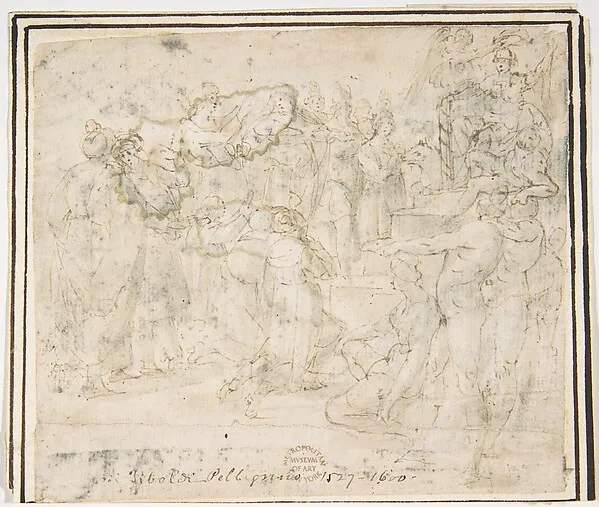
1 Chronicles 13:1-5The Thing Was Right in the Eyes of All the People
1And David consulted with the captains of thousands and hundreds, and with every leader. 2And David said unto all the congregation of Israel, If it seem good unto you, and that it be of the LORD our God, let us send abroad unto our brethren every where, that are left in all the land of Israel, and with them also to the priests and Levites which are in their cities and suburbs, that they may gather themselves unto us: 3And let us bring again the ark of our God to us: for we enquired not at it in the days of Saul. 4And all the congregation said that they would do so: for the thing was right in the eyes of all the people. 5So David gathered all Israel together, from Shihor of Egypt even unto the entering of Hemath, to bring the ark of God from Kirjathjearim.
David begins with a conversation. And David consulted with the captains of thousands and hundreds, and with every leader. He could simply have commanded; he is the king, newly established, with the people behind him. Instead he gathers the whole leadership of Israel and lays the matter before all the congregation, asking their judgment: If it seem good unto you, and that it be of the LORD our God. Notice the double test he names, for it will matter enormously by the end of the chapter.
The thing must seem good to the people, and it must be of the LORD our God. David means both sincerely - and the people will agree heartily that it seems good. What no one in the assembly pauses to ask is the second, harder question buried in David's own words: not only whether the ark should be brought, but whether it will be brought in the way the LORD has appointed. The consultation is wise and the heart behind it is right.
But a good thing can still be done in a way that has not been weighed against the word of God.1
David names the wound he means to heal: for we enquired not at it in the days of Saul. Through the whole long reign of the first king, the ark - the appointed place of God's presence with Israel - had been left in a private house at Kirjath-jearim, unsought, unattended, effectively out of the nation's life. Saul had consulted mediums and his own fear; he had not sought the LORD where the LORD had said He would be found.
David sees this clearly, and his determination to bring the ark back is, at root, a determination to put the seeking of God back at the center of the nation. That is a holy instinct, and the Chronicler tells the story so that we honor it. The tragedy that follows belongs to a generation that had let the ark lie forgotten and had also let slip the knowledge of how it was to be handled.
Neglect has a long reach: a people that stops seeking God soon forgets even the way He gave them to approach Him.
1 Chronicles 13:6-8They Carried the Ark in a New Cart
6And David went up, and all Israel, to Baalah, that is, to Kirjathjearim, which belonged to Judah, to bring up thence the ark of God the LORD, that dwelleth between the cherubims, whose name is called on it. 7And they carried the ark of God in a new cart out of the house of Abinadab: and Uzza and Ahio drave the cart. 8And David and all Israel played before God with all their might, and with singing, and with harps, and with psalteries, and with timbrels, and with cymbals, and with trumpets.
Before the procession even moves, the Chronicler pauses to say what the ark is: the ark of God the LORD, that dwelleth between the cherubims, whose name is called on it. This is the carefully chosen language of presence. The ark is the place where the LORD had said He would dwell among His people, enthroned, as the imagery has it, between the wings of the two golden cherubim, with His own name laid upon it.
Everything that follows must be read in the light of this sentence. What is being loaded onto the cart is not a national treasure or a sacred antique; it is the appointed seat of the living God's presence. The narrator tells us this precisely so that we will not be surprised, a few verses later, that nearness to it is a matter of life and death. The same care that makes the ark a comfort - God truly dwells among His people - is the care that makes it dangerous to handle carelessly.
You cannot have a God who is genuinely present without having a God who is genuinely holy.
Here, in a single phrase, is the whole trouble: they carried the ark of God in a new cart. The cart is new, clean, freshly built - nothing shoddy is being offered to God. But a cart is not how the ark was to be moved at all. The law was explicit: the ark had rings of gold and staves of acacia wood made for the very purpose of carrying it, and it was to be borne on the shoulders of the Levites, who were forbidden even to touch it directly (Exod. 25:14; Num. 4:15).2 A cart drawn by oxen was the ordinary way to haul heavy goods across the land3 - and, as it happens, it was the exact method the Philistines had used a generation earlier when they wanted the ark out of their territory and sent it back on a new cart drawn by two cows (1 Sam. 6:7).
Israel, it seems, had quietly adopted its enemies' expedient and forgotten its own God's instruction. The cart was sincere, reverent, and modern; it was also exactly what God had not commanded. And that gap - between a method that seems fitting to us and the way God has actually given - is the fault line along which this chapter breaks.
Feel the wholeheartedness of this before the breach falls, because it forbids the easy assumption that the disaster came from indifference or irreverence. There is nothing feigned on the road. The whole company pours itself out, every instrument Israel had is sounding, and the king leads the celebration with all their might. These people were ecstatic about God. What the chapter puts its finger on is their worship's conformity to His word. Zeal and error were riding on the same cart.
That is a sobering combination, and one the chapter will not let us escape: it is entirely possible to be sincere, joyful, even passionate in approaching God, and still to be approaching Him in a way He has not appointed. Earnestness is a beautiful thing. It is not, by itself, the same as obedience.
1 Chronicles 13:9-12The Breach upon Uzza
9And when they came unto the threshingfloor of Chidon, Uzza put forth his hand to hold the ark; for the oxen stumbled. 10And the anger of the LORD was kindled against Uzza, and he smote him, because he put his hand to the ark: and there he died before God. 11And David was displeased, because the LORD had made a breach upon Uzza: wherefore that place is called Perezuzza to this day. 12And David was afraid of God that day, saying, How shall I bring the ark of God home to me?
The procession reaches the threshingfloor of Chidon (called Nachon in the parallel account, 2 Sam. 6:6). A threshingfloor was a flat, often rough patch of open ground where grain was beaten and winnowed3 - uneven footing for a cart. The oxen stumbled, the cart lurched, and for a heartbeat the ark seemed about to pitch to the ground. And in that instant, Uzza - one of the two men driving the cart, who had grown up with the ark in his father's house at Kirjath-jearim - did the most natural thing in the world: Uzza put forth his hand to hold the ark. We should not rush past the human reality of this.
His motive was protective; he reached out to keep the holy thing from falling. By every ordinary instinct it was the right reflex. But the whole tragedy turns on the fact that the situation should never have arisen. Had the ark been on the shoulders of the Levites as God commanded, there would have been no cart, no stumbling oxen, and no need for a steadying hand. The crisis Uzza tried to solve was created by the very method that put him beside the ark in the first place.
Then the sentence falls, and it is meant to land as heavily as it reads. A man reached out to steady the ark and died on the spot, in the sight of all Israel. There is no softening it, and we should not try. The text gives the reason without flinching - because he put his hand to the ark - the very thing the law had forbidden on pain of death (Num. 4:15). Sit in the weight of it, even in the trouble of it, rather than reach too fast for an explanation that makes the discomfort go away.
Look closely at what Uzza's reflex assumed. It assumed the ark needed his protecting hand - that the holy thing was, in the end, something he could manage like any other cargo about to fall. You know the instinct; you have felt it about God yourself, the quiet sense that He needs your help to keep His footing in the world. The breach exposed how false that is. The God who dwells between the cherubim does not need a human hand to keep Him from the dust.
His nearness is not something to handle on our own terms. This is the seriousness of a holy God, and that same seriousness is exactly what makes His nearness, rightly approached, the greatest of all gifts.
David's response moves through two stages, and both are honest. First, David was displeased - the Hebrew carries the heat of grief and consternation; the joyful procession has collapsed into a death, and the king is shaken to his core. Then the deeper note: David was afraid of God that day, saying, How shall I bring the ark of God home to me? The fear is not the cringing of a man before a tyrant; it is the awe of a man who has suddenly seen how holy God truly is, and how little he had reckoned with it.
His question is genuine and even humble: How shall I bring the ark of God home to me? - how can such holiness possibly come to dwell with me? It is the right question, asked at last, though only after the breach. And to David's lasting credit, he did not abandon the desire; he stopped, he learned, and he searched out the answer. Months later he would tell the Levites exactly what he had come to understand: the LORD our God made a breach upon us, for that we sought him not after the due order (1 Chr. 15:13).
The fear that fell on David at Perez-uzza did not drive him away from God. It drove him, in the end, to seek God rightly - which is the very thing the fear of the LORD is meant to do.
1 Chronicles 13:13-14The LORD Blessed the House of Obed-edom
13So David brought not the ark home to himself to the city of David, but carried it aside into the house of Obededom the Gittite. 14And the ark of God remained with the family of Obededom in his house three months. And the LORD blessed the house of Obededom, and all that he had.
David, shaken, makes a decision born of fear and wisdom together: So David brought not the ark home to himself to the city of David, but carried it aside into the house of Obed-edom the Gittite. He does not press on to Jerusalem as planned; he dares not, not until he understands what went wrong. But neither does he simply send the ark back to where it had languished in Saul's day. He sets it aside in a nearby home, in a kind of holy pause - a season of waiting in which the king will learn the very thing the breach exposed.
The detail that the household is that of Obed-edom the Gittite is worth noticing: “Gittite” means a man of Gath, and Gath was a Philistine city - the name carries the scent of the foreigner, the outsider. (The Chronicler elsewhere counts Obed-edom among the Levites and the gatekeepers, so this is no irreverent placement; but the label deliberately keeps the flavor of an unlikely, humble home.) The ark that could not be brought to the city of David in triumph is quietly entrusted to an ordinary house.
And there the chapter's final surprise unfolds.
For three months the ark stays put, and something happens that no one in the terrified procession would have predicted: the LORD blessed the house of Obed-edom, and all that he had. The very presence that had broken out in death at the threshingfloor now overflows in blessing within a quiet household. Nothing about the ark has changed. The holiness that struck Uzza is the holiness that now prospers Obed-edom. What is different is the manner of nearness.
Obed-edom did not seize the ark, manage it, or improvise with it; he simply sheltered it, honored it, and let it be what it was. And under that honoring nearness his whole house flourished. This is the turn that keeps the chapter from ending in dread. The lesson David needed was written not only in Uzza's death but in Obed-edom's prosperity. The same presence that destroys the presumptuous blesses the reverent, and blesses lavishly.
So plainly did it show that word reached David and rekindled his courage - when at last he came to fetch the ark the right way, it was because the LORD hath blessed the house of Obed-edom (1 Chr. 15:25; 2 Sam. 6:12) that he dared to bring it home at all.
Research trail
Sources & further study
These references support the historical, linguistic, manuscript, and contextual notes in this chapter. Scripture remains the primary text; external sources are provided so readers can inspect the research directly.
- 1 Chronicles 13 - Translators' NotesThe NET Bible's detailed footnotes on 1 Chronicles 13 - the scope of “from Shihor of Egypt even unto the entering of Hemath” (v. 5), the idiom of the LORD “breaking out” against Uzza (vv. 10-11), and the relation of this account to the parallel in 2 Samuel 6.
- 1 Chronicles 13 ↔ Numbers 4 · Romans 3 · Hebrews 10Traces the threads tying the appointed carrying of the ark (Num. 4; Exod. 25:14) and the mercy-seat upon it to the One set forth to be a propitiation (Rom. 3:25) and the new and living way… through the veil, that is to say, his flesh (Heb. 10:20).
- Art of the Ancient Near East · Heilbrunn TimelineThe Met's survey of the ancient Near Eastern world that frames the chapter - the ox-drawn cart as the ordinary means of hauling heavy goods (v. 7), the winnowing threshingfloor where the breach occurs (v. 9), and the household as the basic unit blessed or cursed by the divine presence it sheltered (v. 14).
- 1 Chronicles 13 · Hebrew + classical Jewish commentaryThe Hebrew text of 1 Chronicles 13 with Rashi, Radak, and other classical commentators side by side - useful for aron (the ark, v. 3), for the force of the anger “kindled” against Uzza in verse 10, and for the wordplay behind perets and the place-name Perez-uzza in verse 11.
Where this echoes in Scripture
The Thing Was Right in the Eyes of All the People
- 1 Chronicles 15:13For because ye did it not at the first, the LORD our God made a breach upon us, for that we sought him not after the due order.The chapter's own later commentary - David, on the second attempt, naming exactly what went wrong the first time.
- Numbers 4:15They shall not touch any holy thing, lest they die… These things are the burden of the sons of Kohath.The appointed way the ark was to be carried - borne by the Levites, never touched, the very order overlooked here.
- 1 Samuel 28:6And when Saul enquired of the LORD, the LORD answered him not, neither by dreams, nor by Urim, nor by prophets.The neglect David means to undo - the days of Saul, when Israel did not seek God where He had promised to be found.
They Carried the Ark in a New Cart
- 1 Samuel 6:7Now therefore make a new cart, and take two milch kine… and bring the ark of the LORD, and lay it upon the cart.Where the new cart came from - the Philistines' method of returning the ark, quietly adopted by Israel.
- Exodus 25:14And thou shalt put the staves into the rings by the sides of the ark, that the ark may be borne with them.The way God appointed the ark to travel - on staves, borne by hand, not on a cart drawn by oxen.
- John 14:6I am the way, the truth, and the life: no man cometh unto the Father, but by me.The appointed way the ark only foreshadowed - the one God-given path by which we come to the Father.
- Exodus 25:22And there I will meet with thee, and I will commune with thee from above the mercy seat.Why the ark was the heart of the procession - the appointed place where the holy God met His people.
- 1 Timothy 2:5For there is one God, and one mediator between God and men, the man Christ Jesus.The one in whom God draws near and is drawn near to - the ark's meeting-place fulfilled in a Person.
The Breach upon Uzza
- Hebrews 10:19-20Having therefore… boldness to enter… by a new and living way, which he hath consecrated for us, through the veil, that is to say, his flesh.The answer to the breach - the once-dangerous way to God thrown open through the flesh of Christ.
- Romans 3:25Whom God hath set forth to be a propitiation through faith in his blood.The true mercy-seat - the same word the Scriptures use for the covering of the ark, now fulfilled in Christ.
- 2 Samuel 6:6-7Uzzah put forth his hand to the ark of God, and took hold of it… and God smote him there for his error.The parallel account - the same breach, told in Samuel, naming it plainly as Uzza's error.
- Isaiah 6:5Woe is me! for I am undone… for mine eyes have seen the King, the LORD of hosts.The right response to seeing God's holiness - the awe that fell on David, the dread that drives toward cleansing rather than into hiding.
- Hebrews 4:16Let us therefore come boldly unto the throne of grace, that we may obtain mercy.Where the new and living way leads - the once-dangerous nearness now approached with boldness and welcome.
The LORD Blessed the House of Obed-edom
- 2 Corinthians 2:16To the one we are the savour of death unto death; and to the other the savour of life unto life.The two houses in one phrase - the same presence death to the presumptuous and life to those who come rightly.
- 2 Samuel 6:12It was told king David, saying, The LORD hath blessed the house of Obed-edom… because of the ark of God.The blessing that rekindled David's courage - what moved him at last to bring the ark home the appointed way.
- Psalm 128:1Blessed is every one that feareth the LORD; that walketh in his ways.Obed-edom's household in a single line - blessing poured out on the home that honors God and walks in His ways.
- 1 Peter 2:7-8Unto you therefore which believe he is precious… a stone of stumbling, and a rock of offence.The two houses in the language of the New Testament - precious to those who believe, an offence to those who will not come.
- Romans 8:32He that spared not his own Son… how shall he not with him also freely give us all things?The end the blessing points toward - the God who, rightly met in His Son, withholds no good from His people.