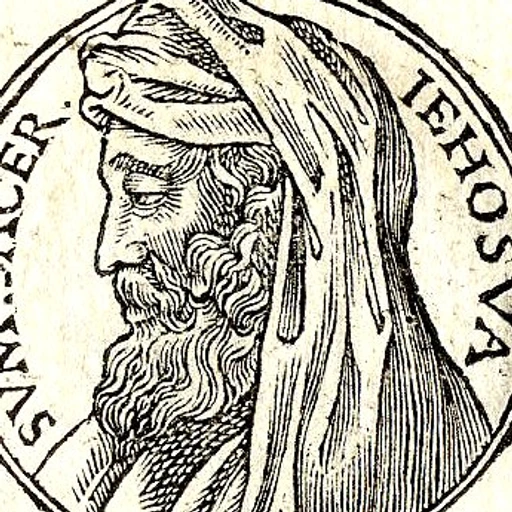
Who was Joshua in the Bible?
Joshua was the high priest who led worship among the Jews who returned from exile and helped rebuild the temple in Jerusalem.
High Priest of the Return
Late 6th century BC
Joshua was the high priest who led worship among the Jews who returned from exile and helped rebuild the temple in Jerusalem.
Follow the reading trailBEYOND THE NAME
Joshua son of Jehozadak served as high priest alongside the governor Zerubbabel in the years after the return from Babylon, and together they led the rebuilding of the temple. The prophets Haggai and Zechariah encouraged him in this work, and in one of Zechariah’s visions Joshua stands before the Lord in filthy garments that are exchanged for clean ones, a sign of cleansing and renewed priesthood. He represents the restored worship of a people coming home to begin again.
Themes in the authored commentary
These are other entries using this name. Compare their source passages before treating them as the same or different historical people.
These entries connect the study to the source’s recorded family context. Read their cautions when the family records or identifications differ.
FOLLOW THE PASSAGES
These are chapter studies associated with this record. Their order follows the books and chapters, rather than a reconstructed timeline of the person’s life.
high priest who returns with Zerubbabel at the head of the restored community
The book of Ezra opens with a people coming home. Nebuchadnezzar had carried Judah away into Babylon - a judgment so complete it could have seemed the exile would be permanent. But the captivity did not destroy them. When Cyrus the Persian decreed that the house of God should be rebuilt, a remnant rose up to return; and chapter 2 is the record of who they were. It is a list - nearly seventy verses of families and numbers, of towns and temple servants and gifts. To the modern eye it is the part of the Bible easiest to skim, a column of unfamiliar names and round figures.
Chapter overview from the authored study guide.resumes building the temple alongside Zerubbabel
The work of rebuilding the temple had stopped. Years before, the returned exiles had laid the foundation with shouting and tears (Ezra 3), but opposition and discouragement had ground the project to a halt, and for a long stretch nothing rose on the site at all. Then, in a single moment, that changed. The prophets, Haggai the prophet, and Zechariah the son of Iddo, prophesied unto the Jews… in the name of the God of Israel, and immediately Zerubbabel the governor and Jeshua the priest rose up and began to build the house of God.
Chapter overview from the authored study guide.high priest addressed with the remnant in the oracle comparing the new temple to Solomon's
Haggai’s first word had gotten the people moving again; now, seven weeks into the rebuilding, a second word arrives - and it is aimed at a very particular ache. In the seventh month, in the one and twentieth day of the month, came the word of the LORD by the prophet Haggai (v. 1), and the LORD tells him to speak now to Zerubbabel… and to Joshua… and to the residue of the people (v. 2). The question He puts is gentle but exact: Who is left among you that saw this house in her first glory? and how do ye see it now? is it not in your eyes in comparison of it as nothing? (v. 3).
Chapter overview from the authored study guide.high priest shown standing before the angel, accused by the adversary and then clothed in clean garments
In the fourth of his night-visions, Zechariah is shown a courtroom scene unlike any other. And he shewed me Joshua the high priest standing before the angel of the LORD, and Satan standing at his right hand to resist him (v. 1). Joshua was a real man, the high priest of the returned exiles rebuilding Jerusalem; but he stands here for more than himself. The high priest was the one figure who entered God’s presence on behalf of the whole people, and here he stands in that presence with an accuser at his side.
Chapter overview from the authored study guide.high priest who returns with Zerubbabel and supervises the rebuilding of the altar
The decree is issued by Cyrus of Persia: rebuild the temple of the Lord in Jerusalem. Families respond. Those in captivity begin to gather as a covenant people. They collect offerings, they organize by family and by city, they prepare the long road home. Some have seen Jerusalem. Most have only stories.
Chapter overview from the authored study guide.high priest present at the assembly dealing with foreign marriages
It rains, and the people are weeping. Word has reached Esdras that returning exiles took wives from the peoples around them, and other gods came home with those marriages. He tears his garments. He pulls out his hair. He sits in horror until the evening sacrifice. The covenant that set Israel apart has cracked, and the mending will cost families. The whole assembly sits trembling in the cold street .
Chapter overview from the authored study guide.THE PEOPLE AROUND THE PERSON
Relationships follow the source graph. Some are interpretive or uncertain, and individual verse citations are not yet available for every connection.
STUDY & INTERPRETATION
Joshua the high priest belongs to the generation that returned from exile to find the temple in ruins and the covenant community needing to be rebuilt from the ground up. His ministry, supported by Haggai and Zechariah, joined priestly worship to the civic leadership of Zerubbabel, so that the renewal of Judah was both an act of governance and an act of devotion. Zechariah’s vision of Joshua clothed in clean garments and crowned points beyond the moment to a coming figure called the Branch, in whom priesthood and kingship would be united and a people would be cleansed in a single day. In this way Joshua’s restored priesthood quietly anticipates the One who would serve as both King and great High Priest, gathering the offices that had long been kept apart.
From the Learn of Christ person commentary. Read alongside the linked Scripture passages.KEEP SCRIPTURE CLOSE
10 authored chapter guides feature this person. This is guide coverage, not an exhaustive count of biblical mentions.
ASK A BETTER QUESTION
Identity, story, early-life sources, family, and where to read.
Names and spellings in the source: Joshua · Jeshua
Joshua was the high priest who led worship among the Jews who returned from exile and helped rebuild the temple in Jerusalem.
Joshua son of Jehozadak served as high priest alongside the governor Zerubbabel in the years after the return from Babylon, and together they led the rebuilding of the temple. The prophets Haggai and Zechariah encouraged him in this work, and in one of Zechariah’s visions Joshua stands before the Lord in filthy garments that are exchanged for clean ones, a sign of cleansing and renewed priesthood. He represents the restored worship of a people coming home to begin again.
The individualized passage index associates this Joshua record with Ezra, Nehemiah, Haggai, Zechariah. There are 21 distinct indexed verse references in the 66-book Bible. Browse the book-by-book list below; it separates this identity from other people who share the name. Source assignments and textual identifications can require interpretation.
A separate childhood account for Joshua is not provided in our current authored profile sources. Begin with Ezra 2:2 and the passages linked here for the evidence that is available. The first indexed reference to a name is not a birth record. This profile does not establish a birth date, schooling, or childhood events beyond what its sources state.
The current source graph does not list immediate family for Joshua. That is a limit of this data, not evidence that Joshua had no relatives. Read the cited passages for the details they actually give.
Joshua the high priest belongs to the generation that returned from exile to find the temple in ruins and the covenant community needing to be rebuilt from the ground up. His ministry, supported by Haggai and Zechariah, joined priestly worship to the civic leadership of Zerubbabel, so that the renewal of Judah was both an act of governance and an act of devotion.
Answers draw on our existing authored biography and linked chapter studies. Where supplied, verse assignments come from the individualized STEP Bible index. Childhood answers distinguish documented events from gaps in the available sources.
FIND THE PERSON IN THE TEXT
21 distinct verse references in the source’s 66-book index. These are indexed name assignments, rather than every indirect allusion to this person. A name may also refer to descendants, a tribe, or a nation; read each passage to distinguish that usage from the individual.
“Which came with Zerubbabel: Jeshua, Nehemiah, Seraiah, Reelaiah, Mordecai, Bilshan, Mizpar, Bigvai, Rehum, Baanah. The number of the men of the people of Israel:”
Ezra 2:2 · King James Version
“Sallu, Amok, Hilkiah, Jedaiah. These were the chief of the priests and of their brethren in the days of Jeshua.”
Nehemiah 12:7 · King James Version
“Speak now to Zerubbabel the son of Shealtiel, governor of Judah, and to Joshua the son of Josedech, the high priest, and to the residue of the people, saying,”
Haggai 2:2 · King James Version
“Then take silver and gold, and make crowns, and set them upon the head of Joshua the son of Josedech, the high priest;”
Zechariah 6:11 · King James Version
References are adapted from STEP Bible / Tyndale House TIPNR (CC BY 4.0). Deduplicated, matched to this identity, and checked against the bundled KJV’s verse bounds. Interpretive assignments and translation/versification differences may remain. This index is separate from evidence for individual family relationships.
YOUR OWN OBSERVATIONS
Notes, saved people, and study marks stay in this browser. They do not sync to your account.
KEEP EXPLORING
People featured in the same study guides. Sharing a chapter does not establish a family relationship.