Hosea 1
People in this chapter
The book of Hosea begins not with a sermon but with a marriage, and the marriage is the sermon. The word of the LORD comes to the prophet with a command that would mark his whole life: Go, take unto thee a wife of whoredoms and children of whoredoms: for the land hath committed great whoredom, departing from the LORD (v. 2). Israel had bound herself to God in covenant and then given herself to other gods, and the LORD now asks Hosea to carry that betrayal in his own household - to feel from the inside what it is to love one who will not be faithful.
Hosea obeys. He takes Gomer to wife, and the sign begins to unfold in the children she bears. This is the prophetic word made flesh: not announced from a safe distance, but lived where it cost the prophet everything.1
Tap any highlighted phrase to jump to the commentary that unpacks it.
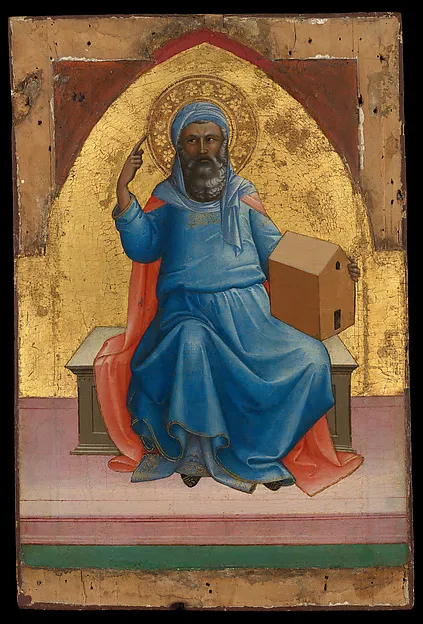
Hosea 1:1-3A Wife of Whoredoms
1The word of the LORD that came unto Hosea, the son of Beeri, in the days of Uzziah, Jotham, Ahaz, and Hezekiah, kings of Judah, and in the days of Jeroboam the son of Joash, king of Israel. 2The beginning of the word of the LORD by Hosea. And the LORD said to Hosea, Go, take unto thee a wife of whoredoms and children of whoredoms: for the land hath committed great whoredom, departing from the LORD. 3So he went and took Gomer the daughter of Diblaim; which conceived, and bare him a son.
The book opens by placing Hosea in time - the long reign of Jeroboam II over the northern kingdom, overlapping a line of Judah's kings (v. 1). It was an age of outward prosperity and inward rot, and the LORD's first word to His prophet is a hard one: Go, take unto thee a wife of whoredoms and children of whoredoms: for the land hath committed great whoredom, departing from the LORD (v. 2).
The reason is stated in the same breath as the command, and it is the key to the whole sign. Israel's sin is named as whoredom - the breaking of faith within a marriage. This is covenant language. At Sinai the LORD had bound Himself to this people as a husband to a wife, and they had answered by giving their devotion to other gods. The word is deliberately stark because the betrayal is real: a people who pledged themselves to the LORD have departed from Him.
Before a single child is born, the chapter has already named the wound the whole book exists to address - a bride who knew Him and turned away.
What the command asks of Hosea is costly, and he gives no speech in reply: So he went and took Gomer the daughter of Diblaim; which conceived, and bare him a son (v. 3). The prophet obeys. The point of the marriage is never Gomer's reputation held up for spectacle; the point is the sign it embodies. Hosea is being asked to stand where God stands - to bind himself in love to one whose faithfulness cannot be assumed, and so to know from the inside the grief of a love that is not returned in kind.
The prophets often carried their messages in their bodies and their lives rather than only on their lips; here the message is a household. Every later word of the book - the pleading, the anger, the aching tenderness - rises out of this opening obedience. The prophet does not merely describe what God feels toward an unfaithful people; he is made to live a version of it. That is the weight Hosea takes up without hesitation in verse 3, and it is what gives the book its unmistakable ache: this is a man speaking about betrayal and mercy who has been made to feel both.
Hosea 1:4-9Jezreel · Loruhamah · Loammi
4And the LORD said unto him, Call his name Jezreel; for yet a little while, and I will avenge the blood of Jezreel upon the house of Jehu, and will cause to cease the kingdom of the house of Israel. 5And it shall come to pass at that day, that I will break the bow of Israel in the valley of Jezreel. 6And she conceived again, and bare a daughter. And God said unto him, Call her name Loruhamah: for I will no more have mercy upon the house of Israel; but I will utterly take them away. 7But I will have mercy upon the house of Judah, and will save them by the LORD their God, and will not save them by bow, nor by sword, nor by battle, by horses, nor by horsemen. 8Now when she had weaned Loruhamah, she conceived, and bare a son. 9Then said God, Call his name Loammi: for ye are not my people, and I will not be your God.
The first child is a son, and his name is a place with a history of blood: Call his name Jezreel; for yet a little while, and I will avenge the blood of Jezreel upon the house of Jehu, and will cause to cease the kingdom of the house of Israel (v. 4). Jezreel was the valley where Jehu had founded his dynasty in slaughter, cutting down the house of Ahab to seize the throne.
That violence had served God's judgment in its hour, but Jehu's house had since become as corrupt as the one it replaced, and now the same valley would witness the reckoning: I will break the bow of Israel in the valley of Jezreel (v. 5). The “bow” is the nation's military strength; to break it is to leave the kingdom defenseless. So the firstborn's name announces that the northern kingdom's days are numbered - the dynasty will fall, the army will be shattered.
There is a grim symmetry in it: blood spilled to grasp a throne will be answered in the very ground where it was shed. The name the prophet must speak over his own son is, in the first instance, a sentence on a kingdom that has forgotten the God who made it.
The second child is a daughter, and her name cuts deeper than the first: Call her name Loruhamah: for I will no more have mercy upon the house of Israel; but I will utterly take them away (v. 6). Loruhamah means “not pitied,” “not having obtained mercy.” Where Jezreel announced a coming defeat, this name announces something more terrible - the withdrawal of the compassion that had spared Israel again and again through her history. The word translated mercy is bound up with the deep, tender, almost maternal love a parent feels for a child; to be Loruhamah is to be the one for whom that welling pity is, for now, held back.
Yet even in this severe word a thread of mercy is not cut. The next verse turns toward the southern kingdom: But I will have mercy upon the house of Judah, and will save them by the LORD their God, and will not save them by bow, nor by sword… nor by horsemen (v. 7). Judah will be delivered - and not by her own weapons, but by the LORD Himself, so that no one can mistake the rescue for human strength.
The mercy is not extinguished from the earth. It is withheld here, granted there, and pointedly tied to the saving hand of God alone.
The third name is the bottom of the descent: Then said God, Call his name Loammi: for ye are not my people, and I will not be your God (v. 9). Loammi means “not my people.” To feel its full weight, recall the words it undoes. When the LORD made His covenant with Israel, the heart of it was a mutual belonging: I will… be your God, and ye shall be my people (Lev. 26:12).
That formula was the marriage vow of the covenant, the sentence that bound the two together. Here it is spoken in reverse, clause by clause - ye are not my people, and I will not be your God. This is the dissolution of the relationship itself, the saddest word in the chapter. Three children, three names, and they fall like steps going down: a kingdom condemned, mercy withdrawn, the bond severed. Read straight through, the section seems to close every door.
Israel had said by her whoredom that she would not be the LORD's; now the LORD speaks the matching word. And the reader is left at the very bottom - a people unmade, a name of estrangement spoken over a newborn child - with nothing left to hope in but the God who has just said no.
Hosea 1:10-11Ye Are the Sons of the Living God
10Yet the number of the children of Israel shall be as the sand of the sea, which cannot be measured nor numbered; and it shall come to pass, that in the place where it was said unto them, Ye are not my people, there it shall be said unto them, Ye are the sons of the living God. 11Then shall the children of Judah and the children of Israel be gathered together, and appoint themselves one head, and they shall come up out of the land: for great shall be the day of Jezreel.
The turn comes with a single word: Yet. Yet the number of the children of Israel shall be as the sand of the sea, which cannot be measured nor numbered (v. 10). Nothing in the preceding verses has earned this; there is no record of repentance between verse 9 and verse 10, no condition the people have met. The reversal rests entirely on the character of God, who reaches back behind the broken covenant to a promise older still.
As the sand of the sea is the very pledge once made to Abraham - that his descendants would be beyond counting - and here it surges back over a people who had just been told they were no people at all. The God who can say Loammi has not exhausted His purposes; He has only paused to let judgment do its work, and now the ancient promise reasserts itself, larger than the failure that seemed to cancel it.
The first half of the verse re-establishes the people's sheer number; the second half will re-establish something even more precious - their name.
The most arresting words in the chapter are about a place: in the place where it was said unto them, Ye are not my people, there it shall be said unto them, Ye are the sons of the living God (v. 10). The reversal happens on the same ground where the sentence fell. The exact spot of Loammi becomes the spot where a new name is spoken. And what a name it is. They are lifted higher than the formula they had broken: the sons of the living God. Sons, not subjects; children of the living God, not of the dead idols they had chased.
The unmaking of verse 9 is answered by a making that exceeds the original. This is how God's mercy characteristically works in Scripture - it gives back more than was taken, and speaks the new word in the precise place the old grief was felt. The name of estrangement is overwritten with a name of belonging deeper than the first.
The chapter closes by gathering its divided people and redeeming even its darkest name: Then shall the children of Judah and the children of Israel be gathered together, and appoint themselves one head, and they shall come up out of the land: for great shall be the day of Jezreel (v. 11). The two kingdoms that had split apart - north and south, Israel and Judah - are pictured reunited under one head, no longer rivals but a single people again.
And then the final wonder: the day of Jezreel. That was the firstborn's name of judgment, the valley of broken bows and avenged blood - and now it is to be a great day. The reversal reaches all the way back and takes up even the harshest of the three names. The Hebrew name Jezreel carries the sense of “God sows,” and the scattering announced earlier gives way to a sowing: a people planted again in their land, gathered rather than broken.
Every door that verses 4 through 9 seemed to shut is opened. The kingdom condemned is reunited; the mercy withheld returns; the bond severed is not only restored but deepened into sonship; and the valley of slaughter becomes a field of planting. The chapter that began with whoredom ends with a family gathered home.
Research trail
Sources & further study
These references support the historical, linguistic, manuscript, and contextual notes in this chapter. Scripture remains the primary text; external sources are provided so readers can inspect the research directly.
- Hosea 1 - Translators' NotesThe NET Bible's detailed footnotes on Hosea 1 - the command of verse 2 and the question of how the marriage functions as a sign, the historical bloodshed behind the name Jezreel in verses 4-5, and the construction of the negated sign-names Loruhamah and Loammi in verses 6 and 9.
- Hosea 1 · Hebrew + classical Jewish commentaryThe Hebrew text of Hosea 1 with Rashi, Ibn Ezra, and other classical commentators side by side - useful for the children's sign-names lo-ruchamah (v. 6, “not pitied”) and lo-ammi (v. 9, “not my people”), for the wordplay in Jezreel (vv. 4, 11), and for the covenant formula echoed and reversed in verses 9-10.
- Hosea 1 ↔ Romans 9 · 1 Peter 2 · John 1Traces the threads tying Hosea 1 to the rest of Scripture - the reversed names of verses 9-10 (not my people → sons of the living God) taken up by Paul at Romans 9:25-26 and by Peter at 1 Peter 2:10, and the gift of becoming the sons of God at John 1:12.
Where this echoes in Scripture
A Wife of Whoredoms
- Jeremiah 2:2I remember thee, the kindness of thy youth, the love of thine espousals, when thou wentest after me in the wilderness.The same covenant-as-marriage picture behind verse 2 - Israel as the bride the LORD wed in the wilderness.
- Ezekiel 16:8I sware unto thee, and entered into a covenant with thee, saith the Lord GOD, and thou becamest mine.The covenant at Sinai cast as a marriage vow - the bond Israel breaks by the “whoredom” of verse 2.
- Romans 5:8God commendeth his love toward us, in that, while we were yet sinners, Christ died for us.The love that binds itself to the unfaithful (v. 2) - God's love reaching us before we deserved it.
- Ephesians 5:25-27Christ also loved the church, and gave himself for it; that he might sanctify and cleanse it.The bridegroom's costly love of verse 2 carried to its end - a bride cleansed, not condemned.
- Isaiah 20:2-3the LORD... said, Go and loose the sackcloth... and he did so... a sign and wonder upon Egypt.A prophet made into a living sign, as Hosea is in verses 2-3 - the message carried in the body, not only the voice.
Jezreel · Loruhamah · Loammi
- 2 Kings 10:11So Jehu slew all that remained of the house of Ahab in Jezreel... until he had left him none remaining.The blood of Jezreel that verse 4 says God will now avenge - Jehu's dynasty founded in slaughter.
- Leviticus 26:12I will walk among you, and will be your God, and ye shall be my people.The covenant formula that verse 9 (“ye are not my people”) reverses clause by clause.
- Isaiah 49:15Can a woman forget her sucking child, that she should not have compassion on the son of her womb?The tender, motherly mercy (racham) that the name Loruhamah negates in verse 6.
- Zechariah 4:6Not by might, nor by power, but by my spirit, saith the LORD of hosts.The kind of deliverance promised Judah in verse 7 - salvation by the LORD alone, beyond any bow or horse.
- Hosea 2:23I will have mercy upon her that had not obtained mercy; and I will say... Thou art my people.The same three names answered later in the book - the reversal verse 10 begins, carried forward.
Ye Are the Sons of the Living God
- Romans 9:25-26I will call them my people, which were not my people... there shall they be called the children of the living God.Paul quotes verse 10 directly - the no-people made God's people, the gospel gathering in the outsider.
- 1 Peter 2:10Which in time past were not a people, but are now the people of God: which had not obtained mercy, but now have obtained mercy.Both reversed names of verses 6 and 9 made the whole story of the church.
- John 1:12But as many as received him, to them gave he power to become the sons of God, even to them that believe on his name.The gift of true sonship that crowns the reversal of verse 10 - “the sons of the living God.”
- Genesis 22:17I will multiply thy seed as the stars of the heaven, and as the sand which is upon the sea shore.The promise to Abraham that surges back in verse 10 - a people beyond numbering, as the sand of the sea.
- Romans 8:15ye have received the Spirit of adoption, whereby we cry, Abba, Father.The belonging deeper than the broken covenant (v. 10) - adopted children calling God Father.