Who was Jairus in the Bible?
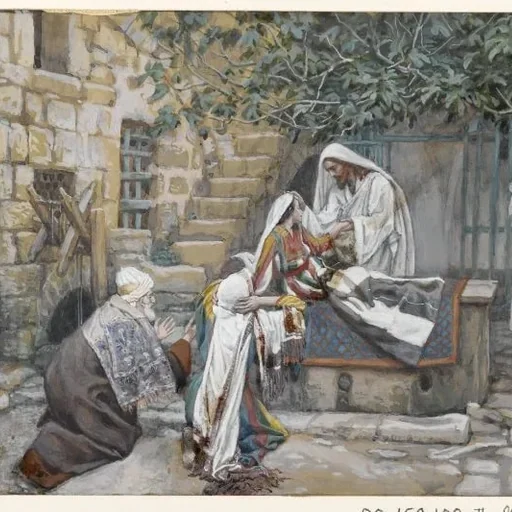
Jairus was a synagogue leader who begged Jesus to heal his dying daughter, and Jesus raised her to life.
Synagogue Ruler and Grieving Father
1st century AD
Jairus was a synagogue leader who begged Jesus to heal his dying daughter, and Jesus raised her to life.
Follow the reading trailBEYOND THE NAME
Jairus was a ruler of the synagogue who fell at Jesus’ feet and pleaded with Him to come and heal his only daughter, who lay dying. On the way, Jesus stopped to heal a woman who touched His garment, and word came that the girl had died. Jesus told Jairus, “Fear not: believe only,” went to the house, and took the child by the hand, and she rose at His word.
Themes in the authored commentary
FOLLOW THE PASSAGES
These are chapter studies associated with this record. Their order follows the books and chapters, rather than a reconstructed timeline of the person’s life.
synagogue ruler whose daughter Jesus raised from the dead
Matthew 9 reads like a string of miracles, but underneath it is one steady question: by what authority does this Man act, and who must He be to act this way? It opens with a paralytic carried to Jesus and let down before Him. And Jesus seeing their faith said unto the sick of the palsy; Son, be of good cheer; thy sins be forgiven thee (v. 2). The words land like a thunderclap, because everyone present knows that the forgiveness of sins is God’s to give. The scribes say so under their breath - This man blasphemeth (v. 3) - and they have the principle exactly right. What they do not yet see is the One standing in front of them.
Chapter overview from the authored study guide.synagogue ruler who begs Jesus to heal his dying daughter
Mark 5 sets three desperate cases side by side, and the point of putting them together is unmistakable: the authority of Jesus runs past every limit a person might think it would hit. He steps off the boat into the country of the Gadarenes and is met at once by a man no one could help - a man who lived among the tombs, and no man could bind him, no, not with chains (v. 3), because he had snapped every chain and shattered every fetter put on him (v. 4). Night and day he wandered the mountains and the graves, crying, and cutting himself with stones (v. 5).
Chapter overview from the authored study guide.synagogue ruler who begs Jesus to heal his daughter, who dies before Jesus arrives
Luke 8 opens by naming the company that travelled with Jesus as He went throughout every city and village, preaching and shewing the glad tidings of the kingdom of God (v. 1). The twelve were with Him - and so were certain women, which had been healed of evil spirits and infirmities: Mary called Magdalene, out of whom went seven devils, and Joanna the wife of Chuza Herod’s steward, and Susanna, and many others, which ministered unto him of their substance (vv. 2-3).
Chapter overview from the authored study guide.THE PEOPLE AROUND THE PERSON
Relationships follow the source graph. Some are interpretive or uncertain, and individual verse citations are not yet available for every connection.
STUDY & INTERPRETATION
Jairus, a leader honored in his community, cast aside every concern for his standing and knelt before Jesus for the sake of his child. His faith was tested by delay and then by the worst news a father can hear, yet Jesus met his fear with a call to keep believing. At the bedside Jesus spoke to the dead girl as though waking her from sleep, and life returned at His touch. The story reveals Jesus as Lord even over death, meeting a father’s desperate trust with power that turned mourning into wonder, a sign of the greater life He came to give.
From the Learn of Christ person commentary. Read alongside the linked Scripture passages.KEEP SCRIPTURE CLOSE
3 authored chapter guides feature this person. This is guide coverage, not an exhaustive count of biblical mentions.
ASK A BETTER QUESTION
Identity, story, early-life sources, family, and where to read.
Jairus was a synagogue leader who begged Jesus to heal his dying daughter, and Jesus raised her to life.
Jairus was a ruler of the synagogue who fell at Jesus’ feet and pleaded with Him to come and heal his only daughter, who lay dying. On the way, Jesus stopped to heal a woman who touched His garment, and word came that the girl had died. Jesus told Jairus, “Fear not: believe only,” went to the house, and took the child by the hand, and she rose at His word.
The individualized passage index associates this Jairus record with Mark, Luke. There are 2 distinct indexed verse references in the 66-book Bible. Browse the book-by-book list below; it separates this identity from other people who share the name. Source assignments and textual identifications can require interpretation.
A separate childhood account for Jairus is not provided in our current authored profile sources. Begin with Mark 5:22 and the passages linked here for the evidence that is available. The first indexed reference to a name is not a birth record. This profile does not establish a birth date, schooling, or childhood events beyond what its sources state.
The current source graph does not list immediate family for Jairus. That is a limit of this data, not evidence that Jairus had no relatives. Read the cited passages for the details they actually give.
Jairus, a leader honored in his community, cast aside every concern for his standing and knelt before Jesus for the sake of his child. His faith was tested by delay and then by the worst news a father can hear, yet Jesus met his fear with a call to keep believing.
Answers draw on our existing authored biography and linked chapter studies. Where supplied, verse assignments come from the individualized STEP Bible index. Childhood answers distinguish documented events from gaps in the available sources.
FIND THE PERSON IN THE TEXT
2 distinct verse references in the source’s 66-book index. These are indexed name assignments, rather than every indirect allusion to this person. A name may also refer to descendants, a tribe, or a nation; read each passage to distinguish that usage from the individual.
“And, behold, there cometh one of the rulers of the synagogue, Jairus by name; and when he saw him, he fell at his feet,”
Mark 5:22 · King James Version
“And, behold, there came a man named Jairus, and he was a ruler of the synagogue: and he fell down at Jesus’ feet, and besought him that he would come into his house:”
Luke 8:41 · King James Version
References are adapted from STEP Bible / Tyndale House TIPNR (CC BY 4.0). Deduplicated, matched to this identity, and checked against the bundled KJV’s verse bounds. Interpretive assignments and translation/versification differences may remain. This index is separate from evidence for individual family relationships.
YOUR OWN OBSERVATIONS
Notes, saved people, and study marks stay in this browser. They do not sync to your account.
KEEP EXPLORING
People featured in the same study guides. Sharing a chapter does not establish a family relationship.