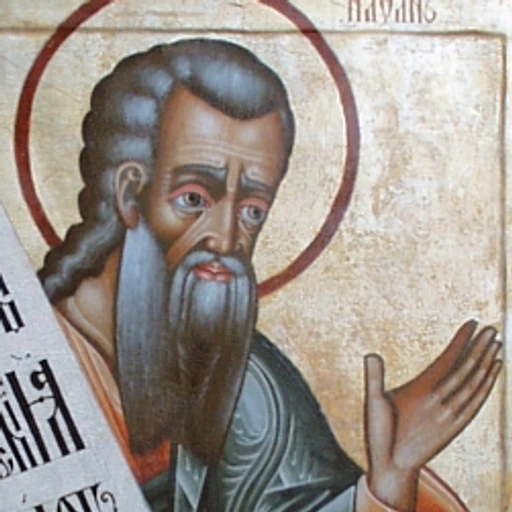
Who was Nathan in the Bible?
The prophet who told David the parable of the poor man’s lamb and announced the coming Messiah from David’s line.
Court prophet to David
c. 1000 BC
The prophet who told David the parable of the poor man’s lamb and announced the coming Messiah from David’s line.
Follow the reading trailBEYOND THE NAME
Court prophet through David’s reign and into Solomon’s. Brought the Davidic covenant in 2 Samuel 7 - "thy throne shall be established for ever." Confronted David after Bathsheba with the parable and "thou art the man." Helped secure Solomon’s succession.
Themes in the authored commentary
These are other entries using this name. Compare their source passages before treating them as the same or different historical people.
These entries connect the study to the source’s recorded family context. Read their cautions when the family records or identifications differ.
FOLLOW THE PASSAGES
These are chapter studies associated with this record. Their order follows the books and chapters, rather than a reconstructed timeline of the person’s life.
Delivers the eternal-throne promise that anchors every later messianic hope
David has a house of cedar and a time of rest from his enemies. The ark of God is still under curtains. He speaks to Nathan about this, and that night the Lord gives Nathan a promise for David.
Chapter overview from the authored study guide.Brings the parable of the poor man’s lamb: "Thou art the man."
After David arranged for Uriah to die and took Bathsheba as his wife, he remained king. Now the LORD sends Nathan to speak to him about what he has done.
Chapter overview from the authored study guide.prophet who conspired with Bathsheba to ensure Solomon's succession
David is so old that his servants cannot keep him warm. While he is growing weaker, Adonijah gathers chariots, runners, Joab, and Abiathar. He holds a feast for his supporters and says, "I will be king."
Chapter overview from the authored study guide.first approves David's plan, then receives God's word redirecting it, and reports it to David
The wars are over. The ark is home. David sits in a palace of cedar and cannot enjoy it, because the God who gave him everything still lives in a tent. The contrast eats at him. So the king decides to fix it: he will build a house for God . Nathan, his prophet, says yes on the spot. Do whatever is in your heart, he tells David. God is with you.
Chapter overview from the authored study guide.prophet whose confrontation of David prompted this psalm of repentance
Psalm 51 is the most famous prayer of repentance ever written, and it was born out of the worst chapter of David’s life. The superscription tells us exactly when: when Nathan the prophet came unto him, after he had gone in to Bathsheba. David - the shepherd-king, the man after God’s own heart - had committed adultery with Bathsheba and then arranged the battlefield death of her husband Uriah to hide it. For the better part of a year he lived with the secret, and Scripture says nothing of his praying.
Chapter overview from the authored study guide.the prophet who arose in David's time and stood as a witness before him
Sirach 47 is a portrait of two kings, painted by a man who loved Israel’s story and wanted his readers to feel its weight. It opens with David, and the surprising thing is what Ben Sira chooses to celebrate. He remembers the giant and the sling, yes. But he lingers far longer on David the worshipper, the king who in all his works gave thanks to the Holy One, who loved the God that made him, who set singers before the altar and added beauty to the festivals so that Israel might magnify the holiness of God in the morning.
Chapter overview from the authored study guide.THE PEOPLE AROUND THE PERSON
Relationships follow the source graph. Some are interpretive or uncertain, and individual verse citations are not yet available for every connection.
STUDY & INTERPRETATION
Nathan delivers two of the most consequential prophetic words in the canon: the eternal-throne promise that anchors every later messianic hope, and the rebuke that shows even God’s anointed king is not above the moral law. Both deliveries show prophetic courage in the room of the most powerful man in Israel.
From the Learn of Christ person commentary. Read alongside the linked Scripture passages.KEEP SCRIPTURE CLOSE
6 authored chapter guides feature this person. This is guide coverage, not an exhaustive count of biblical mentions.
ASK A BETTER QUESTION
Identity, story, early-life sources, family, and where to read.
The prophet who told David the parable of the poor man’s lamb and announced the coming Messiah from David’s line.
Court prophet through David’s reign and into Solomon’s. Brought the Davidic covenant in 2 Samuel 7 - "thy throne shall be established for ever." Confronted David after Bathsheba with the parable and "thou art the man." Helped secure Solomon’s succession.
The individualized passage index associates this Nathan record with 2 Samuel, 1 Kings, 1 Chronicles, 2 Chronicles, Psalms. There are 30 distinct indexed verse references in the 66-book Bible. Browse the book-by-book list below; it separates this identity from other people who share the name. Source assignments and textual identifications can require interpretation.
A separate childhood account for Nathan is not provided in our current authored profile sources. Begin with 2 Samuel 7:2 and the passages linked here for the evidence that is available. The first indexed reference to a name is not a birth record. This profile does not establish a birth date, schooling, or childhood events beyond what its sources state.
The current source graph does not list immediate family for Nathan. That is a limit of this data, not evidence that Nathan had no relatives. Read the cited passages for the details they actually give.
Nathan delivers two of the most consequential prophetic words in the canon: the eternal-throne promise that anchors every later messianic hope, and the rebuke that shows even God’s anointed king is not above the moral law. Both deliveries show prophetic courage in the room of the most powerful man in Israel.
Answers draw on our existing authored biography and linked chapter studies. Where supplied, verse assignments come from the individualized STEP Bible index. Childhood answers distinguish documented events from gaps in the available sources.
FIND THE PERSON IN THE TEXT
30 distinct verse references in the source’s 66-book index. These are indexed name assignments, rather than every indirect allusion to this person. A name may also refer to descendants, a tribe, or a nation; read each passage to distinguish that usage from the individual.
“That the king said unto Nathan the prophet, See now, I dwell in an house of cedar, but the ark of God dwelleth within curtains.”
2 Samuel 7:2 · King James Version
“And he sent by the hand of Nathan the prophet; and he called his name Jedidiah, because of the LORD.”
2 Samuel 12:25 · King James Version
“And the king hath sent with him Zadok the priest, and Nathan the prophet, and Benaiah the son of Jehoiada, and the Cherethites, and the Pelethites, and they have caused him to ride upon the king’s mule:”
1 Kings 1:44 · King James Version
“And he set the Levites in the house of the LORD with cymbals, with psalteries, and with harps, according to the commandment of David, and of Gad the king’s seer, and Nathan the prophet: for so was the commandment of the LORD by his prophets.”
2 Chronicles 29:25 · King James Version
References are adapted from STEP Bible / Tyndale House TIPNR (CC BY 4.0). Deduplicated, matched to this identity, and checked against the bundled KJV’s verse bounds. Interpretive assignments and translation/versification differences may remain. This index is separate from evidence for individual family relationships.
YOUR OWN OBSERVATIONS
Notes, saved people, and study marks stay in this browser. They do not sync to your account.
KEEP EXPLORING
People featured in the same study guides. Sharing a chapter does not establish a family relationship.