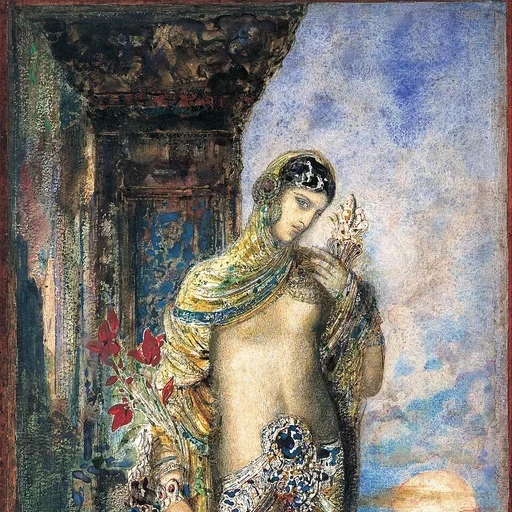
Who was The Shulamite in the Bible?
The Shulamite is the young woman whose voice and love fill the Song of Songs as she longs for and rejoices in her beloved.
Beloved of the Song of Songs
United Monarchy
The Shulamite is the young woman whose voice and love fill the Song of Songs as she longs for and rejoices in her beloved.
Follow the reading trailBEYOND THE NAME
The Shulamite is the central female voice of the Song of Songs, a young woman who speaks of her love with striking openness, beauty, and longing. Through dialogue, dreams, and praise she and her beloved express their devotion, their delight in one another, and the steadfastness of love that is “strong as death.” She stands at the heart of the Bible’s great poem celebrating faithful, covenant love between a man and a woman.
Themes in the authored commentary
FOLLOW THE PASSAGES
These are chapter studies associated with this record. Their order follows the books and chapters, rather than a reconstructed timeline of the person’s life.
the beloved bride who longs for her king and describes her own dark, sun-weathered beauty to the daughters of Jerusalem
The Song of Solomon stands apart from every other book in the Bible. It does not teach or prophesy or narrate a history; it sings. It is a collection of love poems passing between a bride and her bridegroom, full of longing and praise and the language of the body, and it never once pauses to apologize for itself. The opening line gives it its name and its scale - The song of songs, which is Solomon’s (v. 1) - a Hebrew way of saying the finest song of all. Then, without preamble, the bride speaks, and her first words are pure desire: Let him kiss me with the kisses of his mouth: for thy love is better than wine (v. 2).
Chapter overview from the authored study guide.the beloved who describes herself as a rose of Sharon and delights in the banqueting house of her lover
After the opening exchanges of chapter 1, the two lovers go on answering each other, and chapter 2 begins with three pictures handed back and forth. The bride names herself a wildflower - I am the rose of Sharon, and the lily of the valleys (v. 1) - not a rare hothouse bloom but the ordinary, lovely flower of the open country. The beloved takes her own image and lifts it: As the lily among thorns, so is my love among the daughters (v. 2). And she returns the compliment in kind - he is as the apple tree among the trees of the wood, the one tree worth sitting under in a whole forest, and his fruit was sweet to my taste (v. 3).
Chapter overview from the authored study guide.the bride invited to come from Lebanon and acclaimed for her beauty by her beloved
After the bride has spoken and searched and found her beloved in the chapters before, chapter 4 hands the whole stage to him. Every verse is the bridegroom’s voice, and from first to last it is praise. He uses a form the ancient world knew well: a deliberate, head-to-heart description of the beloved, naming feature after feature and likening each to something beautiful and alive - doves, a flock newly washed, a thread of scarlet, a tower hung with shields. The comparisons are not meant to be diagrammed; they are meant to convey delight. He is a man overcome by the loveliness of the woman he loves, and he wants her to hear it named.
Chapter overview from the authored study guide.the beloved who rises too late to open for her lover, then searches the city for him and describes his appearance to the daughters of Jerusalem
The Song moves into its sharpest turn yet. The beloved speaks first, answering the invitation at the close of the previous chapter: I am come into my garden, my sister, my spouse (v. 1). But the scene quickly shifts to night, and to a line that has echoed in the church for centuries: I sleep, but my heart waketh: it is the voice of my beloved that knocketh, saying, Open to me (v. 2). He stands at the door and asks to be let in - and she, already at rest, hesitates over the small trouble of rising. I have put off my coat; how shall I put it on? (v. 3).
Chapter overview from the authored study guide.the beloved whose beauty is praised from feet to head by her lover, and who in turn invites him to the countryside
The bridegroom takes up the praise of his bride once more, and this time he begins at her feet and works upward - How beautiful are thy feet with shoes, O prince’s daughter! the joints of thy thighs are like jewels… Thy neck is as a tower of ivory (vv. 1-4). The portrait is unhurried and deliberate, reaching at last the crown of her head. Every line of it is praise; nothing in it asks her to be other than she is. The imagery is drawn from the most prized and beautiful things his world knew - jewels and ivory, wheat and wine, a tower, a palm tree - and it is offered with reverence, the language of a husband delighting in his wife.
Chapter overview from the authored study guide.the beloved who declares love stronger than death and recalls the day she was sought out as a young girl by her brothers
The Song of Solomon comes to its close, and the closing is its peak. Through eight chapters the book has held up married love - the seeking and the finding, the praise of the beloved’s beauty, the ache of separation and the joy of reunion - as something good, strong, and worth guarding. The opening verses of this last chapter sound that note one more time: the Bride wishes she could show her love openly, without shame, as freely as one would greet a brother in the street (vv. 1-2), and she repeats for the third and final time her charge to the daughters of Jerusalem: that ye stir not up, nor awake my love, until he please (v. 4).
Chapter overview from the authored study guide.THE PEOPLE AROUND THE PERSON
Relationships follow the source graph. Some are interpretive or uncertain, and individual verse citations are not yet available for every connection.
STUDY & INTERPRETATION
The Shulamite gives voice to a love portrayed as good, powerful, and worth guarding, set within poetry that honors the goodness of the body and the bond between two persons. Her words rise to the book’s famous declaration that love is strong as death and that its flame cannot be quenched by many waters, lifting human love toward something almost sacred. Within the wider witness of Scripture, the imagery of devoted bride and bridegroom is one God himself uses for his covenant with his people. Readers across the generations have therefore heard in her longing and joy an echo of the deeper love between God and those he calls, a love that the New Testament sees embodied in Christ and his people.
From the Learn of Christ person commentary. Read alongside the linked Scripture passages.KEEP SCRIPTURE CLOSE
8 authored chapter guides feature this person. This is guide coverage, not an exhaustive count of biblical mentions.
ASK A BETTER QUESTION
Identity, story, early-life sources, family, and where to read.
The Shulamite is the young woman whose voice and love fill the Song of Songs as she longs for and rejoices in her beloved.
The Shulamite is the central female voice of the Song of Songs, a young woman who speaks of her love with striking openness, beauty, and longing. Through dialogue, dreams, and praise she and her beloved express their devotion, their delight in one another, and the steadfastness of love that is “strong as death.” She stands at the heart of the Bible’s great poem celebrating faithful, covenant love between a man and a woman.
Our authored studies connect The Shulamite with Song of Solomon. The linked chapters provide reading context, not proof that an unnamed or inferred identity is explicitly named there. A verified, identity-specific verse index is not yet available for this record, so these chapter tags should not be treated as an exhaustive list of mentions.
A separate childhood account for The Shulamite is not provided in our current authored profile sources. Begin with Song of Solomon 1 and the passages linked here for the evidence that is available. The first indexed reference to a name is not a birth record. This profile does not establish a birth date, schooling, or childhood events beyond what its sources state.
The current source graph does not list immediate family for The Shulamite. That is a limit of this data, not evidence that The Shulamite had no relatives. Read the cited passages for the details they actually give.
The Shulamite gives voice to a love portrayed as good, powerful, and worth guarding, set within poetry that honors the goodness of the body and the bond between two persons. Her words rise to the book’s famous declaration that love is strong as death and that its flame cannot be quenched by many waters, lifting human love toward something almost sacred.
Answers draw on our existing authored biography and linked chapter studies. Where supplied, verse assignments come from the individualized STEP Bible index. Childhood answers distinguish documented events from gaps in the available sources.
YOUR OWN OBSERVATIONS
Notes, saved people, and study marks stay in this browser. They do not sync to your account.
KEEP EXPLORING
People featured in the same study guides. Sharing a chapter does not establish a family relationship.
