- Starting price
- Free articles · paid courses
- Free tier
- Yes
- Platforms
- Web · Podcast · YouTube · In-person events
- Developer
- Acton Institute for the Study of Religion and Liberty
- Launched
- 1990
- Updated
- May 24, 2026
The verdict
Acton has quietly become the default reference for Christians who want to think seriously about economics without leaving their faith at the door. The articles are free, the conference is excellent, and the conservative-libertarian framing is honest and central - not a hidden agenda.
Try The Acton Institute ↗Opens acton.org
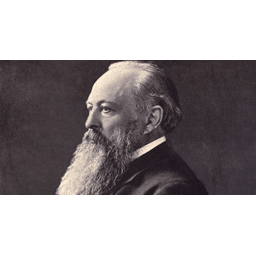
The Acton Institute is what happens when a Catholic priest, a small group of Reformed economists, an Orthodox theologian, and a handful of secular classical liberals decide to share an office. Founded in 1990 by Father Robert Sirico and Kris Mauren in Grand Rapids, Michigan, the institute exists for one specific intellectual project - connecting religious moral tradition to free-market economics and classical liberalism. The name comes from Lord Acton, the nineteenth-century English Catholic historian famous for the line about power corrupting and absolute power corrupting absolutely.
Acton is not a devotional site. It does not run reading plans. It does not publish sermon outlines. It does not try to deepen your prayer life. What it does is treat economics, political philosophy, business, work, and wealth as legitimate theological subjects - and then publish thousands of articles, lectures, podcasts, and a major annual conference about them. The free-market framing is intentional and load-bearing, not incidental.
That framing is also the thing readers need to know going in. Acton is openly conservative-libertarian on economics - pro-market, pro-property-rights, skeptical of large government programs, sympathetic to traditional civil society and religious liberty. Christians who lean progressive on economic policy will find a lot to disagree with here. That is not a flaw in the resource so much as the resource itself. Acton exists precisely to make the conservative-libertarian Christian case with rigor, and readers should approach it the way they would approach any think tank - as a serious advocate for a coherent position, not a neutral encyclopedia.
✓ The good
- Genuinely ecumenical contributor base - Catholic, Reformed, Orthodox, Jewish, and secular classical-liberal voices all show up in the bylines
- The free article library is enormous - Religion & Liberty journal, the Acton Powerblog, Acton Notes, and the Journal of Markets & Morality are all readable without a paywall
- Acton University is the flagship - six days of seminary-grade lectures on religion and economics that draws hundreds of pastors, students, and professionals to Grand Rapids each summer
- Honest about its priors - the conservative-libertarian framing is named clearly rather than buried, which is more useful than think tanks that pretend to be neutral
- Strong on the theology of work and vocation - Acton has done as much as any institution to take the dignity of business, entrepreneurship, and ordinary employment seriously
- Acton Line podcast is a calm, substantive interview show - useful even for listeners who disagree with the editorial line
- High academic standards - the Journal of Markets & Morality is peer-reviewed and cited in serious economics-and-religion scholarship
✗ Watch out
- Politically and economically one-sided - readers who lean left on economic policy will find very little written from inside their own framework
- Acton University is expensive once travel is included - tuition, lodging, and flights to Grand Rapids add up fast for individuals paying out of pocket
- Not a devotional or pastoral resource - no prayers, no reading plans, no sermon helps; this is policy and theology, not personal formation
- Catholic flavor is real even when the bylines are ecumenical - the founding orientation, the natural-law vocabulary, and several flagship books carry Catholic social-teaching assumptions
- Comment-section culture can get partisan in a hurry - the editorial work is high-quality, but the community around it is mixed
Best for
- Pastors and seminarians who want to teach on work, wealth, and economics
- Business owners and professionals connecting Sunday faith to Monday work
- Students of Catholic social teaching, Kuyperian economics, or classical liberalism
- Christians researching the religious-liberty and conscience-protection conversation
Avoid if
- You want a politically neutral or progressive economic framework
- You are looking for devotional reading, prayer guides, or a daily Bible plan
- You only read content that stays inside one denomination
- You prefer short-form viral content over essays and lectures
What The Acton Institute is
The Acton Institute for the Study of Religion and Liberty is a Christian think tank headquartered in Grand Rapids, Michigan, with affiliated offices in Rome, Buenos Aires, and London. It was founded in 1990 by Father Robert Sirico - a Catholic priest who had previously been a libertarian activist - together with entrepreneur Kris Mauren. Its stated mission is to promote a free and virtuous society characterized by individual liberty and sustained by religious principles, and that exact phrase shows up in almost everything the institute publishes.
In practice the output sorts into a few buckets: a constant stream of short essays on the Acton Powerblog, the quarterly Religion & Liberty magazine, the peer-reviewed Journal of Markets & Morality, the Acton Line podcast, video lectures on YouTube and the Acton website, paid online courses, and the flagship Acton University conference each June. The audience is pastors, seminarians, business leaders, journalists, scholars, and serious laypeople - not a mass devotional audience.
Why thoughtful Christians use Acton
The single biggest practical difference between Acton and almost every other Christian publishing outlet is that Acton treats economics as a real theological discipline. Most Christian media handles money the way it handles politics - as a touchy subject best addressed with a stewardship sermon every two years. Acton does the opposite. It assumes that markets, prices, property, labor, trade, monetary policy, and entrepreneurship are subjects the Christian tradition has thought about for two thousand years, and it brings that tradition into contact with modern economics in a serious, footnoted way.
The other differentiator is the ecumenical bench. The contributor list pulls from Catholic social teaching, Reformed (especially Dutch neo-Calvinist) economics, Eastern Orthodox social thought, Jewish ethical tradition, and secular classical liberalism. That is unusual. Most think tanks that look ecumenical on paper are functionally one tradition with guest essays. Acton actually puts a Catholic priest, a Calvin College economist, and an Orthodox theologian on stage together and asks them to disagree productively - which is the thoughtful Christian reader’s killer feature.
Religion and economics: the differentiator nobody else does at this depth
Acton’s core intellectual project is the intersection of religion and economics - and it is genuinely hard to find another organization doing this work at the same depth, frequency, and quality. Articles tackle questions like the moral status of profit, how Catholic social teaching reads modern labor markets, whether usury doctrine still applies to consumer credit, how Abraham Kuyper’s sphere sovereignty translates to twenty-first century pluralism, what the Hebrew Bible’s jubilee laws do and do not say about contemporary redistribution, and dozens more. The arguments are made from inside the Christian moral tradition, not as an apologetic afterthought.
The framing is honestly conservative-libertarian - pro-market, pro-property, skeptical of expansive state economic policy, sympathetic to mediating civil-society institutions like family, church, and voluntary association. Readers who agree will find a vast, well-organized library to draw on. Readers who disagree should still know this content exists; if you are going to argue with the religious case for markets, Acton is the place where that case is made most carefully, and engaging it directly is more useful than engaging caricatures.
Acton University: the annual conference that anchors the network
Acton University is the institute’s flagship event - six days each June in Grand Rapids that function as a kind of seminary-grade intensive on religion and free societies. The format is dense: pick one of roughly a hundred sessions per slot, attend three or four lecture blocks a day, take meals with faculty and other attendees, and end each evening with a plenary address. Faculty are drawn from Catholic universities, Reformed seminaries, Orthodox institutions, secular universities, and policy organizations - and the attendees skew toward pastors, seminarians, business owners, professionals, and graduate students.
For the right reader this is one of the most efficient learning experiences in American Christian academic life - you can compress a semester’s worth of reading on, say, Catholic social teaching or Kuyperian economics into a single week of expert lectures, with a notebook’s worth of book recommendations on the way out. The cost is real (tuition runs around $850-$1,200 depending on track and timing, and that is before travel and lodging to Michigan), but scholarship support for clergy and students is substantial - anyone seriously considering the trip should apply for aid rather than assume the sticker price.
Free articles plus the Acton Line podcast: the everyday on-ramp
Most readers will never make it to Grand Rapids in June, and that is fine - the free article library and the Acton Line podcast do the bulk of the institute’s public work. The Acton Powerblog publishes multiple short essays a day on current events through the religion-and-economics lens. Religion & Liberty is a longer quarterly magazine with feature essays, interviews, and book reviews. The Journal of Markets & Morality runs peer-reviewed academic work and went open-access in 2020, which means anyone can download the full PDF archive.
Acton Line, the institute’s flagship podcast, is a calm, interview-driven show - typically a host in conversation with a scholar, journalist, or practitioner for forty-five minutes to an hour. It is one of the more substantive religion-and-public-life podcasts in regular production, and it works as a background subscription even for listeners who disagree with the editorial line. Together the articles and the podcast are the institute’s real front door - the place where most people first encounter Acton and decide whether the project is for them.
Pricing
Online articles & podcast
Free
The entire Acton Powerblog, Religion & Liberty magazine, Acton Notes, and the Acton Line podcast are free on the web - no account required.
Acton Academic Journal
Free (open access)
The Journal of Markets & Morality, Acton’s peer-reviewed academic journal, has been fully open-access since 2020 - every article downloadable as PDF.
Acton Online Courses
Around $50-$250 per course
Self-paced courses on Christian social thought, economics, and the moral foundations of free societies - discounts for clergy, students, and seminarians.
Acton University
Around $850-$1,200 tuition
The annual six-day conference in Grand Rapids - tuition covers lectures and most meals; travel and lodging are separate. Significant scholarships available for students and clergy.
The headline number is zero. Acton’s articles, magazine, podcast, video lectures, and the entire peer-reviewed Journal of Markets & Morality are free on the web. For the casual reader who just wants to read a thoughtful Christian take on a current economic story once a week, the price of admission is genuinely nothing.
Online courses are the first paid tier. Self-paced courses on Christian social thought, the moral foundations of a free society, and related subjects run roughly $50-$250 each, with discounts for students, seminarians, and clergy. For pastors building a teaching series on work and vocation, one of these courses is often the most cost-effective investment in the institute’s catalog.
Acton University is where the real money lives. Tuition alone runs around $850-$1,200 depending on track and registration timing, and once you add airfare to Grand Rapids and six nights of lodging the total can comfortably clear $2,000. Most users do not need Acton University to get value from Acton - but for the right reader (a pastor mid-career, a seminarian writing a thesis, a business owner trying to articulate a Christian framework for the firm) the conference can be transformative.
A practical note on scholarships: Acton runs significant aid programs for clergy, seminarians, and students. Anyone in those categories who is seriously considering the conference should apply for support rather than rule it out on price.
Where The Acton Institute falls behind
No real engagement with progressive Christian economic frameworks. The institute makes its case from inside conservative-libertarian assumptions and rarely engages liberation theology, Christian socialism, or social-democratic Catholic thought on their own terms. Readers who want a steel-manned version of the other side will need to read elsewhere and bring the comparison themselves.
No devotional, pastoral, or formation content. Acton does not publish reading plans, prayer guides, daily devotionals, sermon outlines, or anything aimed at personal spiritual formation. This is a feature, not a bug - but it means Acton sits alongside, not in place of, the resources you use for actual Bible reading and prayer.
A persistent Catholic gravity even in ecumenical work. The founding orientation, the prominence of natural-law vocabulary, and several flagship books carry Catholic social-teaching assumptions even when the bylines look broadly Christian. This is not concealed, but Reformed and Orthodox readers will occasionally notice the home tradition speaking with a slightly louder voice.
Limited international and non-Western coverage. Despite affiliated offices in Rome, London, and Buenos Aires, most of the writing addresses American political economy and the European policy debates Americans are already paying attention to. Coverage of African, Asian, or Latin American religion-and-economics questions is real but thinner than the American material.
Acton Institute vs. First Things vs. Sojourners
These three publications are the easiest way to map the American religious-public-square conversation. Acton, First Things, and Sojourners are all serious, well-edited, and unapologetic about their priors - but they are aimed at very different readers and operate from very different theological and political starting points.
Different strengths. Acton is the specialist on religion and economics, with a conservative-libertarian frame and a uniquely ecumenical contributor base. First Things is broader - a religion-and-public-life journal with a strong Catholic and traditional-Protestant editorial center that engages culture, law, philosophy, and theology more than it does economics specifically. Sojourners sits at the opposite end of the economic spectrum from Acton - a progressive evangelical magazine founded by Jim Wallis that frames poverty, racial justice, and peacemaking through a left-leaning policy lens drawn from the same Christian sources Acton reads conservatively.
For a Christian trying to think honestly about economics and public life, reading all three is more useful than reading any one. Acton makes the rigorous religious case for markets and limited government. Sojourners makes the rigorous religious case for redistribution and state-led justice work. First Things does the broader cultural and theological framing in which both arguments live. None of them is neutral, and that is precisely why the combination is more useful than any single source pretending to be.
The bottom line
The Acton Institute is the thoughtful Christian’s reference library for religion and economics - genuinely ecumenical in its contributor base, honestly conservative-libertarian in its editorial frame, and unusually deep on a subject most Christian publishers handle shallowly. The free articles and the Acton Line podcast are an easy yes. Acton University is a real investment but a serious one for the right reader. Progressive Christian readers will disagree with much of the policy framing - but that disagreement is more productive against Acton’s carefully made case than against a caricature. Worth a permanent bookmark with the priors named going in.
Alternatives to The Acton Institute
 First ThingsBroader religion-and-public-life journal with a Catholic and traditional-Protestant editorial center - culture, law, theology more than economics.
 Christianity TodayFlagship evangelical magazine - broader news, reviews, and ministry coverage with a more centrist editorial voice than Acton or Sojourners.
 SojournersProgressive evangelical magazine on poverty, racial justice, and peacemaking - the opposite end of the economic spectrum from Acton, equally honest about its priors.
 Catholic AnswersThe largest Catholic apologetics ministry - doctrine, sacraments, and Q&A rather than economics, but a useful neighbor for the Catholic side of Acton’s contributor base.
Frequently asked questions
Is the Acton Institute Catholic?
It was founded by a Catholic priest, Father Robert Sirico, and Catholic social teaching is one of its main intellectual streams - but Acton is intentionally ecumenical. Contributors include Catholic, Reformed (especially Dutch neo-Calvinist), Eastern Orthodox, Jewish, and secular classical-liberal voices, and the public events are explicitly cross-tradition.
What does the Acton Institute actually believe about economics?
Acton is openly conservative-libertarian on economics - supportive of free markets, private property, voluntary exchange, and a relatively limited role for state economic intervention, framed through Christian moral tradition (natural law, Catholic social teaching, Reformed sphere sovereignty, and classical liberalism). It is not a neutral encyclopedia and does not present itself as one.
Is Acton’s content free?
Most of it, yes. The Acton Powerblog, Religion & Liberty magazine, the Acton Line podcast, and the full Journal of Markets & Morality archive (open-access since 2020) are free on the web. Online courses are paid (roughly $50-$250 per course), and Acton University tuition runs around $850-$1,200 plus travel.
What is Acton University?
It is the institute’s flagship annual conference - six days each June in Grand Rapids, Michigan, with around a hundred lecture sessions per slot on religion, economics, philosophy, history, and policy. Attendees are mostly pastors, seminarians, students, business owners, and professionals. Significant scholarship support is available for clergy and students.
Will I disagree with Acton if I am a politically progressive Christian?
Probably, on economics. Acton makes a careful religious case for free-market and classical-liberal positions, and that case will conflict with most progressive Christian economic frameworks. The articles are still worth reading as the strongest version of the opposing argument, but readers should expect to disagree rather than expect a neutral take.
Is Acton a good resource for devotional reading or sermon prep?
Not really. Acton publishes essays, policy analysis, lectures, and academic work - not devotionals, prayer guides, reading plans, or sermon outlines. Pastors do find sermon illustrations and theological background on work, money, and vocation here, but for the actual sermon scaffolding you will want a different tool.
What is the Journal of Markets & Morality?
It is Acton’s peer-reviewed academic journal, published twice a year, covering the intersection of theology, ethics, and economics. The full archive went open-access in 2020, meaning every article is downloadable as PDF without a subscription - a notable resource for graduate students and scholars working in religion-and-economics.
Sources & further reading
More Teaching & Theology Websites
 Life.Church Open NetworkOne of the church world’s most generous resource libraries, serving leaders since 2006 with free sermons, curriculum, creative files, worship material, training, partner content, and ministry apps—but “free” is a tightly scoped noncommercial license, not open ownership or permission to edit and repost everything.
 The Odin ProjectA completely free, open-source path from web-development beginner to portfolio-building full-stack learner—excellent for disciplined self-study, demanding in time and independence.
 BibleProjectA nonprofit studio that turned the entire Bible into animated explainers, free seminary-grade courses, and a deep-dive theology podcast - and somehow gave it all away.
 Lessons.ChurchA genuinely free, open-source curriculum platform with 1,167 video lessons from preschool through adult, printable resources, classroom scheduling, presenter mode, TV caching, and volunteer access—but each church still needs to review doctrine, permissions, safeguarding, account governance, and recovery before Sunday depends on it.
 Christian Classics Ethereal LibraryThe Christian Classics Ethereal Library is possibly the oldest Christian site on the internet, and it is still the single best free source for the public-domain canon - from Augustine to Spurgeon, with the entire 38-volume Ante-Nicene and Nicene-and-Post-Nicene Fathers in the middle.
 Christian History InstituteThe quiet workhorse of popular church history publishing for forty years - and almost everything they have ever printed is sitting online for free.