Head-to-head comparison
The Case for Christ vs Evidence That Demands a Verdict
Ratings, pricing, platforms, real-world strengths, and a clear pick for each kind of user.
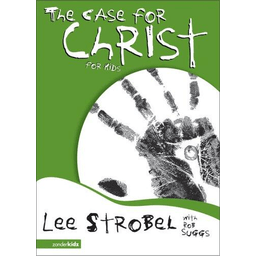
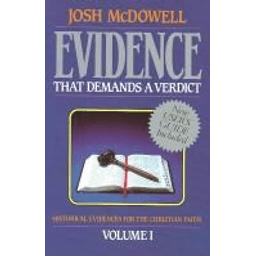
The Case for Christ and Evidence That Demands a Verdict are the two most recommended apologetics books in evangelical churches, and they couldn't be built more differently if they tried. Both argue from historical evidence for the reliability of the Gospel accounts and the plausibility of the resurrection. Both come from the broad evangelical tradition. Both have shaped a generation of lay apologists. But one is a narrative and the other is a handbook, and that difference in form is almost everything.
Lee Strobel built The Case for Christ as a reporter, traveling to interview 13 scholars and letting their back-and-forth drive the story. Josh and Sean McDowell built Evidence That Demands a Verdict as an organized reference, topically arranged so you can look up the specific objection you're facing. One is a book to read to a friend; the other is a desk reference to consult when you need a citation.
The bottom line
Both are genuinely valuable, and most readers should own both but use them for entirely different purposes. The Case for Christ is the book to hand a skeptical friend because it reads like journalism and pulls non-readers through. Evidence That Demands a Verdict is the book to keep on your desk when you're fielding hard questions and need the data organized and footnoted. Pick the one that matches how you work.
The core difference: The Case for Christ is a narrative investigation. Strobel interviews 13 scholars and you follow the conversation. Evidence That Demands a Verdict is a reference compendium: 800 pages organized by topic so you can find the specific question without reading the surrounding pages. One is a read; the other is a lookup tool.
The Case for Christ vs Evidence That Demands a Verdict: at a glance
| The Case for Christ | Evidence That Demands a Verdict | |
|---|---|---|
| Rating (source) | 4.6 / 5 (Editor rating) | 4.6 / 5 (Editor rating) |
| Starting price | $10.99 paperback | ~$25 hardcover |
| Free tier | No | No |
| Platforms | Print · Kindle · Audiobook · Audible | Print · Kindle |
| Developer | Zondervan | Thomas Nelson |
| Launched | 1998 (revised + updated 2016) | 1972 (fully rewritten 2017) |
| Best for | Skeptical friends, spouses, or adult children open to one honest book | Teachers, students, and small-group leaders who need a citable reference |
How they compare, point by point
Format and readability
The Case for Christ
Investigative narrative. Strobel travels to meet scholars, lays out objections like a cross-examiner, and lets the scholar answer at length. Scenes, descriptions, back-and-forth dialogue. Reads like long-form journalism from the Chicago Tribune.
Evidence That Demands a Verdict
Reference handbook. 800+ pages organized topically by objection (manuscripts, the resurrection, prophecy, the historical Jesus) with tables, citations, and a detailed index. Built to be consulted, not read straight through. Dense and footnote-heavy.
Intended audience and entry barrier
The Case for Christ
Skeptics and non-readers. Strobel asks the questions a non-Christian actually asks, in the order they'd ask them. Assumes no theological background. The narrative carries readers who wouldn't open a reference book.
Evidence That Demands a Verdict
Teachers, students, and small-group leaders. Not really competing for a first-time reader. Built for someone who already has a specific question and wants the organized data behind it. The density can overwhelm newcomers.
Breadth and balance
The Case for Christ
One-sided by design. Strobel interviews only scholars who agree with the orthodox Christian position: no Bart Ehrman, no Jesus Seminar voices, no skeptical New Testament critics. Transparent about this. Readers know they're getting the prosecution's brief.
Evidence That Demands a Verdict
One-sided by design. Argues from a definite evidential position rather than refereeing a debate. Each skeptical objection gets named and answered, but the book takes a stance rather than surveying multiple sides neutrally. Footnotes point toward the wider literature.
Depth of engagement with scholarship
The Case for Christ
Introductory level. Strobel interviews scholars but doesn't quote academic journals or go into technical detail. The reader gets the scholar's view in their words, not the scholarly consensus. Updated in 2016 but some scholarship has moved on.
Evidence That Demands a Verdict
Reference level. Nearly every claim is sourced. Tables comparing New Testament manuscript counts, extended treatment of the resurrection evidence, response to naturalistic counter-explanations. The 2017 rewrite refreshes scholarship; you get current sources with the 2017 edition.
Scope and coverage
The Case for Christ
Focused. Historical case for Jesus: manuscripts, eyewitness accounts, extra-biblical sources, the resurrection. Light on philosophy (that's The Case for a Creator's job) and light on the problem of evil (that's The Case for Faith's job).
Evidence That Demands a Verdict
Comprehensive. Manuscripts, the resurrection, fulfilled prophecy, the historical Jesus, and responses to standard objections, all under one cover. But still emphasizes historical and textual evidence rather than philosophical argument about God's existence.
Discoverability and ease of use
The Case for Christ
Narrative momentum carries you through. Chapters are short. You follow the investigation rather than navigate a reference structure. Low friction for cover-to-cover reading.
Evidence That Demands a Verdict
High friction for cover-to-cover reading. Built for lookup. The table of contents and index let you find a specific objection without reading surrounding pages. Kindle edition with searchability is arguably the best format because you can jump straight to a term.
Which should you choose?
The Case for Christ
Choose The Case for Christ if you have a skeptical friend who would never pick up a reference handbook, you want to introduce apologetics to someone new to the topic, you prefer reading narratives to consulting references, or you're a small-group leader looking for an accessible book to work through over 6-8 weeks.
Evidence That Demands a Verdict
Choose Evidence That Demands a Verdict if you're a pastor or teacher fielding recurring skeptical questions and want the data organized and footnoted in one place, you need to cite specific manuscript figures or resurrection evidence, you're already familiar with apologetics and want the depth behind another book's claims, or you're writing a paper and need the sources attached.
The strongest move is to own both and use them for different purposes. Most readers start with Strobel for the narrative, then turn to McDowell when they want the deeper, sourced material behind a specific objection. Many churches run both in sequence: Strobel first for accessibility, McDowell later for depth.
Strengths at a glance
The Case for Christ
- Investigative-journalist format - reads like a series of long-form Tribune features, not a theology textbook
- Interview-driven structure - 13 scholars including Craig Blomberg, Bruce Metzger, Edwin Yamauchi, William Lane Craig, Gary Habermas, and J.P. Moreland answer Strobel’s objections directly
- Excellent on-ramp for skeptics - Strobel asks the questions a non-Christian actually asks, in the order they actually ask them
- Covers the historical case end-to-end - manuscript transmission, eyewitness reliability, extra-biblical sources, the resurrection, the empty tomb
Evidence That Demands a Verdict
- The most comprehensive single-volume evidential apologetics reference in print - manuscript evidence, the resurrection, prophecy, and the historical Jesus all under one cover
- Fully rewritten in 2017 by Sean McDowell - decades of dated material was pruned and the scholarship refreshed rather than just reprinted
- Exhaustively footnoted - nearly every claim is sourced, which makes it genuinely useful as a citation tool for teachers, students, and small-group leaders
- Excellent on manuscript transmission and the bibliographical test - the tables comparing New Testament manuscript counts to other ancient texts are the most-photocopied pages in the book
Watch-outs
The Case for Christ
- One-sided by design - Strobel only interviews scholars who agree with the orthodox Christian position, which critics (and honest readers) have flagged for decades
- Surface-level on philosophy - the historical case is strong, the philosophical case for theism is barely touched (that is The Case for a Creator’s job)
- Dated in places - even the 2016 update can’t fully refresh material that originated in 1998
Evidence That Demands a Verdict
- Not a cover-to-cover read - it is a dense reference handbook, and readers who try to read it straight through usually stall out
- The sheer volume can overwhelm - 800-plus pages of evidence, tables, and footnotes is a lot to navigate for someone new to apologetics
- The evidential method is one approach among several - presuppositional and experiential readers build their case differently and may find the whole framework less persuasive
Frequently asked questions
Which book should I give to a skeptical friend?
The Case for Christ. It reads like journalism, pulls non-readers through, and asks the questions a skeptic actually asks. Evidence That Demands a Verdict will intimidate someone new to the topic because of the sheer volume and reference density. Strobel is the on-ramp.
Is The Case for Christ outdated after 25+ years?
The core argument holds, but the scholarship has moved on in places. The 2016 updated and expanded edition helps. It adds a closing chapter of Strobel's reflections nearly two decades later. But the interviews themselves are from 1998. For current sources, Evidence's 2017 rewrite is more up-to-date.
Can I use Evidence That Demands a Verdict in a small group?
Not really as the primary text. It's too dense to assign chapters. But it works well as a reference backup. You read a shorter book in the group and then use Evidence to look up specific questions that come up. Many churches pair it with Strobel for exactly that reason.
Which is better for someone intellectual who wants rigor?
Evidence That Demands a Verdict. It's more comprehensive, more thoroughly footnoted, and more current (especially the 2017 rewrite). Strobel is excellent but introductory. If you want the sources and the full scholarly engagement, McDowell is the deeper read. Both are evidential though; if you want philosophical arguments for God's existence, William Lane Craig's Reasonable Faith is the better pick.
Is The Case for Christ free?
The Case for Christ starts at $10.99 paperback; there's no free tier.
Is Evidence That Demands a Verdict free?
Evidence That Demands a Verdict starts at ~$25 hardcover; there's no free tier.
The Case for Christ is the most-recommended introductory apologetic in print, and the reason is structural - Strobel built it as a reporter, not a theologian, and it reads accordingly. Evidence That Demands a Verdict is the most comprehensive single-volume evidential apologetics handbook in print, and that is exactly what to expect from it - a reference, not a read.