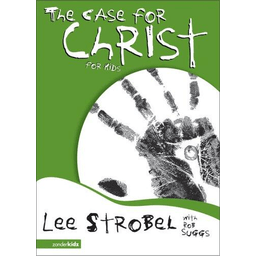
- Starting price
- $10.99 paperback
- Free tier
- No
- Platforms
- Print · Kindle · Audiobook · Audible
- Developer
- Zondervan
- Launched
- 1998 (revised + updated 2016)
- Updated
- May 24, 2026
The verdict
The Case for Christ is the most-recommended introductory apologetic in print, and the reason is structural - Strobel built it as a reporter, not a theologian, and it reads accordingly. If you have one book to hand a skeptical friend, this is still the one.
Try The Case for Christ ↗Opens leestrobel.com
The Case for Christ has quietly become the default first book most pastors, small-group leaders, and Christian parents reach for when a skeptical friend says, "Convince me." Published in 1998, revised and updated in 2016, and now well past 5 million copies sold, it has outlasted nearly every apologetic of its generation - and unlike most of its peers, it gets read cover to cover instead of skimmed and shelved.
It is not a systematic theology. It does not argue from first principles. It does not assume you already accept the Bible as authoritative. What it does is something the apologetics shelf rarely tries: it tells the story of one atheist journalist methodically interviewing 13 scholars to test whether the historical claims about Jesus of Nazareth can survive cross-examination. The format does the persuasive work the arguments alone never could.
Lee Strobel was the legal-affairs editor of the Chicago Tribune, a Yale Law School graduate, and - by his own account - a hardened atheist whose wife’s conversion in 1979 set him on a nearly two-year investigation to disprove Christianity. He came out the other side a believer. The book is the retelling of that investigation, scholar by scholar, objection by objection, in the voice of the reporter he already was.
✓ The good
- Investigative-journalist format - reads like a series of long-form Tribune features, not a theology textbook
- Interview-driven structure - 13 scholars including Craig Blomberg, Bruce Metzger, Edwin Yamauchi, William Lane Craig, Gary Habermas, and J.P. Moreland answer Strobel’s objections directly
- Excellent on-ramp for skeptics - Strobel asks the questions a non-Christian actually asks, in the order they actually ask them
- Covers the historical case end-to-end - manuscript transmission, eyewitness reliability, extra-biblical sources, the resurrection, the empty tomb
- Spawned an entire ecosystem - The Case for Faith, The Case for a Creator, The Case for Easter, The Case for Christmas, student and kids editions, and two feature films
- Updated 2016 edition refreshes the scholarship without rewriting the original investigation
- Genuinely gift-able - short chapters, conversational prose, and a narrative arc that pulls non-readers through
✗ Watch out
- One-sided by design - Strobel only interviews scholars who agree with the orthodox Christian position, which critics (and honest readers) have flagged for decades
- Surface-level on philosophy - the historical case is strong, the philosophical case for theism is barely touched (that is The Case for a Creator’s job)
- Dated in places - even the 2016 update can’t fully refresh material that originated in 1998
- Light on the harder objections - problem of evil, hiddenness of God, and biblical difficulties are mostly out of scope
- Reads as broadly evangelical Protestant - readers from other traditions will find the framing familiar but the scholar bench narrow
Best for
- Skeptical friends, spouses, or adult children open to one honest book
- New Christians wanting to understand why the historical claims hold up
- Small groups looking for an accessible 6-8 week study
- Anyone who reads more journalism than theology
Avoid if
- You want a philosophical case for God’s existence - read The Case for a Creator or Reasonable Faith instead
- You want a multi-tradition survey of apologetic arguments
- You want the academic source material - go directly to Blomberg, Metzger, Bauckham, or N.T. Wright
- You are looking for devotional or pastoral writing rather than evidential argument
What The Case for Christ is
The Case for Christ is a journalistic apologetic - a book-length investigation in which a former atheist reporter interviews 13 scholars to test the historical evidence for Jesus of Nazareth. Each chapter functions as a long-form feature: Strobel travels to meet a specialist, lays out his objections in the voice of a hostile cross-examiner, and lets the scholar answer at length. The reader gets the back-and-forth, not a lecture.
Structurally it moves from the documentary evidence (can we trust the Gospels?) through corroborating evidence (do non-Christian sources back them up?) to the scientific and psychiatric evidence about Jesus himself, and finally to the resurrection - the claim Strobel calls the linchpin of the entire case. The 2016 updated and expanded edition keeps the original interviews intact and adds a closing chapter of Strobel’s reflections nearly two decades later.
Why skeptical readers actually finish The Case for Christ
Most apologetics books fail at the same point: they sound like apologetics books. The reader, especially a skeptical one, can feel the persuasive intent in every paragraph and disengages. Strobel’s training as a Tribune reporter gave him a different default. He writes scenes. He describes the scholar’s office, the coffee on the desk, the way Bruce Metzger leaned back in his chair. The argument is there, but it arrives inside a narrative the reader is following for its own sake.
The second reason is the question selection. Strobel asks the questions a non-Christian actually asks - Aren’t the Gospels biased? Weren’t they written too late to be reliable? Couldn’t the disciples have hallucinated the resurrection? Wasn’t Jesus just a wise teacher his followers later deified? - in roughly the order a curious skeptic would ask them. The book respects the reader’s starting point. That is rarer than it sounds, and it is the single biggest practical difference between The Case for Christ and the apologetic books written by scholars for other scholars.
The investigative-journalist format: a Tribune reporter writes apologetics
The format is the feature. Strobel structures the book as the report of an investigation he actually conducted, modeled on the kind of legal-affairs reporting he had spent years producing for the Chicago Tribune. Each chapter opens with a courtroom or crime-scene parallel - eyewitness testimony, documentary evidence, corroborating witnesses, motive - and then carries that frame into a scholarly interview. The reader is not being told what to believe; they are watching a reporter test claims.
This sounds like a small thing. In practice it is transformative. It lowers the defenses of readers who would not pick up a theology book, gives the prose forward momentum that argument-driven apologetics rarely have, and lets Strobel admit doubts and push back at his interviewees in ways a pastor-author would not. The book’s longevity is not an accident of marketing - it is the format doing work that the underlying arguments, presented any other way, would not do nearly as well.
The interview-with-scholars structure: Blomberg, Metzger, Craig, and ten more
Strobel built the book around 13 named scholars, each chosen for a specific expertise. Craig Blomberg on the Gospels. Bruce Metzger - then the dean of New Testament textual criticism at Princeton - on manuscript transmission. Edwin Yamauchi on the extra-biblical sources for Jesus. Gary Habermas on the historicity of the resurrection. William Lane Craig on the resurrection’s philosophical case. J.P. Moreland on the disciples’ post-Easter behavior. The roster reads like a survey of late-1990s conservative biblical scholarship at its peak.
The choice has obvious upsides and one obvious downside. The upside is depth - each chapter is essentially a long-form interview with a specialist who has spent decades on the question Strobel is asking. The downside is what critics flagged from the start: every scholar is on the same side. Strobel does not interview Bart Ehrman, John Dominic Crossan, or any voice from the Jesus Seminar. He treats the book as a brief for the prosecution-turned-defense, not a panel debate. Read it knowing that, and the interviews are extraordinarily useful - and the bibliography points you toward the academic source material if you want to go deeper.
The Case-for series ecosystem: one book that became a publishing program
The Case for Christ was the first volume in what became one of the most extensive apologetic series in modern Christian publishing. The Case for Faith (2000) took on the emotional and philosophical objections - evil, suffering, hell, miracles - that the first book set aside. The Case for a Creator (2004) moved into the design-and-cosmology arguments for theism itself. The Case for Easter and The Case for Christmas distilled the resurrection and incarnation chapters into shorter giftable volumes. Student editions, kids editions, study guides, video curriculum, and a 2017 Pure Flix feature film starring Mike Vogel as Strobel followed.
For readers, this matters in two ways. First, it means The Case for Christ does not have to do everything - if a friend bounces off the historical material but cares about the problem of evil, you have a direct next step in The Case for Faith. Second, it makes the books work well as a small-group sequence. Many churches now run a six-month track through Christ → Faith → Creator and have curriculum to support it. The series is the ecosystem, and the ecosystem is part of why the original book stays on the front table at almost every Christian bookstore in the country.
Pricing
Paperback
~$10.99
The standard updated-and-expanded edition. What almost everyone buys and gifts.
Hardcover
~$22
Library-grade binding for keeping or gifting in a more permanent format.
Kindle
~$10
Digital edition with the full updated text and Strobel’s reflective afterword.
Audible / Audiobook
~$15
Unabridged narration - works well for commuters and reluctant readers.
Student Edition
~$10
Reworked for teen readers with shorter chapters, sidebars, and discussion prompts.
Updated & Expanded Edition
~$15
The 2016 refresh - same investigation, with new material on recent scholarship and Strobel’s reflections.
Paperback is the right default for almost everyone - around $10.99, lightweight, and the edition most small groups standardize on so everyone can highlight the same page numbers.
The hardcover at roughly $22 is mostly a gifting and shelving decision. The text is identical to the paperback. If you are buying for a graduate, a baptism, or a confirmation, the hardcover holds up to repeat reads.
Kindle hovers around $10 and includes the full updated-and-expanded edition. The audiobook on Audible - about $15, or one credit on a subscription - is a popular pick for commuters and is the version most readers actually finish if they have bounced off the print copy before.
The Student Edition at roughly $10 is genuinely reworked, not just a smaller font - shorter chapters, sidebars, and discussion prompts make it the right pick for a youth group. And the Updated & Expanded Edition (~$15) is what to buy if you want the original interviews plus Strobel’s reflective material added in 2016.
Where The Case for Christ falls behind
No real engagement with opposing scholarship. The book interviews only scholars who already agree with the orthodox Christian conclusion. That is the structural choice critics have flagged for decades, and it is fair - if you want to hear Bart Ehrman or the Jesus Seminar pushed back at directly, you will not find it here.
Thin on philosophical apologetics. The Case for Christ is a historical case, not a metaphysical one. Arguments for the existence of God, the coherence of theism, and the design inferences sit in The Case for a Creator (2004) - not this volume. Reasonable Faith by William Lane Craig is the more rigorous companion.
Light on the hard problems. The problem of evil, divine hiddenness, biblical difficulties, and the moral objections to Christianity are mostly out of scope. Strobel addressed them later in The Case for Faith, but a reader expecting them in book one will feel the gap.
Dated in places, even with the 2016 update. Some interviews still read like 1998, and the textual-criticism material has been overtaken in detail by newer popular works (including Daniel Wallace’s more recent writing). The core arguments hold; the surrounding scholarship has moved on.
Narrow in tradition. The book is written squarely from a broadly evangelical Protestant frame. The core historical arguments - manuscript reliability, the empty tomb, the post-Easter appearances - are widely shared across Catholic, Reformed, and other traditions, but the scholar bench and rhetorical register will feel most familiar to readers already inside the evangelical world.
The Case for Christ vs. Mere Christianity vs. The Reason for God
These are the three books most likely to end up in the same shopping cart, and they are doing genuinely different jobs. The Case for Christ is the historical brief - does the evidence about Jesus of Nazareth hold up under cross-examination? Mere Christianity is C.S. Lewis’s broadcast-talk case for theism and basic Christian doctrine - moral law, the trilemma, the shape of the Christian life. The Reason for God is Tim Keller’s answer to the New Atheism’s specific cultural objections - exclusivism, suffering, hell, the church’s record - delivered in the voice of a Manhattan pastor.
Different strengths. Strobel is best when a reader’s objection is evidential - "How do we even know what Jesus said or did?" Lewis is best when the reader is intellectually serious but has not thought through what Christianity is actually claiming. Keller is best when the reader’s objection is cultural and ethical - "I could not be part of a religion that says X." If you only buy one as a gift, the rule of thumb most pastors use is: Strobel for the journalist or lawyer mind, Lewis for the philosophical or literary mind, Keller for the urban skeptic.
They also layer well. Many small-group curricula run Strobel first (because it is the easiest on-ramp), then Lewis (because it deepens the doctrinal frame), then Keller (because it answers the objections the first two leave on the table). You do not have to choose. But if you can only put one book in a skeptical friend’s hand and walk away, The Case for Christ remains the safest bet because it does not require the reader to already grant anything.
The bottom line
The Case for Christ is the most-recommended introductory apologetic in print for a reason - Strobel’s reporter format, his interview-with-scholars structure, and the giftability of the finished book combine into something the apologetics shelf has never quite reproduced. It is not the most rigorous, the most current, or the most balanced book on the historical Jesus. It is the one a skeptical friend will actually read. For nearly thirty years it has been the on-ramp into the rest of the conversation, and there is no obvious sign that is about to change.
Alternatives to The Case for Christ
 Mere ChristianityC.S. Lewis’s broadcast-talk case for the basics of Christian belief - the literary and moral-philosophical counterpart to Strobel’s evidential one.
 Reasonable FaithWilliam Lane Craig’s ministry and the rigorous philosophical case for theism and the resurrection - where The Case for Christ’s arguments are made for grown-up philosophy readers.
 Cold-Case ChristianityJ. Warner Wallace, a former cold-case homicide detective, applies forensic-evidence methodology to the Gospels - the closest spiritual successor to Strobel’s format.
 ESV Study BibleOnce The Case for Christ has done its work, this is the standard one-volume study Bible most readers move into for the text itself.
Frequently asked questions
Is The Case for Christ a good first apologetics book?
For most readers, yes - it is probably the best first apologetic in print. It assumes no theological background, asks the questions a skeptic actually asks, and reads like long-form journalism rather than a textbook. If the reader is more philosophically inclined, Mere Christianity may be a better first pick.
Was Lee Strobel actually an atheist?
Yes. Strobel has consistently described himself as an atheist before his wife’s conversion in 1979, and the book is the retelling of the nearly two-year investigation he undertook between 1980 and 1981 to disprove Christianity. He became a Christian in 1981 and later left the Tribune for full-time ministry.
Which edition should I buy?
The Updated & Expanded Edition (2016) is the right default. It contains the original interviews intact plus a closing chapter of Strobel’s reflections written nearly two decades later. The paperback at around $10.99 is what most readers and small groups standardize on.
What is the main criticism of the book?
The most common criticism, raised since publication, is that Strobel only interviews scholars who already agree with the orthodox Christian conclusion - no Bart Ehrman, no Jesus Seminar voices, no skeptical New Testament critics. The book is structured as a one-sided brief, not a debate. Readers should know that going in.
How does it compare to Cold-Case Christianity?
J. Warner Wallace’s Cold-Case Christianity is the closest spiritual successor - a former homicide detective applying forensic-evidence methodology to the Gospels. Strobel is the journalist; Wallace is the detective. Both are evidential, both are very accessible, and many readers enjoy them back-to-back.
Is there a study guide or curriculum?
Yes. Zondervan publishes a Case for Christ study guide and DVD curriculum designed for 6-8 week small groups, along with a Student Edition (for teens) and a kids edition. There is also a 2017 Pure Flix feature film, which works as a soft introduction before reading the book.
What other books did Strobel write?
Strobel built out an extensive Case-for series - The Case for Faith (2000), The Case for a Creator (2004), The Case for Easter, The Case for Christmas, The Case for the Real Jesus, The Case for Grace, and The Case for Miracles, plus student and kids editions across the line. The Case for Faith and The Case for a Creator are the most natural next reads.
Sources & further reading
More Apologetics Books
 The Reason for GodTim Keller’s 2008 apologetic has quietly become the default gift for the smart, secular friend who has questions - and it earns the reputation.
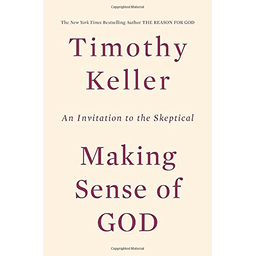 Making Sense of GodTim Keller’s 2016 “prequel” to The Reason for God doesn’t argue that God exists - it argues that the things you already want make more sense inside Christianity than outside it, and it’s the book for the skeptic who isn’t ready for the argument yet.
 TacticsGreg Koukl wrote the book that teaches you how to talk about faith without it turning into an argument - the one most people reach for when "I never know what to say" is the real problem.
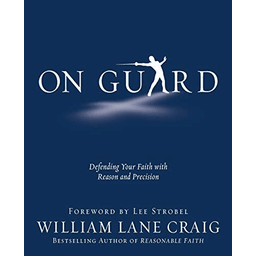 On GuardWilliam Lane Craig’s 2010 primer takes the formal arguments from his heavyweight Reasonable Faith and redraws them as flowcharts a layperson can actually follow - apologetics taught like a skill, not a sermon.
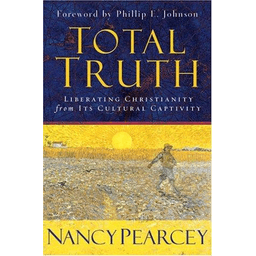 Total TruthThe book that taught a generation of evangelicals to think in terms of worldview - and to stop letting their faith get filed under "private values" while everyone else got "public facts."
 Simply ChristianN.T. Wright's accessible case for the faith - the book reviewers reach for when they want a modern Mere Christianity, built not on a single argument but on four longings every human being already carries.