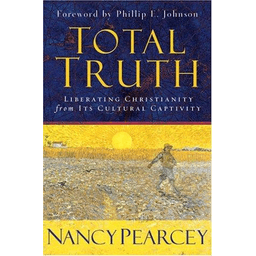
- Starting price
- $22.99 paperback
- Free tier
- No
- Platforms
- Print · Kindle · Audiobook
- Developer
- Crossway
- Launched
- 2004 (Updated + Expanded 2008)
- Updated
- May 25, 2026
The verdict
Total Truth has quietly become the foundational worldview text for the post-Schaeffer generation - a 500-page argument that Christianity is not a private feeling but a public, total claim about reality. Dense, occasionally repetitive, and unmistakably formative.
Try Total Truth ↗Opens crossway.org
Total Truth is not the right book for everyone. It is long, it is footnoted, and it asks the reader to think historically about ideas most people inherit unexamined. But for anyone who has ever felt the strange split between what they believe on Sunday and what they say at work on Monday - the polite shrinking of faith into "values" while the rest of life runs on "facts" - Pearcey’s argument lands with unusual force.
It doesn’t pitch itself as apologetics in the debate-club sense. It doesn’t hand you arguments for the resurrection or the existence of God. It doesn’t teach you how to win an argument with a skeptical cousin. What it does, methodically, is name a structure of thought - the "two-story" worldview - that has quietly shaped how Christians in the West relate to truth itself, and then it walks back through the intellectual history that produced that structure.
Pearcey was a student of Francis Schaeffer at L’Abri, and her book reads like Schaeffer rewritten for a generation that has to engage Darwin, Dewey, postmodern literary theory, and the design of the modern research university. The result is a book that pastors quote, that homeschool curricula assign, and that Christian college freshmen find waiting for them on their first reading list - and that, twenty years on, is still doing the work of explaining to evangelicals why "worldview" became the word everyone started using.
✓ The good
- The two-story diagnosis is genuinely clarifying - once you see the upper-story/lower-story split, you cannot unsee it in news coverage, school policy, or your own thought life
- Schaeffer’s framework, rebuilt and modernized - Pearcey carries forward the L’Abri tradition while updating its examples for the post-2000 academy
- Application across disciplines is unusually broad - biology, history, art, education, politics, and economics each get treated as worldview-bearing fields
- The historical genealogy of secularism is the strongest chapter set - Pearcey traces the modern fact/value split back through the Enlightenment with real care
- Study Guide Edition is excellent for groups - discussion questions, study prompts, and a workbook section make it usable in a Sunday school or college small group
- Tone is firm but not combative - Pearcey is making an argument, not picking a fight, and the book ages better than most "culture war" titles from the same era
✗ Watch out
- Length is genuinely demanding - 500 pages and an academic register make this a multi-week read, not a weekend
- Reformed/presuppositional accent is unstated - readers from other traditions will notice the apologetic method without it being named
- Repetition of the two-story metaphor - once introduced, the upper-story/lower-story image is invoked on nearly every chapter
- Treatment of evolution leans hard on Intelligent Design - readers who hold other origin views may find this section the most polarizing
- Dated examples in places - some of the 2004 cultural references read as period pieces, though the 2008 expanded edition softens this
Best for
- College students entering a secular university
- Christians whose work touches academia, education, or media
- Small-group leaders teaching worldview formation
- Readers who loved Schaeffer and want a modern successor
Avoid if
- You want a short, devotional read
- You want apologetics arguments for specific doctrines
- You want a politically neutral cultural analysis
- You are looking for personal-spiritual-formation content
What Total Truth is
Total Truth is a book-length argument that Christianity is, in Pearcey’s repeated phrase, "total truth" - not a private religious feeling that floats above the real world, but a public claim about the way reality actually is. Published in 2004 by Crossway and revised in a 2008 expanded edition, it won the ECPA Gold Medallion and has since sold steadily as a foundational worldview text in evangelical higher education.
The book is structured in four parts: an opening diagnosis of the modern "two-story" split between facts and values, a long historical section tracing how that split developed, a set of chapters applying a Christian worldview to specific academic disciplines, and a closing section on the personal and ecclesial conditions for thinking and living as a whole person rather than a divided one. Pearcey writes as a former L’Abri student of Francis Schaeffer, and the book is best read as a deliberate continuation of his project.
Why worldview-minded readers keep returning to Total Truth
Most popular Christian books in the apologetics aisle defend specific propositions - that Jesus rose, that the universe was designed, that the Bible is reliable. Total Truth does something different: it argues that the deeper problem in the contemporary West is not that Christians lose individual arguments, but that the playing field itself has been redrawn so that religious claims are pre-classified as the wrong kind of statement. They get filed as "values," not "facts" - and once filed, they cannot win, because the category itself has been emptied of truth content.
Pearcey calls this the "two-story" worldview, borrowing the image from Schaeffer. The lower story holds public facts: science, economics, history, anything testable. The upper story holds private values: religion, morality, meaning, anything supposedly untestable. The book’s central move is to refuse that division and reassert that Christianity, whatever else it is, makes claims about the lower story - about how the world actually is - and that the conversation has to happen on those terms. That refusal, more than any specific argument the book makes, is why readers keep coming back to it.
The two-story worldview critique: the diagnosis the whole book turns on
The opening third of Total Truth is built around an image Pearcey carries throughout: a two-story building. The lower story is the public realm of "facts" - what counts in courtrooms, classrooms, and laboratories. The upper story is the private realm of "values" - what counts in your own home and your own head. Modern Western culture, Pearcey argues, has quietly trained everyone to put religious claims in the upper story and only secular-empirical claims in the lower story. The effect is that Christianity gets to exist, but only as a private preference; the moment it makes a claim about how reality actually is, it gets re-classified as merely "personal."
The reason this section is genuinely transformative for most readers is that the diagnosis explains something they have already felt without being able to name it - the strange experience of being treated as reasonable as long as faith stays "private," and as a fundamentalist the moment it becomes "public." Once you have the upper-story/lower-story image, it becomes hard to read a newspaper editorial, a school curriculum, or even your own internal hesitation about speaking up at work without seeing the split at work. Pearcey’s achievement is making a piece of intellectual history feel like a piece of self-recognition.
Worldview applied across academic disciplines: where the book earns its 500 pages
The middle of the book turns from diagnosis to application. Pearcey walks through a sequence of academic and cultural fields - biology, philosophy, history, political theory, art, education, economics - and asks, in each one, what the operating assumptions are and how those assumptions would look different if Christianity were treated as a total claim about reality rather than a private value. The treatment of biology and origins leans heavily on Intelligent Design arguments (a tradition Pearcey was personally close to), which will resonate with some readers and not with others. The treatment of education, art, and the history of ideas is the broadest in reach and probably the most durable.
This is the section that gives the book its weight in Christian higher education. Faculty assign chapters from this part because it gives students a vocabulary for asking, in any class they take, "what does this discipline assume about the nature of reality, and where did those assumptions come from?" That habit - treating every subject as worldview-bearing rather than worldview-neutral - is the practical legacy of the book in the homeschool, Christian college, and seminary worlds. It is also the most controversial part of the book’s influence, because once you have that habit, you cannot turn it off.
Christianity-and-culture engagement: the closing thesis
The final section of Total Truth turns inward. Pearcey argues that the cultural problem she has been diagnosing is also a discipleship problem - that Christians have, in many cases, internalized the two-story split themselves and now live divided lives in which their Sunday convictions and their Monday work-lives never speak to each other. The proposed remedy is not louder political activism. It is the slower, harder work of forming whole people whose vocational lives, intellectual lives, and devotional lives are integrated under a single account of what is real.
This is where the book’s influence on the broader "worldview-formation" movement becomes clearest. The argument is that culture engagement is downstream of Christian formation, not the other way around - that you cannot recover a public, total Christianity until you stop letting your own thinking be quietly bifurcated. The closing chapters read less like apologetics than like a charge to readers to take their own minds seriously as a discipleship project. Twenty years later, this is the section that many longtime readers cite as the one that most changed how they ordered their lives.
Pricing
Paperback
~$22.99
Standard Crossway paperback - the most common edition, widely available new and used.
Hardcover
~$32
Hardcover edition for shelf longevity - same text as the paperback, library binding.
Kindle
~$15
Digital edition with full text, footnotes, and search - the cheapest way in.
Audible
~$25
Unabridged audiobook - roughly 20 hours of listening, narrated in a steady academic register.
Study Guide Edition
~$25
Expanded paperback with discussion questions and workbook prompts - the version most small groups buy.
Total Truth is sold mostly as a paperback - the standard Crossway edition runs around $22.99 new and is widely available used for less. For most readers, the paperback is the right buy: it is the version most small groups assume, it stays affordable, and the typesetting handles Pearcey’s footnotes well.
The Kindle edition at roughly $15 is the cheapest entry point and the most practical version for readers who want to search the text or highlight heavily - useful, given how often Pearcey returns to the same metaphor across 500 pages. The Audible edition runs around $25 and clocks in near 20 hours; it is a steady listen but not an easy one, since the book leans on diagrams and historical names that benefit from being seen rather than heard.
The Study Guide Edition is the version to buy if you are reading in a group. For roughly $25, you get the full text plus chapter discussion questions, summary outlines, and prompts designed for classroom or small-group use. Most readers do not need both editions - pick the Study Guide Edition if you know you are going through this with others, and the standard paperback if you are reading alone.
The hardcover at around $32 is mostly for readers who want the book on the shelf for years. The text is identical to the paperback. There is no premium "expanded" edition beyond the 2008 update - anything sold as current already includes that revision.
Where Total Truth falls behind
Length and density. Total Truth is genuinely long, and Pearcey writes in an academic register with extended footnotes and historical asides. Readers expecting a brisk popular-level book the size of Mere Christianity will be surprised. The book rewards being read slowly over a season, not knocked out in a weekend.
Single dominant metaphor. The two-story image is so central that Pearcey returns to it in nearly every chapter. For readers who find the metaphor clarifying, this is a feature; for readers who already grasped it in chapter two, the repeated invocations across 500 pages can feel like the same point being made many ways.
Origins chapter is polarizing. Pearcey treats Intelligent Design as the natural Christian alternative to philosophical naturalism, and readers who hold theistic-evolution or other origin views will find this section harder to accept on the book’s own terms. It is possible to take the book’s broader worldview argument without endorsing this specific chapter, but the chapter is doing more load-bearing work than some readers expect.
Apologetic method goes unnamed. Pearcey writes from a broadly evangelical position with strong Reformed and presuppositional-apologetics influences - the assumption that worldviews are total, comprehensive, and mutually exclusive owes a great deal to Cornelius Van Til and the tradition he shaped. Pearcey does not foreground this lineage, so readers from other Christian traditions sometimes encounter the framework as if it were neutral when it is in fact a specific apologetic posture.
Limited treatment of non-Western contexts. The book’s "cultural captivity" is overwhelmingly the captivity of post-Enlightenment Western thought. Readers looking for a global account of how Christianity engages other cultural orders will need to supplement Total Truth with other reading.
Total Truth vs. How (Not) to Be Secular vs. You Are What You Love
Different strengths, different angles on the same question. All three books take seriously that modern Western life shapes how Christians think and live - but they come at it from different directions. Total Truth is the worldview-and-ideas account: how did Western thought arrive at the fact/value split, and what does it look like to think Christianly across academic disciplines once you have seen it? It is the most intellectually historical of the three, and the most useful if your question is, "why does my secular workplace treat my faith as a private hobby?"
How (Not) to Be Secular is James K. A. Smith’s shorter companion to Charles Taylor’s A Secular Age - and it does something Total Truth does not, which is to describe secularism less as an argument to be won and more as a condition we are all living inside. Where Pearcey asks how the secular fact/value split happened and how to argue against it, Smith asks what it feels like to live in a world where belief itself has become contestable, and how Christians can live faithfully inside that condition rather than imagining themselves outside it. It is shorter, more sympathetic to secular interlocutors, and less programmatic.
You Are What You Love is also Smith - and it moves the conversation again, this time toward formation rather than ideas. Smith’s argument is that worldview-talk has overemphasized the head: humans are not primarily thinking things but loving things, shaped by habits and liturgies more than by arguments. Read together, the three books form a triangle. Pearcey says: get your ideas straight, because ideas have consequences. Smith (Secular) says: see the cultural condition you are actually inside. Smith (Love) says: pay attention to what is forming your loves, because that is where you actually live. None of them replaces the others.
The bottom line
Total Truth is the book that taught a generation of evangelicals to use the word "worldview" with confidence - and twenty years on, it is still the most thorough single-volume argument for treating Christianity as a public, total claim about reality rather than a private value. It is long, occasionally repetitive, and unmistakably shaped by a Schaefferian, broadly Reformed apologetic tradition. If you can sit with those constraints, it remains one of the most clarifying books on faith and culture you can read, and the Study Guide Edition makes it unusually well-suited for working through with others.
Alternatives to Total Truth
 Mere ChristianityC. S. Lewis’s gateway apologetics classic - shorter, warmer, less academic, and the natural first read before Pearcey.
 The Reason for GodTim Keller’s urban-skeptic apologetic - pairs well with Total Truth as the conversational counterpart to Pearcey’s more systematic argument.
 Knowing GodJ. I. Packer on the character of God - the devotional-theological reading that complements Pearcey’s worldview formation.
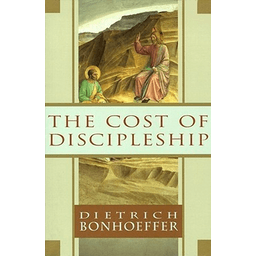 The Cost of DiscipleshipBonhoeffer on what following Christ actually requires - the costly-discipleship counterweight to any purely intellectual worldview project.
Frequently asked questions
Is Total Truth an apologetics book or a worldview book?
Both, but worldview is primary. Pearcey is not arguing for individual doctrines so much as arguing that Christianity is a comprehensive account of reality and should not be treated as a private value floating above the "real" world of public facts. The apologetic work is mostly aimed at the fact/value split itself.
What tradition is Nancy Pearcey writing from?
Pearcey writes from a broadly evangelical position, with strong Reformed and presuppositional-apologetics influences - she was a student of Francis Schaeffer at L’Abri and carries that lineage forward. Readers from other Christian traditions will recognize the framework as one specific apologetic posture rather than a neutral one.
Do I need to read Schaeffer first?
No, but it helps. Total Truth is in many ways Schaeffer rewritten for a later generation - if you have read The God Who Is There or How Should We Then Live, much of Pearcey’s framework will feel familiar. If you have not, Pearcey is self-contained and explains what she is inheriting.
Is the 2008 Updated and Expanded edition worth getting over the 2004 original?
Yes - the 2008 edition is the standard text now, with additional material and updated examples. Anything currently in print as "Total Truth" already includes the expanded content, so you do not need to seek it out separately.
Is this book too political?
It is not partisan in a Republican-vs-Democrat sense, but it does argue that ideas have public consequences and that Christianity has claims on disciplines beyond personal piety. Readers expecting a strictly apolitical book will find that boundary thinner here than in something like Knowing God.
Should I buy the Study Guide Edition or the standard paperback?
Buy the Study Guide Edition if you know you will read this with a group or class - the discussion questions and outlines are genuinely useful. Buy the standard paperback if you are reading alone and do not need the workbook material.
How long does it take to read?
Plan for several weeks at a normal reading pace. The book is around 500 pages with footnotes and historical material, and it is denser than its popular reception sometimes suggests. Most small groups spread it over a semester.
Sources & further reading
More Apologetics Books
The Reason for GodTim Keller’s 2008 apologetic has quietly become the default gift for the smart, secular friend who has questions - and it earns the reputation.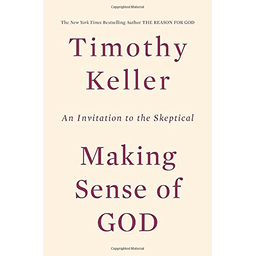 Making Sense of GodTim Keller’s 2016 “prequel” to The Reason for God doesn’t argue that God exists - it argues that the things you already want make more sense inside Christianity than outside it, and it’s the book for the skeptic who isn’t ready for the argument yet.
 TacticsGreg Koukl wrote the book that teaches you how to talk about faith without it turning into an argument - the one most people reach for when "I never know what to say" is the real problem.
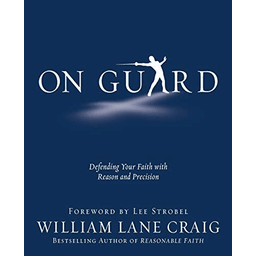 On GuardWilliam Lane Craig’s 2010 primer takes the formal arguments from his heavyweight Reasonable Faith and redraws them as flowcharts a layperson can actually follow - apologetics taught like a skill, not a sermon.
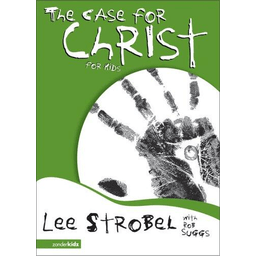 The Case for ChristLee Strobel’s investigative-journalist apologetic has quietly become the default gift book for skeptical friends - and the on-ramp into apologetics for an entire generation of readers.
 Simply ChristianN.T. Wright's accessible case for the faith - the book reviewers reach for when they want a modern Mere Christianity, built not on a single argument but on four longings every human being already carries.