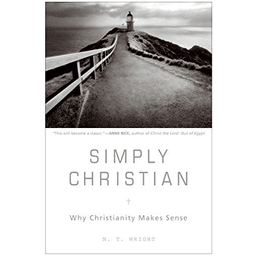
- Starting price
- ~$17 paperback
- Free tier
- No
- Platforms
- Print · Kindle · Audiobook
- Developer
- HarperOne
- Launched
- 2006
- Updated
- May 31, 2026
The verdict
Simply Christian is the book most reviewers reach for when they want to name a modern heir to Mere Christianity, and it earns the comparison. Wright starts not with an argument but with four longings everyone already feels - justice, spirituality, relationship, beauty - and walks them toward the Christian story of God, Israel, Jesus, and a renewed creation. If you want an on-ramp that begins with what you already sense rather than with a proof you have to accept, start here.
Try Simply Christian ↗Opens harpercollins.com
Simply Christian has quietly become the book people name when they go looking for a contemporary Mere Christianity. N.T. Wright - an Anglican New Testament scholar and former Bishop of Durham - wrote it in 2006 with exactly that ambition in the background, and almost every reviewer reaches for the same comparison. The two books are doing the same job for different generations: introducing the Christian faith to a thoughtful outsider in plain language, without insider jargon, without a denominational axe to grind.
But the method is genuinely different, and that difference is the whole point of the book. Lewis opened with a single argument - the moral law points to a lawgiver. Wright opens with four longings he says every human being already carries: a hunger for justice, a pull toward spirituality, a need for relationship, and a delight in beauty. He calls them echoes of a voice. He does not argue you into anything in the opening chapters. He does not assume you believe in God. He does not lead with the resurrection. He starts with what you already feel on an ordinary Tuesday and asks where it could be coming from.
The book is built in three movements. Part 1, "Echoes of a Voice," lays out the four longings and asks what kind of world would have to be true for them to make sense. Part 2, "Staring at the Sun," tells the Christian story proper - the God of Israel, the unexpected arrival of Jesus, the cross and resurrection, the gift of the Spirit. Part 3, "Reflecting the Image," turns to what the Christian life actually looks like: worship, prayer, Scripture, the church, and a renewed creation that Wright insists is the real Christian hope rather than disembodied souls drifting off to heaven. The voice throughout is warm, learned, occasionally lyrical, and unmistakably a working scholar's - Wright cannot help teaching, and the book is better for it.
✓ The good
- The most-cited modern candidate for "the next Mere Christianity" - when reviewers want to name Lewis's heir, this is the book they reach for, and it largely earns it
- The four echoes of a voice are a brilliant on-ramp - starting with justice, spirituality, relationship, and beauty meets a secular reader inside their own experience rather than demanding they accept a premise first
- Written by a working New Testament scholar - Wright knows the historical material on Jesus and the first century cold, and the Part 2 storytelling carries that authority lightly
- Genuinely accessible - no theological vocabulary is assumed, the chapters are short, and Wright's prose is clear and frequently beautiful without showing off
- Read across traditions - Wright is Anglican, but Catholics, Protestants, Orthodox, and Latter-day Saints all read him, and the book stays on the shared Christian story rather than denominational distinctives
- Part 3 is unusually concrete about practice - worship, prayer, Scripture, and the church get real chapters, so the book ends with how to live rather than trailing off after the argument
- The new-creation emphasis is fresh - Wright's insistence that the Christian hope is a renewed heaven-and-earth, not escape from the world, is the part many readers say reframed everything
✗ Watch out
- The echoes framework is a slower on-ramp than a direct argument - readers who want Lewis's tight logical march from premise to conclusion will find the opening more diffuse and impressionistic
- Part of the book is Wright's own emphasis, not just "mere" Christianity - the strong new-creation, heaven-comes-to-earth framing is a particular (and contested-in-the-details) reading, more so than the deliberately bare-minimum approach the title might suggest
- Wright is associated with the New Perspective on Paul - it stays mostly in the background of this general introduction, but it shapes how he frames Israel and Jesus, and the New Perspective is debated among scholars (including Reformed critics)
- Some readers simply prefer Lewis's tighter construction - Simply Christian is broader and more atmospheric, and if you came for a crisp case rather than a sweeping story, that breadth can read as looseness
- Not a quick-reference apologetic - it answers "what is the Christian story and why might it be true?" beautifully, but it is not built to field a list of specific objections one by one the way some readers want
Best for
- Thoughtful skeptics who feel the four longings before they accept any argument
- Readers who want a modern, scholar-written companion to Mere Christianity
- Anyone drawn in by the new-creation hope rather than a proof-of-God march
- New or returning Christians wanting the whole story, not just the entry argument
Avoid if
- You want Lewis's tight premise-to-conclusion logic rather than a sweeping narrative
- You want a point-by-point answer file to specific modern objections
- You want a deliberately bare-minimum "mere" account with no authorial emphasis
- You bounce off a teaching, scholarly voice and prefer a brisk conversational one
What Simply Christian is
Simply Christian is N.T. Wright's accessible introduction to and case for the Christian faith, published by HarperOne in 2006 and frequently described as this generation's Mere Christianity. It is a general-audience book, not an academic one - short chapters, no assumed vocabulary, around 240 pages. It moves in three parts: first the four universal longings Wright calls echoes of a voice (justice, spirituality, relationship, beauty), then the Christian story itself (the God of Israel, Jesus, the cross and resurrection, the Spirit), then the shape of the Christian life (worship, prayer, Scripture, church, and the renewal of all things).
Wright writes from an Anglican vantage - he is a New Testament scholar and a former Bishop of Durham - but the book is pitched at the shared Christian story rather than at any one tradition's distinctives. He is read widely across traditions, and the title's "simply" signals the same instinct Lewis had in borrowing the phrase "mere": aim at what is most basic and most common to Christian faith, and let the reader follow the story before sorting out the denominational details. It is an on-ramp, by design, not a final word.
Why readers reach for Wright after Lewis
The single biggest difference between Simply Christian and most apologetics is where it starts. Most books in the genre open with a claim you are asked to accept - there is a moral law, the gospels are reliable, the universe looks designed. Wright opens somewhere you already are. You want the world to be fair, and it isn't. You sense there is more to reality than the material surface, even if you can't say what. You need to love and be loved, and you keep getting it wrong. You are stopped in your tracks by beauty and don't quite know why. Four longings, four echoes of a voice - and the question is not "will you accept my premise" but "where do you think these are coming from?"
That makes Wright the natural next book for a reader who admired Lewis but wanted something built for the present. Where Lewis argued, Wright invites. Where Lewis stopped at the doctrine of God, Wright keeps going all the way to a renewed creation and the texture of ordinary Christian practice. He is a scholar, so the Jesus he describes in Part 2 is grounded in real first-century history rather than sentiment. And he stays on the shared story - a Catholic, an Orthodox reader, a Protestant, and a Latter-day Saint can all follow Wright's account of the God of Israel and the arrival of Jesus without tripping over an aside aimed at someone else. That is the same ecumenical instinct that made Lewis travel, updated for a reader who feels the longings more readily than they accept the proofs.
The four echoes of a voice (Part 1): an on-ramp built from longing, not proof
Part 1, "Echoes of a Voice," is the move the whole book is known for. Instead of beginning with an argument for God's existence, Wright names four things he says nearly every human being already experiences: a longing for justice (we cannot stop wanting the world to be put right), a hunger for spirituality (the persistent sense that there is more than the material), a need for relationship (we are made for one another and keep wounding the people we love), and a delight in beauty (the way a sunset or a piece of music can stop us cold). He calls these echoes of a voice - fragments of a sound we can't quite locate but can't unhear either. The chapters don't prove anything. They describe, carefully, and then ask what kind of world would have to be real for these longings to be more than a cruel joke.
This is a slower on-ramp than a direct argument, and Wright knows it - that is the trade he is making on purpose. A reader who wants Lewis's brisk logical march will feel the opening as diffuse. But for the reader the book is aimed at - the modern skeptic who is not moved by syllogisms but is quietly haunted by exactly these four hungers - it is disarming in the best sense. Wright is not telling such a reader they are wrong. He is telling them that the things they already feel most deeply might be evidence, and that Christianity claims to know whose voice the echoes belong to. It meets people inside their own experience, which is why it has become the part of the book reviewers single out.
Staring at the Sun (Part 2): the Christian story told by a historian
Part 2, "Staring at the Sun," is where Wright tells the Christian story proper, and it is where his day job shows to best effect. Rather than presenting doctrines as abstractions, he tells it as history: the calling of Israel and the long ache of a people waiting for their God to act, the unexpected arrival of Jesus inside that story, the shock of the cross, the claim of resurrection, and the gift of the Spirit. Wright is a New Testament scholar who has spent his career on the first century, and the Jesus of these chapters is rooted in a real time and place - a Jewish world with specific hopes - rather than floating free as a timeless moral teacher.
Two notes for the reader who wants the full picture. First, the new-creation thread that becomes the book's signature is already humming here: Wright frames the resurrection not as a soul going to heaven but as the first installment of God's renewal of the whole world, a reading he develops at length in his later book Surprised by Hope. Second, Wright is associated with what scholars call the New Perspective on Paul - a way of reading Paul, justification, and Israel's story that is much debated among scholars, including Reformed critics. In a general introduction like this it stays mostly in the background, shaping the frame more than the foreground, and Wright does not litigate it here. It is simply worth knowing that the historian telling you this story has a particular, and contested, scholarly location - as every scholar does.
Reflecting the Image (Part 3): worship, prayer, and a world made new
Part 3, "Reflecting the Image," is the section many apologetics books skip and Wright refuses to. Having told the story, he turns to how it is actually lived: worship, prayer, the reading of Scripture, the life of the church, and the sacraments. He treats these not as add-ons for people who have already signed up but as the natural shape of a life that has heard whose voice the echoes belong to. The chapters are practical without being a how-to manual, and they give the book a destination - it ends with a way of living rather than trailing off after the case has been made.
Underneath all of it runs Wright's insistence that the Christian hope is the renewal of heaven and earth together, not an escape from the world into a disembodied afterlife. The four longings from Part 1 come back transformed: the hunger for justice points to a world finally put right, the delight in beauty to a creation made whole, the need for relationship to a restored human family, the pull toward spirituality to the presence of God filling everything. This new-creation framing is the freshest thing in the book for many readers - and it is also, fairly noted, more Wright's particular emphasis than a bare-minimum "mere" account. He would say it is simply the New Testament's own emphasis recovered. Readers who came for the renewed-creation vision tend to call Part 3 the part that stayed with them.
Pricing
Paperback
~$17
The standard HarperOne edition. The copy most readers and study groups buy.
Kindle / ebook
~$13
Searchable, highlight-syncs across devices. A few dollars under paperback.
Audiobook
~$18
Narrated edition, or included with an Audible membership. Wright's prose reads aloud well.
Used / library
~$4 and up
A 2006 bestseller, so used copies are everywhere. The cheapest way to start.
Simply Christian is not free. As a 2006 bestseller it is easy to find used - copies turn up at library sales and used-book sites for a few dollars, which is how a lot of readers acquire their first one. A new HarperOne paperback runs around $17 and is the edition study groups standardize on and most quotations are keyed to.
The ebook runs a few dollars under the paperback, in the neighborhood of $13, with highlighting that syncs across devices - useful for a book this quotable. The audiobook lands around $18 or is included with an Audible membership, and Wright's prose, which leans lyrical in places, holds up read aloud.
There is no premium or annotated tier to weigh here - this is a single trade book, not a platform. The only real decision is format. The paperback is the balanced default and the copy you will mark up; the ebook is the convenient one; the audiobook is for commuters. Most readers want the paperback and a pen.
If you are buying for someone else, the paperback is also the natural gift - inexpensive enough to give freely, substantial enough to matter. Pair it with Mere Christianity and you have handed someone the two-book starter shelf for understanding the faith.
Where Simply Christian falls behind
A slower on-ramp. The four echoes are the book's best idea and also its biggest ask of an impatient reader. Where Lewis gives you a clean argument to grab in the first chapter, Wright spends Part 1 describing longings and deferring the payoff. Readers who want a premise-to-conclusion march can find the opening atmospheric rather than rigorous. It rewards patience, but it does ask for it.
An authorial emphasis, not a bare minimum. The title suggests "mere" Christianity, and much of the book is, but the strong new-creation, heaven-comes-to-earth framing is a particular reading Wright presses harder than a deliberately lowest-common-denominator account would. Most readers find it illuminating. It is fair to say it is more Wright's vision of Christianity than a neutral floor under every tradition.
The New Perspective in the background. Wright is one of the leading voices of the New Perspective on Paul, a reading of Paul and justification that is debated among scholars, including Reformed critics. He does not argue it in this introductory book, and a first-time reader will likely never notice it. But it shapes how Israel and Jesus are framed, and a reader who already cares about that debate should know where the author stands - without that being a mark for or against the book.
Not an objection-by-objection handbook. Simply Christian answers "what is the Christian story and why might it ring true?" far better than it answers "what about suffering, hell, science, and the church's record?" one by one. That is a different book's job - Keller's The Reason for God is built that way. Wright is after the shape of the whole, not a checklist of rebuttals.
Simply Christian vs. Mere Christianity vs. The Reason for God
These three are the natural shortlist for "one book to understand and consider the Christian faith," and they take three different routes. Mere Christianity (C.S. Lewis, 1952) is the philosophical-imaginative classic - it opens with the moral argument and builds, in prose written for a wartime radio audience, toward the doctrine of God. Simply Christian (N.T. Wright, 2006) is the explicit modern heir - it begins not with an argument but with four universal longings, then tells the Christian story as history, then closes on a renewed creation. The Reason for God (Tim Keller, 2008) is the objection-driven update - it takes the seven hardest modern objections one at a time before making its positive case.
Different strengths. Lewis is the tightest and most timeless - the cleanest single argument and the book you will still be quoting in twenty years. Wright is the broadest and most narrative - the best at telling the whole sweep from Israel to new creation, and the warmest on-ramp for a reader moved more by longing than by logic. Keller is the most direct at fielding specific objections - the right choice for a friend whose questions are concrete and contemporary. If you want one book and you respond to story, start with Wright; if you want the classic argument, Lewis; if you want the objection file, Keller.
All three are read widely across Catholic, Protestant, Orthodox, and other Christian readers. Lewis is the most deliberately ecumenical of the three. Keller writes from a Reformed Presbyterian perspective but engages broadly. Wright writes from an Anglican vantage and is associated with the New Perspective on Paul - debated among scholars - though in this general introduction that stays in the background, and like Lewis he keeps the book on the shared Christian story.
The bottom line
Simply Christian is the book to hand a thoughtful friend who is moved more by longing than by argument. Wright starts with the four hungers everyone already feels - justice, spirituality, relationship, beauty - and walks them, in clear and often beautiful prose, into the Christian story of God, Israel, Jesus, and a world made new. It is broader and more narrative than Lewis and less of a point-by-point objection file than Keller, and that is exactly its niche. If you want one modern, scholar-written introduction that begins with what you already sense rather than a proof you must accept, this is the one to read.
Alternatives to Simply Christian
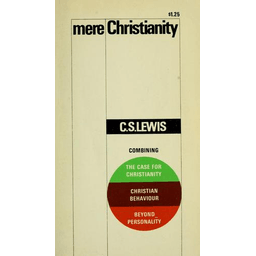 Mere ChristianityC.S. Lewis's wartime classic and the book Simply Christian is most often compared to - tighter logic, the original ecumenical on-ramp.
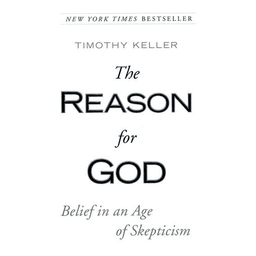 The Reason for GodTim Keller's objection-by-objection apologetic - the book to pair with Wright when a reader's questions are specific and modern.
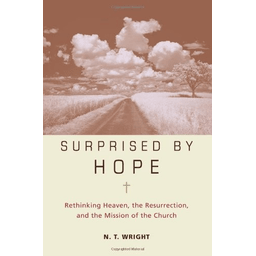 Surprised by HopeWright's full-length development of the new-creation hope that runs through Simply Christian - the natural next read once the vision lands.
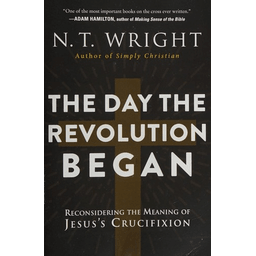 The Day the Revolution BeganWright's longer, more demanding book on what the cross actually accomplished - for readers who want to go deeper than the introduction.
Frequently asked questions
Is Simply Christian really the modern Mere Christianity?
It is the book most reviewers reach for when they want to name one, and N.T. Wright wrote it with that ambition in the background. Both introduce the faith to a thoughtful outsider in plain language. The method differs: Lewis opens with a single argument (the moral law), while Wright opens with four universal longings - justice, spirituality, relationship, and beauty - and walks them toward the Christian story.
What are the four "echoes of a voice"?
They are the four longings Wright says nearly every person already carries: the longing for justice (we want the world put right), the hunger for spirituality (the sense there is more than the material), the need for relationship (we are made to love and keep failing at it), and the delight in beauty. Wright calls them echoes of a voice and asks where they could be coming from, rather than starting with a proof you have to accept.
What tradition does N.T. Wright write from?
Wright is an Anglican - a New Testament scholar and a former Bishop of Durham. Simply Christian is pitched at the shared Christian story rather than Anglican distinctives, and he is read widely across Catholic, Protestant, Orthodox, and Latter-day Saint readers.
What is the New Perspective on Paul, and does it affect this book?
Wright is one of the leading voices of the New Perspective on Paul - a way of reading Paul, justification, and Israel's story that is debated among scholars, including Reformed critics. In this general introduction it stays mostly in the background, shaping how Israel and Jesus are framed more than driving the argument, and Wright does not litigate it here. A first-time reader will likely never notice it.
How is Simply Christian different from Mere Christianity?
Lewis leads with a tight argument and stops at the doctrine of God; Wright leads with four longings and keeps going through the whole story to a renewed creation and the shape of Christian practice. Wright is broader and more narrative; Lewis is tighter and more logical. Many readers who admired Lewis read Wright next because it is built for a present-day reader moved more by longing than by syllogism.
Is Simply Christian a good book to give a skeptic?
Yes, especially a skeptic who feels the four longings before they accept any argument. It meets people inside their own experience rather than demanding they grant a premise first. For a skeptic whose questions are specific and concrete - suffering, hell, science, the church's record - pair it with Tim Keller's The Reason for God, which is built to field objections one by one.
What should I read after Simply Christian?
For Wright specifically: Surprised by Hope develops the new-creation hope that runs through this book, and The Day the Revolution Began goes deeper on the cross. For the classic argument, read C.S. Lewis's Mere Christianity. For a point-by-point response to modern objections, read Tim Keller's The Reason for God. From there, most readers move toward a study Bible and deeper reading in their own tradition.
Sources & further reading
More Apologetics Books
The Reason for GodTim Keller’s 2008 apologetic has quietly become the default gift for the smart, secular friend who has questions - and it earns the reputation.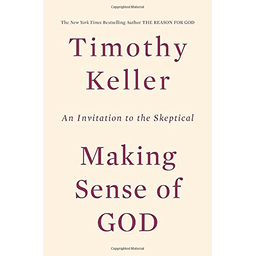 Making Sense of GodTim Keller’s 2016 “prequel” to The Reason for God doesn’t argue that God exists - it argues that the things you already want make more sense inside Christianity than outside it, and it’s the book for the skeptic who isn’t ready for the argument yet.
 TacticsGreg Koukl wrote the book that teaches you how to talk about faith without it turning into an argument - the one most people reach for when "I never know what to say" is the real problem.
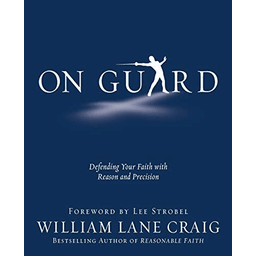 On GuardWilliam Lane Craig’s 2010 primer takes the formal arguments from his heavyweight Reasonable Faith and redraws them as flowcharts a layperson can actually follow - apologetics taught like a skill, not a sermon.
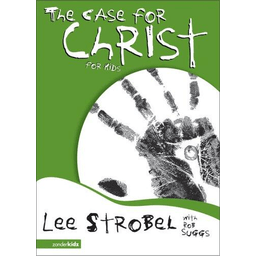 The Case for ChristLee Strobel’s investigative-journalist apologetic has quietly become the default gift book for skeptical friends - and the on-ramp into apologetics for an entire generation of readers.
 Total TruthThe book that taught a generation of evangelicals to think in terms of worldview - and to stop letting their faith get filed under "private values" while everyone else got "public facts."